A man on the Eminönü waterfront sold me a “sunset Bosphorus cruise with dinner and show” for €70. What I got was ninety minutes, a chicken breast, a belly dancer working a boat that was rolling, and a route that went as far as the first bridge and turned round. Forty metres away, the public ferry was loading for a six-hour trip up the entire strait to the Black Sea for the equivalent of about €11. I had walked past it to get to him.
The best Bosphorus cruise is the Şehir Hatları Long Tour, which leaves Eminönü at 10:35 every day of the year, costs 640 TL return and runs the full length of the strait with about three hours ashore at Anadolu Kavağı. Shorter tourist boats run 250–450 TL for 75–90 minutes; a plain commuter ferry crossing costs 53–60 TL.
This guide compares every way onto the water — public ferry, short tourist loop, sunset yacht, dinner cruise and private charter — with September 2026 prices, what each one actually shows you, and the villages, palaces and fortresses you pass on the way. I have taken most of them and I have opinions about which are worth the money.

Bosphorus cruise options compared
All prices checked on 10 September 2026, at €1 ≈ 56 TL, $1 ≈ 48 TL and £1 ≈ 65 TL. The 7 June 2026 ferry tariff is the current one for public services.
| Option | Price | Duration | Departs | How far it goes | Verdict |
|---|---|---|---|---|---|
| Şehir Hatları Long Tour | 640 TL return, 390 TL one way | ~6 h including 3 h ashore | Eminönü 10:35 daily, year-round | Anadolu Kavağı, near the Black Sea | The best value on the water |
| Şehir Hatları Short Tour | ~340 TL | ~2 h | Eminönü, seasonal | To the second bridge and back | Good if you have half a day |
| Üsküdar–Anadolu Kavağı public line | Standard Istanbulkart fare | ~100 min each way | Üsküdar, 8 daily to Beykoz, 3 continue | Full length, Asian shore | Cheapest full-length trip |
| Turyol | ~250 TL | 90 min | Eminönü, hourly | To the second bridge | Fine, frequent, no commentary worth having |
| Dentur Avrasya | ~300 TL | 75 min | Kabataş | To the second bridge | As above, from a better pier |
| Mega Lüfer | 400–450 TL | ~2 h | Kabataş / Eminönü | To the second bridge | Larger boat, more comfortable |
| Sunset yacht | €30–50 | 2–2.5 h | Various | Second bridge and back | Worth it once, for the light |
| Dinner cruise with show | €55–95 | 3–4 h | Various | Not far | Skip it |
| Commuter ferry crossing | 53.20–59.28 TL | 20 min | Constantly | Across, not along | The best 20 minutes in Istanbul |
| Sea taxi | ~420 TL per trip | On demand | Various piers | Wherever you ask | For a specific errand, not sightseeing |
| Private charter | From ~€150–400 for a group | 2–4 h | By arrangement | As far as you pay for | Sensible for six or more |
Note that third-party sites still quoting the Long Tour at 200 or 480 TL are out of date; the current fare is 640 TL return. Transfer discounts apply on the Bosphorus commuter routes but not on the Princes’ Islands services.
The Şehir Hatları Long Tour, in detail
This is the municipal ferry company’s own excursion, and it is a public service rather than a tour product, which is why it costs a fraction of what the private boats charge and why nobody on the waterfront will recommend it to you.
The essentials. Departs Eminönü at 10:35, every day, all year. 640 TL return, 390 TL one way. It calls at Beşiktaş, Kanlıca, Sarıyer, Rumeli Kavağı and Anadolu Kavağı, arriving at the top around 12:25 and leaving again around 15:00, back at Eminönü about 17:00. Total commitment: roughly six hours, three of them ashore in a fishing village.
Practicalities that matter. The ticket office opens at 10:00 and in season you want to be there by ten — this boat fills, and the good seats go first. Sit on the upper deck if the weather allows; port side gives you the European shore on the way up and the Asian shore on the way back, which is the better arrangement. There is tea and simit on board. There is no commentary, which I count as a feature.
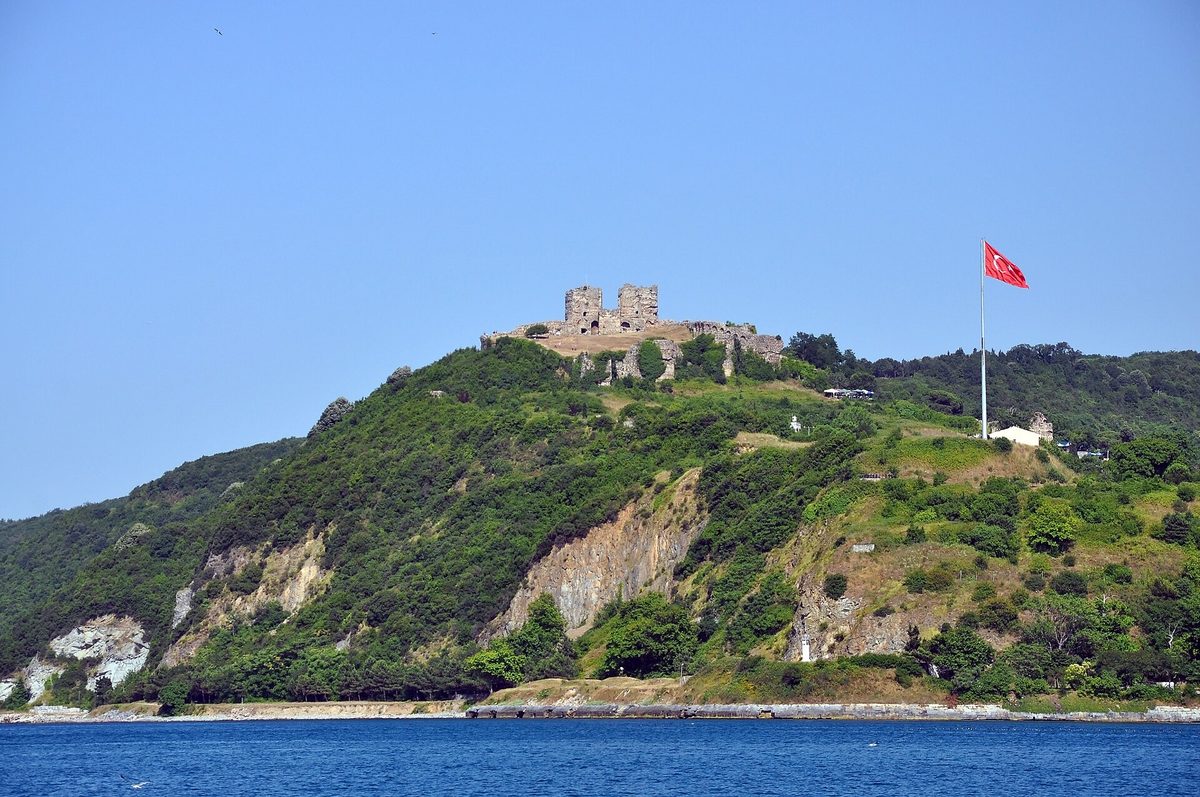
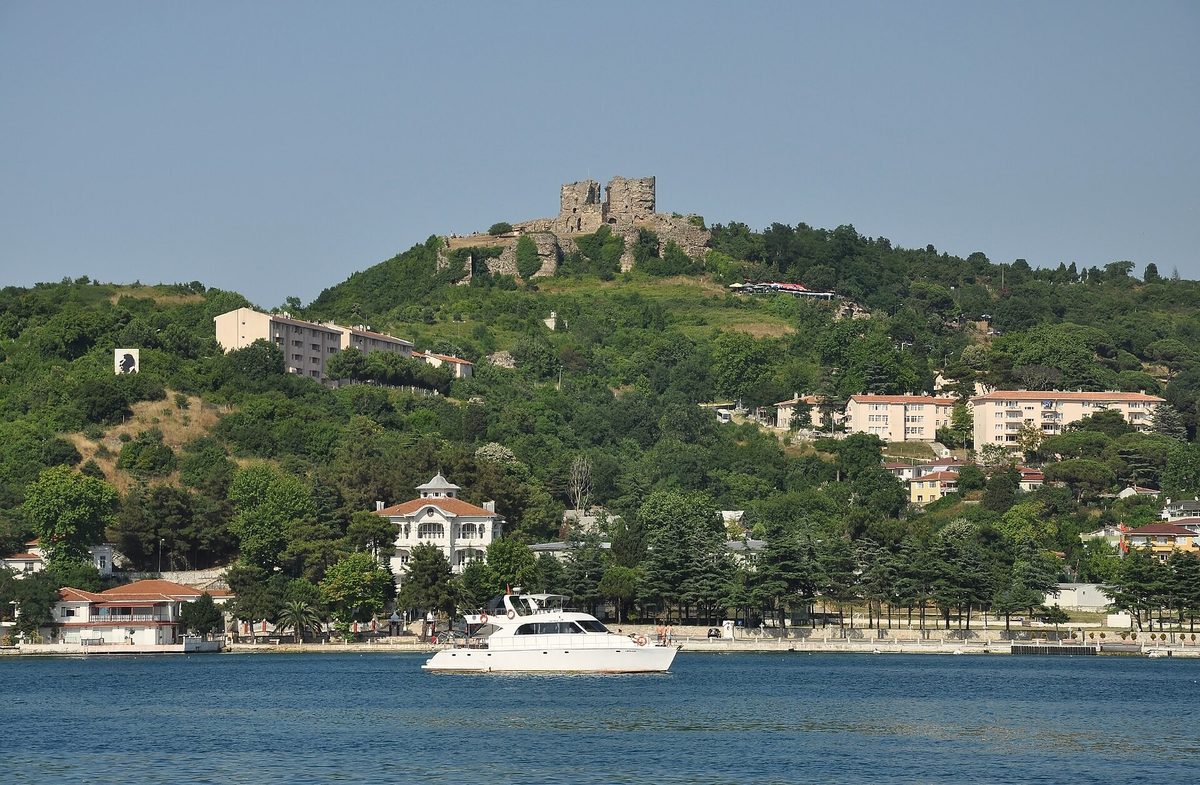
Anadolu Kavağı is the point of the exercise. A small fishing village at the top of the strait, more or less at the Black Sea, with a row of fish restaurants along the front that have priced themselves for a captive audience arriving on a boat that leaves at three. Eat if you like, but the real thing to do is walk up to Yoros Castle — a ruined Byzantine and Genoese fortress on the headland, about forty minutes uphill, with a view down the entire strait on one side and the Black Sea on the other. Three hours is exactly enough for the climb, the view and a plate of fish. It is not enough to be bored.
The one-way option at 390 TL is worth considering if six hours is too much: take the boat up and a bus back, or vice versa. The 15 bus runs down the Asian shore and the journey is a good deal less pleasant, which is rather the point.
The cheapest full-length trip nobody mentions
The Üsküdar–Anadolu Kavağı line is a public commuter service up the Asian shore: nine piers, about a hundred minutes end to end, at the standard Istanbulkart fare. Eight boats a day run Üsküdar–Beykoz and three continue to Anadolu Kavağı.
For a fraction of the Long Tour’s price you get the same water, the same castles and a good deal more local life — this is a boat carrying people to work rather than tourists to a photograph. The catch is the timetable, which is built around commuters rather than day trippers, so you need to plan the return before you set off. Check sehirhatlari.istanbul for the current schedule; the site publishes PDFs and, unhelpfully, blocks the aggregators that would otherwise copy them.
What you actually pass
Going north from Eminönü, on both shores, roughly in order. This is what the private boats’ commentary would tell you if it were audible.
The lower strait: palaces and mosques
Dolmabahçe Palace on the European side, a 600-metre neoclassical facade that reads much better from the water than it does from the road. The last Ottoman sultans lived here after they left Topkapı; Atatürk died in it in 1938. Entry is 2,000 TL, closed Mondays, and the exterior is arguably the better half.
The Maiden’s Tower off Üsküdar, on its own islet, a museum since 2023 at €27 plus about €5 for the boat out. Whether the Museum Pass covers it is genuinely disputed — one long-running guide site says it is not accepted, another reported in August 2026 that it is free with the Museum Card. Ask at the pier before you buy anything.

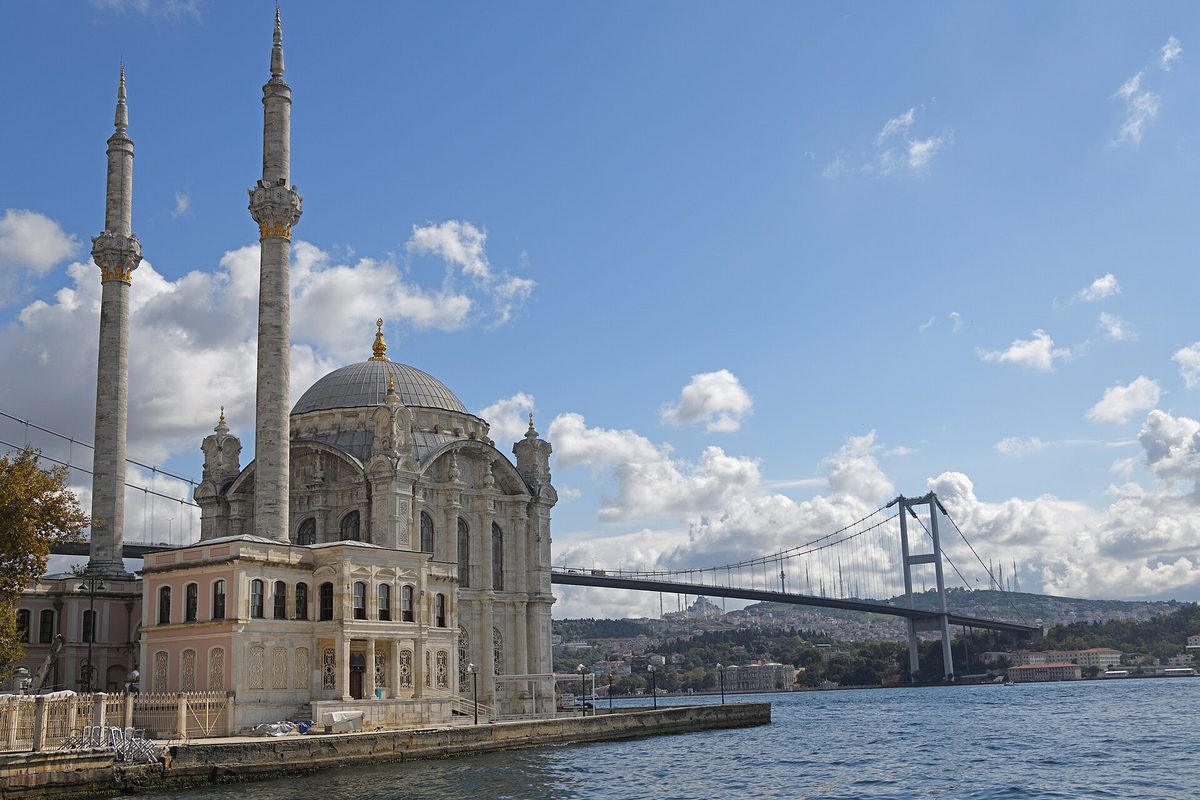
Ortaköy Mosque, small, ornate and standing directly under the first Bosphorus bridge, which is the single most photographed juxtaposition in the city. The bridge itself, opened in 1973, is now officially the 15 July Martyrs Bridge.
The middle strait: fortresses and yalıs
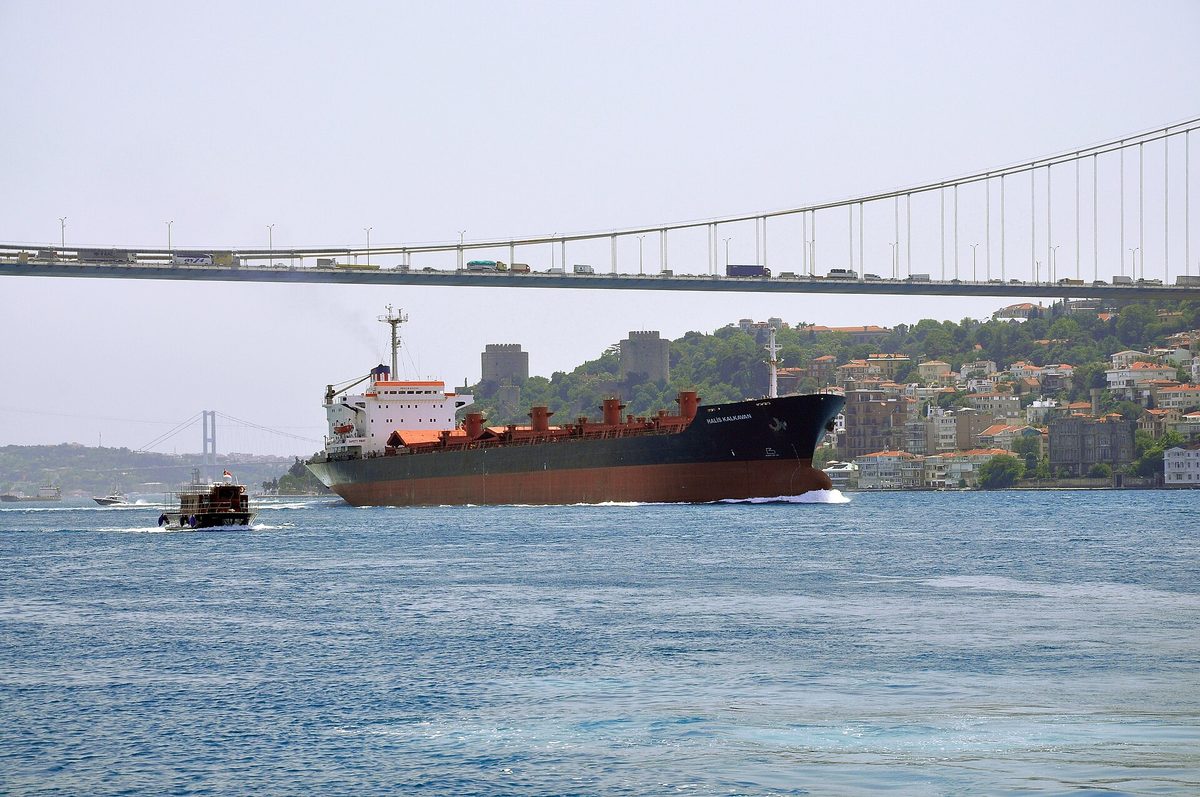
Rumeli Hisarı on the European bank, built by Mehmed II in four months in 1452 at the narrowest point of the strait, specifically to cut Constantinople’s supply line from the Black Sea before the siege. Directly opposite is Anadolu Hisarı, its older and smaller Asian counterpart. Between them the strait is about 700 metres wide, which is why the fortresses are where they are and why the second bridge crosses here. Rumeli Hisarı is €6 to enter, under-12s free, and covered by the Museum Pass; sources disagree on its closed day, with one saying Wednesday and another Monday, so check before making a special trip.
The yalıs — waterfront timber mansions, eighteenth and nineteenth century, built by Ottoman officials and ambassadors with their feet in the water and their own boathouses underneath. There are a few hundred left, they are among the most expensive residential property in Turkey, and they are the thing that makes the middle strait beautiful rather than merely scenic. Look for the deep overhanging eaves and the bay windows leaning out over the current.
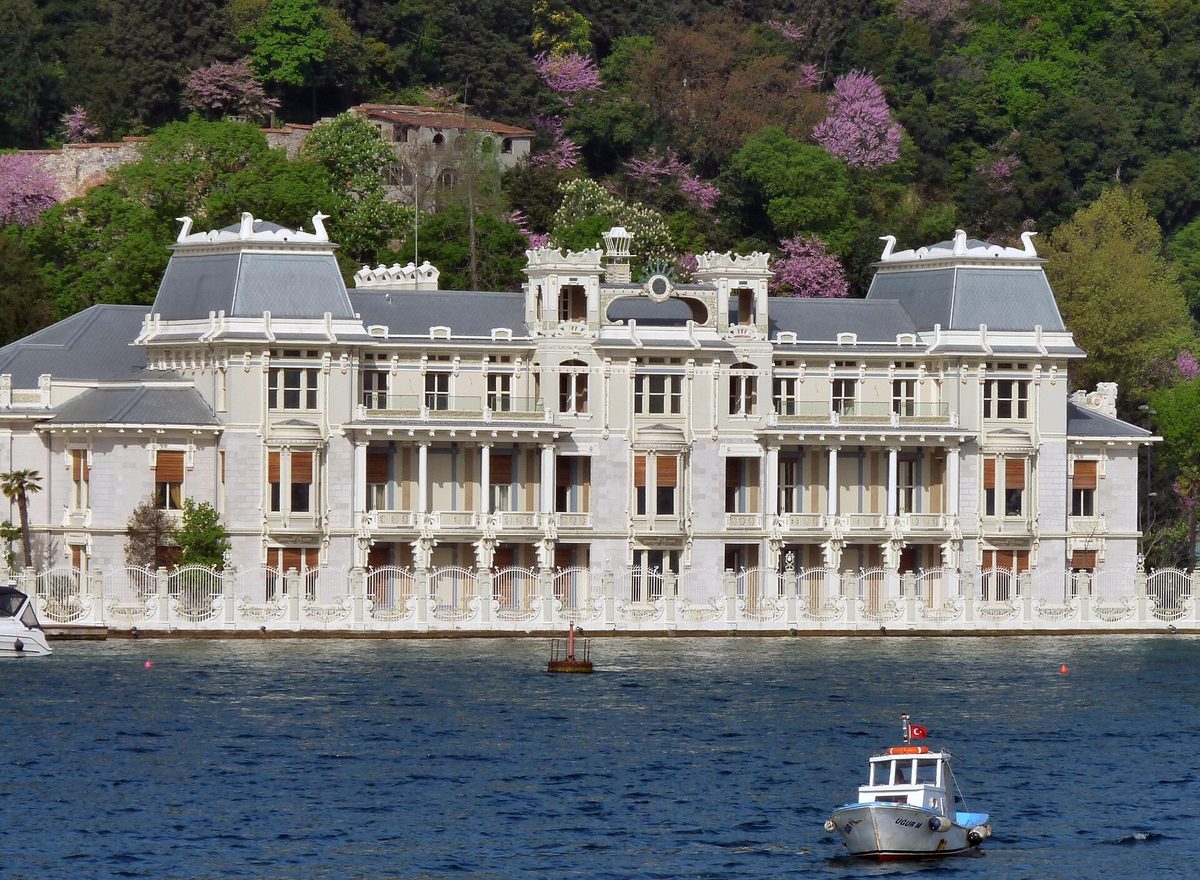
Bebek and Arnavutköy on the European side, the smartest villages on the strait; Kandilli and Çengelköy opposite, quieter and with better tea gardens.
The upper strait: villages and the Black Sea
Kanlıca, a Long Tour stop, is famous for yoghurt — sold on the pier, eaten with icing sugar, and genuinely worth the two minutes it takes.
Beykoz and Paşabahçe on the Asian side, both former industrial villages with good waterfront eating. Sarıyer on the European side is the largest settlement up here and has a serious fish market.
Rumeli Kavağı and Anadolu Kavağı face each other at the top, both fishing villages, both with ruined castles above them, and beyond them the strait opens into the Black Sea and military restrictions begin.
Why the strait looks like this
The Bosphorus is about thirty kilometres long and, at its narrowest, roughly seven hundred metres wide. It is the only sea route between the Black Sea and the Mediterranean, which is the single fact that explains Istanbul’s entire existence. Byzantion was founded on this headland in the seventh century BC because whoever sat here controlled the grain traffic from the Black Sea to the Aegean, and everything since — the walls, the empires, the sieges — follows from that.
It is still a working international waterway rather than a scenic lake, and this is the thing most visitors are unprepared for. Something over forty thousand vessels pass through each year, roughly three times the traffic of the Panama Canal, and a good number of them are tankers longer than the ferry you are sitting on. Passage is governed by the Montreux Convention of 1936, which gives merchant shipping free transit and restricts warships — a treaty that has stayed diplomatically live for ninety years and that Turkish newspapers still argue about.
The water itself does something unusual. A surface current runs south from the Black Sea, which is fresher and higher, and a denser, saltier undercurrent runs north from the Marmara beneath it. Fishermen have exploited the two layers for centuries, and it is why the fish move up and down the strait on a seasonal schedule the whole city knows about.
Three bridges cross it: the first, opened in 1973 and now the 15 July Martyrs Bridge, at Ortaköy; the Fatih Sultan Mehmet Bridge of 1988, at the narrows between the two fortresses; and the Yavuz Sultan Selim Bridge of 2016, far to the north, which carries the motorway ring and a railway. Two tunnels run underneath — the Marmaray rail tunnel of 2013 and the Eurasia road tunnel of 2016. None of this stops the ferries being the pleasanter way across.
Seeing the Bosphorus from land instead
If a boat does not suit — a tight schedule, seasickness, small children, or simply not wanting to spend six hours sitting down — the strait is also very good from the shore, and free.
The Bebek to Rumeli Hisarı walk on the European side is about two kilometres of waterfront promenade, past the yalıs and under the second bridge, finishing at the fortress. It is the best hour’s walk in Istanbul and costs nothing but a bus fare each way.
Salacak, in Üsküdar, looks back across the mouth of the strait at the old city with the Maiden’s Tower in the foreground. Tea gardens, a paved promenade, and the best sunset in the city. Twenty minutes by ferry from Eminönü.
Çamlıca Hill on the Asian side gives the highest panorama available, taking in the whole strait, both bridges and the Marmara. The enormous new mosque up there is worth a look on its own account.
Otağtepe and Fethi Paşa Korusu, both wooded parks on the Asian shore, are where Istanbul residents actually go to look at their own city, and both are essentially unvisited by tourists.
Ortaköy and Kuruçeşme put you at water level under the first bridge, with kumpir stalls at 200–300 TL and a constant procession of shipping going past a few dozen metres away.
A Bosphorus day without any tour at all
For anyone who would rather improvise than buy a ticket, this is the day I would do, and it costs about the price of one short tourist cruise.
09:30 Ferry from Eminönü or Karaköy to Üsküdar, twenty minutes, standard fare. Tea on the deck.
10:00 Walk along the Salacak waterfront for the view back at the peninsula, then up into Üsküdar for the Mihrimah Sultan and Şemsi Paşa mosques, both free and both Sinan.
11:30 Bus or a short taxi up the Asian shore to Kuzguncuk, a village of painted timber houses on a single street, where a synagogue, a church and a mosque stand within two hundred metres of each other. Coffee.
13:00 On up to Çengelköy for lunch by the water, or across to Bebek on the European side if you would rather have the smart version.
15:00 The Bebek–Rumeli Hisarı promenade walk, finishing at the fortress for €6 if the closed day is not against you.
17:30 Bus down the coast road to Ortaköy, a kumpir under the bridge, and the last ferry back across at dusk.
Total spend: two or three standard fares, a fortress ticket and lunch. You will have seen more of the strait than the ninety-minute boat shows you, and eaten better than you would have at Anadolu Kavağı.
Sunset cruises, dinner cruises and the private boats
Sunset yachts at €30–50 for two to two and a half hours are the one paid tourist boat I would defend. The light on the strait in the hour before sunset is genuinely extraordinary, the boats are small enough to get close to both shores, and you get a drink and a seat. Book one that goes as far as the second bridge rather than turning at the first.
Dinner cruises with a show run €55–95 and I would not. You spend three hours on a boat moving too fast to look at anything, eating a set menu in the dark, watching a floor show that has nothing to do with the Bosphorus. Viator lists basic versions from about $27, which tells you what the food is like. The same money in a Kadıköy meyhane plus a commuter ferry at sunset gets you a much better evening.
Private charters start around €150–400 depending on boat and duration, which for six or more people is competitive with individual tickets and gets you a route of your choosing. Worth it for a group; absurd for two.
Sea taxis at about 420 TL a trip are a point-to-point service rather than sightseeing, useful if you need to be somewhere across the water at a specific time and the traffic is bad.
Which one should you take?
If you have a full day and want the real thing: the Şehir Hatları Long Tour, 640 TL, ten thirty-five from Eminönü, with the walk up to Yoros Castle at the top. Nothing else comes close on value or on ground covered.
If you have half a day: the short tour at around 340 TL, or Turyol at 250 TL, both about ninety minutes to the second bridge and back. You see the palaces, the bridges, the fortresses and the yalıs, which is most of the good scenery.
If you have two hours and want it to be beautiful: a sunset yacht at €30–50.
If you have twenty minutes and 60 lira: a commuter ferry from Eminönü or Karaköy to Kadıköy or Üsküdar, standing at the back with a glass of tea. This is not a consolation prize. It is, for the money, the best thing in the city.
If you want to make a day of it without a tour at all: take the public ferry up the Asian shore from Üsküdar, get off at Beykoz or Anadolu Kavağı, eat, and come back. Standard fare, real timetable, no photographs of you being handed a lifebuoy.
Practical notes
Buying tickets. Şehir Hatları tickets are bought at the pier on the day; there is no need to book and no online advantage. Contactless bank cards work at ferry gates, as does an Istanbulkart, which is the cheaper option for the commuter routes.
Which pier. Eminönü has several, and they are not signposted as clearly as you would like — the Long Tour goes from the Boğaz İskelesi, which is the one furthest from Galata Bridge. Ask; the staff are used to it. Kabataş is the pier for Dentur Avrasya and for the Princes’ Islands.
Weather. The northerly poyraz wind can suspend the longer routes at short notice, most often between November and March. The short crossings almost always run. If a day depends on a boat in winter, have a Marmaray alternative in mind.
Seasons. The Long Tour runs year-round, which surprises people. In January you will spend most of it in the saloon; the strait under low cloud is a different and arguably better thing than the strait in August haze. The private sunset and dinner boats thin out considerably from November.
Seasickness is a non-issue on the public ferries, which are large and the water is sheltered. The small tourist boats roll noticeably when a container ship passes, which happens constantly.
What to bring. A layer more than you think — it is consistently several degrees cooler on the water and the wind funnels down the strait. Sunscreen in summer, because the upper deck has no shade worth the name.
Eating and drinking on the strait
Half the pleasure of a Bosphorus day is what you eat at the end of it, and the choices are more varied than the fish restaurant at Anadolu Kavağı suggests.
Fish is the obvious answer, and the season matters more than the restaurant. Lüfer — bluefish — runs in autumn and is what the strait is famous for; hamsi, the Black Sea anchovy, arrives from November and costs 180–280 TL a portion; turbot and sea bass are available most of the year. A whole fish at a waterfront restaurant in Sarıyer, Çengelköy or Kumkapı will run 800–1,500 TL depending on species and size, and it is always worth asking the price of the fish rather than the dish.
Kanlıca yoghurt, sold on the pier at the Long Tour’s third stop, eaten with a dusting of icing sugar. Two minutes and a few lira, and one of the small fixed rituals of a Bosphorus day.
Balık ekmek — a grilled fish sandwich, 150–200 TL — from the boats moored at Eminönü, eaten standing up looking at the bridge. The pickle-juice sellers next to them charge 30–50 TL for a glass of turşu suyu, which is an acquired taste that most people acquire on the second attempt.
Çay on the deck. Every Şehir Hatları ferry has a tea counter and the tea costs almost nothing. Buying one and standing at the stern is, in a fairly literal sense, the local way to do a Bosphorus cruise.
Tea gardens at Çengelköy, Emirgan and Salacak serve tea and Turkish breakfast at a fraction of restaurant prices with a better view than most of them. A Bosphorus-side breakfast for two runs about 800–1,000 TL and takes two hours, which is the correct amount of time.
Photographing the Bosphorus
A few things learned the hard way. The light is best in the hour after sunrise and the hour before sunset, and in October and November when the summer haze has gone — an August afternoon flattens the whole strait into a white smear beyond about a kilometre.
From a moving ferry, the upper deck at the stern gives you the most stable position and the fewest heads in the frame. Shutter speeds need to be faster than you think: the boat is doing perhaps fifteen knots and vibrating.
The classic compositions are Ortaköy Mosque under the first bridge, best from the water or from the Kuruçeşme side; the old city skyline from a Kadıköy or Üsküdar ferry, best in the last twenty minutes of light; and the yalıs at Kandilli and Bebek, which need a long lens from the opposite shore or a boat that passes close.
Drones are restricted over Istanbul and flying one over the strait, the bridges or any military installation is a fast way to a serious conversation. Do not.
What to skip
Anyone selling you a cruise on the waterfront. The commission is in the price, and the boat is invariably the short loop dressed as an expedition.
The dinner-and-show boats, for the reasons above.
“Two-continent” tours that combine a short cruise with a coach to Çamlıca hill. The cruise is ninety minutes, the coach is two hours in traffic, and you could do both independently for a third of the price and half the time.
Paying extra for “commentary”. On every boat I have taken it was either inaudible over the engine or a recording in four languages that had finished describing the palace by the time we reached it.
The restaurants on the front at Anadolu Kavağı, if you mind being charged for a captive market. Check the menu prices before sitting; walk one street back from the water if you do not like them.
Frequently asked questions
How much is a Bosphorus cruise?
From 53 TL for a commuter ferry crossing to €95 for a dinner cruise with a show. The main options are the Şehir Hatları Long Tour at 640 TL return, short tourist boats at 250–450 TL for 75–90 minutes, and sunset yachts at €30–50. Prices checked 10 September 2026.
What is the best Bosphorus cruise?
The Şehir Hatları Long Tour, on grounds of value, distance covered and the fact that it puts you ashore at Anadolu Kavağı for three hours with a castle to climb. If you cannot spare six hours, a sunset yacht is the most enjoyable of the short options and a commuter crossing is the best value in the city.
How long does the Bosphorus cruise take?
The Long Tour is about six hours in total, including roughly three hours ashore. Short tourist cruises are 75 to 90 minutes. Sunset cruises are two to two and a half hours. The Üsküdar–Anadolu Kavağı public line is about a hundred minutes each way.
Where does the Bosphorus cruise leave from?
The Şehir Hatları Long Tour leaves from Eminönü at 10:35 daily, from the Boğaz İskelesi pier. Turyol also runs from Eminönü, Dentur Avrasya from Kabataş, and various private boats from Kabataş and Ortaköy. Buy at the pier on the day.
Do I need to book a Bosphorus cruise in advance?
Not for the public ferries — you buy at the pier and there is no online advantage. In July and August arrive at the Long Tour ticket office when it opens at 10:00 to be sure of a seat on the upper deck. Private sunset and dinner cruises are worth booking a day or two ahead in season.
Is the Bosphorus cruise worth it?
The public one, unequivocally. Istanbul is a city that only makes sense from the water — the geography, the way the two continents face each other, the scale of the shipping, the palaces designed to be seen from a boat. The tourist versions are worth it in proportion to how far they go and how little they charge, which is why the municipal ferry beats all of them.
Can I use an Istanbulkart on the Bosphorus cruise?
On the commuter and public lines, yes, at standard fares — the Üsküdar–Anadolu Kavağı route included. The Long Tour is a separate 640 TL excursion ticket. Contactless bank cards are accepted at ferry gates.
What is there to do at Anadolu Kavağı?
Walk up to Yoros Castle, about forty minutes uphill, for a view down the whole strait and out to the Black Sea. Eat fish on the front if the prices suit you. That is essentially it, and three hours is the right amount of time for both.
Does the Bosphorus cruise run in winter?
Yes — the Şehir Hatları Long Tour runs year-round, leaving Eminönü at 10:35 every day. You will spend more of it inside the saloon, and a strong northerly can suspend the longer routes at short notice between November and March. The private sunset and dinner boats largely stop.
Which side of the boat should I sit on?
Port side on the way up gives you the European shore — Dolmabahçe, Ortaköy, Rumeli Hisarı, Bebek — and the Asian shore on the way back. Upper deck if the weather allows. If it is cold or wet, the saloon windows are perfectly adequate and much warmer.
The long tour to Anadolu Kavağı is really the shortest of the escapes out of the city, and it sits at number three in our ranking of day trips from Istanbul — twenty of them ordered by how long you actually spend in a seat, with 2026 ferry, coach and rail fares and a straight answer on Bursa, Edirne and the Princes’ Islands.
The Üsküdar–Anadolu Kavağı line runs nine piers up the Asian shore for a standard fare, calling at Kanlıca, Çengelköy and Beykoz — the cheapest full-length cruise there is. Those villages, plus Kadıköy, Moda, Üsküdar and Çamlıca, are in our guide to the Asian side of Istanbul.
Once a year, a race turns a Bosphorus bridge into the only place all year a pedestrian can legally cross it on foot. Our Istanbul events guide covers the Istanbul Marathon alongside the rest of the city’s annual calendar.
Related Istanbul guides
- Where a Bosphorus day fits in the week is set out in our Istanbul itineraries for one to seven days.
- If you would rather sleep on the strait than sail down it, see where to stay in Istanbul, which covers Ortaköy, Bebek and Üsküdar as well as the central neighbourhoods.
- The Long Tour runs all year, but everything else on the water is seasonal — see the best time to visit Istanbul for the month-by-month picture.
- And for the rest of the city, the best things to do in Istanbul, with dated prices.
Photo credits
- Yoros Castle above Anadolu Kavağı (featured image) — photo by Moonik, Wikimedia Commons, CC BY-SA 3.0.
- Yoros Castle from the water — photo by Moonik, Wikimedia Commons, CC BY-SA 3.0.
- Şehir Hatları ferry — photo by Mark Ahsmann, Wikimedia Commons, CC BY-SA 3.0.
- Maiden’s Tower from Üsküdar — photo by Pnc net, Wikimedia Commons, CC BY-SA 3.0.
- Ortaköy Mosque and the Bosphorus bridge — photo by Dosseman, Wikimedia Commons, CC BY-SA 4.0.
- Cargo ship under the Fatih Sultan Mehmet Bridge — photo by Moonik, Wikimedia Commons, CC BY-SA 3.0.
- Waterfront mansion at Bebek — photo by michael clarke stuff, Wikimedia Commons, CC BY-SA 2.0.
Fares checked on 10 September 2026 against the 7 June 2026 Şehir Hatları tariff, converted at €1 ≈ 56 TL, $1 ≈ 48 TL and £1 ≈ 65 TL. Ferry timetables change seasonally and in bad weather — confirm the day’s departures at sehirhatlari.istanbul before you build an afternoon around one.