There is a particular corner in Balat where, on a weekday at nine in the morning, you will find a woman lowering a basket on a rope from a third-floor window to the bakery van below, a cat asleep on a car bonnet, and nobody else. By eleven on a Saturday the same corner has a queue of forty people waiting to photograph each other in front of the pink house. Both are Balat. Only one of them is worth the trip.
balat istanbul is the old Jewish, Greek and Armenian quarter on the Golden Horn, twenty minutes up the shore from Eminönü by T5 tram or the Haliç ferry. Go on a weekday morning for the colourful houses and steep lanes, Fener’s Greek Patriarchate, the iron Bulgarian church, Chora’s mosaics, and Eyüp and Pierre Loti hill beyond.
This guide walks it in order along the water, from Fener through Balat to Ayvansaray and the land walls, then up to Eyüp. It covers how to get there now that the T5 tram exists (a lot of pages still tell you to take a bus), which churches you can actually go into and when, what Chora costs and why it shuts on Fridays, the stretch of the Byzantine walls worth seeing, and the parts of the area that have been photographed to death. Prices checked 10 September 2026 at about €1 = 56 TL.
Balat istanbul at a glance: what is where along the Golden Horn
| Stop | What it is | Cost | Hours / closed | Time needed |
|---|---|---|---|---|
| Fener: Ecumenical Patriarchate & St George | Seat of Orthodox Christianity since 1601 | Free | Daily, roughly morning to late afternoon; modest dress | 30 min |
| Phanar Greek Orthodox College | The “Red Castle” above Fener | Exterior only | — | 10 min |
| Bulgarian St Stephen (“Iron Church”) | Prefabricated cast-iron church, 1898 | Free | Roughly 09:00–17:00/18:00 | 20 min |
| Balat’s colourful houses | Kiremit Caddesi, Merdivenli Yokuş and around | Free | Best before 10:00 on weekdays | 1 hour |
| Ahrida Synagogue | Istanbul’s oldest synagogue | By prior arrangement | Not a walk-in visit | — |
| Chora (Kariye Mosque) | The finest Byzantine mosaics in the world | €20 | 09:00–18:00; closed to tourists Fridays | 45–60 min |
| Theodosian land walls | Fifth-century city walls, 6.5 km | Free to walk the outside | — | 1–2 hours |
| Tekfur Palace | Palace of the Porphyrogenitus, museum since 2021 | Check at the door | Check before you go | 45 min |
| Eyüp Sultan Mosque | Istanbul’s holiest mosque | Free | Outside prayers; very busy Fridays | 30 min |
| Pierre Loti hill | Café and viewpoint over the Golden Horn | Cable car at a standard Istanbulkart fare | Daily | 1 hour |
Most of this is free. The only substantial ticket is Chora, and the only real constraint is its Friday closure. If you want to do Chora, Balat and Eyüp in one day, do not pick a Friday.
Getting there: the tram, the ferry, and the bus everyone still recommends
The single most out-of-date piece of information about Balat is how to reach it. Older guides send you on a city bus from Eminönü along the shore road. That still works, and it is no longer the best way.
- T5 tram — the modern answer. The T5 runs from Eminönü up the Golden Horn shore towards Alibeyköy, with stops at Fener and Balat and then Ayvansaray for Chora and the walls. Standard Istanbulkart fare, clean, quick, and it drops you exactly where you want to be.
- Haliç ferry — the pleasant answer. The Golden Horn line runs from Üsküdar via Karaköy and Eminönü, calling at Kasımpaşa, Fener, Balat, Hasköy, Ayvansaray and Sütlüce before ending at Eyüp: nine piers, around 55 minutes end to end, standard fare. It is the best cheap boat trip in Istanbul that almost no visitor takes, and the frequency is modest, so check the timetable.
- Walking from Eminönü along the shore is about 4 km. Pleasant enough in the morning, unshaded in the afternoon, and the shore road is a busy road.
- Taxi from Sultanahmet is fifteen to twenty-five minutes depending on traffic; use BiTaksi.
My usual plan: T5 up to Fener in the morning, walk through Fener and Balat to Ayvansaray, Chora and the walls, then the Haliç ferry from Ayvansaray on to Eyüp, and back down to Eminönü on the ferry in the evening. All of it is on one card; fares and transfer rules are in the Istanbul transport guide.
Fener: the Patriarchate and the Red Castle
Fener — Phanar in Greek — is where the Orthodox Greek community of the city concentrated after the conquest, and it has been the seat of the Ecumenical Patriarch of Constantinople, the senior bishop of the Orthodox world, since 1601. It is a strange and moving place to stand: the spiritual centre of several hundred million Christians in a courtyard in a quiet neighbourhood of Istanbul.
The Ecumenical Patriarchate and St George’s Church
The Patriarchate’s compound sits behind a wall on a side street a few minutes from the Fener tram stop. The main gate — the Middle Gate — has been welded shut since 1821, when Patriarch Gregory V was hanged from it at the start of the Greek War of Independence; visitors use a side entrance. Inside, the Church of St George is modest from the outside and rich inside: gilded iconostasis, relics, and a patriarchal throne said to date from the Byzantine period.
Entry is free. Dress modestly — shoulders and knees covered — and be quiet; services are held regularly and this is a working church, not a museum. Photography inside is generally allowed outside services. Hours are not published consistently; mornings to late afternoon is the reliable window, and major Orthodox feasts bring large pilgrim groups from Greece.
The Phanar Greek Orthodox College
The enormous red-brick building dominating the hill above Fener, built in the 1880s and known locally as the Red Castle, is the oldest surviving Greek Orthodox school in the city and still teaches a small number of pupils. It is not open to visitors. The view of it from below, and the view from beside it down over the Golden Horn, are both worth the climb — a steep ten minutes up from the shore.
The Bulgarian Iron Church

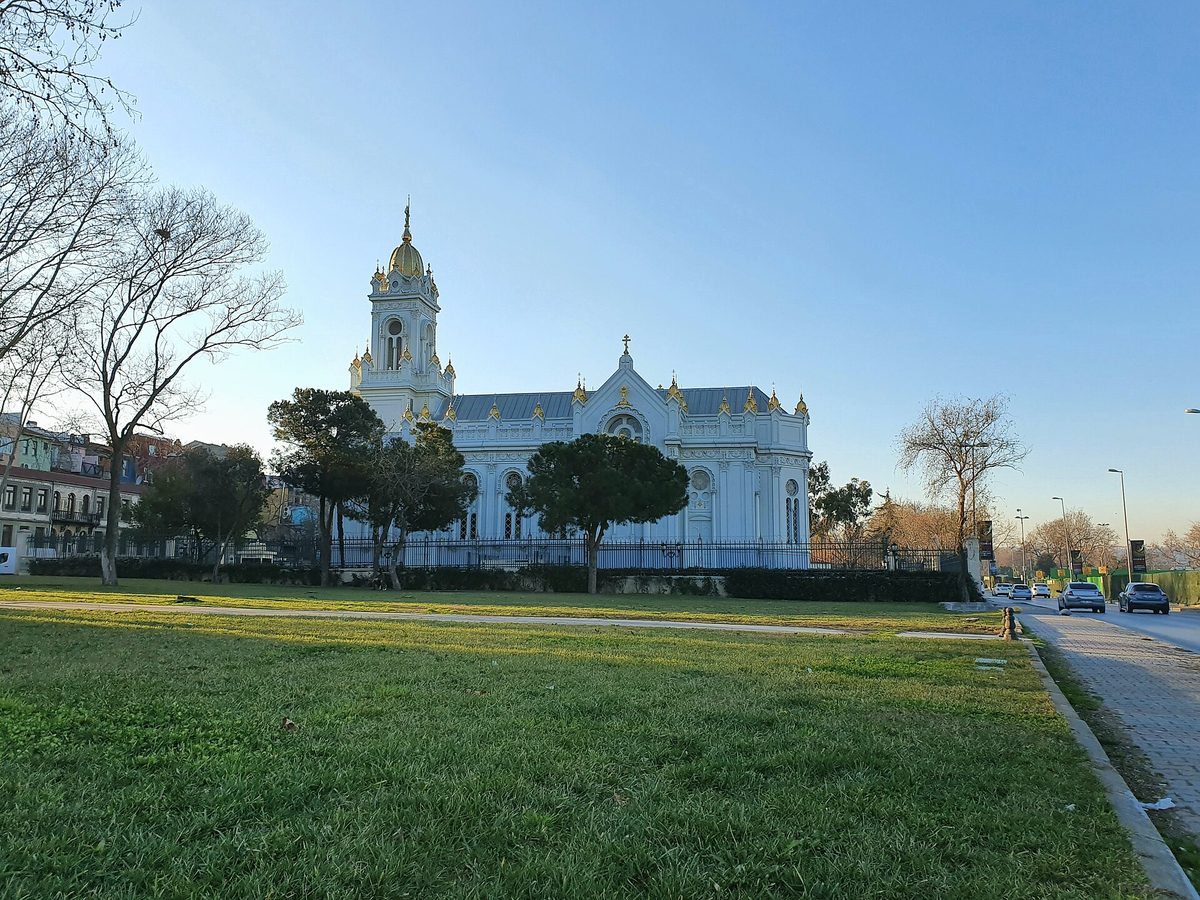
On the shore road between Fener and Balat stands one of the oddest buildings in Istanbul: the Bulgarian Church of St Stephen, a neo-Gothic church made almost entirely of cast iron. The components were prefabricated in Vienna, shipped down the Danube and across the Black Sea, and bolted together on this site, which opened in 1898. It was built for the Bulgarian Exarchate, the independent Bulgarian Orthodox church whose creation in 1870 was one of the steps towards Bulgarian nationhood.
It was restored in a long project completed in 2018, with Turkish and Bulgarian government funding, and it is now immaculate — the ironwork painted, the interior bright, the garden trimmed down to the water. Entry is free and it is open through the day, roughly 09:00 to late afternoon. Knock on the walls. They ring.
Balat: the colourful houses and the steep lanes
Balat proper is the grid of streets climbing the hill from the shore road just north of the Iron Church. It was the principal Jewish quarter of Istanbul from the Byzantine period onward, received a large community of Sephardic Jews expelled from Spain after 1492, and stayed substantially Jewish until the mid-twentieth century, when most of the community moved to wealthier districts or emigrated to Israel. Greek and Armenian families lived alongside. By the 1980s the neighbourhood was poor, crumbling and populated largely by migrants from the Black Sea coast.
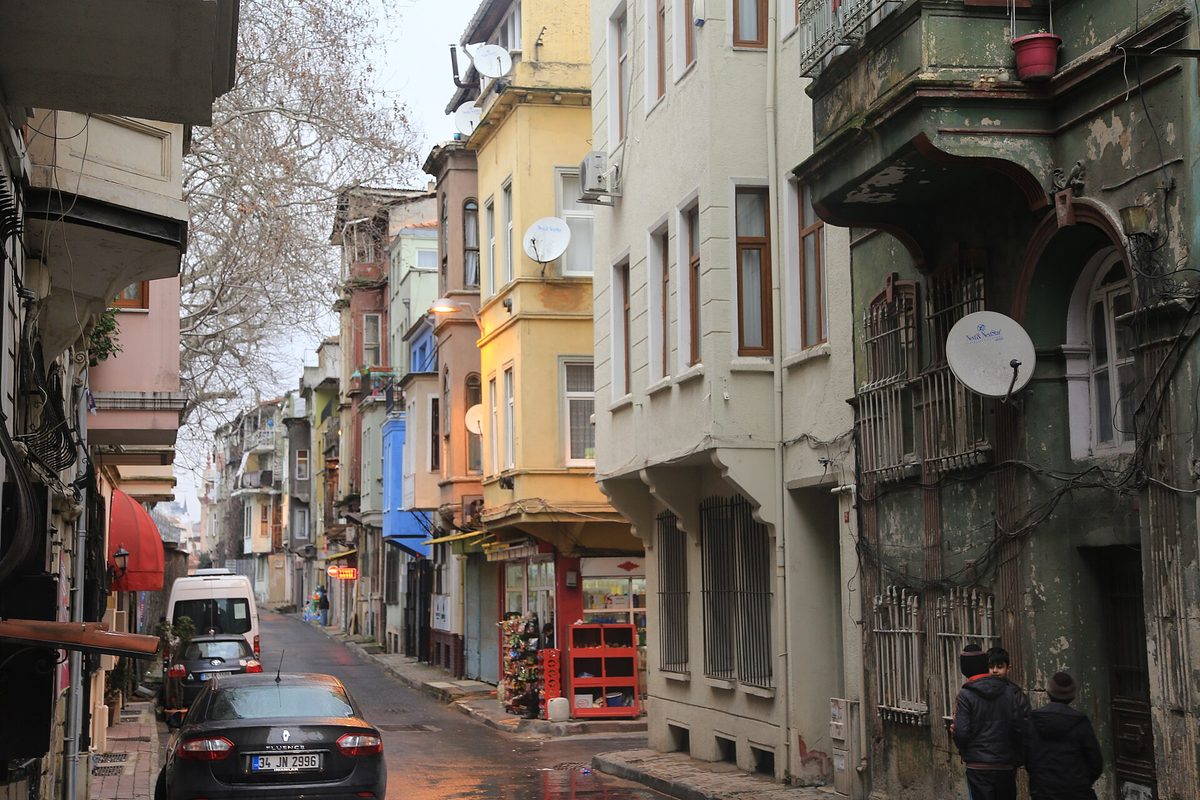
What you see now is the result of a restoration programme in the 2000s and, more powerfully, of social media. The painted wooden and brick houses with their jutting bay windows — cumba — became one of the most photographed backdrops in the city, and the lower streets filled with cafés, antique shops and vintage stores catering to the people photographing them.
Where exactly to walk
- Kiremit Caddesi — the main street of painted houses, running across the hill. The best-preserved run of colour in the neighbourhood.
- Merdivenli Yokuş — “the street with stairs”, a steep stepped lane with brightly painted houses on either side, and the single most photographed spot in Balat. Go early.
- Vodina Caddesi — the lower commercial street, lined with cafés, antique dealers and small shops, running parallel to the shore.
- Yıldırım Caddesi and the streets off it — more cafés, more colour, fewer people.
- The Çıfıt Çarşısı — the old market street of the Jewish quarter, now a local market street selling fruit, vegetables and household goods to residents.
There is no set route and there does not need to be. Walk uphill from Vodina Caddesi, cut across Kiremit, drop down Merdivenli Yokuş, and keep turning into streets that look quieter than the one you are on. Within ten minutes of the Instagram corners, Balat goes back to being an ordinary, rather poor residential neighbourhood with washing lines and children playing football, which is the part of it most worth seeing.
The etiquette, which matters here more than most places
Balat has become a flashpoint for a specific kind of tourist behaviour, and residents have had enough of it. People live in these houses. Do not sit on their doorsteps for photographs, do not photograph into windows, do not photograph children without asking their parents, and do not block narrow streets for a shoot. Some residents have put up signs; some have become openly hostile. A small amount of consideration — a nod, a “merhaba”, stepping aside for somebody carrying shopping up the hill — is noticed and appreciated.
The Ahrida Synagogue
The oldest synagogue in Istanbul, founded in the fifteenth century by Jews from Ohrid in Macedonia, with a boat-shaped wooden reading platform said to represent Noah’s Ark. It is not a walk-in visit: visits are by prior arrangement through the Jewish community’s offices, with security checks, and are not always possible. If you want to go, arrange it well in advance; do not simply turn up at the door.
Chora: the finest Byzantine mosaics anywhere
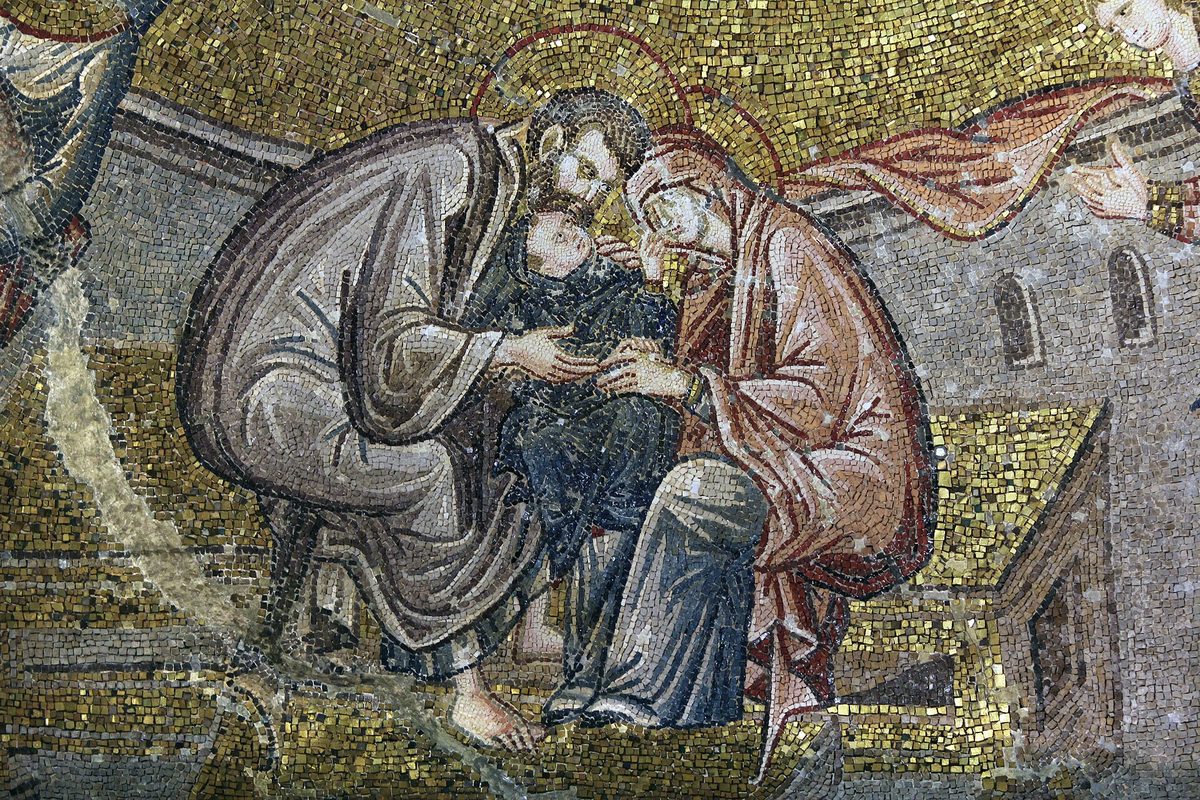
Ten minutes’ walk uphill from Balat, just inside the land walls, sits the building that on its own justifies coming this far: the Church of the Holy Saviour in Chora, now the Kariye Mosque, whose mosaics and frescoes from the 1310s and 1320s are the most complete and most beautiful surviving cycle of late Byzantine art in the world.
Theodore Metochites, one of the most powerful men in the empire, paid for the decoration and is himself portrayed in a mosaic kneeling to present the church to Christ. What he commissioned is a picture-book of the lives of Christ and the Virgin — the census, the journey to Bethlehem, the miracles, the infancy of Mary — told in gold, in a naturalistic, almost Renaissance style a century ahead of Italy. In the side chapel, the Anastasis fresco shows Christ pulling Adam and Eve bodily from their tombs, and it is one of the great images of European art.
Visiting in 2026
Chora spent decades as a museum and closed for a long restoration. In 2020 it was reconverted to a mosque by presidential decree, and it reopened on 6 May 2024 as the Kariye Mosque with a visitor route through the narthexes and side chapel, where almost all the art is.
- Price: €20 for foreign visitors.
- Hours: 09:00–18:00, closing briefly before each prayer.
- Closed to tourists on Fridays, when it functions as a mosque only.
- Museum Pass: ministry sources say it is not covered. One large Istanbul site claims a “history section” is included. I have seen no confirmation of that from the ministry; assume you will pay €20.
- What you see: the mosaics in the outer and inner narthexes and the frescoes of the parekklesion are visible. Some figurative art in the main prayer hall is covered during prayer. The core cycles are not.
- Dress: mosque rules — shoulders and knees covered, hair covered for women.
- Getting there: T5 tram to Ayvansaray and a short uphill walk, or a bus to Edirnekapı and a walk down.
It is small, it is crowded by midday, and it deserves forty-five minutes of looking rather than fifteen of photographing. Go when it opens. If you have been to Hagia Sophia and felt the mosaics there were too far away and too few, this is the answer: here they are at arm’s length and they cover every surface.
The land walls and Tekfur Palace
Chora sits just inside the Theodosian walls, the fifth-century land defences that ran 6.5 km from the Golden Horn to the Sea of Marmara and held the city for a thousand years until Mehmed II’s cannon broke them in 1453. A triple line of moat, outer wall and inner wall with ninety-six towers, much of it still standing, some of it heavily and controversially restored, some of it collapsing into allotments.
The best stretch to see
From Ayvansaray, walk south along the outside of the walls towards Edirnekapı, the Adrianople Gate, where Mehmed II rode into the city. It takes about forty minutes. On the way you pass Tekfur Palace — the Palace of the Porphyrogenitus, the only substantially surviving Byzantine imperial palace in the city, with its patterned brick-and-stone facade — which reopened as a museum in 2021 after a long restoration and has almost no English-language coverage. Check the hours and ticket at the door. At Edirnekapı, the Mihrimah Sultan Mosque, Sinan’s building for Süleyman’s daughter, fills with light from what feels like a hundred windows and is free.
The full walk to the Marmara takes most of a day and passes through some rough neighbourhoods; I would not do the southern half alone at dusk. At the far end, access to the Yedikule fortress is genuinely unclear in 2026: one detailed Istanbul site reported in August 2026 that it was open only to Turkish citizens by online reservation, while others describe it as open with tickets of 250–400 TL. Check before you make the trip.
Eyüp and Pierre Loti hill
A few stops further up the Golden Horn, Eyüp is the most sacred place in Istanbul for Muslims, and it feels it. The mosque complex is built around the tomb of Abu Ayyub al-Ansari, a companion of the Prophet Muhammad who died during the Arab siege of Constantinople in the 670s; the Ottomans rediscovered the tomb after the conquest and built the first mosque of their new city beside it. Sultans were girded with the sword of Osman here at their accession.
Eyüp Sultan Mosque
Free, busy with pilgrims every day and overwhelmed on Fridays and religious holidays. This is a place of genuine devotion rather than tourism: families bring boys in white-and-gold circumcision outfits to pray at the tomb, and the queue to pass the tomb window can be long. Dress conservatively — this is the one place in the city where I would wear long sleeves and long trousers regardless of the heat — women cover their hair, and keep your camera down inside the tomb enclosure. The square outside, with its plane trees, pigeons and stalls selling prayer beads and rosewater, is a good place to sit.
Pierre Loti hill
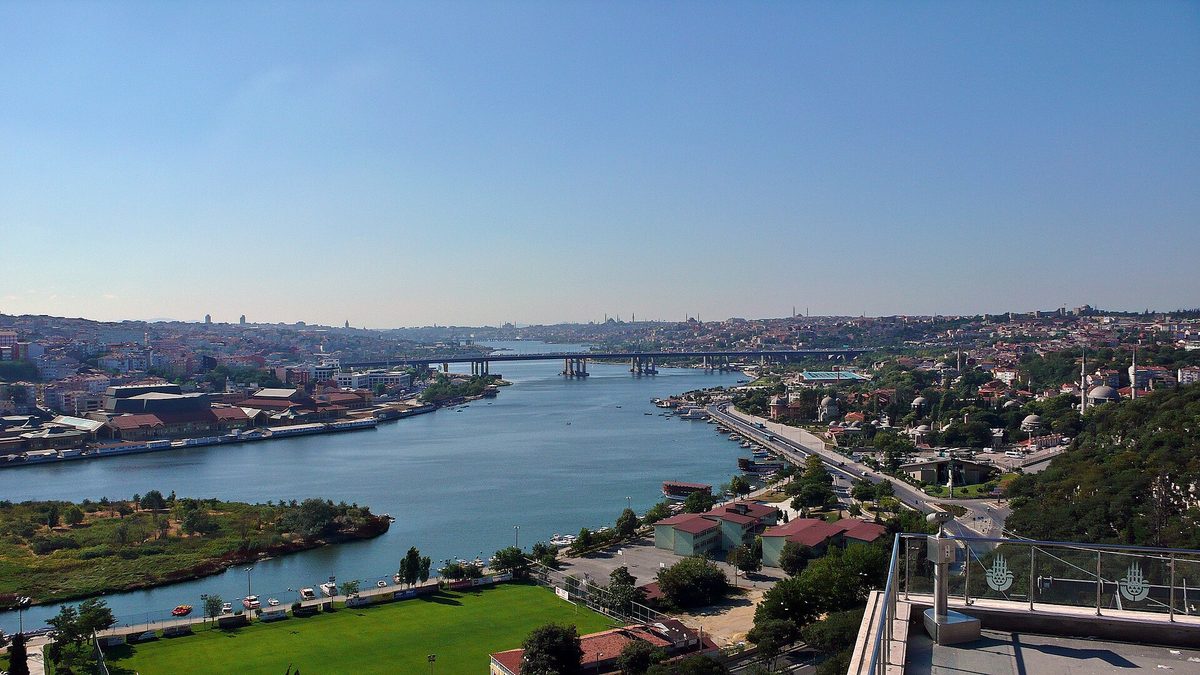
Above the mosque, a hillside of Ottoman gravestones — turbaned for men, flowered for women — climbs to a café named after Pierre Loti, the French naval officer and novelist who drank coffee here in the 1870s and wrote a romantic novel about Istanbul. The view down the whole length of the Golden Horn to the city is the reason people come.
Two ways up. The TF2 cable car from beside the mosque takes a couple of minutes and costs a standard Istanbulkart fare. Or walk up through the cemetery in fifteen to twenty minutes on a steep cobbled path between the gravestones — the better way, and one of the most atmospheric walks in the city. Then take the cable car down.
The café itself is overpriced and slow, and the terrace is the point rather than the tea. Late afternoon, with the light going gold down the water, is when to be there. Weekends are crowded.
Along the Golden Horn: Rahmi Koç, Miniatürk and the other shore
The Haliç ferry crosses to the northern shore of the Golden Horn at Hasköy and Sütlüce, and two stops are worth knowing about, particularly with children.
- Rahmi M. Koç Museum at Hasköy — an industrial and transport museum in a restored Ottoman anchor foundry and dockyard, with a submarine, steam engines, trams, aircraft, vintage cars and a great deal to climb in. Among the best museums in the city for children and adults with a mechanical bent. Check current prices at the door.
- Miniatürk at Sütlüce — a park of scale models of Turkey’s buildings, from Hagia Sophia to Anatolian sites you will not get to, at 990 TL. Children love it; adults find it pleasant for an hour.
Both are easy ferry stops on the same line as Balat and Eyüp, which makes the Golden Horn a surprisingly strong family day — ferry, iron church, cable car, submarine.
The Haliç ferry, stop by stop
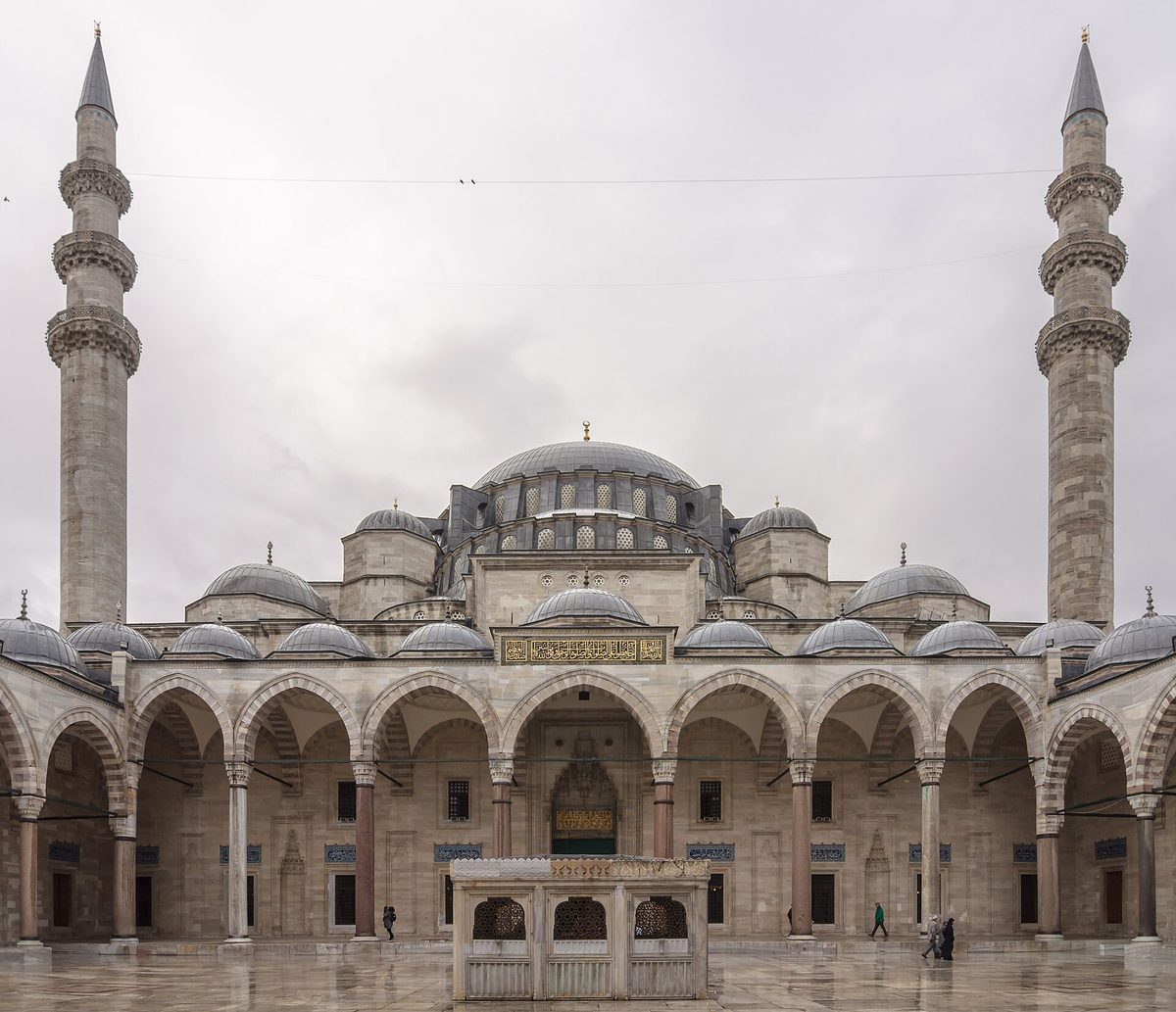
The Golden Horn line is the least-used and most underrated boat in Istanbul, and it deserves a section of its own. It is a small commuter ferry, standard Istanbulkart fare, around 55 minutes end to end, with a timetable thin enough that you should check it before you plan around it — but when it lines up, it turns a day in Balat into a day on the water.
| Pier | Side | Get off for |
|---|---|---|
| Üsküdar | Asian | The start of the line; Mihrimah Sultan Mosque on the square |
| Karaköy | European, north bank | Galata and Beyoğlu |
| Eminönü | European, old city | The Spice Bazaar, Galata Bridge, the T1 and T5 trams |
| Kasımpaşa | North bank | Very little for visitors; the old naval dockyards |
| Fener | Old city | The Patriarchate, the Red Castle, the Iron Church |
| Balat | Old city | The colourful streets, Vodina Caddesi, the market |
| Hasköy | North bank | Rahmi M. Koç Museum |
| Ayvansaray | Old city | Chora, the land walls, Tekfur Palace |
| Sütlüce | North bank | Miniatürk |
| Eyüp | Upper Golden Horn | Eyüp Sultan Mosque and Pierre Loti hill |
Two ways to use it. Either take the whole line up from Eminönü to Eyüp in the morning, do Pierre Loti and the mosque first, and work your way back down on foot and tram through Chora, Balat and Fener — which puts the downhill at the end of the day. Or use it in pieces, as a water taxi between the stops you want. The first is the better day; the second is more flexible.
Sit on the left going up for the old-city shore, the Patriarchate and the Iron Church; on the right for Süleymaniye, the Hasköy dockyards and the view back to Galata. There is a tea seller on most sailings. It is one of the nicest fifty-five minutes you can spend in Istanbul for the price of a tram ride, and the wider ferry network is explained in the Bosphorus cruise guide.
Photographing Balat without being that person
Balat is photographed more than almost anywhere in the city, so a few practical notes on doing it well and doing it decently.
- Timing is everything. Weekday, before 10:00. The low sun comes across the hill from the east, the painted fronts glow, and the streets are empty. After about 11:00 at weekends every corner has a queue and a ring light.
- Overcast is fine. The colours actually read better in flat light than in hard midday sun, which bleaches them and throws the lanes into black shadow.
- Look up. The bay windows, iron balconies, carved brackets and washing lines are more interesting than the ground-floor doors everyone lines up in front of.
- Ask before photographing people, and do not photograph children at all without a parent’s clear yes. Many residents are conservative and some are very tired of it.
- Do not use doorsteps as sets. Somebody lives behind that door and needs to get out of it.
- Drones need permission in Istanbul, and the historic peninsula is effectively off-limits. Do not.
- The best wide views are not in Balat at all: from the Red Castle terrace above Fener looking down, from the Haliç ferry looking back at the shore, and from Pierre Loti looking down the whole Golden Horn at sunset.
Staying in Balat
A small number of guesthouses and apartment rentals have opened in Balat and Fener, mostly in restored townhouses, and staying here is a very different experience from staying in Sultanahmet or Beyoğlu.
The case for: you are in a real residential neighbourhood with a morning bakery run and a call to prayer from the mosque on the corner; you have Balat’s streets to yourself before the day visitors arrive and after they leave; and the T5 tram and Haliç ferry connect you to Eminönü in minutes. It suits a second or third visit, a longer stay, or anyone who wants Istanbul as a place rather than a list.
The case against: there is almost no nightlife and very little alcohol; restaurants close early; the streets are steep and cobbled, which is miserable with luggage; and short-term rentals in older houses vary widely in quality. Also note that since 2024 short-term lets in Turkey must hold a tourism residence certificate — a listing that cannot show one may not last.
For a first trip I would stay in the old city or Beyoğlu and come here for the day. The trade-offs across every neighbourhood are in the accommodation guide.
Accessibility, children and older visitors
The Golden Horn is a mixed picture. The shore road, the Iron Church, the T5 tram and the Haliç ferry are all flat or level-boarding, and a visit built around the waterfront is manageable for most people. The Patriarchate is a short, gentle walk from the Fener stop.
Balat’s colourful streets are the problem: they climb a steep hill on uneven cobbles and include stepped lanes like Merdivenli Yokuş that are simply stairs. Chora is uphill from the tram. Pierre Loti has a cable car, which solves that one entirely. Eyüp’s mosque square is level.
For children, the combination of ferry, iron church, cable car and the Rahmi Koç Museum’s submarine is one of the best family days in Istanbul, and considerably better than anything in Sultanahmet for keeping a seven-year-old interested. Pushchairs are fine on the shore and hopeless in the upper lanes.
Where to eat and drink
Balat’s lower streets have gone from having almost no cafés to having dozens, most of them aimed at visitors. Some are very good; some are a vintage armchair and a price list.
- Breakfast is Balat’s strength. Several places on and around Vodina and Yıldırım Caddesi do a full Turkish breakfast spread, and on a weekday morning, before the crowds arrive, that is the best way to begin the day here.
- Coffee is everywhere and generally good; third-wave places have arrived alongside the traditional kahvehane.
- Lunch is better in the plain lokanta places on the market streets, serving stews and vegetable dishes from steam trays to residents, than in the cafés.
- Eyüp has a run of traditional restaurants around the mosque square; eat there rather than at the Pierre Loti café.
- Alcohol: largely absent. Fatih and Eyüp are conservative districts. A handful of Balat cafés serve beer; most do not, and Eyüp none. Drink in Beyoğlu afterwards.
What to order in general, and what it should cost, is in the Istanbul food guide.
A day along the Golden Horn
- 08:45 — T5 tram from Eminönü to Fener.
- 09:00 — The Ecumenical Patriarchate and St George’s, then up to the Red Castle for the view.
- 10:00 — Breakfast in Balat, before the crowds.
- 11:00 — The Bulgarian Iron Church on the shore, then Balat’s lanes: Kiremit Caddesi, Merdivenli Yokuş, the market street.
- 12:30 — Up to Chora. Forty-five minutes with the mosaics. (Not on a Friday.)
- 13:30 — Lunch at a lokanta near Edirnekapı, then the walls down to Mihrimah Sultan Mosque, via Tekfur Palace.
- 15:30 — Back to Ayvansaray and the Haliç ferry one stop on to Eyüp, or the T5.
- 16:00 — Eyüp Sultan Mosque, then the cemetery walk up to Pierre Loti.
- 17:30 — Tea on the terrace with the Golden Horn going gold.
- 18:30 — Cable car down, ferry back down the whole Golden Horn to Eminönü or Karaköy.
That is a long but manageable day, and genuinely one of the best in the city. A shorter version drops the walls and Eyüp and gives Balat and Chora the whole morning. How it fits alongside the old city and the Bosphorus is set out in the Istanbul itineraries.

A short history of the Golden Horn neighbourhoods
The Golden Horn — Haliç in Turkish — is a drowned river valley eight kilometres long, and for most of the city’s history it was the harbour of Constantinople: deep, sheltered, and closed in time of siege by a great chain slung across its mouth from the old city to Galata. The shore neighbourhoods grew up around trade and the water.
After 1453, Mehmed II and his successors repopulated the emptied city partly by settling communities by faith, and the Golden Horn shore became a patchwork of them: Greeks around the Patriarchate in Fener, Jews in Balat and across the water in Hasköy, Armenians, Bulgarians and Muslims on the streets between. You can still read the pattern — a synagogue, a Greek church, a Bulgarian church and a mosque within ten minutes’ walk.
The twentieth century emptied it. The Greek community fell from over a hundred thousand in the city to a few thousand after the pogrom of 1955 and the expulsions of 1964; the Jewish community moved to Şişli and Nişantaşı, or to Israel; the Golden Horn itself became an open sewer lined with factories through the 1960s and 1970s. The clean-up of the waterway from the 1980s onward, the removal of the factories and the restoration schemes of the 2000s brought the shore back, and with it the visitors. Balat’s colours are new paint on old houses whose original owners are, for the most part, long gone — which is worth knowing as you stand in front of them.
The churches, synagogues and mosques, and how to behave in each
Few places in the world pack this many working religious buildings of different faiths into so small an area, and each has slightly different expectations. The general rule is the same everywhere — cover up, keep quiet, do not photograph worshippers — but the details differ enough to be worth setting out.
- Greek Orthodox churches (St George at the Patriarchate, and several smaller churches around Fener): shoulders and knees covered; women are not usually required to cover their hair, though some visitors do. Candles are sold at the entrance and lighting one is welcome whatever your faith. Do not stand with your back to the iconostasis to take a selfie.
- The Bulgarian Iron Church: the same rules. It is a working parish church with a small congregation and occasional services; if one is on, stay at the back.
- Synagogues: visits by prior arrangement only, with security screening and passport details sent in advance. Men will be given a head covering. Do not turn up unannounced; you will not get in and the guards will be unamused.
- Mosques (Chora, Mihrimah Sultan, Eyüp and dozens of small neighbourhood mosques): shoes off, shoulders and knees covered for everyone, hair covered for women. Avoid the half hour before each prayer and Friday midday. At Eyüp, the tomb enclosure is the most sacred space in the city — keep the camera down.
- Cemeteries, including the one on the Pierre Loti hillside: walk on the paths, not across graves, and do not climb on the stones for photographs.
Nobody will interrogate you about your beliefs in any of these buildings, and in my experience everybody, from the Patriarchate’s doorman to the imam at a small mosque above Balat, is welcoming to a visitor who is visibly trying. The general principles are in the travel tips, and the same rules at the big old-city mosques are covered in the Sultanahmet guide.
Is Balat worth visiting?
Yes, and more for what surrounds the colourful houses than for the houses themselves. The Patriarchate, the Iron Church and above all Chora are things you will not see anywhere else in the world, and the walk from Fener to Eyüp along the Golden Horn is one of the most interesting half-days in Istanbul. The houses are pretty and they are the least of it.
Go on a weekday. Go early. Treat the residential streets as residential, keep walking past the corners with the queues, and it is a completely different place from the one on social media.
What is overrated, and what to skip
- Merdivenli Yokuş after 10:30 on a weekend. A queue of people waiting to be photographed on somebody’s front steps. See it at nine on a Tuesday or not at all.
- The “Instagram cafés” on the most photographed corners, which charge Beyoğlu prices for average coffee. Walk one street further.
- Organised Balat photo tours. The route is fifteen minutes on foot and there is nothing a guide adds to a photograph of a painted wall. A guide at Chora, on the other hand, can be excellent.
- Pierre Loti café’s food. Go for the terrace and a glass of tea, eat in Eyüp.
- Chora on a Friday. It is closed to visitors. This catches people every week.
- Eyüp on a Friday or a religious holiday, unless you specifically want to see it at its busiest and most devotional — in which case it is extraordinary, but very crowded, and not a moment for sightseeing.
- The Fethiye Museum (the Pammakaristos church, with superb mosaics) — closed since 2018, whatever older guides say.
Frequently asked questions about Balat and the Golden Horn
How do I get to Balat from Sultanahmet?
Take the T1 tram to Eminönü and change to the T5 tram up the Golden Horn to Balat or Fener, all on one Istanbulkart; about 30–40 minutes. Or take the Haliç ferry from Eminönü, which stops at Fener and Balat. A taxi takes 15–25 minutes depending on traffic.
Is Balat safe?
Yes, in daytime certainly, and in the tourist streets in the evening. It is a poor, conservative residential neighbourhood rather than a dangerous one. Behave considerately — residents are tired of visitors treating their homes as a photo set — and the only risks are the ordinary city ones.
What is the best time to visit Balat?
A weekday morning, before 10:00. The light is soft, residents are going about their day, and the photographed streets are empty. By late morning at weekends the main corners have queues. Avoid Fridays if you want to include Chora, which is closed to tourists that day.
Where are the colourful houses in Balat?
Mainly along Kiremit Caddesi and on the stepped lane of Merdivenli Yokuş, which climbs the hill from near Vodina Caddesi. Yıldırım Caddesi and the side streets off it have more with fewer people. All are within ten minutes’ walk of the Balat tram stop and ferry pier.
Is Chora open to tourists?
Yes, since 6 May 2024, when it reopened as the Kariye Mosque. Foreign visitors pay €20, hours are 09:00–18:00 with short closures at prayer times, and it is closed to tourists on Fridays. The mosaics in the narthexes and the side-chapel frescoes are visible.
Is Chora covered by the Museum Pass?
Ministry sources say no. One large Istanbul website claims part of it is covered; I have seen no official confirmation. Budget for €20 and be pleasantly surprised if your pass is accepted.
How long do you need in Balat?
Two to three hours for Fener and Balat alone. Add an hour for Chora, and two to three hours more for the walls, Eyüp and Pierre Loti. The whole Golden Horn makes a full and very good day.
Can you go inside the Bulgarian Iron Church?
Yes. The Church of St Stephen is free and open through the day, roughly 09:00 to late afternoon. It was restored in 2018 and is in immaculate condition. Dress modestly and be quiet if a service is under way.
How do you get up Pierre Loti hill?
The TF2 cable car from beside Eyüp Sultan Mosque takes a couple of minutes and costs a standard Istanbulkart fare. The better option is walking up through the Ottoman cemetery on a steep cobbled path in fifteen to twenty minutes, then taking the cable car down.
Is it worth getting a guide for Balat and Chora?
For Balat’s streets, no — they are a fifteen-minute walk and a guide adds nothing a map does not. For Chora, a knowledgeable guide can be genuinely worthwhile: the mosaic cycles tell two long stories in a specific order, and having someone point out which scene follows which turns forty-five minutes of pretty gold into something you understand. If you do not hire one, read up on the Life of the Virgin and the Anastasis before you go.
Can I combine Balat with the Grand Bazaar in one day?
Yes, comfortably. Do Balat and Fener in the morning, take the T5 tram or walk back down the shore to Eminönü for lunch, then climb through the Mahmutpaşa market to the Grand Bazaar for the afternoon — remembering the bazaar is closed on Sundays. Chora is the piece that makes the day too long; save it for a separate morning if you want both.
Can you visit the Ecumenical Patriarchate?
Yes. The compound and St George’s Church in Fener are open to visitors, free, generally from morning to late afternoon. Dress modestly, keep your voice down, and avoid disrupting services. The main gate has been welded shut since 1821; visitors use a side entrance.
Related Istanbul guides
- Sultanahmet and the old city — the other half of the historic peninsula.
- Hagia Sophia — and why Chora’s mosaics are the perfect companion.
- Things to do in Istanbul — Balat and Chora in context.
- Getting around Istanbul — the T5 tram and Haliç ferry.
- Bosphorus cruises — the bigger boat trip.
- The Grand Bazaar — on the way back towards the old city.
- Istanbul itineraries — where a Golden Horn day fits.
- Where to stay in Istanbul — including Balat’s small guesthouses.
- Istanbul travel tips — mosque etiquette and photographing people.
- Beyoğlu and Galata — for a drink afterwards.
Photo credits
- The Bulgarian Church of St Stephen — photo by Antoloji, Wikimedia Commons, CC BY-SA 4.0.
- Colourful houses in Balat — photo by Jwslubbock, Wikimedia Commons, CC BY-SA 4.0.
- The Virgin caressed by her parents, Chora — photo by Till Niermann, Wikimedia Commons, CC BY-SA 3.0.
- The Golden Horn from Pierre Loti — photo by Jl FilpoC, Wikimedia Commons, CC BY 4.0.
Prices and opening hours checked on 10 September 2026, at roughly €1 = 56 TL. Chora’s €20 ticket is a state-museum euro price and relatively stable; transport fares rose on 20 July 2026. Opening hours at the Patriarchate, the Iron Church and Tekfur Palace are not consistently published, Yedikule access is disputed between sources, and the Ahrida Synagogue requires advance arrangement — check before you go.