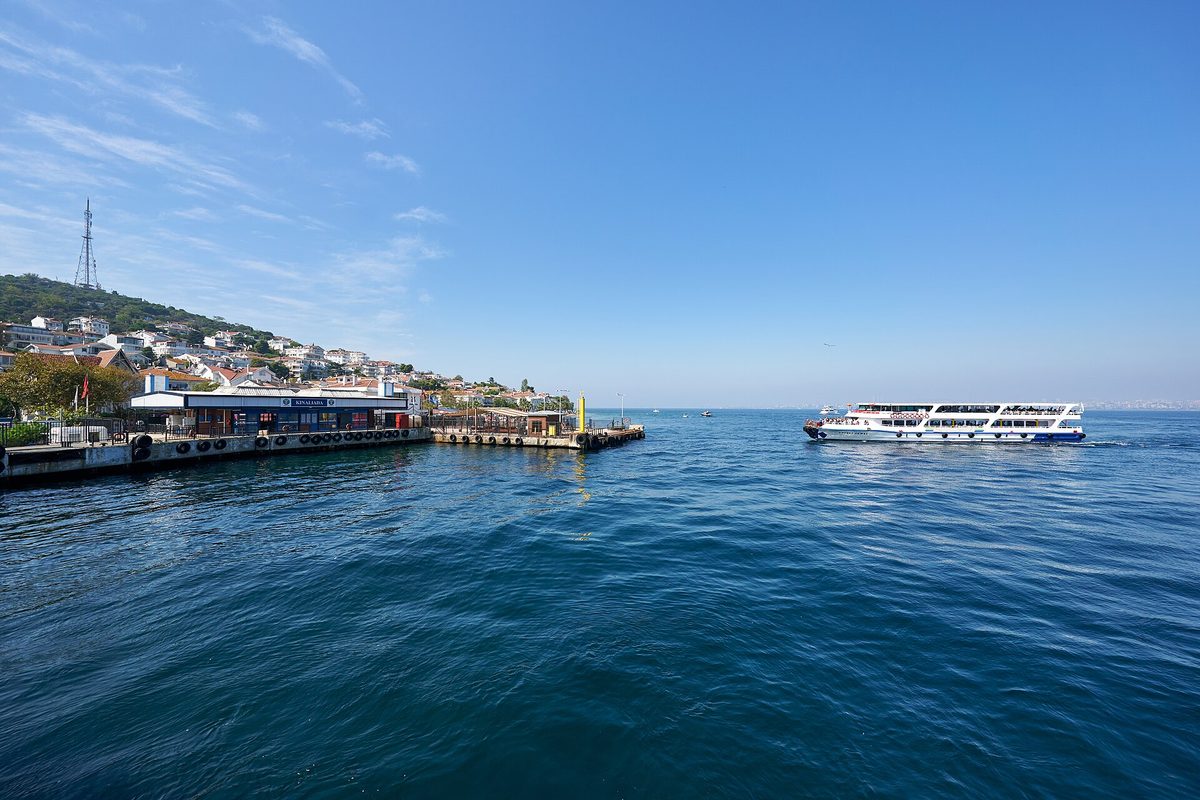
I got the ferry wrong the first time. Sailed from Kabataş because it was near my hotel, spent ninety minutes calling at three islands before mine, arrived at Büyükada at half past one with the whole place at peak Sunday, and did the same ninety minutes back. Three hours on a boat for four hours ashore.
The princes islands istanbul visitors nearly always mean is Büyükada, and the single most useful thing anybody can tell you about it is which pier to leave from. Bostancı on the Asian side is thirty minutes away. Kabataş on the European side is ninety, and costs 137.48 TL each way. That one decision is two hours of your day.
What follows is the full picture: how the ferries actually work, which of the four islands suits which kind of day, what has replaced the horse carriages, where to swim, what everything costs in September 2026, and a straight answer on whether to go at all if your trip is short.
Princes islands istanbul: which island, and how long it takes
| Island | Turkish name | Size | From Bostancı | From Kabataş | Best for |
|---|---|---|---|---|---|
| Büyükada | Büyükada | Largest, ~5.4 km² | ~30 min | ~90 min | First visit: mansions, the monastery, beaches |
| Heybeliada | Heybeliada | Second largest | ~25 min | ~75 min | Pine forest, the seminary, quiet coves |
| Burgazada | Burgazada | Small | ~20 min | ~60 min | Sunset at Kalpazankaya, literary history |
| Kınalıada | Kınalıada | Smallest inhabited | ~15 min | ~45 min | Flattest, closest, almost no visitors |
There are nine islands in the group, of which four have year-round communities and a regular ferry service. The others are private, uninhabited or, in one case, a former quarantine island. All of the inhabited ones are car-free.
Fares checked 10 September 2026, at roughly €1 = 56 TL. Note that the island routes are the one part of the Istanbul network where the transfer discount does not apply — you pay the full 137.48 TL from Kabataş whether or not you tapped onto a tram twenty minutes earlier.
The ferries: which pier, which operator, and the mistake to avoid
Where to sail from
Four European piers and three Asian ones serve the islands, and the difference between the best and the worst choice is about two hours of round trip.
- Bostancı (Asian side) — 15 to 30 minutes depending on the island. The fastest route by a wide margin, and reachable on the M4 metro from Kadıköy. If you are on the European side, crossing first and sailing from here still beats sailing direct.
- Kadıköy (Asian side) — 60 to 75 minutes to Büyükada. A reasonable compromise if you are already over there.
- Eminönü (European side) — about 75 minutes. Convenient from Sultanahmet, and the sail down past the old city is genuinely nice.
- Kabataş (European side) — about 90 minutes, calling at all four islands in turn, at 137.48 TL each way. This is the route most visitors take and the one that eats the day.
Reduced fares run at 68.76 TL for students and 96.23 TL for over-65s. Contactless bank cards are accepted at the gates as well as the Istanbulkart.
Which operator
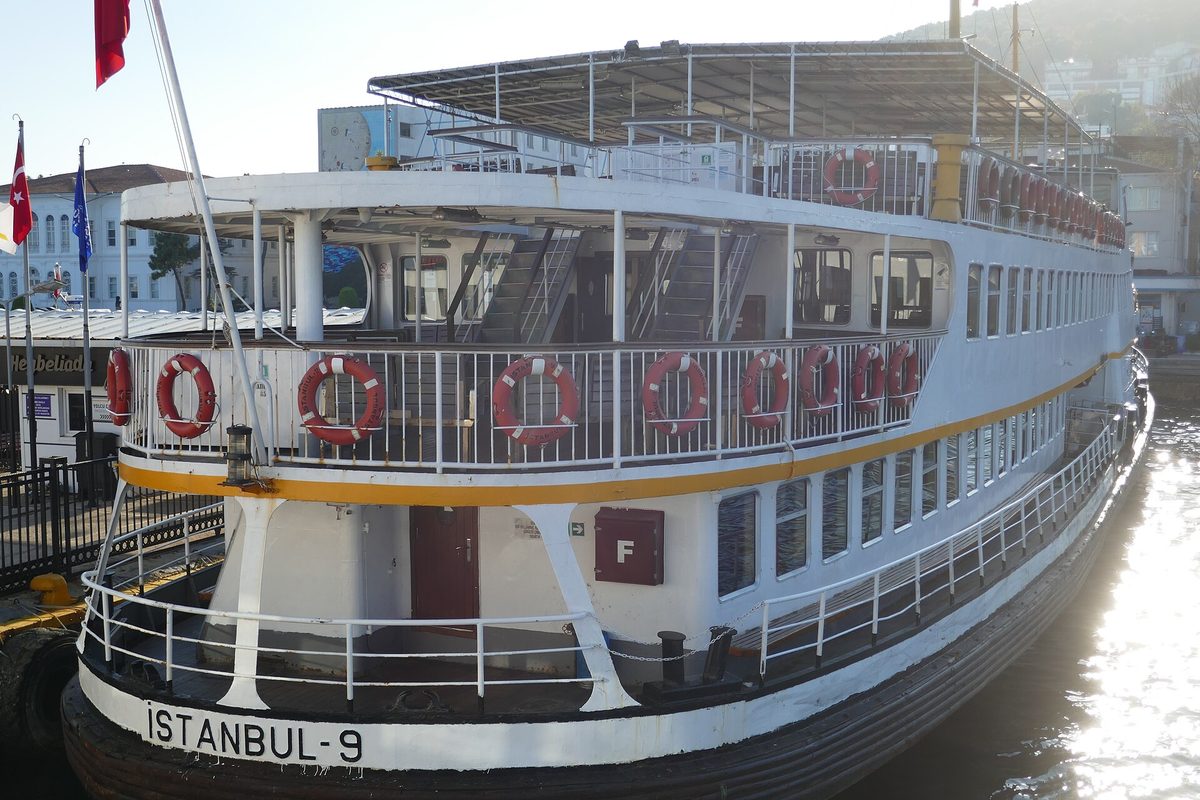
Şehir Hatları is the municipal line: large, slow, comfortable double-decker ferries with open decks, tea service and space to move. Turyol and Mavi Marmara run smaller private boats from Kabataş and Eminönü, sometimes faster, always more cramped, and not always at the same fare. İDO runs a sea-bus service that is quicker again and entirely enclosed, which rather defeats the purpose.
Take the Şehir Hatları boat if you have the choice. The crossing is a substantial part of what you are paying for: an hour on the top deck with tea, the old city receding behind you and the Marmara opening out ahead, is the best value in Istanbul sightseeing.
The timetable trap
Two things catch people. First, the schedule thins out sharply outside summer and in the evening — a route with a boat every hour in August might have four sailings a day in February, with the last one back in the late afternoon. Second, on summer weekends the boats fill, and on a hot Sunday in July you may not get on the one you planned.
Photograph the return timetable at the pier when you arrive, before you walk anywhere. Şehir Hatları publishes PDFs on its own site; third-party pages carry old ones. Getting stranded on Büyükada means a hotel you did not budget for.
Büyükada: the big one
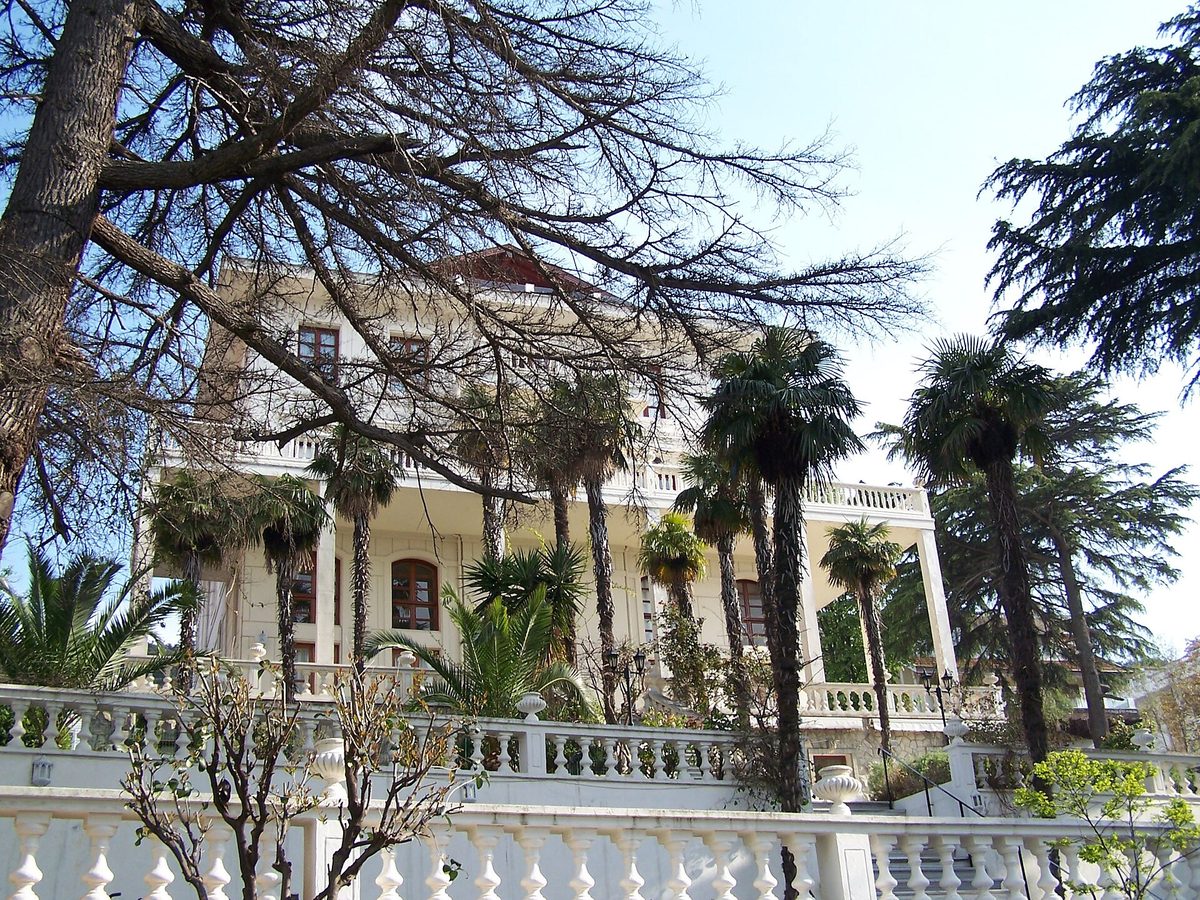
Büyükada — “big island” — is where the ferry crowd goes and where the postcard version of the islands lives: a horseshoe of nineteenth-century wooden villas around a harbour, two pine-covered hills behind, and a shoreline road you can walk or cycle right around.
The houses
This is the real attraction and it is free. From the 1840s, when regular steamer services began, the islands became the summer resort of Istanbul’s Greek, Armenian, Jewish and Levantine bourgeoisie, who built elaborate timber mansions with deep verandas, fretwork eaves and gardens full of pine and mimosa. Many are still standing, a good number are derelict, and a few have been restored to a standard that makes you stop in the street.
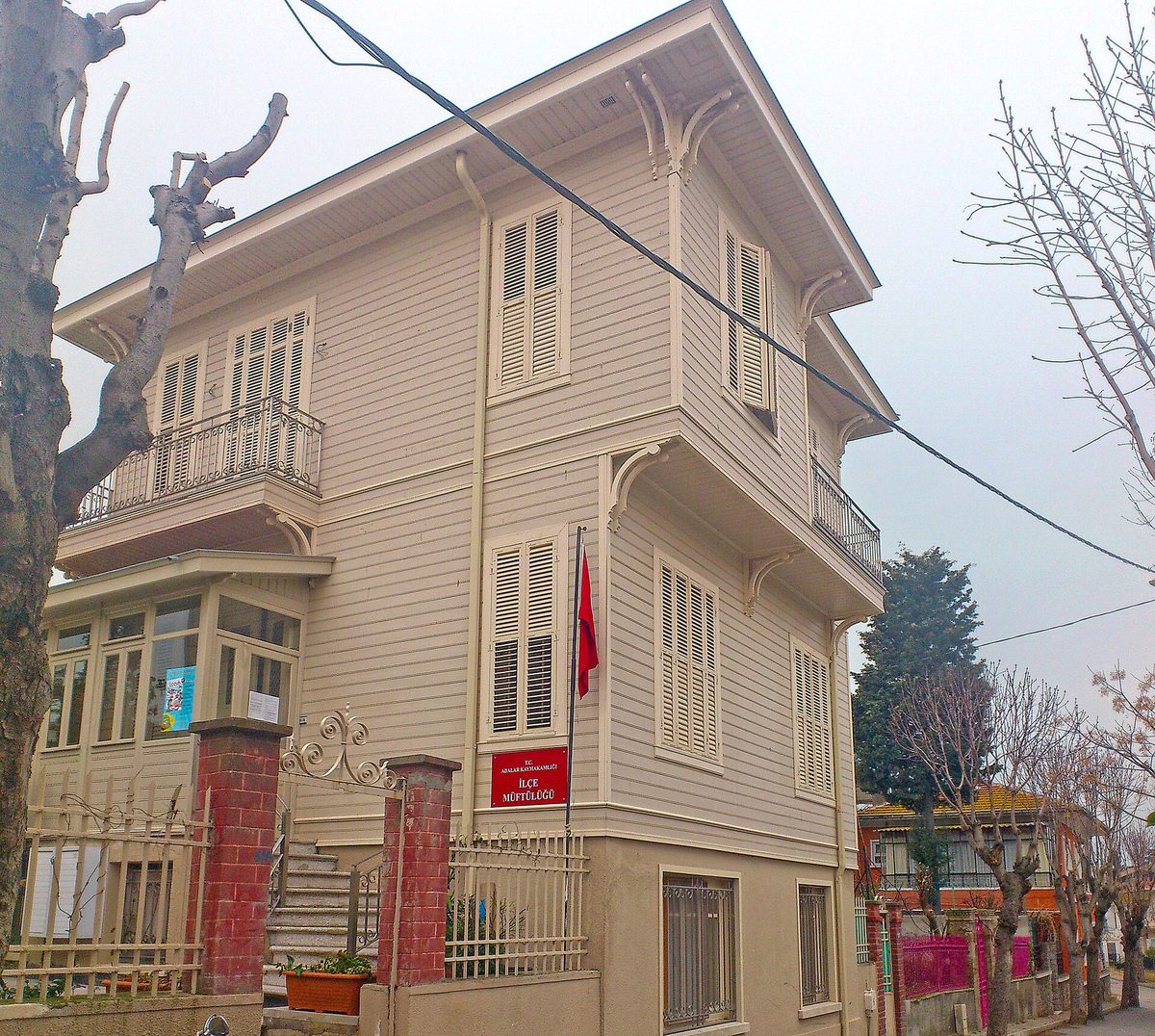
Walk up Çankaya Caddesi from the harbour and keep going. There is no route and no ticket; you simply walk residential streets looking at architecture, which is a better hour than most things in Istanbul that charge admission.
Aya Yorgi
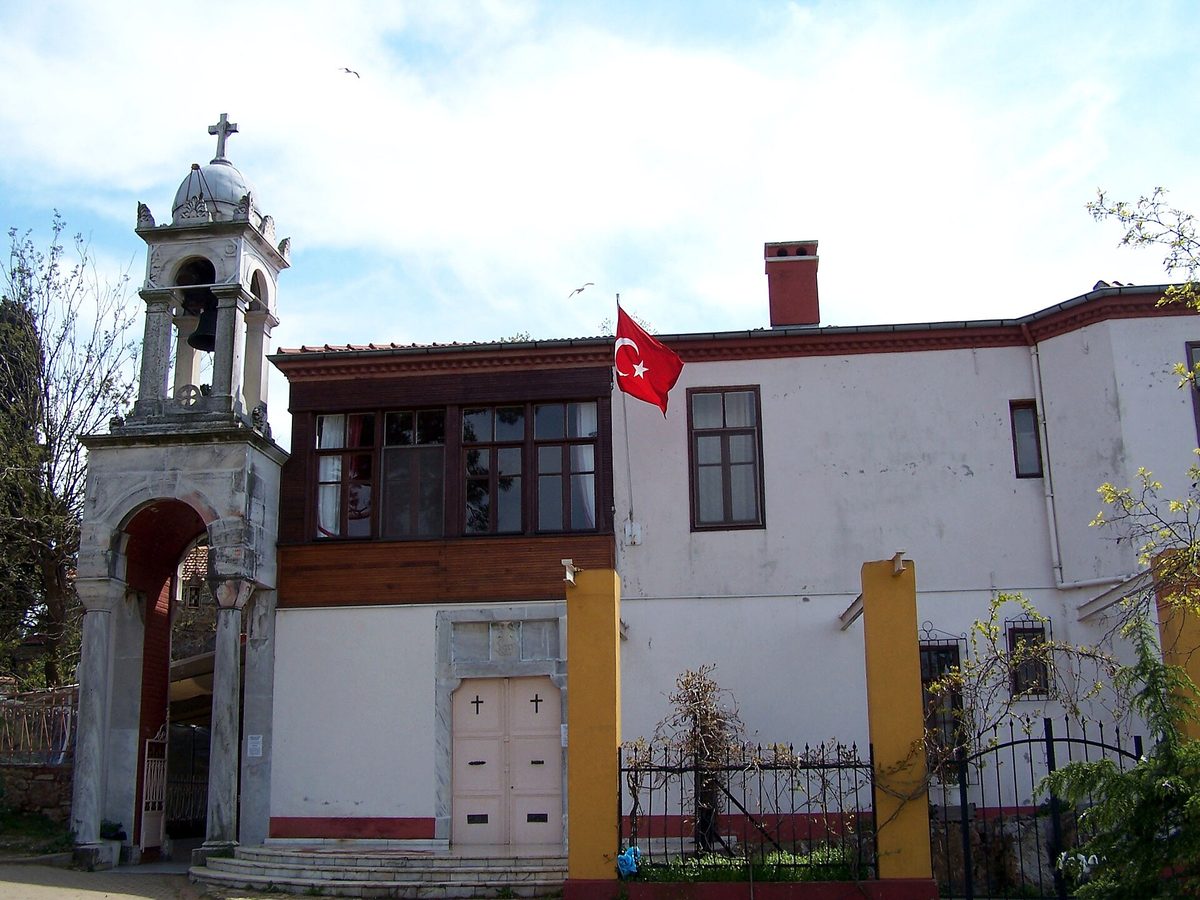
The monastery of St George sits on the southern of the island’s two hills, at about 200 m, and the climb to it is the island’s set-piece walk: a long, steep, cobbled path through pines, with the Marmara opening up behind you. There is a Greek Orthodox chapel, a spring, and a restaurant at the summit serving wine and a view over the whole archipelago.
On 23 April every year the monastery draws an enormous pilgrimage — tens of thousands of people, mostly Muslim Turkish women, climbing the hill unwinding spools of thread behind them and tying wishes to the trees. It is one of the more remarkable religious events in the country and the island is completely overwhelmed. Go on that day for the spectacle or avoid it entirely; there is no middle option.
The Trotsky house, and other footnotes
Trotsky spent four years on Büyükada from 1929, deported from the Soviet Union, writing The History of the Russian Revolution in a rented villa and fishing off the rocks. The house still stands, roofless and overgrown behind a fence on Çankaya Caddesi. There is nothing to see beyond the ruin and there is no access; it takes two minutes and it is worth the detour if you know the story.
Swimming
Yörük Ali Plajı, on the western shore about twenty minutes’ walk from the harbour, is the main public beach: a platform and rocks rather than sand, with an entry charge, sunbeds and a café. Nakibey is the other. The sea reaches about 20.5 °C in June, 23.5 °C in July and peaks around 24.5 °C in August, dropping to 22.5 °C in September — which makes September the best swimming month, because the water is still warm and the crowds have gone.
The shore loop
The road that rings Büyükada is about twelve kilometres and is the island’s other great walk. It runs mostly at sea level under pines, past coves, a scattering of restored villas and a good deal of nothing, with the Marmara on one side and the hills on the other. On foot it is three hours at a decent pace; on a bike, an easy hour and a half with stops. There is a shorter northern loop of around seven kilometres if you have less time.
Doing the loop is the thing I would recommend above the beach clubs and above the harbour. It costs nothing beyond the bike, it is genuinely quiet within ten minutes of leaving the town, and it is the only way to see the parts of the island that the day-trip crowd never reaches. Go clockwise so the steepest section is downhill.
Heybeliada: the quiet one
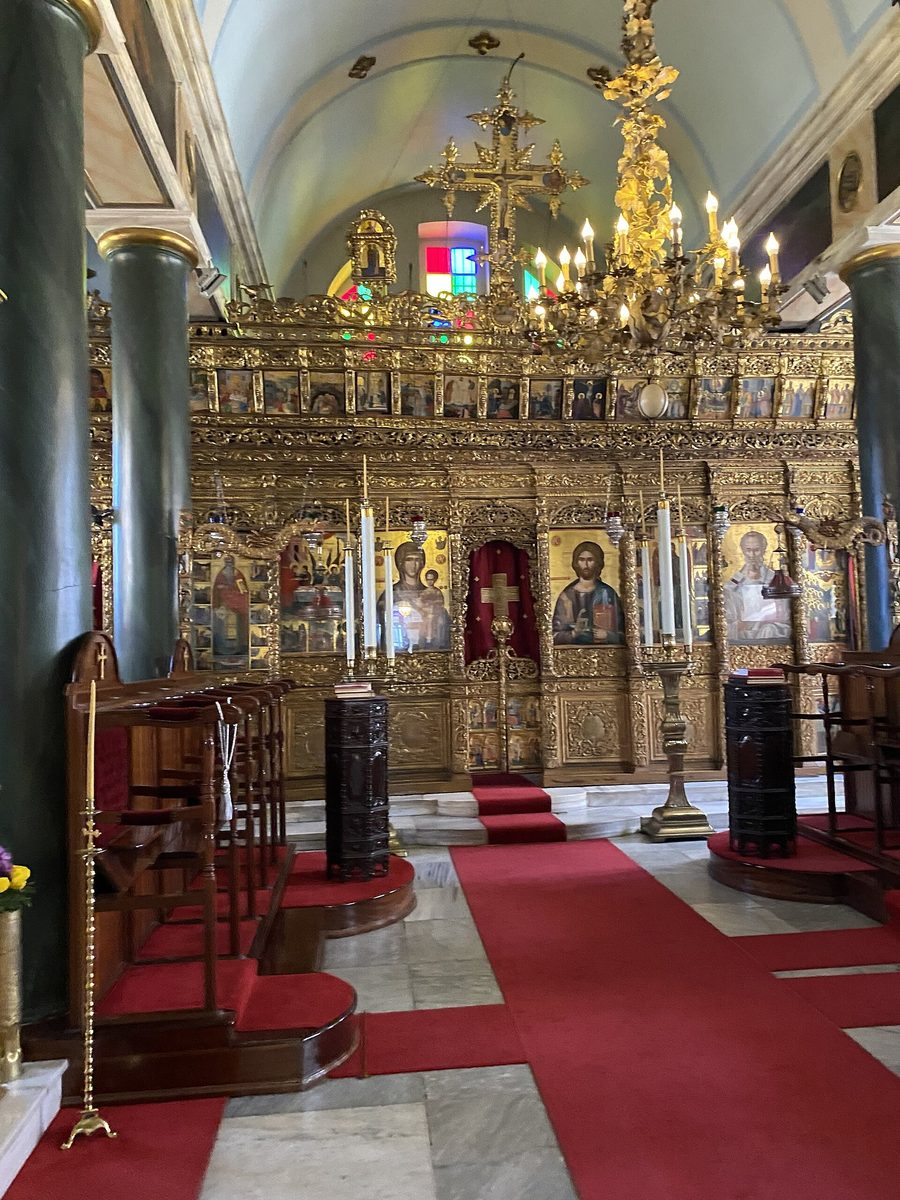
One stop before Büyükada, half the visitors, and for a certain kind of day the better island. Heybeliada is greener, hillier and more residential, with a pine forest covering most of its interior and a shoreline of small coves.
Three things to see. The Halki seminary — Aya Triada — on the northern hill was the Greek Orthodox theological school for the Ecumenical Patriarchate until Turkey closed all private higher education in 1971; it has never reopened, its status remains a recurring subject in Turkish–Greek and Turkish–American diplomacy, and the monastery and church can be visited. The Naval High School occupies the harbour front and is closed to visitors but dominates the town. And the çam limanı pine woods, which you walk or cycle through on the loop road, are the reason people come.
Heybeliada also has the best cheap swimming in the group: several small public coves around the shore road where you get in off the rocks with local families and pay nothing.
Burgazada and Kınalıada: the two nobody visits
Burgazada
Small, hilly, wooded, and with a literary claim: Sait Faik Abasıyanık, the Turkish short-story writer, lived here and his house is now a small museum, preserved as he left it. The other reason to come is Kalpazankaya — “counterfeiter’s rock” — on the far side of the island, where a restaurant sits above the water facing west and the sunset is the best in the archipelago. It is a forty-minute walk or a short buggy ride from the pier.
Kınalıada
The closest island to the city, the flattest, the driest and the least wooded, with reddish rock that gave it its name — “henna island”. Historically the Armenian island, with an Armenian church and a distinctive modern mosque on the shore. There is very little to do, which on a hot Tuesday in June is the entire point: a shore walk, a swim off the rocks, a fish lunch, and a fifteen-minute ferry back to Bostancı.
Kınalıada is also the practical answer for anyone short of time or short of legs. It is the flattest of the four by some distance, the walk from the pier to the far side is twenty minutes rather than an hour, and at fifteen minutes from Bostancı it is genuinely doable as a half day rather than a full one — which none of the others are.

Why they are called the Princes’ Islands
Because princes were sent here to get them out of the way. Under the Byzantines the archipelago — Prinkiponisos — was where inconvenient members of the imperial family were exiled, and typically tonsured into one of the monasteries that covered the islands, which put them permanently out of the succession. Romanos IV Diogenes, blinded after losing the battle of Manzikert in 1071, was exiled to Proti, the island now called Kınalıada, and died there. Empresses, deposed emperors and unwanted heirs came and went for the better part of a thousand years.
The islands stayed monastic and half-empty through the Ottoman centuries. What changed everything was a steamship: from 1846 a regular service began running out from the city, and within a generation the islands turned into the summer resort of Istanbul’s non-Muslim commercial class. Greek, Armenian, Jewish and Levantine families built the timber villas you now walk past, each community clustering on a particular island, and the population swelled every June and emptied every September.
The largest surviving monument to that period is not a mansion but the Prinkipo Palace on Büyükada — a vast six-storey timber building of 1898, put up as a hotel and casino by the company behind the Orient Express, never licensed by the sultan, and instead sold to a Greek benefactor who turned it into an orphanage. It ran as one until 1964. It is generally described as the largest wooden building in Europe, it has stood derelict for sixty years, and it has been on European heritage watch-lists as a building at risk for most of that time. You can see it from the Aya Yorgi path, decaying among the pines, and it is a genuinely startling sight.
What happened to the communities that built all this is the same thing that happened to them in the city: the 1942 wealth tax that fell disproportionately on non-Muslims, the September 1955 pogrom, and the 1964 expulsion of Greek nationals. The islands’ Greek population fell away, the villas changed hands or fell down, and the summer colony became a Turkish one. The churches, synagogues and monasteries are still there, some of them still in use, and they are the reason the islands feel unlike anywhere else in the province.
Eating and drinking on the islands
The islands are a captive market and behave accordingly. The rule is simple: the further you walk from the pier, the better and cheaper the food gets.
- Fish. The main event, and the thing to be careful about. Have it weighed and priced in front of you before it is cooked — this is the single most common way visitors get a surprising bill anywhere on the Turkish coast, and a harbour restaurant on Büyükada in August is a textbook setting for it. Two people eating fish with a few meze and a drink should expect somewhere in the region of 1,200–2,000 TL; considerably more if you did not ask.
- Meze and rakı. Several of the harbour restaurants do a proper meyhane spread, and doing it slowly at a table over the water as the last ferries come in is the best dinner on the islands. Budget as you would for a mainland meyhane — around 2,000 TL and up for two.
- Breakfast. The islands do a good Turkish breakfast and the garden cafés up the hill on Büyükada do it better than the front. This is a good reason to take an early boat.
- Ice cream. Traditional stretchy Turkish dondurma, sold from carts and shops around every harbour, and a fixed part of the day for everyone else on the island.
- Ada çayı. Literally “island tea” — sage tea, grown on the hillsides here, served everywhere, and the thing to order at the top of the Aya Yorgi climb.
Alcohol is served freely on all four islands; these were Christian and Jewish summer colonies and the licensing culture reflects it. Buy any takeaway bottles before 22:00, when the nationwide retail ban starts.
Staying overnight
Almost nobody does, which is most of the argument for it. From about six in the evening the day-trippers leave, the harbour empties, and Büyükada turns back into a small town of a few thousand people with no cars in it. The night silence on a car-free island twenty minutes from a city of sixteen million is genuinely strange.
The stock is limited and seasonal. Büyükada has a handful of restored-mansion hotels — the Splendid Palas, an art-nouveau pile of 1908 with domed corner turrets, is the landmark one — plus guesthouses and apartment rentals. Heybeliada has a smaller selection of family-run pensions. Burgazada and Kınalıada have very little. Rates move a great deal with the season and with whether it is a weekend; expect summer weekends to be both expensive and full, and expect a good number of places simply to close between November and March.
Two practical points. Book directly or through a booking site well ahead for any summer weekend, because the supply is genuinely small. And check whether your hotel is at the harbour or up the hill — luggage plus a cobbled gradient plus no cars is a specific kind of unpleasant, though most places will send a buggy if you ask.
Whether this beats a night in the city depends on what you want from the trip; the case for each Istanbul neighbourhood is set out in the accommodation guide.
Getting around once you land
No private cars. This has been true since the 1930s and it is what makes the islands feel like somewhere else.
| How | Cost (Sep 2026) | Notes |
|---|---|---|
| Walking | Free | Büyükada’s full shore loop is about 12 km; the harbour area is small |
| Electric buggy (Adabus) | Taps with Istanbulkart or contactless | Fixed routes around the island; replaced the carriages in 2020 |
| Bicycle hire | ~100 TL an hour, roughly 400–750 TL a day | Quotes vary widely by season and shop; agree it before you ride off |
| Electric bike or scooter | Higher, and negotiable | Worth it for the Aya Yorgi hill, which defeats most people on a pushbike |
| Municipal minibus | Standard-style fare | Runs the main routes on the bigger islands |
The horse-drawn faytons that every older guidebook describes were retired in 2020 after a long animal-welfare campaign and an outbreak of glanders among the horses. The municipality bought out the operators and replaced them with electric buggies. If a page tells you to take a carriage around Büyükada, that page has not been updated in six years.
A practical note on the bikes: Büyükada is hilly, the shore road is fine, and the climb to Aya Yorgi is not something to attempt on a rented single-speed in August. Rent electric if you intend to go up.
What it costs: a realistic day
| Item | From Bostancı | From Kabataş |
|---|---|---|
| Return ferry | ~275 TL | ~275 TL |
| Getting to the pier | Metro, ~46 TL each way | Tram, ~46 TL each way |
| Bike for three hours | ~300 TL | ~300 TL |
| Beach entry and a sunbed | 400–900 TL | 400–900 TL |
| Fish lunch for two | 1,200–2,000 TL | 1,200–2,000 TL |
| Tea and ice cream | ~150 TL | ~150 TL |
| Total, two people, with lunch | ~3,000–4,200 TL | ~3,000–4,200 TL |
| Hours in transit, return | ~1.5 | ~3 |
Roughly €55–75 for two including a good lunch, which for a full day out is among the better-value things you can do from the city. Organised tours run $90–140 per person and give you a guided boat and a shorter day; there is no meaningful reason to take one, as covered in the day trips guide.
A day on Büyükada, hour by hour
- 08:30 — M4 metro to Bostancı, or cross from the European side first.
- 09:30 — Ferry. Thirty minutes on the top deck with tea.
- 10:00 — Land. Photograph the return timetable. Walk the harbour front, then up Çankaya Caddesi through the mansions.
- 11:00 — Hire a bike, or take the buggy, round the northern shore loop.
- 12:30 — Yörük Ali beach for a swim, if it is between June and September.
- 14:00 — Fish lunch near the harbour, away from the first row of restaurants.
- 15:30 — The climb to Aya Yorgi. Allow an hour up, with stops, and thirty minutes down.
- 17:30 — Tea at the harbour, then the ferry.
- 18:30 — Back at Bostancı in time for dinner in Kadıköy.
That works comfortably from the Asian side and is a stretch from Kabataş. If you are staying in Sultanahmet or Beyoğlu, sail from Eminönü and lose the Aya Yorgi climb, or accept a long day. The whole trip pairs naturally with an afternoon in Kadıköy and Moda at either end.
When to go
- May, June and September are the right months. Warm enough to swim, not hot enough to make the hills punishing, and the ferry timetable is at full strength.
- July and August are hot, crowded and at weekends genuinely unpleasant — the boats fill, the beaches fill, and Büyükada takes on the character of a seaside town at capacity. Midweek is manageable.
- October is lovely and quiet, with the sea still around 19 °C early in the month.
- November to March is a different proposition: half the restaurants shut, the ferry timetable contracts to a few sailings a day, and the islands are empty, damp and rather beautiful. Go only if quiet is what you want, and check the last boat obsessively.
- Any Sunday between May and September is the busiest the islands get. Avoid if you can; go on a Tuesday.
The seasonal picture across the whole city is in the month-by-month guide.
Practical notes worth having before you sail
- Take cash. The restaurants and the bigger beach clubs take cards; the bike shops, the buggies at some ranks, the small cafés and the stalls at Aya Yorgi prefer notes. A thousand lira in your pocket covers a day comfortably.
- There are no big supermarkets and no chain pharmacies in the way there are on the mainland. Bring anything you specifically need — sun cream in particular is sold at island prices.
- Water and shade. Büyükada’s hills are exposed and the Aya Yorgi path has very little cover on the last stretch. Carry water; there are taps and shops in the town but not on the climb.
- Shoes. Cobbles, gradients and, if you cycle, a shore road with some rough sections. This is not a sandals day unless you plan to sit on a beach.
- Phone signal is fine across all four islands, but download an offline map anyway — the inland paths on Büyükada and Heybeliada are not always well signed.
- Dogs and cats. Both islands have substantial free-roaming populations, generally healthy, sterilised and looked after by residents. They will follow you up the hill. This is normal.
- Bring a layer. The sea breeze on the open top deck is cold well into May and again from late September, whatever the city temperature said when you left it.
- Toilets at the piers and in the towns cost 5–10 TL and want coins.
One more thing that catches people: the islands are administratively a district of Istanbul called Adalar, so your Istanbulkart, your phone data and your ordinary city expectations all apply. It is not a separate place with separate rules — it just feels like one.
What is overrated, and what to skip
- Sailing from Kabataş because it is nearest your hotel. The single most expensive convenience on this page. Ninety minutes each way instead of thirty.
- Trying to do two islands in a day. The inter-island boats are infrequent enough that hopping consumes the afternoon. Pick one.
- The first row of harbour restaurants on Büyükada. Priced for people getting off a boat and hungry. Walk two streets back for better fish at two-thirds of the money.
- Organised island tours at $90–140 a head, for a ferry you can tap onto with the card in your pocket.
- Büyükada on a July Sunday. If your dates give you no choice, go to Heybeliada or Burgazada instead — same sea, a fifth of the people.
- The Trotsky house as a destination rather than a two-minute detour. It is a roofless ruin behind a fence.
- The islands at all, if you have three days in Istanbul. This is a full day for the price of a full day, and Hagia Sophia, Topkapı and the bazaars have a stronger claim on a first short trip. From day four onwards it becomes the obvious thing to do.
Frequently asked questions about the Princes’ Islands
Is there anything to do on the islands in winter?
Walk, look at the houses, and eat in one of the restaurants that stays open. Between November and March about half the businesses shut, the ferry timetable contracts to a few sailings a day, and the islands are damp, green and almost completely empty. It is a good half-day if solitude is the point and a poor one if you wanted a beach. Check the last boat with more care than you would in July.
Can I take a bike over on the ferry?
Yes, the Şehir Hatları boats carry bicycles, though space is limited on busy summer sailings. Given that hire on the island runs around 100 TL an hour it is rarely worth the hassle unless you have a bike you particularly want, or you are going out of season when some of the hire shops are shut.
Which Princes’ Island should I visit?
Büyükada for a first visit: the mansions, the Aya Yorgi climb, the beaches and the harbour are all there. Heybeliada if you want pines, coves and far fewer people. Burgazada for the sunset at Kalpazankaya. Kınalıada if you simply want the closest, flattest, quietest option.
How do I get to the Princes’ Islands from Istanbul?
By ferry from Bostancı (15–30 minutes), Kadıköy (60–75), Eminönü (about 75) or Kabataş (about 90, at 137.48 TL each way). Bostancı is by far the fastest and is on the M4 metro. Operators are Şehir Hatları, Turyol, Mavi Marmara and İDO; the Şehir Hatları boats are the most comfortable.
How much does the Princes’ Islands ferry cost?
137.48 TL each way from Kabataş as of September 2026, with 68.76 TL for students and 96.23 TL for over-65s. The island routes do not qualify for the transfer discount that applies elsewhere on the network, so you pay full price regardless of what you tapped onto beforehand.
Are there still horse carriages on Büyükada?
No. The faytons were withdrawn in 2020 following an animal-welfare campaign and a disease outbreak among the horses, and were replaced by electric buggies that take the Istanbulkart. Any guide that still recommends a carriage ride is out of date.
Can you visit the Princes’ Islands in one day?
Yes, and one island is exactly right for one day. Two is a mistake — the inter-island boats are infrequent and you will spend the afternoon waiting on piers. From Bostancı a full day on Büyükada is comfortable; from Kabataş it is tight.
Can you swim on the Princes’ Islands?
Yes, between roughly June and September, when the Marmara runs 20–24.5 °C. Büyükada’s Yörük Ali and Nakibey are paid beach clubs with platforms and sunbeds rather than sand; Heybeliada has free public coves where you get in off the rocks. September is the best month — warm water, no crowds.
Do I need to book the ferry in advance?
No. It is a turn-up-and-tap service. On summer weekends the boats do fill, so allow for missing one, and always check the last return sailing when you arrive — the timetable thins out considerably in the evening and outside summer.
How long does the Aya Yorgi climb take?
About an hour up from the harbour area at a reasonable pace, with the last stretch steep and cobbled, and thirty to forty minutes down. In July and August do it early or late; there is very little shade on the final section. There is a restaurant with a view at the top.
Are the islands worth it if I only have three days in Istanbul?
Probably not. A day here costs a full day, and on a short first trip the old city, the Bosphorus and Beyoğlu have a stronger claim. On four days or more it becomes one of the best things you can do, and it is the easiest escape from the city there is.
Is it expensive?
No. Around 3,000–4,200 TL for two people including return ferries, a bike, beach entry and a fish lunch — roughly €55–75 for a full day out. Skipping the beach club and eating away from the harbour front brings it well under that.
The ferry out runs on the same card as everything else in the city. Our Istanbulkart guide covers the current fares and where to buy one if you have not already, plus what the card does and does not cover on private boats.
Related Istanbul guides
- Day trips from Istanbul — where the islands rank against Bursa, Edirne and the rest.
- The Asian side of Istanbul — Bostancı, Kadıköy and Moda, at either end of an island day.
- Bosphorus cruises and ferries — the other great boat trip from the city.
- Getting around Istanbul — the Istanbulkart, and why island fares are different.
- The best time to visit Istanbul — sea temperatures and ferry seasons.
- Things to do in Istanbul — the forty that come first.
- Istanbul itineraries — where a full island day fits.
- Where to stay in Istanbul — and why an Asian-side base halves the crossing.
- What to eat in Istanbul — before you order fish at a harbour restaurant.
- Istanbul travel tips — fares, cash and the rest of the practical ground.
Photo credits
- The harbour at Kınalıada — photo by Anil Öztas, Wikimedia Commons, CC BY 4.0.
- A Şehir Hatları ferry — photo by Phil Venditti, Wikimedia Commons, CC BY 2.0.
- Mansions on Büyükada — photo by User:Darwinek, Wikimedia Commons, CC BY-SA 3.0.
- A wooden mansion on Büyükada — photo by müşfik öztürk, Wikimedia Commons, CC BY 3.0.
- The Aya Yorgi monastery chapel — photo by User:Darwinek, Wikimedia Commons, CC BY-SA 3.0.
- Aya Triada at the Halki seminary, Heybeliada — photo by Furkan Akkurt, Wikimedia Commons, CC BY-SA 4.0.
Fares, prices and sea temperatures checked on 10 September 2026, at roughly €1 = 56 TL. Istanbul’s public fares rose on 20 July 2026 and typically change again each February and July. Ferry timetables contract sharply between November and April — always check the operator’s own schedule for the last sailing back.