On my first trip to Istanbul I watched a man in front of me at the Sultanahmet tram stop try to pay the driver in cash for a single ride. There was no driver to pay, no cash slot, and no queue moving until he worked that out. Everyone behind him missed that tram.
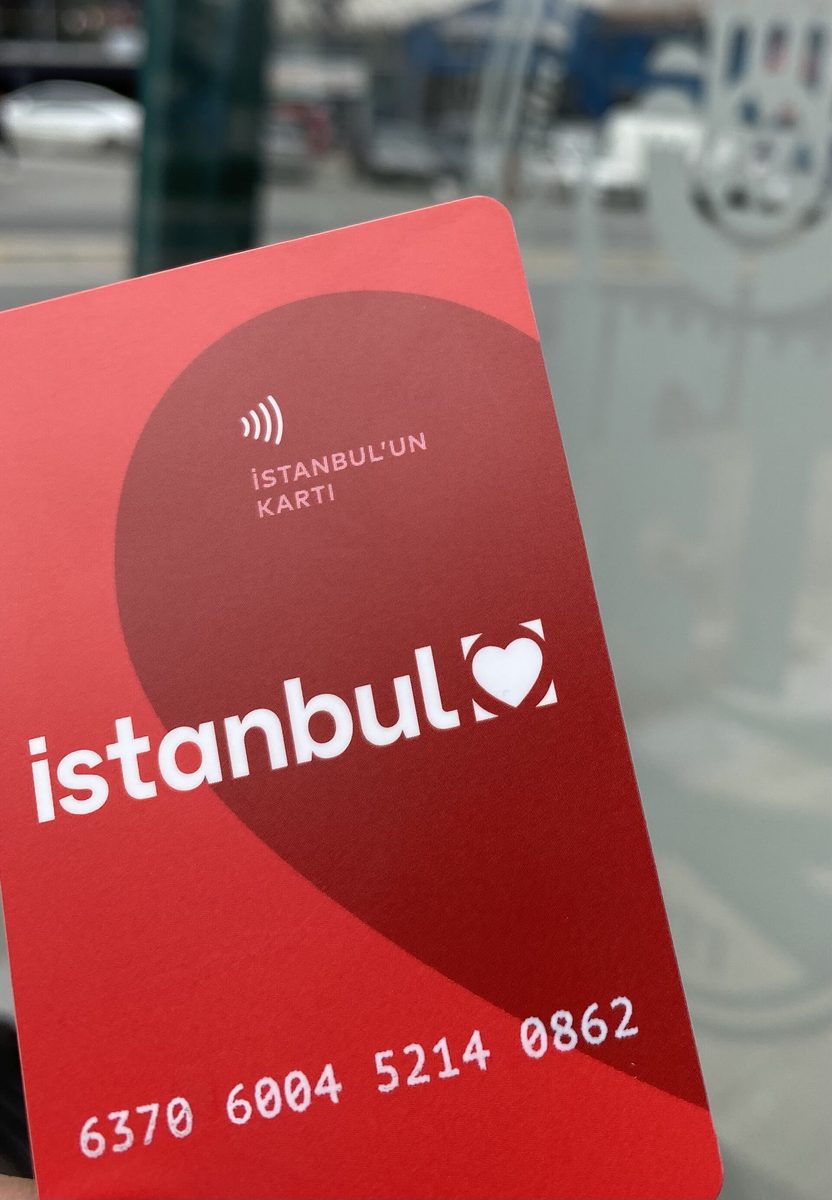
The fix is a small plastic card called the Istanbulkart, and it is the single most useful thing you will buy in Istanbul. It costs 165 TL (about €3), works on every tram, metro, funicular, bus, metrobüs, Marmaray train and public ferry in the city, and cuts your fare from 65 TL a single-use ticket to 46.20 TL a ride — with a transfer discount on top. Buy one from a yellow-and-blue Biletmatik machine at either airport or any metro and tram station before you do anything else.
Below is what it actually costs to buy and load in September 2026, the full fare table for every mode, where the machines are, how the mobile app and contactless bank cards really perform for a foreign visitor, and the traps — the non-refundable deposit, the transfer window, the tourist-pass upsell — that catch people who did not grow up with one.
What an Istanbulkart costs and what it gets you
The card itself is a flat 165 TL, non-refundable, and that fee buys you nothing but the plastic — you then load it with credit separately, at the same machine or later at any other one. Balance tops out at 2,750 TL, and one card can carry up to five people through a gate, one after another, each tap billed as its own fare. That last detail matters more than almost anything else in this guide: a family of four does not need four separate cards bought and topped up individually. One will do, tapped four times in a row at the same turnstile.
| Item | Price (from 20 Jul 2026) | Notes |
|---|---|---|
| Istanbulkart (anonymous, physical) | 165 TL | Non-refundable card fee; separate from balance |
| Standard ride | 46.20 TL | Metro, tram, funicular, bus, most ferries |
| First transfer within the window | 34.40 TL | Window is roughly 90–120 minutes depending on route; sources vary on the exact figure |
| Student fare | 22.55 TL | Requires a Turkish student card; not available to visiting students without one |
| Single-use ticket (no card) | 65 TL | Bought at the same machines; no transfer discount |
| 2-ride single-use ticket | 120 TL | No card required |
| 5-ride single-use ticket | 275 TL | No card required |
| 10-ride single-use ticket | 530 TL | No card required |
| Metrobüs (BRT) | 33.08–68.59 TL | Distance-based by number of stops travelled |
| Mavi Kart monthly pass | 3,628 TL | Unlimited rides; only worth it for a stay of a month or longer |
Fares checked 10 September 2026, current since the İBB council’s 20 July 2026 rise (+10% on the previous 42 TL rate, itself a February 2026 increase from 35 TL). The council has historically revisited fares again in February, so expect another change before this time next year.
Where to buy an Istanbulkart, and where the machines actually are
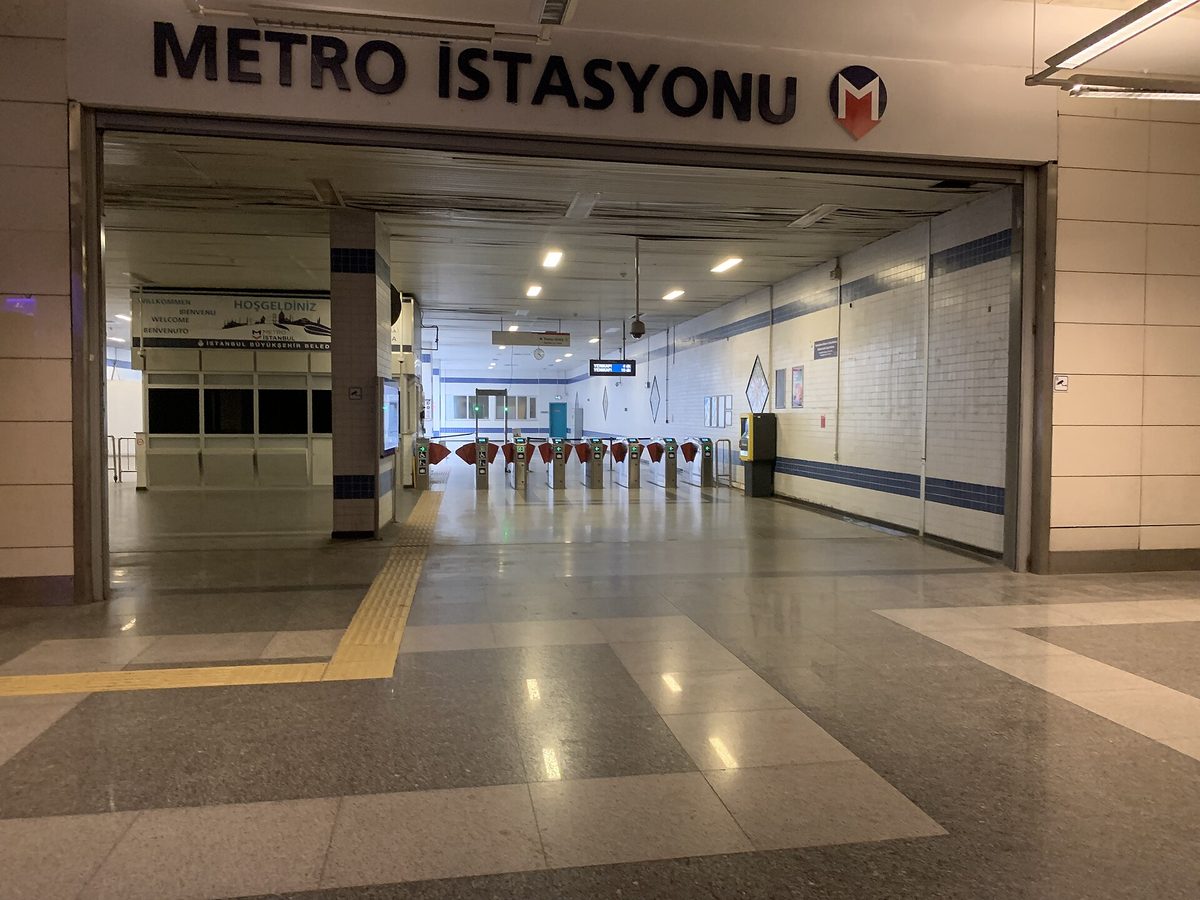
Every metro and tram station has a yellow-and-blue Biletmatik machine at the entrance, and both airports sell them within a few minutes of clearing immigration: at Istanbul Airport (IST) the machines are on floor -2 by the metro entrance, and at Sabiha Gökçen (SAW) they sit by the M4 metro access point. Neighbourhood kiosks — büfe stalls near tram and bus stops — also sell and top up cards, often faster than queuing at a machine, though not every kiosk stocks them at every hour.
The machines accept Turkish lira banknotes from 10 TL to 200 TL for topping up balance; card acceptance for topping up varies by machine and is not something to rely on. Bring cash for your first purchase. Do not buy an Istanbulkart from a street vendor or a tour operator “helpfully” selling them outside a station at a markup — the machines are quick, official, and cheaper.
How to top up an Istanbulkart
At a Biletmatik machine: select English from the language menu, choose “top up” (yükleme), tap your card on the reader, insert banknotes, and confirm — the machine credits the balance in a few seconds and prints a small receipt if you want one. The whole process takes under a minute once you have done it once.
The official Istanbulkart mobile app lets you check your balance and, in principle, top up digitally without finding a machine. In practice this is one of the few genuinely inconsistent parts of the system for a foreign visitor: several current guides report that in-app top-up works cleanly with a Turkish-issued bank card and is hit-or-miss with a foreign one, while other sources describe successfully loading balance with an international card without trouble. Treat the app as a convenience to try, not something to depend on for your only top-up method — carry enough balance loaded from a machine that a flaky app session on your last day does not strand you.
Which modes an Istanbulkart actually works on
| Mode | Works with Istanbulkart? | Notes |
|---|---|---|
| Metro (M1–M11 lines) | Yes | Standard fare, tap in only |
| Tram (T1, T3, T4, T5) | Yes | Tap in only, no tap-out |
| Funiculars (Tünel, F1) | Yes | Same fare structure as metro |
| City buses and İETT services | Yes | Tap on boarding at the front door |
| Metrobüs (BRT) | Yes | Distance-tiered; tap in and, on some routes, tap out |
| Marmaray (cross-Bosphorus rail) | Yes | Distance-tiered fare, tap in and out |
| Şehir Hatları public ferries | Yes | Standard or route-specific fare; contactless bank cards also accepted here |
| Private tourist boats (Bosphorus dinner cruises, etc.) | No | Separately ticketed, cash or card at the operator’s own desk |
| Yellow, turquoise and black taxis | No | Metered fare, cash or the driver’s own card reader |
The card works everywhere that matters for a visitor’s itinerary, with two structural quirks worth knowing before you travel. First, most modes only require you to tap in, not out — the fare is flat regardless of distance — while Marmaray and some metrobüs routes are distance-based and do require a tap on exit, so tap out on those two even if habit tells you not to bother. Second, the transfer discount only applies within a single connected journey inside the stated window; leaving the system and coming back an hour later for an unrelated trip resets you to full fare.
The network itself: what each mode actually covers
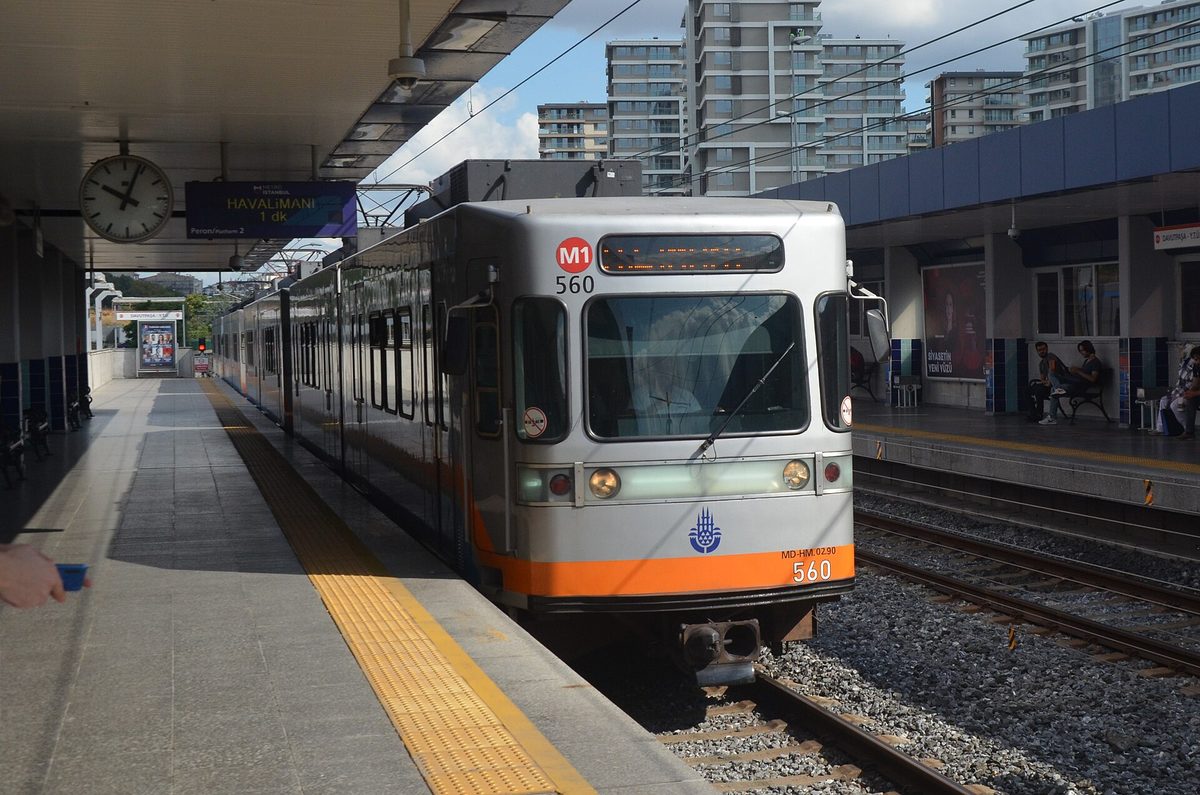
Eleven metro lines now run under Istanbul, labelled M1 through M11, and they are the backbone of a visitor’s trip more than any other mode. M1A runs from Yenikapı out to the old Atatürk Airport site and Bakırköy; M2 is the one most tourists actually ride, running from Yenikapı up through Vezneciler, Şişhane (for Galata and İstiklal via the Tünel funicular) and Taksim to the northern suburbs; M11 is the newer line connecting Istanbul Airport to Gayrettepe, where it meets M2. None of the metro lines cross into Sultanahmet itself — that is tram territory.
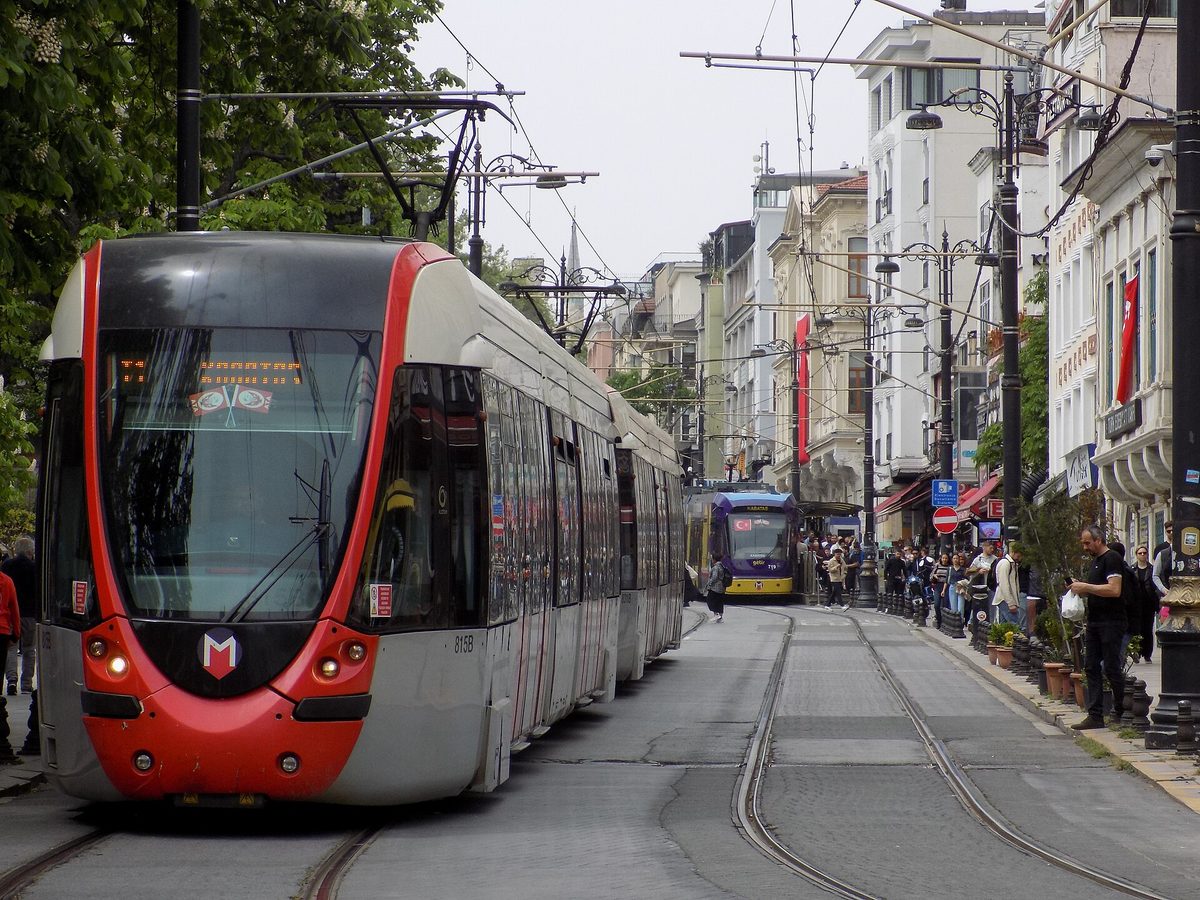
The tram network is smaller and more tourist-relevant: T1 runs from Kabataş through Karaköy, Eminönü, Sultanahmet, Beyazıt and Aksaray out to Bağcılar, and is the single most useful line on this whole list if your itinerary is built around the old city and the Bosphorus ferry piers. T5 runs along the Golden Horn’s shore toward Alibeyköy, useful for Balat and Fener. The T3 heritage tram is a short nostalgic loop around Kadıköy on the Asian side, and the red heritage tram down İstiklal Caddesi in Beyoğlu, while charming, is a slow, crowded photo opportunity rather than serious transport — walk İstiklal instead and save the tram ride for the novelty of it, not the speed.
Two funiculars matter: the historic Tünel, one of the oldest underground railways in the world, connects Karaköy at the bottom of the hill to Beyoğlu at the top in under two minutes, and F1 connects Taksim to Kabataş, linking the tram and the metro without a long uphill walk. Both take a standard Istanbulkart tap.
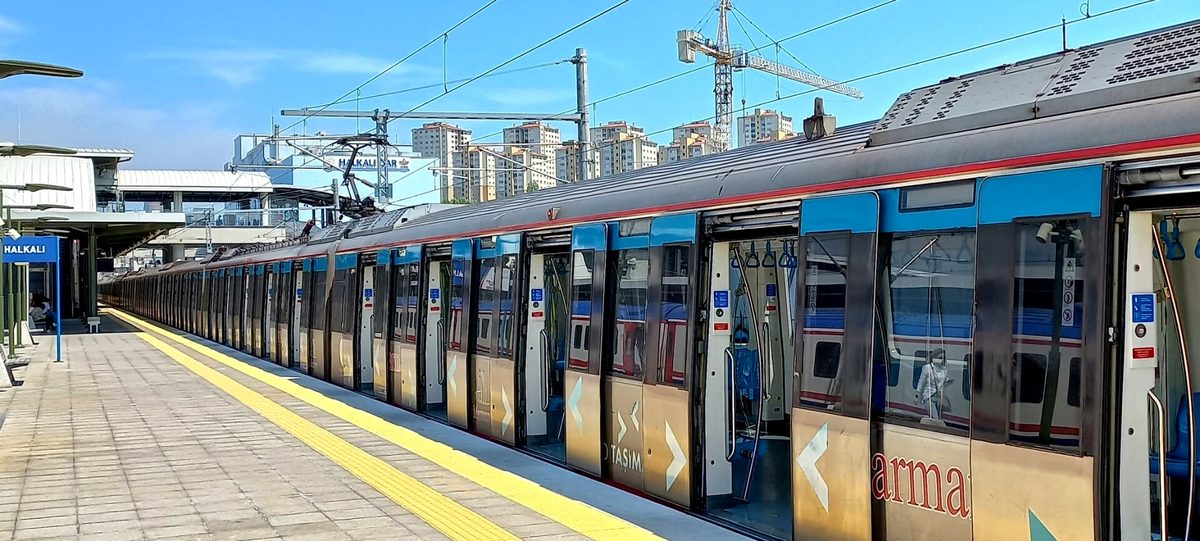
Marmaray is the cross-Bosphorus commuter rail line, running underwater between the European and Asian shores via a tunnel completed in 2013 — genuinely one of the more remarkable pieces of infrastructure in the city, and useful for a fast, cheap crossing to the Asian side that bypasses the ferry schedule entirely, though it lacks the ferry’s view. Fares are distance-tiered, so tap both in and out.
Şehir Hatları’s public ferries are the mode most visitors underrate before arriving and overrate in retrospect once they have ridden one. Commuter crossings between Eminönü, Karaköy, Kadıköy, Üsküdar and Beşiktaş run all day at standard or near-standard fares, take an Istanbulkart the same as a bus, and give you the single best view of the old-city skyline available at any price. See our Bosphorus cruise guide for the full-length tourist route, which uses a separate ticket from the commuter crossings.
Losing or replacing an Istanbulkart
A lost card cannot be cancelled or have its balance transferred to a new one the way a bank card can — there is no account tied to your name on the anonymous version, so a lost card with balance on it is simply gone, along with whatever credit was loaded. This is the practical argument for keeping balance topped up modestly rather than loading the full 2,750 TL maximum onto a single card at the start of a trip: load enough for a few days at a time, particularly if you are the type of traveller who misplaces things. If the card itself breaks or the chip stops reading — which happens occasionally with a well-worn card — a station attendant can sometimes assist, but there is no formal warranty or replacement scheme for a 165 TL anonymous card; buying a new one is usually simpler than pursuing a fix.
Istanbulkart versus the paid tourist passes
Istanbul sells several bundled tourist passes alongside the transport network, and it is worth being precise about what each one actually includes, because “transport included” means different things on different products. The Istanbul Tourist Pass runs from roughly €149 for one day up to €299 for a week and bundles an airport shuttle credit with museum access; a separate unlimited public-transport add-on costs extra on top rather than being included in the base price. The Istanbul e-Pass runs from about €165 for two days to €245 for a week and includes a private airport transfer rather than an Istanbulkart-style transport allowance. The Museum Pass İstanbul, at roughly €105, is a museum-entry product with no transport component at all. None of these three is a substitute for an Istanbulkart; they solve a different problem, and every visitor doing more than a museum-only trip needs the card regardless of which pass, if any, they also buy.
Contactless bank cards: the confusing alternative
Istanbul has been rolling out contactless bank card acceptance alongside the Istanbulkart system, and it genuinely is accepted at the gates on Şehir Hatları ferries and, increasingly, at metro and tram turnstiles — but coverage is not universal across every line and station yet, and where it is accepted you pay full fare with no transfer discount, since the transfer system is tied to the physical or digital Istanbulkart account rather than to a bank card. For a short visit doing more than two or three rides a day, the Istanbulkart’s transfer pricing beats a contactless bank card on cost even before you consider the stations where contactless is not yet live at all. Carry both if you have a no-foreign-transaction-fee card, but do not assume your bank card will work at every gate you meet.
Refunds, balance and what happens to unused credit
The 165 TL card fee is gone the moment you buy it — there is no refund mechanism for the card itself, and no deposit-return desk at the airport on departure, unlike some European transit systems. Leftover ride balance is yours to keep if you plan to return, but is not cashed out on leaving; if you know you will not be back, spend it down to near zero on your last day rather than leaving credit on a card in a drawer at home. Balance does not expire, so there is no urgency if you do plan a return trip within a few years.
The metrobüs: Istanbul’s other rail line, on wheels
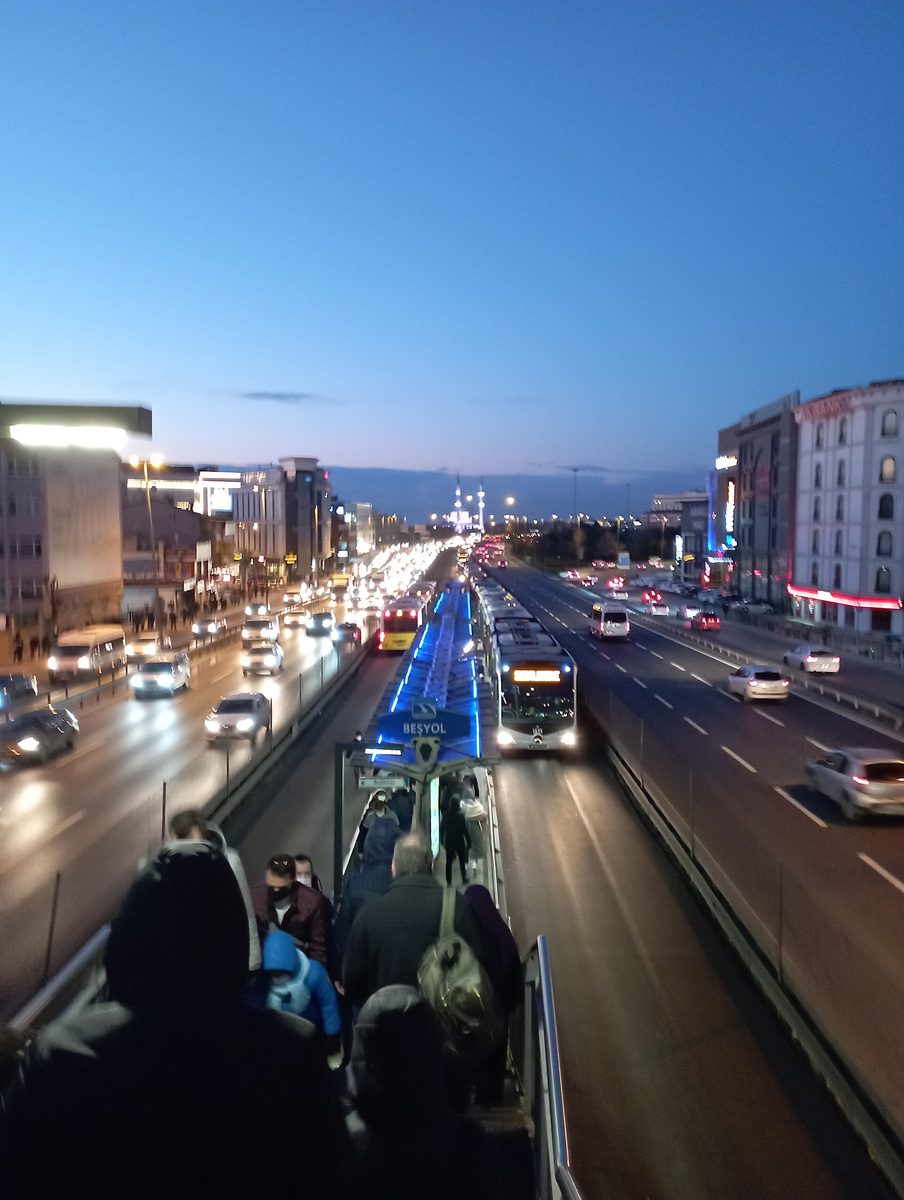
The metrobüs looks like a bus and works like a train. It runs in a fully segregated corridor down the middle of the E-5 motorway, articulated buses arriving every couple of minutes at peak times, and it is the fastest way to cross large stretches of both the European and Asian sides that the metro and tram do not reach — useful mainly for visitors staying near the airport-adjacent districts or heading to a football match at one of the three big stadiums, all of which sit near metrobüs stops. Fares are distance-tiered by the number of stops travelled, from 33.08 TL up to 68.59 TL, tapped with the same Istanbulkart as everything else. It is crowded, fast, and not a scenic ride — take it for the destination, not the journey.
A brief history, and why you may see two names
The Istanbulkart, operated by the municipal company BELBIM, replaced an older token and magnetic-stripe ticket system and consolidated fares across operators that used to require separate tickets for the bus, the tram and the ferry. Some older travel guides and forum threads still refer to the “Akbil,” the electronic token system Istanbulkart superseded years ago — if you see that name in an old blog post, it is describing a system that no longer exists; the Istanbulkart is its full replacement and the only card you need today. The separate “Mavi Kart” (blue card) is a different product: a personalised, photo-ID-linked monthly pass aimed at daily commuters and students, not at visitors, and not worth pursuing for a trip shorter than a month.
Istanbulkart for families and groups
Up to five people can travel on a single card, tapped once per person in sequence at the gate — there is no need to buy a card per family member, which is the single most money-saving fact in this guide for anyone travelling as a group. Children under six travel completely free and do not need a card or a ticket at all. Children aged six to twelve are eligible for a discounted child fare, but that requires a child-specific Istanbulkart rather than tapping an adult card on their behalf multiple times at the child rate — arrange this at a station ticket office if your trip includes several days of public transport with a school-age child, since the savings compound quickly across a week.
A first-time walkthrough: buying and using the card
Here is the whole process, start to finish, the way it actually goes rather than the way an instruction manual describes it. You land, clear immigration, collect your bag, and find an ATM in arrivals — withdraw more lira than you think you need, because the Biletmatik machines want banknotes and you would rather not make a second withdrawal an hour later. Walk to the machine (floor -2 at IST, by the M4 access at SAW), tap the English-language flag, and select “new card.” The machine dispenses the card and asks how much to load; put on at least 300–400 TL if you are staying more than two or three days, since running out mid-journey at a barrier with a queue behind you is an avoidable irritation.
At the gate, hold the card flat against the circular reader on top of the turnstile — not a swipe, not an insert, just a firm tap and a half-second pause. A green light and a short beep mean you are through; a red light and a different tone mean either insufficient balance or, occasionally, a card that needs a firmer or better-aligned tap. If a gate rejects your card twice, try the adjacent turnstile before assuming the card itself has failed — misaligned readers are more common than dead cards.
On a bus, tap at the reader by the driver as you board through the front door; on the metrobüs, tap at the platform gate before boarding, the same as the metro. On Marmaray, remember the tap on exit as well as entry — it is the one mode on this whole list that catches visitors out, because every other mode has trained you by then to expect a single tap and be done with it.
At the airport: buying an Istanbulkart on arrival
At Istanbul Airport (IST), the Biletmatik machines sit on floor -2 next to the M11 metro entrance, so buying a card is the first thing you can reasonably do after collecting luggage, before you decide whether to take the metro, the Havaist bus or a taxi into the city. At Sabiha Gökçen (SAW), the equivalent machines are by the M4 metro access. Neither airport requires you to already have cash in the local currency to buy the card — an ATM withdrawal in the arrivals hall before you reach the machines covers it — but the machines themselves take banknotes, not the ATM card directly, so withdraw first. For the fuller comparison of routes into the city from each airport, see our Istanbul Airport to city centre guide.
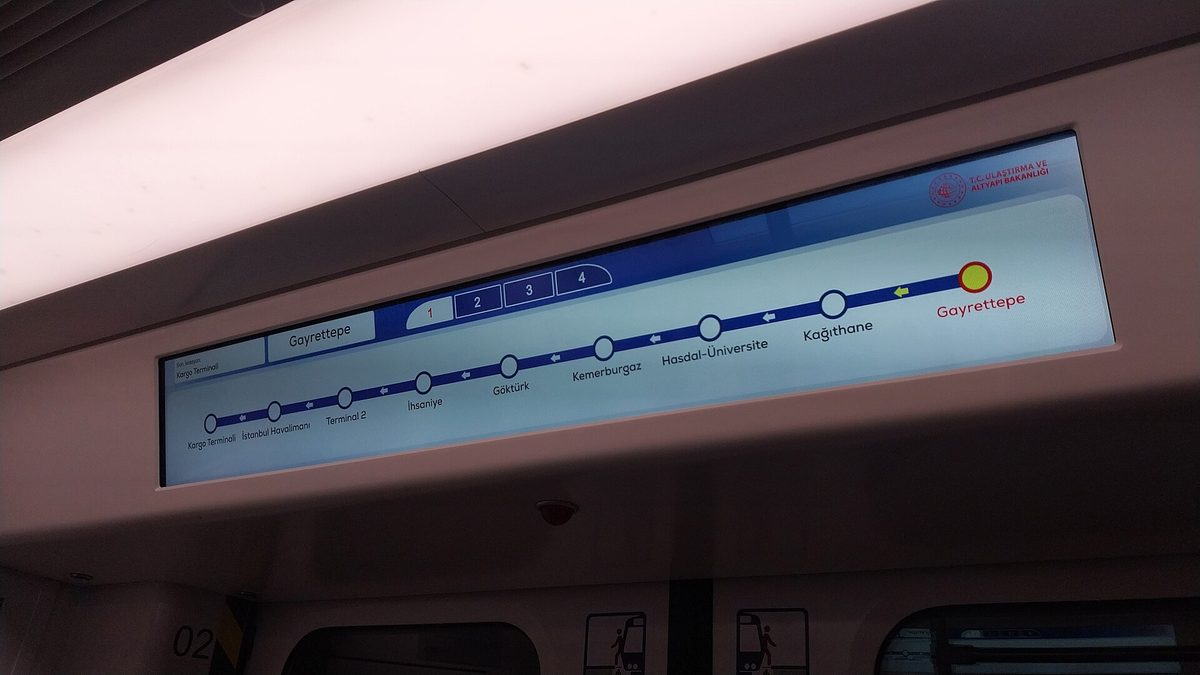
The M11 is worth a specific word of praise: it opened relatively recently as a direct rail link from the airport, replacing what used to be a bus-only or taxi-only choice for budget-conscious arrivals, and it now connects at Gayrettepe to the M2 line that runs through Şişhane and Taksim — meaning a single Istanbulkart, tapped twice with the standard transfer discount applying between the two lines, gets you from the airport to Beyoğlu without a taxi, a shuttle bus, or a fixed-fare booking of any kind. It is slower than a direct taxi in light traffic and considerably faster than one in Istanbul’s regular gridlock, and it costs a fraction of either the Havaist bus or a metered fare.
Is the Istanbulkart worth it, or should you buy single tickets?
The maths is straightforward once you see it written down. A single-use ticket with no card costs 65 TL every time, with no transfer discount ever. An Istanbulkart ride is 46.20 TL, and a connecting second ride within the transfer window is 34.40 TL — so two connected rides on a card cost 80.60 TL against 130 TL for two single-use tickets, and the gap widens with every additional trip in a day. Buy the card on your first ride if you are doing more than two rides across your whole stay, which in practice means almost everyone. The only visitors for whom single-use tickets make sense are those doing one or two rides in total on a very short layover, where the 165 TL card fee is not worth carrying home a piece of plastic for.
This is also where the various paid tourist passes — Museum Pass İstanbul, the Istanbul e-Pass, the Istanbul Tourist Pass and similar bundles — get compared to an Istanbulkart, usually incorrectly. Most of those passes bundle museum entry with a transport allowance or a shuttle credit, not with genuine unlimited Istanbulkart-equivalent transport; read what “transport included” actually means in the small print of any pass before assuming it replaces the card. An Istanbulkart is the transport layer regardless of which sightseeing pass, if any, you also buy.
What to skip, and what trips people up
Buying from a reseller outside the station. Individuals near tourist-heavy stations sometimes sell “pre-loaded” Istanbulkarts at a markup, occasionally with an inflated or fabricated balance that the gate later rejects. The machine two minutes away is official, cash-only-simple, and cannot be argued with.
Assuming every gate takes a contactless bank card. Covered above — coverage is real but incomplete, and depending on it as your only payment method will eventually leave you stuck at a gate that has not been upgraded.
Forgetting to tap out on Marmaray. Most of the system is flat-fare tap-in-only, which trains visitors into a habit that costs them the maximum distance fare the one time it matters — Marmaray and some metrobüs routes are distance-based and penalise a missed tap-out.
Buying a new card at every new city. An Istanbulkart works only within Istanbul’s own network; it is not valid in Ankara, Izmir or Bursa, each of which runs its own separate card system. Do not expect to reuse it if your trip continues elsewhere in Turkey.
Relying solely on the app for your only top-up method. Covered above under topping up — treat the app as a convenience, and keep enough physical balance loaded that a bad app session does not strand you between stations.
Loading the maximum balance in one go. The 2,750 TL ceiling is there so you cannot over-load the card, but there is no reason to approach it on a normal trip, and doing so simply raises the cost of losing the card. Top up in smaller amounts every few days instead — the machines are everywhere, and running the balance down close to zero is a better habit than treating the card as a wallet.
Confusing the Istanbulkart with a tourist sightseeing pass. Covered above, but it bears repeating because the marketing for the paid passes leans on transport language without always delivering an actual transport card. Read what “transport included” means on any pass before assuming it does the Istanbulkart’s job.
Frequently asked questions
How much does an Istanbulkart cost?
165 TL for the card itself, non-refundable, plus whatever balance you load separately. A standard ride costs 46.20 TL from 20 July 2026, with a discounted transfer fare of 34.40 TL for a connecting journey within the transfer window.
Where do I buy an Istanbulkart?
At a yellow-and-blue Biletmatik machine at any metro or tram station, or at both airports — floor -2 by the metro entrance at Istanbul Airport, and by the M4 access point at Sabiha Gökçen. Neighbourhood kiosks near stops also sell and top them up.
Can one Istanbulkart be used for a whole family?
Yes. Up to five people can travel on a single card, tapping it in sequence at the gate, one fare charged per tap. Children under six travel free without needing a card at all.
Do I need cash to buy or top up an Istanbulkart?
Effectively yes. The machines take Turkish lira banknotes from 10 to 200 TL reliably; card acceptance for top-ups is inconsistent machine to machine, so withdraw cash before you go looking for one.
Does the Istanbulkart work on Bosphorus ferries?
Yes, on the public Şehir Hatları ferries, at the standard or route-specific fare. It does not work on privately operated tourist boats or dinner cruises, which sell their own separate tickets.
What happens to unused balance when I leave Istanbul?
It stays on the card indefinitely and is not refunded at the airport or anywhere else. Spend it down to near zero on your last day if you do not expect to return; keep the card if you think you might.
Can I use a contactless bank card instead of buying an Istanbulkart?
Increasingly, yes, on ferries and a growing number of metro and tram gates — but coverage is not complete across the whole network, and you pay full fare with no transfer discount when you do use one. For more than a couple of rides a day, an Istanbulkart is cheaper and more reliably accepted everywhere.
Is the Istanbulkart app worth using?
It is useful for checking your balance and can work for topping up, but foreign-card top-ups through the app are reported as inconsistent. Keep it as a backup rather than your sole method of loading balance.
Do children need their own Istanbulkart?
Under six, no — travel is free without any card. From six to twelve, a discounted child-rate Istanbulkart is available and worth arranging at a station ticket office for a multi-day stay, rather than tapping an adult card repeatedly at full fare.
What is the difference between an Istanbulkart and a Mavi Kart?
The Istanbulkart is the general-purpose anonymous card every visitor should buy. The Mavi Kart is a separate, personalised monthly pass tied to a named individual, aimed at residents and students who commute daily — it is not something a visitor on a normal trip needs to consider.
Is the Istanbulkart valid outside Istanbul?
No. It works only within Istanbul’s own transport network. Ankara, İzmir, Bursa and other Turkish cities each run their own separate card, so if your trip continues elsewhere in the country, budget for a new card there.
Can tourists get a discounted Istanbulkart?
Not on the standard anonymous card, which always charges the full adult fare. The discounted student rate requires a Turkish student card, and the discounted child rate (ages six to twelve) requires a child-specific card arranged at a station office — neither is available to a general adult visitor simply by asking.
Related Istanbul guides
- Getting around Istanbul: the complete public transport guide
- Istanbul Airport to city centre: every route compared
- Princes’ Islands guide
- Bosphorus cruise guide
- Istanbul itinerary planner
- Things to do in Istanbul
- Where to stay in Istanbul
- Istanbul travel tips
- Do I need a visa for Turkey?
Photo credits
- Istanbulkart card (featured image) — Wikimedia Commons, reused from this site’s image library.
- Metro turnstile gates, station entrance — photo by MacBookator, Wikimedia Commons, CC BY-SA 4.0.
- M-line metro train at platform — photo by CeeGee, Wikimedia Commons, CC BY-SA 4.0.
- T1 tram, Sultanahmet — Wikimedia Commons, reused from this site’s image library.
- Marmaray train at platform — Wikimedia Commons, reused from this site’s image library.
- Metrobüs corridor — Wikimedia Commons, reused from this site’s image library.
- M11 line map — Wikimedia Commons, reused from this site’s image library.
Fares and rules checked 10 September 2026 against metro.istanbul and the İBB/UKOME fare decisions of 20 July 2026, cross-checked with current tourist guides for the app and contactless-card details, which are the two areas most likely to have changed by the time you read this. If something here is out of date, tell us and we will fix it.