The worst day I have spent in Istanbul went like this: Topkapı in the morning, Dolmabahçe after lunch, the Asian side for dinner. On paper, three hours of sightseeing and two short journeys. In practice it was a Tuesday, so Topkapı was shut; the Bosphorus bridge traffic turned a twenty-minute taxi into fifty; and I arrived at Kadıköy too tired to eat. The mistake was not the ambition. It was that I had planned a European city and was standing in a city built across a strait.
A good Istanbul itinerary spends each day on one side of the water: Sultanahmet and the old city on day one, Galata and Beyoğlu on day two, the Bosphorus and the Asian side on day three. Three days covers the essentials, five is comfortable, and Topkapı closes on Tuesdays while the Grand Bazaar closes on Sundays.
Below are day-by-day plans for one, two, three, four, five and seven days, plus a layover itinerary and a second-visit itinerary, each with the walking routes, the tram and ferry legs, the meal stops and the closed days built in. Prices were checked on 10 September 2026. I have also included the plan I would follow if it rains, and the four mistakes that ruin more Istanbul trips than anything else.

What fits in each Istanbul itinerary
The honest answer to “how many days do I need in Istanbul” is five. Three is the most common answer and it works, at the cost of doing the Bosphorus properly. Below is what each length realistically covers, at a pace that includes sitting down and eating.
| Length | What it covers | What it leaves out | Rough cost per person per day | Best for |
|---|---|---|---|---|
| 6–10 hours (layover) | Hagia Sophia or Topkapı, the Blue Mosque, the Hippodrome, a ferry crossing | Everything else | €40–70 including transfers | Long connections at IST |
| 1 day | Sultanahmet monuments, Grand Bazaar, one ferry, dinner in Karaköy | Topkapı in full, the Bosphorus, the Asian side | €75–95 | Cruise calls, forced stopovers |
| 2 days | The old city properly, plus Galata and Beyoğlu | The Bosphorus, the Asian side, the palaces | €65–85 | Weekend breaks |
| 3 days | Old city, Galata and Beyoğlu, a Bosphorus ferry and Kadıköy | Chora, Dolmabahçe, the islands, the walls | €60–80 | Most first visits |
| 4 days | The above plus the palaces, or Balat and Chora | The Princes’ Islands, day trips | €55–75 | The sweet spot for a first trip |
| 5 days | Everything above, plus a full-length Bosphorus day and a hamam | Day trips out of the city | €55–70 | A complete first visit |
| 7 days | All of it, plus the Princes’ Islands, the land walls and a day out of town | Very little | €50–65 | Repeat visitors, slow travellers |
Those daily costs assume a mid-range trip: about 200 TL a day in transport, one paid attraction most days, street lunch and a sit-down dinner, and they exclude accommodation. They fall as the trip lengthens because the expensive tickets are front-loaded — the first three days are where the €25 and 2,750 TL entries live. Checked 10 September 2026 at €1 ≈ 56 TL.
Five rules that decide every Istanbul itinerary
Before the plans themselves, the constraints. Getting these wrong is what turns a good itinerary into a day of transit.
One side of the water per day. Istanbul is not laid out like Rome or Paris. The old city, Beyoğlu and the Asian side are separated by water, and every crossing costs you twenty to fifty minutes depending on method and traffic. Group your sights geographically and you will see half again as much.
Topkapı closes Tuesdays. The Grand Bazaar closes Sundays. Dolmabahçe closes Mondays, and one source adds a Thursday closure, so check millisaraylar.gov.tr for your dates. Chora closes to tourists on Fridays. Between them these four facts break more itineraries than anything else, and none of them are visible on a map.
Friday middays belong to the mosques. Hagia Sophia clears tourists from about 12:00 to 14:30 on Fridays; the Blue Mosque admits no visitors before roughly 14:30. Plan Friday mornings around museums and palaces, and do the religious buildings from three o’clock, when they are quieter than at any other time in the week.
The ferry is transport, not an excursion. A commuter crossing costs a standard fare and takes twenty minutes, and it is the most enjoyable travel in the city. Build them into ordinary journeys rather than saving “a boat trip” for a special day. Eminönü–Kadıköy, Karaköy–Kadıköy, Beşiktaş–Üsküdar and Eminönü–Üsküdar all run constantly.
Everything takes longer than the map says, because the peninsula is built on seven hills and the pavements are cobbled and crowded. Add a third to any walking estimate your phone gives you, and take the tram uphill.
One day in Istanbul
A single day is a compromise and I will not pretend otherwise. The version below picks the old city, one ferry and one evening across the water, which gives you the monuments and the feeling of the city rather than just the monuments.

08:00–09:15 Hagia Sophia. First entry, gallery route, €25. In April to September it opens at eight; otherwise be at the door for nine.
09:30–10:15 The Blue Mosque. Free. Four minutes across the park. Aim for the window after the mid-morning prayer, and give the courtyard ten minutes of its own.
10:15–10:45 The Hippodrome. Free, outdoors, and useful padding if a prayer closure has moved your timings. The obelisk, the carved reliefs on its base — which almost everyone walks past — the Serpent Column, the German Fountain.
11:00–11:45 The Basilica Cistern, 1,950 TL, card only. If the queue is more than twenty minutes, skip it and walk ten minutes to the Şerefiye Cistern instead at 900 TL.
12:00–13:00 Lunch, not on the square. Walk five minutes inland to Hocapaşa Sokak near Sirkeci, where a lokanta plate is 350–500 TL and the customers are Turkish.
13:15–15:00 The Grand Bazaar, twelve minutes uphill, free, closed Sundays. Go in one gate and out the other; the building is the attraction and the shopping is optional.
15:15–16:00 Downhill to the Spice Bazaar and Rüstem Paşa Mosque, both free. Rüstem Paşa is up an unmarked staircase between shops and has the best İznik tiles in the city at arm’s length. It is the single best free thing on this route.
16:15 Ferry from Eminönü to Karaköy or Kadıköy. Twenty minutes on the water for the price of a tram ride. If you can only do one crossing, make it Eminönü–Kadıköy for the view back at the old city skyline.
17:30 onwards. Walk up through Karaköy to Galata Tower — €30 to go up, and the queue is often forty minutes; the view from the free terrace outside the Galata Mevlevi Lodge is nearly as good. Then dinner in Karaköy or Beyoğlu, and if you have energy, İstiklal Caddesi after dark.
What this day misses: Topkapı, which needs three hours and cannot be squeezed. If you would rather see the palace than the bazaars, swap the 13:15–16:00 block for Topkapı and accept that you will not see a market.
Two days in Istanbul
Two days is enough for the old city and the modern one, which is a genuinely satisfying shape for a weekend.
Day one: the historic peninsula

09:00 Topkapı Palace at opening, Harem first, three hours, 2,750 TL for the combined ticket. 12:15 the Archaeology Museums on the way out of the first courtyard, €15, ninety minutes — or lunch if the palace has flattened you. 14:30 Hagia Sophia, when the morning coaches have gone. 16:00 the Blue Mosque in the afternoon window. 16:45 the Hippodrome. 17:30 the Basilica Cistern, or its Night Shift session at 19:30. Dinner at Eminönü or across the bridge.
Day two: Galata, Beyoğlu and the water

09:00 the Spice Bazaar and Rüstem Paşa, then walk across Galata Bridge on the lower deck. 10:30 up through Karaköy — the coffee here is the best in the city — to Galata Tower. 12:00 İstiklal Caddesi on foot, north to Taksim, with a detour into the Çukurcuma antique streets and Cihangir. 14:00 lunch in Beyoğlu. 15:30 the Galata Mevlevi Lodge, €7, or Pera Museum. 17:00 the funicular down to Kabataş and a ferry to Üsküdar for sunset from Salacak, looking back at the peninsula with the Maiden’s Tower in front of it. Dinner on the Asian side, ferry home.
Three days in Istanbul
This is the standard first-time trip and the one most people book. It adds the Bosphorus and the Asian side, which is what turns a monument tour into a visit to a city.
Day one: Sultanahmet
As day one of the two-day plan above: Topkapı at opening, the Archaeology Museums or the Turkish and Islamic Arts Museum, Hagia Sophia in the afternoon, the Blue Mosque, the Hippodrome, the cistern. Dinner near Sirkeci or over the bridge in Karaköy. Everything on this day is inside a walkable square kilometre — the full sight-by-sight version is in our guide to Sultanahmet and the historic peninsula.
Day two: bazaars, the Golden Horn and Beyoğlu

09:00 the Grand Bazaar, two hours, not a Sunday. 11:15 uphill to Süleymaniye — free, calmer than the Blue Mosque and, I think, a better building — with the terrace over the Golden Horn. 12:30 down through the market streets to the Spice Bazaar and Rüstem Paşa. 13:30 a fish sandwich at Eminönü, 150–200 TL, eaten standing up. 14:30 across Galata Bridge on foot. 15:00 Karaköy and Galata. 17:00 İstiklal and Taksim. Evening: a meyhane dinner with meze and rakı, which will run 2,000 TL for two and is one of the things you came for.
Day three: the Bosphorus and the Asian side

The choice here is between the full-length Bosphorus tour and a half-day on the strait plus an afternoon in Kadıköy. If you have three days only, I would do the second.
09:30 ferry from Eminönü or Karaköy to Üsküdar. 10:00 Üsküdar’s mosques and the Salacak waterfront, with the Maiden’s Tower offshore. 11:30 the short walk or a bus down to Kuzguncuk, a village of painted wooden houses that feels nothing like the rest of the city. 13:00 to Kadıköy for lunch — this is the best eating in Istanbul and it is not close. 15:00 the Kadıköy market streets, then Moda for the seafront and an ice cream. 18:00 ferry back to Eminönü at sunset, which is the single best twenty minutes of the trip.
If you would rather have the classic boat trip, the Şehir Hatları long tour leaves Eminönü at 10:35 daily, costs 640 TL return, stops at Beşiktaş, Kanlıca, Sarıyer and Rumeli Kavağı, gives you about three hours ashore at Anadolu Kavağı and gets back around five. It is a six-hour commitment and it is excellent value. The cheaper alternative is the Üsküdar–Anadolu Kavağı public line, nine piers and about a hundred minutes each way at a standard fare, with a less convenient timetable.
Four days in Istanbul
Four days is where the trip stops feeling rushed. Keep days one to three as above and add:
Day four, option A: the palaces and the Bosphorus shore
09:00 Dolmabahçe Palace — 2,000 TL including the Harem and the collections, closed Mondays, no photography inside, two hours. Then walk or tram north along the shore to Ortaköy for a kumpir under the mosque at 200–300 TL, and on to Bebek and Rumeli Hisarı, €6, for the fortress Mehmed II built in four months to strangle Constantinople’s supply line. Evening back in Beşiktaş.
Day four, option B: Balat, Fener and the walls

A Golden Horn day: the Chora church, now Kariye Mosque, €20 and closed to tourists on Fridays, whose fourteenth-century mosaics are the finest late-Byzantine painting anywhere; then downhill through Balat and Fener — the Greek Orthodox Patriarchate, the iron church of St Stephen, the coloured houses, the antique shops — and a ferry back down the Horn from Fener or Ayvansaray. Finish at Eyüp and the Pierre Loti cable car for the view at sunset.
Five days in Istanbul
Five is my recommendation for a first visit. Days one to four as above, taking option A and option B on days four and five, or:
Day five: the full Bosphorus. The Şehir Hatları long tour from Eminönü at 10:35, 640 TL, back by five. Arrive at the pier by ten in season — the ticket office opens at ten and the boat fills. Anadolu Kavağı at the top is a fishing village with a ruined Genoese castle above it and a row of fish restaurants that know exactly how long the boat waits; the walk up to the castle takes forty minutes and is the reason to go. Evening: a hamam. Çemberlitaş is €57 for the classic service in a Sinan building of 1584; a neighbourhood hamam does the same job for €35–50.
Alternatively, spend day five on the Princes’ Islands. Ferries run from Kabataş, Eminönü, Kadıköy and Bostancı; Kabataş to Büyükada is about ninety minutes and 137.48 TL, Bostancı about thirty. The islands are car-free, the horse carriages have been replaced with electric buggies, and bicycles rent for around 100 TL an hour. Büyükada is the big one with the wooden mansions and the monastery on the hill; Heybeliada is quieter and I prefer it. Go on a weekday — Istanbul’s own population takes these boats at weekends and the queues are serious.
Seven days in Istanbul
With a week you can stop optimising. Days one to five as above, then:
Day six: the Theodosian walls and the western districts. The land walls run six kilometres from the Marmara to the Golden Horn and you can walk long stretches of them; Yedikule at the southern end has an unclear access situation at the moment, with one source reporting that it is open to Turkish citizens by reservation only and others quoting a 250–400 TL ticket, so check before you commit the morning. Add the Valens Aqueduct, Zeyrek Mosque and the Fatih district for lunch, which is a completely different Istanbul from the one on the first three days.
Day seven: out of the city, or the second half of the Asian side. Either a day trip — Bursa by fast ferry and bus, Şile and Ağva on the Black Sea coast, or the battlefields of Gallipoli, which is a very long day — or the Asian side beyond Kadıköy: Çamlıca hill and its enormous new mosque for the best panorama in the city, Bağdat Avenue for the shopping, Beylerbeyi Palace at 800 TL, and Fenerbahçe park at the end of it.
Where to base yourself, by itinerary length
The hotel decision changes the itinerary more than any other booking you make, because Istanbul’s geography punishes a bad one.
One to three nights: Sultanahmet or Sirkeci. You wake up two minutes from Hagia Sophia and can be inside before the first coach arrives, which genuinely changes what a short trip covers. The trade is that the neighbourhood empties after nine at night and the restaurants are the worst in the city. Rooms run from about $87 for a decent small hotel to $687 at the Four Seasons, with a good band around $120–200.
Four nights or more: split, or stay in Karaköy, Galata or Cihangir. Beyoğlu puts you within walking distance of the evening city and one tram or funicular ride from the old one, which suits a longer trip better. My own preference on a five-day trip is two nights in the old city and three across the Golden Horn, which costs you one hotel change and saves several hours of transit.
If you are here for the food and the city rather than the monuments: Kadıköy. Cheaper, livelier, entirely residential, and a twenty-minute ferry from everything. It is where I stay now. It is a poor choice for a two-day first trip and an excellent one for a week.
Whatever you choose, book by transport rather than by price. Within five minutes of a T1 tram stop, the M2 metro or a ferry pier, and the itineraries above work as written. Twenty-five minutes’ walk from a station and you will lose an hour a day for the length of the trip. Note also that short-term rentals in Turkey have needed a Tourism Residence Certificate since Law 7464 came into force on 1 January 2024 — check any apartment listing is licensed, since unlicensed ones do get shut down, occasionally at short notice.
What to do with your evenings
Most Istanbul itineraries you will read stop at six o’clock, which is strange, because the city is at its best after dark and half the good decisions happen then.
The meyhane evening. A long dinner of meze, grilled fish and rakı, ideally somewhere with fasıl musicians. Budget 2,000 TL and up for two with a bottle. The concentration is in Beyoğlu around Nevizade and Asmalımescit, and in Kadıköy around the fish market. Do it once at least; it is the most characteristic meal in the city and nothing about it is designed for tourists.
The ferry at sunset. Take any commuter crossing between about half an hour before and half an hour after sunset — Eminönü to Kadıköy, or Karaköy to Üsküdar — and stand at the back with a glass of tea from the counter. It costs a standard fare. I would put it above any paid attraction in this guide.
The Bosphorus at night from Salacak or Ortaköy. The Üsküdar waterfront looks back at the old city floodlit above the water; Ortaköy on the European side does the same in reverse with the bridge overhead. Both are free, both have tea and kumpir sellers, and both are full of Istanbul residents rather than visitors.
İstiklal Caddesi and the side streets. The avenue itself is a river of people until well past midnight, and mostly a river of chain shops; the interest is in what runs off it — the arcades, the Çiçek Pasajı, the record shops and bars around Asmalımescit, and the antique streets of Çukurcuma one block downhill.
The Basilica Cistern’s Night Shift session, 19:30 to 22:00 for 3,000 TL, which is expensive but genuinely a different and quieter experience from the daytime queue. And the Hagia Sophia History and Experience Museum stays open until 22:00, which makes it one of very few indoor options in Sultanahmet after dark.
What I would not do in the evening: a dinner cruise with a floor show, at €55–95 a head. You spend three hours on a boat that is moving too fast to look at anything, eating a set menu, watching a choreographed version of a religious ceremony. The same money buys a superb meyhane dinner and a ferry ride.
Adapting these plans for families, older travellers and one-bag trips
With children. Cut one paid monument a day and add water. Ferries are the single best thing in Istanbul for children — cheap, frequent, with seagulls following the boat and simit sellers on board. The Basilica Cistern usually goes down well; three hours in Topkapı usually does not, so do the Harem and the fourth-courtyard terraces and skip the treasury queue. Gülhane Park below the palace is free, shaded and has space to run. Be aware that LEGOLAND, Madame Tussauds and Sea Life Istanbul have all closed permanently, so several family attractions still listed on older pages and in some pass marketing no longer exist. The Princes’ Islands on a weekday, with bicycles, is the best full family day in this guide.
With limited mobility, or knees that object to hills. The old city is genuinely difficult: cobbles, steep slopes and long stretches without a place to sit. Use the tram between Sultanahmet, Çemberlitaş and Beyazıt rather than walking the twelve minutes uphill to the Grand Bazaar; take the Tünel funicular from Karaköy to Beyoğlu rather than the climb; and use ferries, which are step-free at almost every pier, in place of the bridges. Dolmabahçe, the Archaeology Museums and the Turkish and Islamic Arts Museum are all comparatively flat inside. Topkapı is spread over a large site with gravel underfoot and a fair amount of standing.
Travelling light, or arriving straight from the airport. Neither Hagia Sophia nor the Blue Mosque admits large luggage and there is no cloakroom at either. Left luggage at Istanbul Airport runs 90–375 TL per 24 hours depending on size, and most hotels will hold bags before check-in and after check-out; ask before you plan a first or last day around a monument.
Day trips worth adding beyond five days
Nothing below belongs in a first three-day trip, and each costs you a whole day.
The Princes’ Islands are the easy one, and barely a day trip at all — ninety minutes from Kabataş at 137.48 TL, or about thirty from Bostancı on the Asian side. Car-free, pine-covered, with wooden mansions and a monastery on the hill at Büyükada. Weekdays only if you can; at weekends the boats carry Istanbul rather than visitors.
Bursa, the first Ottoman capital, by fast ferry across the Marmara and then a bus — early mosques, a covered market, the tombs of the first sultans, and a cable car up Uludağ. A long but rewarding day.
Şile and Ağva on the Black Sea coast, about two hours out, for beaches and a river valley. This is where Istanbul goes at weekends in summer, which tells you both that it is worth going and that you should not go on a Saturday.
Gallipoli and Troy, five to six hours each way, which makes a self-driven day trip unwise and an organised one very long. If the peninsula matters to you — and around ANZAC Day in April it matters to a great many people — stay overnight in Çanakkale and give it the time.
Cappadocia, Ephesus and Pamukkale are not day trips from Istanbul, whatever the tour desks on the square suggest. They are one-hour-plus flights with transfers at the far end. Two nights minimum each, and the version sold as a day trip is fourteen hours of transit for three hours on the ground.
An Istanbul layover itinerary
Istanbul Airport is forty to fifty kilometres from the old city and the transfer is the whole problem. The M11 metro reaches Gayrettepe in about thirty minutes and then you change; the Havaist bus to Aksaray or Taksim is 470 TL and takes sixty to ninety minutes depending on traffic. Turkish Airlines’ free TourIstanbul service exists for passengers with long connections and is worth asking about at arrivals.
Under six hours between flights: stay in the airport. With immigration, the transfer both ways and a check-in cushion, you would be looking at ninety minutes in the city. It is not worth it. The airport has good food, and left luggage runs 90–375 TL per 24 hours by size if you want to walk the terminal unencumbered.
Six to ten hours: take the Havaist to Sultanahmet or Aksaray, see the Blue Mosque, the Hippodrome and one paid monument — Hagia Sophia if you want the famous one, Topkapı if you would rather have three hours in one place and it is not a Tuesday — eat at Hocapaşa, and be back on the bus with three hours to spare. Total cost around €40–70 including transfers and one ticket.
Ten hours or more, or an overnight: add a ferry. Tram to Eminönü, cross to Kadıköy or Üsküdar, eat on the Asian side, come back at dusk. That gives you the two things Istanbul does that nowhere else does — the monuments and the water — in about six hours on the ground.
Note that most nationalities need a visa or an e-visa for Turkey even for a short stop outside the transit area, and transit passengers staying airside do not. Check the Ministry of Foreign Affairs site for your passport before you plan any of this.
If you arrive by cruise ship
Ships dock at Galataport in Karaköy, which since it opened in 2021 has been one of the very few cruise terminals anywhere that puts you in the middle of the city rather than in an industrial port half an hour outside it. You walk out onto the Bosphorus shore with Galata Tower up the hill behind you and the old city across the water in front. Nobody needs a shore excursion here.
On a standard call of eight to ten hours, the plan almost writes itself. Walk five minutes to the Karaköy ferry piers and cross to Eminönü, or walk over Galata Bridge, which takes fifteen minutes and is the better arrival. Then tram or walk up to Sultanahmet for Hagia Sophia and the Blue Mosque, the Hippodrome between them, and either Topkapı or the Grand Bazaar depending on your appetite and the day of the week. Come back across the bridge in the afternoon, up through Karaköy for coffee, and you are at the gangway with an hour in hand.
On a short call of five or six hours, do not attempt Topkapı. Hagia Sophia, the Blue Mosque, the Hippodrome, a fish sandwich at Eminönü and the walk back over the bridge is a complete, unhurried morning and leaves a good margin.
If you have already seen the old city, stay on this side. Galata Tower, İstiklal, Çukurcuma and a long lunch in Karaköy is a better use of a port day than a third look at the Blue Mosque, and everything is within twenty-five minutes’ walk of the ship.
Two practical notes. The tram stop for Karaköy is on the T1 line, one stop from Eminönü and three from Sultanahmet, so you are never far from a quick way back. And the terminal itself has a shopping mall attached, which is the least interesting thing within a kilometre of it in any direction — walk past it.
A second-visit itinerary
If you have already done Sultanahmet, five days looks completely different and, in my opinion, better.
Day one: Chora, Balat, Fener, the Golden Horn ferry, Eyüp and Pierre Loti at sunset. Day two: the Asian side in full — Üsküdar, Kuzguncuk, Kadıköy, Moda, Çamlıca. Day three: the upper Bosphorus by public ferry, off at Kanlıca for yoghurt, Anadolu Kavağı for the castle, back by boat. Day four: the walls, Zeyrek, the Süleymaniye complex properly including the medreses and the külliye, and the Kariye neighbourhood. Day five: the Princes’ Islands on a weekday, Heybeliada rather than Büyükada, with the ferry back at sunset.
Not one of those days requires a ticket costing more than €20, which tells you something about where the value in this city actually sits.
What to change when things go wrong
If it rains, and it will between November and March: the Archaeology Museums, the Turkish and Islamic Arts Museum, the Basilica Cistern, the Grand Bazaar and Pera Museum are all indoors and all near tram stops. The Bosphorus ferry is still worth taking in rain — the saloon has windows and the city looks better wet than it does hazy.
If it is Tuesday, move Topkapı and use the day for the bazaars, Süleymaniye, the Golden Horn or the Asian side.
If it is Sunday, the Grand Bazaar is shut but the Spice Bazaar is open from 09:30. Swap in a palace or a ferry day.
If it is Friday, museums in the morning, mosques from three.
If it is Ramadan — 8 February to 8 March in 2027 — expect fuller mosques, tighter visitor windows and crowds gathering in Sultanahmet Square before sunset for iftar. Restaurants stay open and the city does not shut down, but the evening atmosphere in the old city is transformed, and worth planning an evening around rather than against.
If it is July or August, invert everything: monuments at opening, a museum or a ferry between eleven and four, and the streets again from six. The middle of a summer day in Sultanahmet is hot, crowded and commercially aggressive, and nothing you see then will look as good as it would at eight in the morning.
The four mistakes that ruin Istanbul itineraries
Crossing the water more than once a day. The most common error and the most expensive in time. Two crossings a day is a full one of them wasted.
Booking a hotel by price rather than by tram stop. A cheap room twenty-five minutes’ walk from a station will cost you an hour a day for the length of the trip. Stay within five minutes of the T1, the M2 or a ferry pier and everything else gets easier.
Buying a city pass before writing the itinerary. The Museum Pass covers Topkapı, the Archaeology Museums and the Turkish and Islamic Arts Museum, but not Hagia Sophia, the Basilica Cistern, Dolmabahçe or Chora — which is precisely the list most first-timers have written down. It is quoted at €105 by the ministry’s resellers and at 6,500 TL, about €115, by istanbul.com, a gap that is a currency lag rather than two different products. Work out your list first, then decide.
Leaving the food to chance in Sultanahmet. The old city has the worst ratio of restaurants to good restaurants in Istanbul because almost every customer is there once. Plan at least one dinner a day across the water, and never sit down anywhere without a printed menu showing prices.
Frequently asked questions
How many days do you need in Istanbul?
Three days covers the essentials, five is comfortable and complete, and seven lets you add the islands, the walls and a day out of town. Two days works for a weekend if you accept losing the Bosphorus. One day is possible and is the only version I would call a compromise.
Is three days enough for Istanbul?
Yes, for a first visit, if you keep each day on one side of the water and accept that the Bosphorus gets a half-day rather than a full one. The three-day plan above covers Sultanahmet, the bazaars, Galata and Beyoğlu, and Üsküdar and Kadıköy, which is the shape of the city.
What is the best order to see Istanbul in?
Old city first, because it is the most tiring and the most crowded and you want it while your legs are fresh and your alarm still works. Then Galata and Beyoğlu, which is mostly walking and eating. Then the water and the Asian side, which is the day you will remember.
Can you see Istanbul in one day?
You can see Hagia Sophia, the Blue Mosque, the Hippodrome, one bazaar and one ferry crossing in a long day, which is a real day out. You cannot also do Topkapı; it needs three hours and something has to give. The one-day plan above is the version I would follow.
How do you get around on an Istanbul itinerary?
An Istanbulkart, used on the T1 tram, the M2 metro, the funiculars and the ferries. The card is 165 TL, non-refundable, shareable by up to five people, and every one of the itineraries above is built around the tram and the boats rather than taxis. Traffic on the bridges is unpredictable enough that a taxi across the Bosphorus at rush hour can take three times as long as the ferry.
What should I book in advance?
Hagia Sophia and Topkapı in July and August, from ayasofyacamii.gov.tr and muze.gov.tr rather than the resellers that dominate the search results. A hamam if you want a specific slot. Nothing else, including the Bosphorus tour, needs booking — you buy at the pier on the day.
Should I do a Bosphorus cruise or a public ferry?
The Şehir Hatları long tour at 640 TL return is a public ferry sold as a tour, which is why it is the best value on the water. Private sunset and dinner cruises run €30–95 and buy you a drink and a table rather than a better view. A plain commuter crossing at 53–60 TL gets you eighty per cent of the pleasure for a tenth of the money.
Is Istanbul walkable?
Within neighbourhoods, very — Sultanahmet, Galata and Kadıköy are all best on foot. Between them, no: the hills are real, the distances are longer than they look and the water is in the way. Use the tram and the ferries for the joins and walk everything else.
What is the best time of year for this itinerary?
April to early June and September to October, when the weather is mild and the queues are civilised. July and August are hot, hazy and crowded. January and February are grey and cold, hotel prices roughly halve, and the monuments are close to empty — if you do not mind the weather, it is the best-value time to visit.
Is four days too long for Istanbul?
No. Four days is where a first trip stops feeling like a checklist — it is the first length that lets you spend a whole day on the water, or a whole day in Balat and Chora, without cutting something else. If anything, the risk in Istanbul runs the other way: two-day trips are the ones people regret.
What is the best three-day itinerary if I have already seen Sultanahmet?
Chora, Balat and the Golden Horn on day one; the Asian side from Üsküdar to Kadıköy on day two; the upper Bosphorus by public ferry on day three, getting off at Kanlıca and Anadolu Kavağı. Nothing on those three days costs more than €20 to enter, and between them they cover the parts of the city that residents would actually show you.
How much walking is in these itineraries?
Eight to twelve kilometres a day on the sightseeing days, most of it on cobbles and a good deal of it uphill. That is more than it sounds. Shoes matter here more than in most cities, and the tram is not cheating.
Can I fit Cappadocia into an Istanbul trip?
Only with at least seven days, and even then it costs you two travel days. A domestic flight to Kayseri or Nevşehir is about ninety minutes plus an hour’s transfer at the other end. Three days in Istanbul and three in Cappadocia inside a week is workable but tight; four and four is much better.
Because the base you pick decides how much of each of those days you spend in transit, it is worth reading alongside our guide to where to stay in Istanbul, which compares every neighbourhood on room price, travel time to Hagia Sophia and what it is like at ten at night.
Which month you pick changes these plans as much as the closed days do — daylight runs from eight hours in December to fifteen in June, and the mosque visitor windows move with it. Our guide to the best time to visit Istanbul has the month-by-month weather, sea temperatures, crowds and hotel pricing.
The transfer at either end is where most of these plans leak time, so it is worth reading our comparison of every route from Istanbul Airport and Sabiha Gökçen into the city alongside them — it has the September 2026 fares, the night-time gaps in the timetable and the four to five hours you need for a self-transfer between the two airports.
The water day is the one people most often get wrong, usually by buying it from someone on the waterfront. Our Bosphorus cruise guide compares the 640 TL public Long Tour with the short tourist boats, the sunset yachts and the dinner cruises, and sets out what you actually pass on each.
Meals are not filler on a trip here, they are half the reason to come. Our guide to what to eat in Istanbul covers forty dishes and drinks with prices, so you can slot a proper breakfast, a meyhane evening and a fish lunch into the days above rather than eating whatever is nearest.
Every plan above is built around the tram and the boats rather than taxis, and our guide to getting around Istanbul explains why — with the current fares, the Istanbulkart transfer discounts and the crossings that are quicker by water than by road.
The Tuesday closure that breaks so many of these plans belongs to one building, and our guide to Topkapi Palace and the palaces of Istanbul explains how to work round it — plus what Dolmabahçe and Beylerbeyi are worth, and the Museum Pass arithmetic behind all three.
Once you are past four days, the question changes from what to see to whether to leave. Bursa is ninety minutes by fast ferry and the best full day out from the city; Cappadocia and Ephesus are sold as day trips and are not. Our ranking of twenty escapes from Istanbul gives each one a transport route, a 2026 fare and a verdict.
If your trip has room to run past Istanbul itself, the maths on Cappadocia, Ephesus and Pamukkale is not what most tour pages suggest. Our guide to Turkey beyond Istanbul compares flights, night buses and the Ankara train honestly, including why a Cappadocia day trip is a mistake.
A long layover is not really different from a very short trip, planning-wise. Our Istanbul layover guide covers Touristanbul, the free stopover hotel and realistic itineraries for 6, 8, 12 and 24-hour connections.
Related Istanbul guides
- Day one of nearly every plan above is covered sight by sight in our guide to Sultanahmet and the historic peninsula.
- Tickets, prayer closures and the dress code for the two big monuments are in Hagia Sophia and the Blue Mosque.
- To build your own version, our list of the best things to do in Istanbul ranks forty sights by neighbourhood with dated prices.
Photo credits
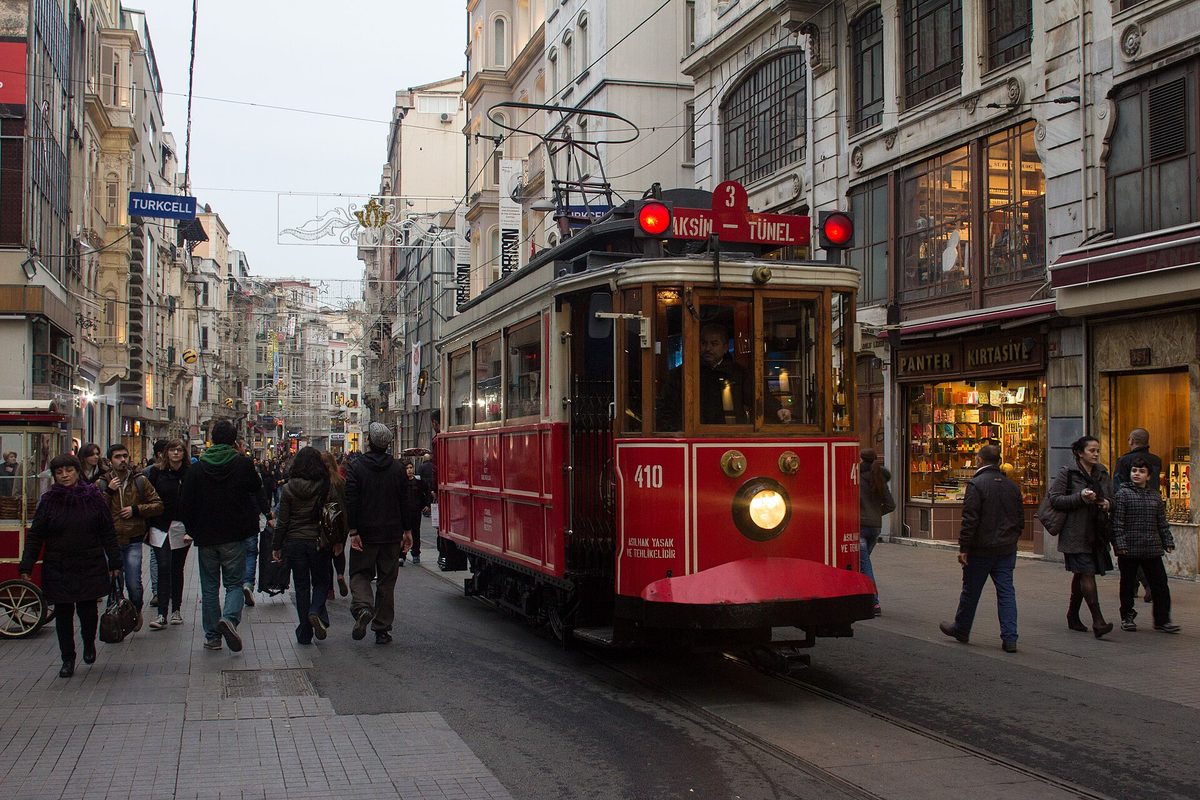
- Historic tram on İstiklal Avenue (featured image) — photo by Alexey Komarov, Wikimedia Commons, CC BY 3.0.
- Galata Bridge fishermen — photo by Jwslubbock, Wikimedia Commons, CC BY-SA 3.0.
- Hagia Sophia — photo by Berlinaut, Wikimedia Commons, CC BY-SA 4.0.
- Topkapı Palace, Baghdad Kiosk — photo by Moonik, Wikimedia Commons, CC BY-SA 3.0.
- Galata Tower — photo by Maurice Flesier, Wikimedia Commons, CC BY-SA 4.0.
- Grand Bazaar — photo by Jorge Franganillo, Wikimedia Commons, CC BY 4.0.
- Şehir Hatları ferry — photo by Mark Ahsmann, Wikimedia Commons, CC BY-SA 3.0.
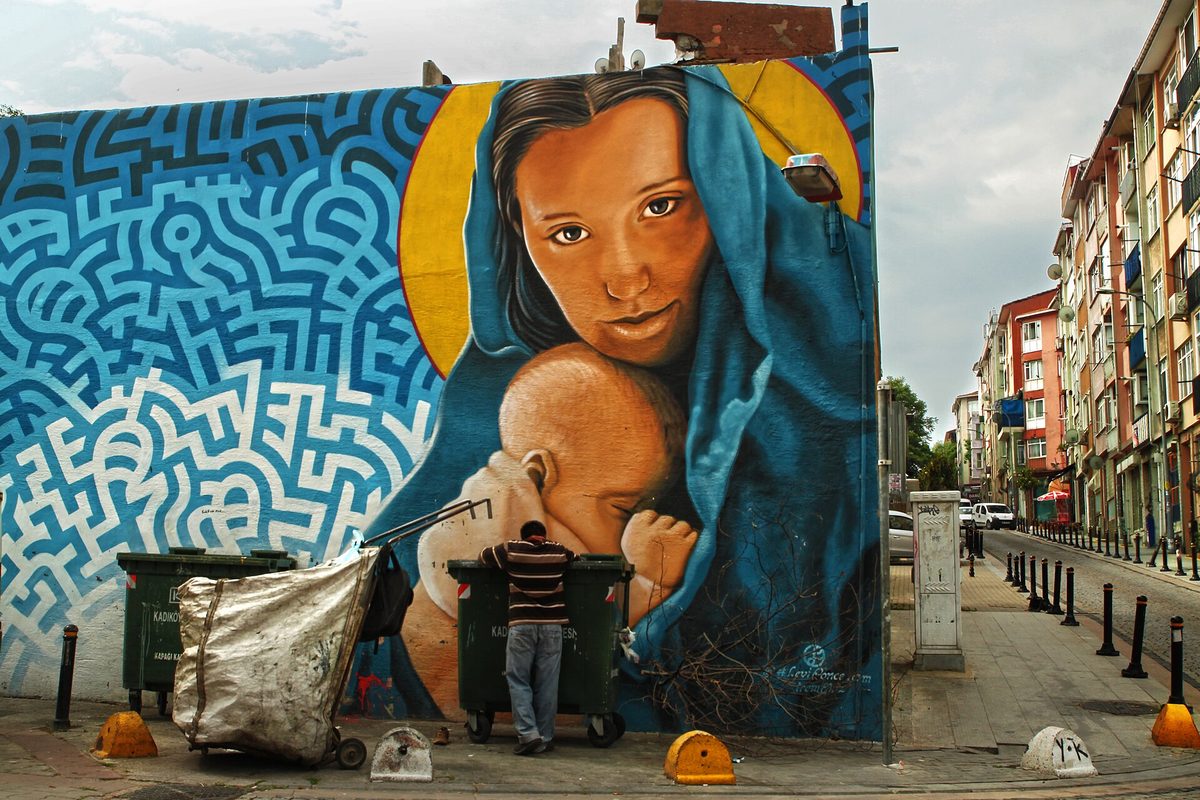
- Mural in Kadıköy — photo by Sebnem Gulfidan, Wikimedia Commons, CC BY 2.0.
- Balat houses — photo by Jwslubbock, Wikimedia Commons, CC BY-SA 4.0.
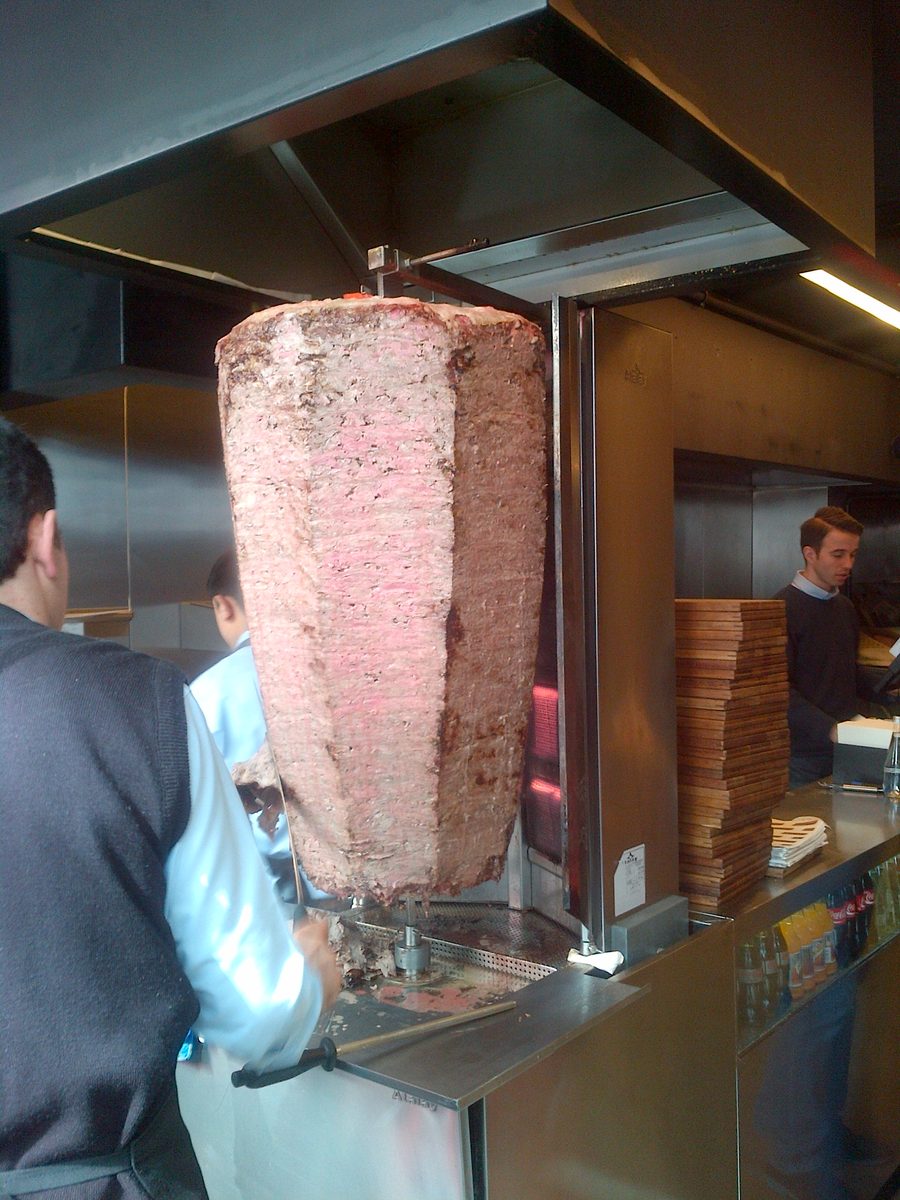
- Döner in Kadıköy — photo by E4024, Wikimedia Commons, CC BY-SA 4.0.
Prices and timings checked on 10 September 2026, converted at €1 ≈ 56 TL, $1 ≈ 48 TL and £1 ≈ 65 TL. Lira prices in Istanbul move quickly — transport fares rose in February and again in July 2026 — so treat the lira figures as the right order of magnitude and confirm the two or three that matter to your budget before you travel.