Neighbourhoods ·
Asian Side Istanbul Guide: Kadikoy, Moda, Uskudar, Camlica & the Bosphorus Shore
Twenty minutes across the water for about a euro: Kadikoy's market and bar street, Moda's promenade, Uskudar's Sinan mosques, Kuzguncuk and the view from Camlica, with 2026 fares and prices.
In this guide 15 sections
- Why the asian side istanbul locals live on is worth your time
- Getting across
- Kadıköy
- Moda: the promenade, the tram and the best free hour on the Asian side
- Üsküdar
- Kuzguncuk
- Çamlıca
- Bağdat Avenue, Beylerbeyi and the shore villages
- Further north
- Why the Asian side feels different
- A day on the Asian side
- Should you stay on the Asian side?
- Practical differences you will notice within an hour
- What is overrated over here
- Frequently asked questions
On my second trip I asked a woman in a Karaköy coffee shop where she would eat that night. She said Kadıköy, and when I said that seemed a long way to go for dinner, she looked at me as if I had said something about the moon. It is twenty minutes on a boat. She does it four nights a week.
That is the whole thing about the asian side istanbul keeps in reserve: it is not a day trip and it is not an excursion. Kadıköy, Moda, Üsküdar, Kuzguncuk and Çamlıca are twenty minutes across the water by a ferry that costs about a euro, and they are where roughly two-thirds of the city’s population actually lives.
What you get for the crossing is a version of Istanbul with almost no monuments and almost no tourists: markets, seafront promenades, bar streets, murals, a hill with the best view in the city, and food that is better and cheaper than anything you will eat in Sultanahmet. This guide covers all of it — how to get across, what each neighbourhood is for, what things cost in September 2026, and the two or three things over here that are not worth the trip.
Why the asian side istanbul locals live on is worth your time
| Neighbourhood | What it is | Go for | Getting there | Hours needed |
|---|---|---|---|---|
| Kadıköy | The big one: market, bars, food | Produce market, meyhanes, Kadife Sokak | Ferry from Eminönü, Karaköy, Beşiktaş or Kabataş | 4–6 |
| Moda | Kadıköy’s seafront suburb | The promenade, sunset, ice cream, the tram | 25 min walk or the nostalgic tram from Kadıköy | 2–3 |
| Yeldeğirmeni | Street-art quarter behind the pier | Murals, small cafés, record shops | 10 min walk from Kadıköy pier | 1–2 |
| Üsküdar | Conservative, historic, mosque-rich | Sinan mosques, Maiden’s Tower view, Salacak | Ferry from Eminönü, or Marmaray | 2–3 |
| Kuzguncuk | A village of painted houses | İcadiye Caddesi, the market garden, breakfast | Bus or 25 min walk north from Üsküdar | 2 |
| Çamlıca | The hill above everything | The view, the mosque, the tower | Bus or taxi from Üsküdar | 2 |
| Bağdat Avenue | 14 km of upscale shopping | Shops, cafés, people-watching | M4 metro to Suadiye or Bostancı | 2 |
| Beylerbeyi | A Bosphorus village with a palace | Beylerbeyi Palace, 800 TL, closed Mondays | Bus from Üsküdar | 2 |
Everything above is reachable on an Istanbulkart. Prices checked 10 September 2026, at about €1 = 56 TL.
Getting across: four ways, and only one of them is any good
There are four ways to cross to the Asian side and the difference between the best and the worst is about an hour of your life.
- Ferry. The only sensible answer. Twenty minutes, on deck, with tea and a view of the entire old-city skyline. Eminönü–Kadıköy, Karaköy–Kadıköy, Beşiktaş–Kadıköy at 59.28 TL, Kabataş–Kadıköy at 57.00 TL, and Üsküdar–Eminönü at 53.20 TL. Boats run every fifteen to twenty minutes through the day. Contactless bank cards now work at the gates as well as the Istanbulkart.
- Marmaray. The rail tunnel under the Bosphorus, Sirkeci to Üsküdar in four minutes at a standard fare. Fast, useful in bad weather, and you see nothing. Take it once for the novelty of being under the strait, then go back to the boat.
- Metrobüs. The bus rapid transit over the Bosphorus Bridge. Efficient, crushingly full, and a genuinely unpleasant introduction to the city.
- Taxi. Forty-five minutes in bridge traffic to do what a ferry does in twenty, plus a toll of about 59 TL for the older bridges. Only if you are moving luggage.
The one thing worth planning around: ferries stop running in the small hours. If you go over for dinner and drinks, check the last boat back to your side, because the alternative at two in the morning is a taxi over a bridge for 700 TL or more. Late-night ferries do run on the busiest routes, but not all night and not on every route. Full fare and route details are in the Istanbul transport guide.
Kadıköy: the market, the meze and the bar street
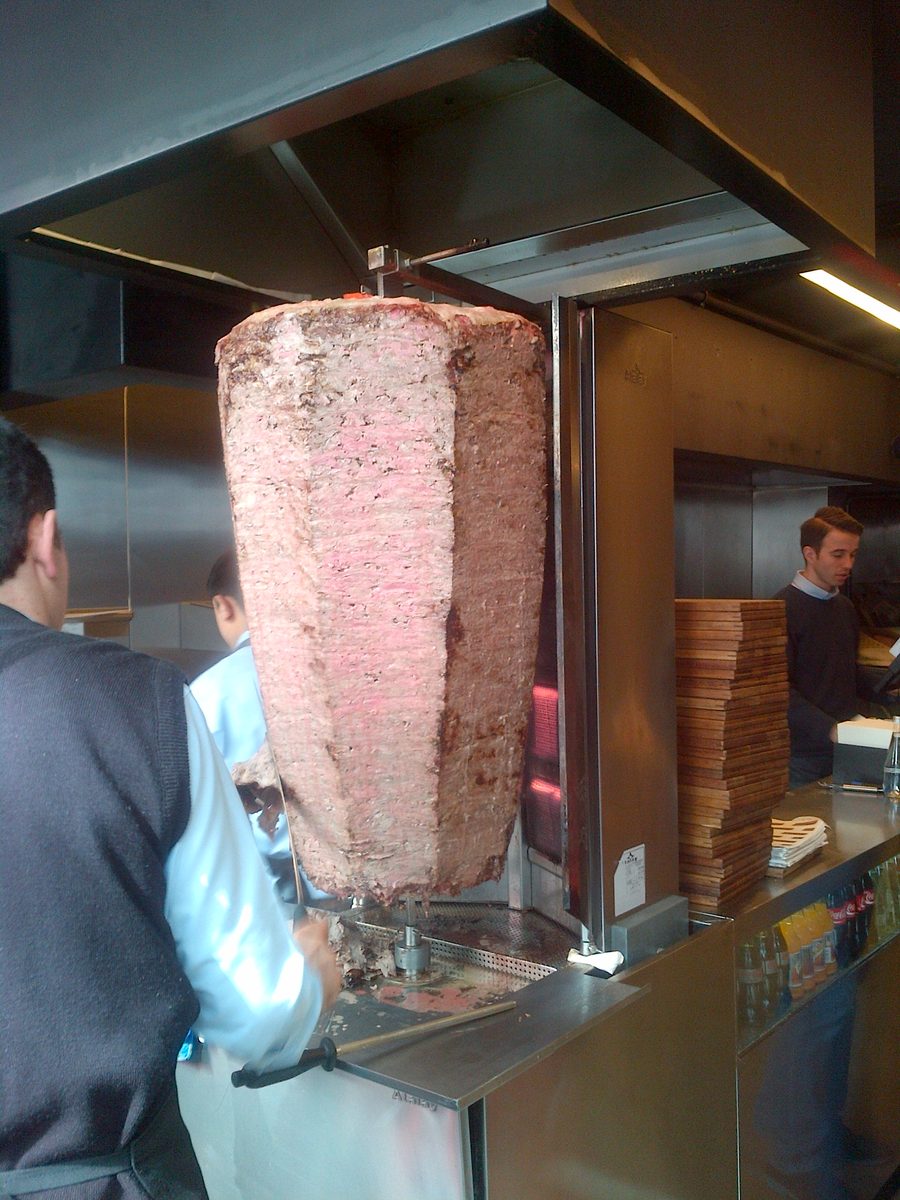
Kadıköy is a district of about half a million people and the reason most visitors come across. Everything you want is within a fifteen-minute walk of the ferry pier.
The market
The produce market — the çarşı — starts a hundred metres from the pier and runs through a grid of pedestrian lanes. It is a working market, not a tourist one: fishmongers shouting over crates of hamsi, cheese shops with fifty regional cheeses, spice merchants, and the pickle shops with wall-to-wall jars of turşu in colours that do not occur in nature. Özcan Turşu is the famous one; a glass of pickle juice is 30–50 TL and is an acquired taste worth acquiring.
Around the market: Tellalzade Sokak for antiques and secondhand books, the fish market proper, and a dense run of small restaurants. Saturday morning is the market at full volume. Sunday is quieter and some stalls close.
Eating
This is the best-value eating in Istanbul, and it is not close.
- Çiya Sofrası in the market lanes is the one restaurant on the Asian side with an international reputation, and it deserves it: regional Anatolian home cooking, much of it from the south-east, changing daily, served canteen-style. Point at things.
- Van Kahvaltı Evi for the eastern-style breakfast that made Kadıköy’s reputation for breakfast — expect 780–900 TL for two and to leave unable to move.
- Moda Meyhanesi and the meyhanes around Kadife Sokak for a rakı dinner at prices that would be a third higher in Beyoğlu.
- The döner and kokoreç shops along the main lanes, which serve the standard the tourist quarters do not reach.
What to order, and what everything costs, is in the Istanbul food guide.
Shopping in Kadıköy
Nothing here is aimed at visitors, which is precisely why it is worth an hour. Tellalzade Sokak is the antiques lane — Ottoman brassware, old photographs, radios, film posters, and a good deal of junk, with prices that assume a conversation. Süreyya Opera House at the top of Bahariye Caddesi is a 1927 building worth walking past and, if the programme suits, worth a very cheap ticket. Bahariye itself is the pedestrian shopping street, and the streets off it hold record shops, secondhand bookshops and a genuinely good concentration of small independent retailers.
The one thing I would carry home from here is food: a kilo of cheese from the market, coffee from one of the roasters, or a jar from a pickle shop, all of which cost a fraction of the equivalent in the Spice Bazaar and are what people here actually buy.
Kadife Sokak and the bars
Barlar Sokağı — Bar Street, officially Kadife Sokak — is a narrow lane of two- and three-storey wooden houses that have been bars for thirty years. Arkaoda, Karga and the rest are dark, cheap, music-led and full of students from the nearby universities. It is a completely different night out from a Beyoğlu rooftop: less view, less money, more actual fun. It runs late and it is safe.
Yeldeğirmeni
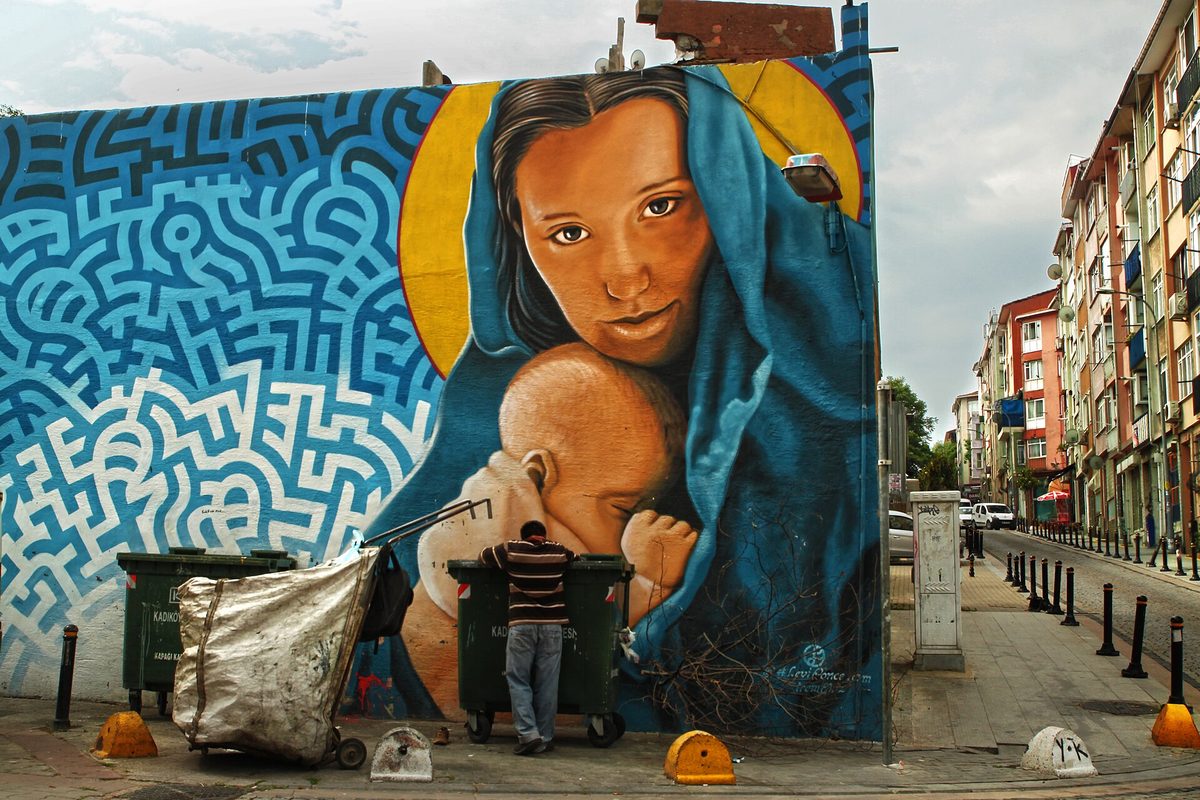
The grid of streets between the Kadıköy ferry pier and Haydarpaşa, ten minutes’ walk north. Since the Mural Istanbul festival started here in 2012 it has collected several dozen large-scale wall paintings, most of them on the blank gable ends of 1960s apartment blocks. There is no route and no map worth following; walk the grid for forty minutes and you will find fifteen of them, along with the small cafés, record shops and bookbinders that arrived with the artists.
At the bottom of the hill sits Haydarpaşa station, the vast German-built terminus of 1908 that was the start of the line to Baghdad and Medina. It has been closed for years for restoration and archaeology, and there is no date. You can walk round the outside, which is worth five minutes; do not plan on getting in.
Moda: the promenade, the tram and the best free hour on the Asian side
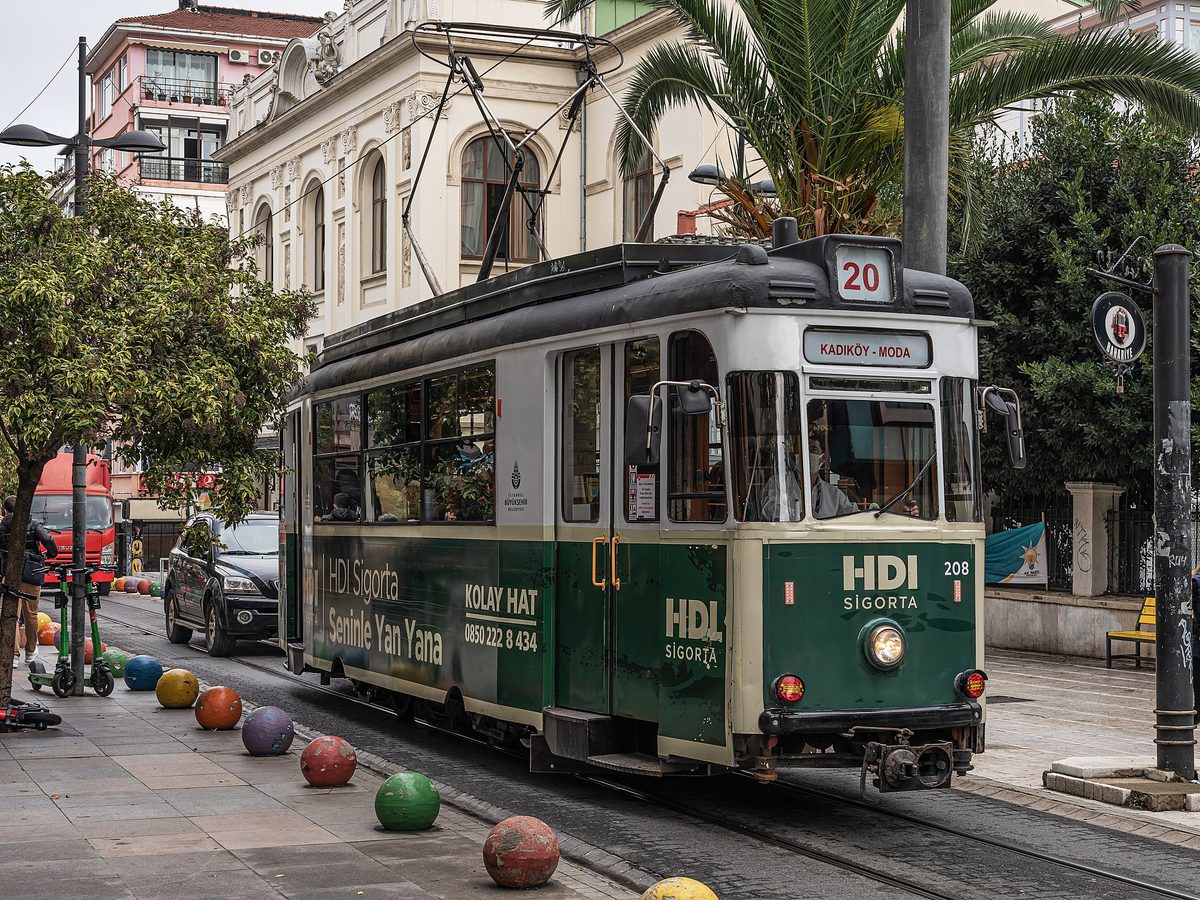
Moda is the headland south of Kadıköy: a genteel, leafy, faintly bohemian residential quarter that runs down to a long seafront path. It is a twenty-five-minute walk from the pier, or you take the little green nostalgic tram that loops around it for a standard fare.
What to do here is walk the promenade from Moda Pier round to the tea gardens, sit on the grass with everybody else, and watch the sun go down behind the old city and the Princes’ Islands. It is free, it takes an hour, and it is one of the two or three best things in Istanbul that nobody sells a ticket for. Buy an ice cream from Ali Usta on the way past; the queue is part of it.
The Moda Pier building itself, an art-nouveau ferry terminal of 1917, is now a café out over the water. Between May and September there is swimming off the rocks, and the Fenerbahçe park a little further round has more of the same with fewer people.
Üsküdar: mosques, the Maiden’s Tower and a different Istanbul
Üsküdar is a twenty-minute ferry from Eminönü and about four hundred years older in temperament than Kadıköy. This is a conservative, religious, deeply historic district — more headscarves, no bar street, and a concentration of great Ottoman mosques that most visitors never see because they are on the wrong side of the water.
- Mihrimah Sultan Mosque, right on the ferry square, built by Sinan in the 1540s for Süleyman’s daughter. Free, and you walk off the boat into it.
- Yeni Valide and Şemsi Paşa, the latter a tiny, perfect Sinan mosque sitting almost in the water on the shore path — the smallest of his mosques and one of the loveliest.
- Atik Valide, up the hill, a large complex most tourists never reach.
- Çinili Camii, the “tiled mosque”, with an İznik tile interior and an attached hamam that has been restored and is now one of the more interesting bathing options in the city.
The Maiden’s Tower, and the honest way to see it

The tower on its own islet 200 m offshore has been a customs post, a lighthouse and a quarantine station, and since a restoration finished in 2023 it has been a small museum with a café and a viewing terrace. Entry runs about €27 plus roughly €5 for the boat from Üsküdar or Kabataş.
Two honest notes. First, whether the Museum Pass covers it is genuinely disputed: one long-running guide site states flatly that it is not accepted, while another, updated in August 2026, says entry is free with the Museum Card. I have seen both claimed within a month of each other and cannot resolve it — ask at the Üsküdar boat desk before you buy anything, and do not build a Museum Pass purchase around it.
Second, the tower is a much better thing to look at than to be inside. The Salacak shore path, ten minutes’ walk south of Üsküdar pier, puts you level with it across a narrow strip of water with the whole old-city skyline behind, and at sunset it is the single most photographed view in Istanbul that costs nothing. If you are choosing between the ticket and an hour on the Salacak wall with a glass of tea, take the wall.
Kuzguncuk: the prettiest street on the Asian side
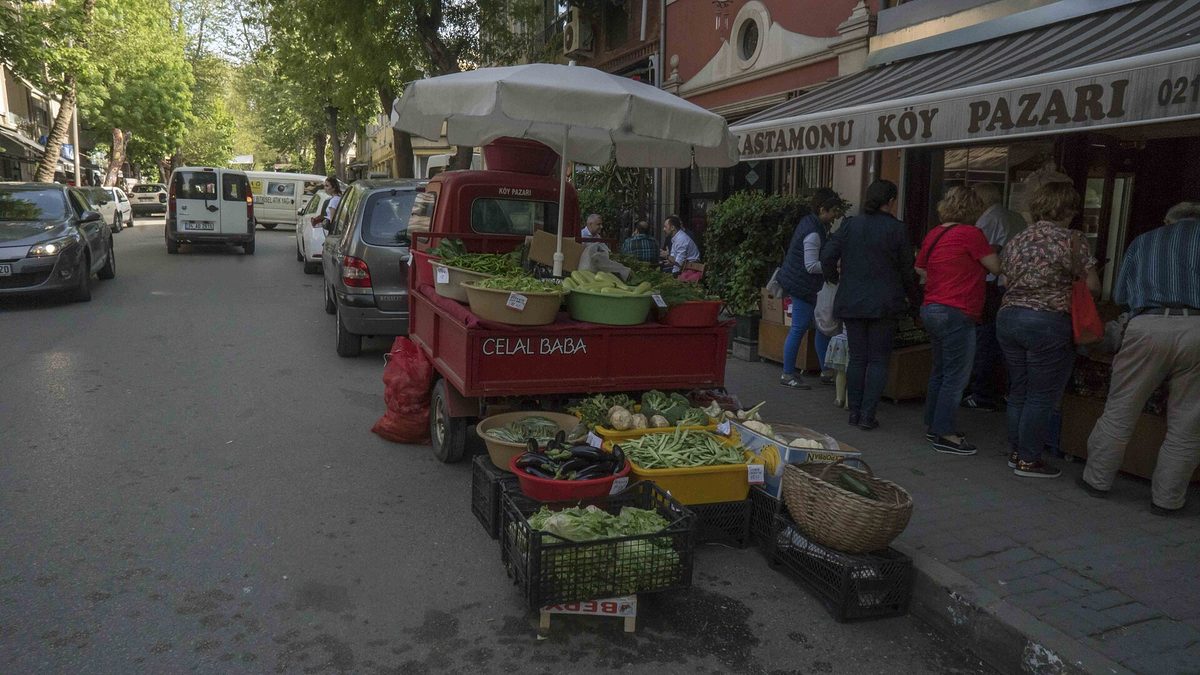
A former Jewish, Greek and Armenian village on the Bosphorus shore twenty-five minutes’ walk or one short bus ride north of Üsküdar, and now a single painted street of about four hundred metres that is among the most photographed places in the city.
What makes Kuzguncuk more than a photograph is that a synagogue, a Greek Orthodox church, an Armenian church and a mosque all stand within about two hundred metres of each other, several of them still in use, which is a piece of Istanbul’s actual social history rather than a curiosity. Behind them is the bostan, a surviving market garden that residents fought a long campaign to save from development, now a community allotment.
Go for breakfast, walk the street, look at the wooden houses, have tea by the ferry landing. It takes two hours and it is very pleasant. It is also small — people who arrive expecting a neighbourhood find a street, so calibrate.
Çamlıca: the view, the mosque and the tower
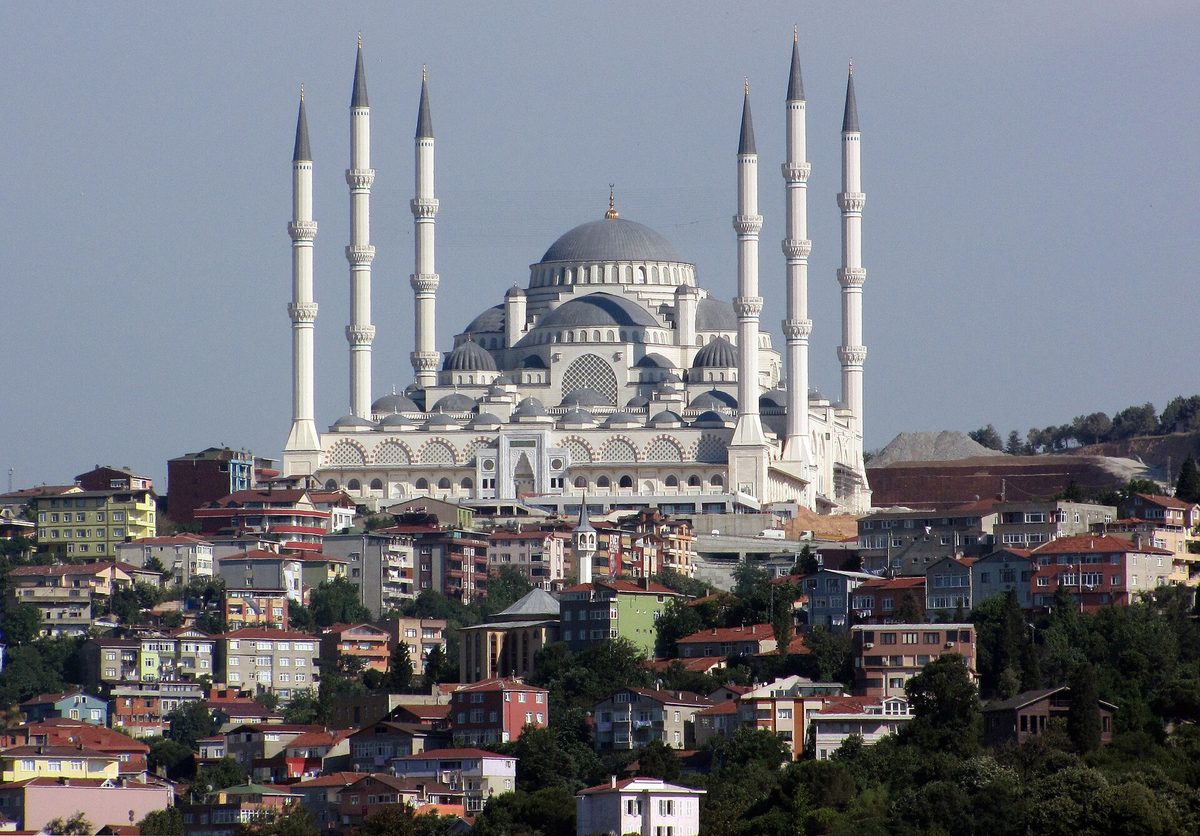
Çamlıca Hill rises to 265 m above Üsküdar and is the highest point in the city. Three things sit on it.
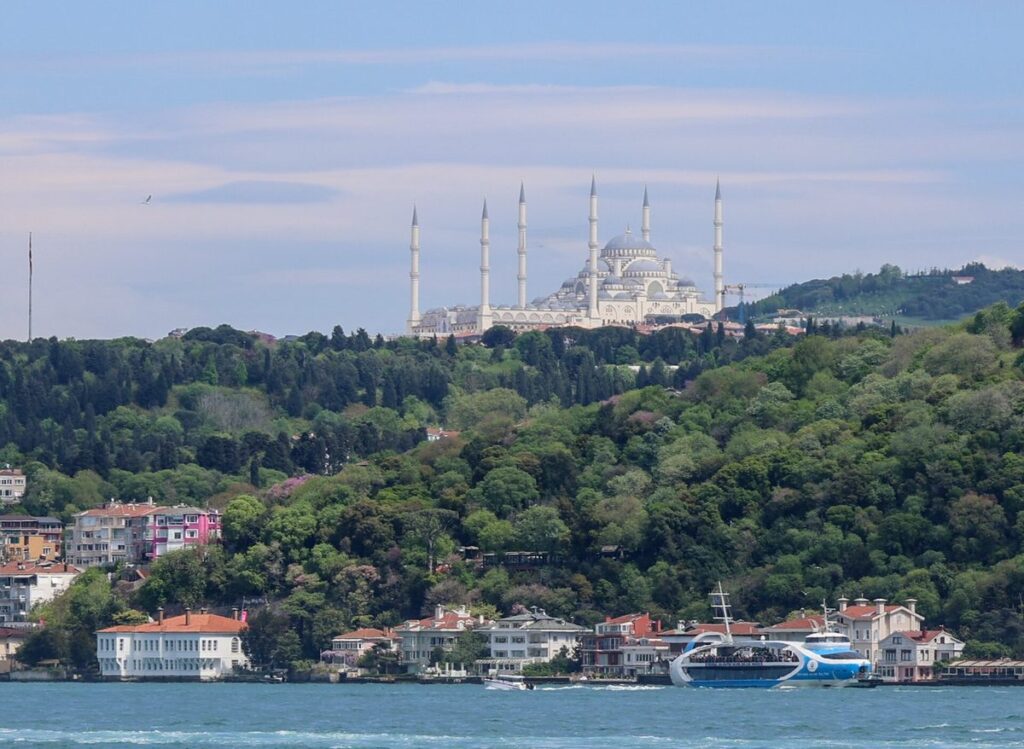
Çamlıca Mosque, opened in 2019, is the largest mosque in Turkey — a capacity somewhere around 63,000, six minerets, an art gallery, a library and a museum in the complex underneath. It is free, it is enormous, and opinions about it in Istanbul are politically loaded in a way that is worth being aware of and not worth wading into as a visitor. Architecturally it is a very large classical-Ottoman pastiche; as a space to stand in it is genuinely impressive.
Çamlıca Tower, the 369 m broadcasting tower finished in 2021, has an observation deck and restaurants near the top. It is the tallest structure in Istanbul and gives you a view over both continents at once. Ticket prices have moved around a good deal and are not consistently published; check at the door.
Çamlıca Hill park is the free option and the one Istanbul families use: terraced gardens, tea houses, and the whole Bosphorus laid out beneath you from the Marmara to the second bridge. Sunset is the time. Getting up there means a bus from Üsküdar or a taxi at around 250–350 TL; there is no metro.
Bağdat Avenue, Beylerbeyi and the shore villages
Bağdat Caddesi runs fourteen kilometres from Kızıltoprak out to Maltepe and is the Asian side’s answer to Nişantaşı: broad, tree-lined, and solidly upmarket, with international brands, Turkish designers and a café culture that is entirely local. There is nothing to see. It is a good two hours if you like watching a city be prosperous, and the M4 metro runs underneath it.
Beylerbeyi, under the first Bosphorus bridge, is a shore village with a summer palace: 800 TL to enter (about €14), closed Mondays, and covered by the Museum Pass. It is smaller and less overwhelming than Dolmabahçe and considerably less crowded, with a marble hall built around a fountain. Combine it with a walk along the shore.
Çengelköy, a little further north, is the tea-garden and small-cucumber village — genuinely famous for its cucumbers — and one of the most pleasant hours on the Bosphorus. All of these are visible from the water, and the Bosphorus ferry routes stop at several of them.
Further north: the Asian Bosphorus villages
Above Beylerbeyi the Asian shore turns into a string of villages that were, until about a century ago, entirely separate places. The ferry and the shore road connect them and almost no visitors go.
Anadolu Hisarı
The fortress Bayezid I built in 1394 at the narrowest point of the Bosphorus, half a century before Mehmed II put Rumeli Hisarı directly opposite it and closed the strait to Byzantine shipping. It is smaller and rougher than its European twin and sits in a village of wooden houses around a stream, with the oldest surviving yalı — waterfront mansion — in Istanbul beside it, the Amcazade Hüseyin Paşa Yalısı of 1699. There is not much to do. It is a genuinely lovely hour.
Kanlıca
Famous for one thing, which is yoghurt: thick, set, eaten with icing sugar spooned over the top, sold from a row of stalls by the ferry pier and served on the Şehir Hatları boats that stop here. It costs almost nothing, it has been the village’s trade since the seventeenth century, and it is worth arranging a ferry around.
Beykoz and Anadolu Kavağı
Beykoz is the last substantial town on the Asian shore before the Black Sea, with a large park and the Ottoman-era İshak Ağa fountain. Beyond it, Anadolu Kavağı is the terminus of the long Bosphorus ferry and the base for the climb up to Yoros Castle, the Byzantine and Genoese ruin that looks straight down the strait to the open sea. The Üsküdar–Anadolu Kavağı public line runs the whole Asian shore in about a hundred minutes at standard fares, calling at nine piers — the cheapest full-length Bosphorus cruise there is, and one of the least known.
Çengelköy and the tea gardens
Between Beylerbeyi and Kanlıca, Çengelköy is a shore village of plane trees and tea gardens whose historic tea house sits under a vast tree right on the water. It is also, seriously, known across Turkey for its cucumbers — small, thin-skinned, sold by the crate. An hour here with a glass of tea watching the tankers go past is a very good way to lose an afternoon.
Why the Asian side feels different: a short history
Chalcedon, on the site of modern Kadıköy, was founded around 685 BC — seventeen years before Byzantium was founded across the water. When the settlers who founded Byzantium asked the oracle at Delphi where to build, the answer was reportedly “opposite the land of the blind”, the blindness being that of the Chalcedonians, who had somehow picked the site without the natural harbour. Kadıköy has been living down that story for two and a half thousand years.
For most of the Byzantine and Ottoman periods this shore was semi-rural: Üsküdar — Chrysopolis, then Scutari — was the caravan terminus where the road to Anatolia, Damascus and Mecca began, which is why it accumulated so many imperial mosques, and why the pilgrim caravans formed up here. The villages further north were summer retreats, and the great families built wooden yalıs along the water for the months when the city was unbearable.
The nineteenth century brought the railway. Haydarpaşa station opened in 1908 as the Istanbul end of the Baghdad Railway, and the neighbourhoods behind it — Yeldeğirmeni above all — were built for railway workers and the Germans who built the line, which is why the architecture there is different from anything else in the city. Florence Nightingale ran her hospital in the Selimiye Barracks in Üsküdar during the Crimean War; the barracks are still an army base and a small museum in one tower can be visited by arrangement.
The real change came after 1973, when the first Bosphorus bridge opened and the Asian side stopped being across the water and started being a suburb. The population went up several times over in thirty years, Bağdat Avenue turned into a commercial spine, and Kadıköy — which had always been the more secular, more mixed, more left-leaning half of the city — became a district of half a million people with its own universities, its own music scene and no particular interest in tourism.
All of which is why the two shores feel unalike. The European side, and particularly the historic peninsula, is imperial: it was built to be looked at. This side was built to be lived in, and it still is.
A day on the Asian side
- 09:30 — Ferry from Eminönü to Üsküdar. Sit on the right for the old-city view.
- 10:00 — Mihrimah Sultan and Şemsi Paşa mosques, then the shore path south to Salacak for the Maiden’s Tower.
- 11:15 — Bus or walk north to Kuzguncuk. Breakfast on İcadiye Caddesi, look at the four religious buildings and the market garden.
- 13:30 — Bus up to Çamlıca for the mosque and the view over both continents.
- 15:30 — Down to Kadıköy. The produce market, the pickle shops, Tellalzade for antiques.
- 17:00 — Yeldeğirmeni’s murals, then the nostalgic tram round to Moda.
- 18:30 — The Moda promenade for sunset, with an ice cream.
- 20:00 — Meyhane dinner near Kadife Sokak, then the bars.
- Late — Ferry back, having checked the last one.
That is an ambitious day and it works. A gentler version drops Çamlıca and Kuzguncuk and gives the whole afternoon to Kadıköy and Moda, which is what I would actually do on a first crossing. Where this fits in a three- or five-day trip is set out in the Istanbul itineraries.
Should you stay on the Asian side?
A real question, and the answer is: for a second or third visit, yes; for a first, probably not.
The case for. Hotels and rentals are meaningfully cheaper. You eat better for less every single night. Kadıköy has the nightlife and Moda has the sea. You are staying in a residential city rather than a visitor one, which some people find is the difference between a trip and a stay. And the ferry commute is a genuine pleasure rather than a cost.
The case against. Almost everything on a first-timer’s list — Hagia Sophia, Topkapı, the Blue Mosque, the cisterns, the bazaars, Beyoğlu — is on the other side. That is a twenty-minute ferry each way, plus waiting, plus the walk to the pier, which realistically costs you an hour a day. Late nights are constrained by the ferry timetable. And the hotel stock is thinner and less geared to visitors.
The compromise most people should make: stay on the European side and cross for a full day and one evening. The full comparison of neighbourhoods on both sides is in the accommodation guide.
Practical differences you will notice within an hour
Crossing the water changes a handful of small operational things, and knowing them in advance saves a certain amount of standing about looking confused.
- Fewer people speak English, and considerably fewer in Üsküdar than in Kadıköy. Kadıköy has universities and a young population, so you will manage; Üsküdar, Kuzguncuk and the shore villages are ordinary Turkish neighbourhoods where a translation app earns its place.
- Menus are in Turkish and often handwritten on a board. This is a feature. Çiya solves it by letting you point; elsewhere, photograph the board and translate it.
- Cash matters more. Market stalls, the pickle shops, the tea gardens, the small meyhanes and the buggy and bike rentals all prefer it. Cards work in the restaurants and the chains.
- Alcohol is geographically specific. Kadıköy and Moda are full of bars; Üsküdar, Çamlıca and Kuzguncuk are conservative districts where you should not expect a beer with lunch, and where asking for one is faintly awkward rather than any kind of problem.
- Dress in Üsküdar. Nobody will say anything about anything, but you will be more comfortable in longer sleeves and trousers or a longer skirt around the mosque quarter than you would be in Moda, where the standard is the same as any Mediterranean seafront.
- Prayer times close mosques here too, and the Üsküdar mosques are working neighbourhood mosques with fuller congregations than the tourist-facing ones across the water. Check the day’s times before you build a morning around Mihrimah Sultan and Atik Valide.
- The hills. Kadıköy to Moda is flat and pleasant. Üsküdar up to Atik Valide, and anything approaching Çamlıca, is not. Buses and taxis exist for a reason.
The scams that operate around İstiklal and Sultanahmet essentially do not run over here, because there is no volume of tourists to run them on. The one thing to keep an eye on is the same as anywhere: agree a taxi on the meter or use BiTaksi. The rest of the practical ground rules are in the Istanbul travel tips.
What is overrated over here
- The Maiden’s Tower ticket. About €32 with the boat for a small museum and a café. The view of it from the Salacak wall is better than the view from it, and free.
- Bağdat Avenue as a sight. It is a long, pleasant, expensive shopping street. If you have flown to Istanbul, it is not what you came for.
- Çamlıca Tower’s observation deck, if the free hill park is right beside it and gives you the same panorama from twenty metres lower. Go up the tower only if you specifically want the enclosed 360-degree deck.
- Crossing on the Metrobüs “to see the bridge”. You will see a crash barrier and the inside of a very full bus. Take the ferry.
- Doing Kadıköy in ninety minutes between other things. It is a district, not a stop. Give it an afternoon and an evening or leave it for next time.
Frequently asked questions about the Asian side
Which ferry pier should I sail from?
For Kadıköy: Eminönü if you are in the old city, Karaköy if you are in Galata, Beşiktaş or Kabataş if you are further up the European shore. For Üsküdar: Eminönü, or the Marmaray from Sirkeci. If you are heading for the Princes’ Islands afterwards, note that Bostancı on the Asian side is only thirty minutes from Büyükada against ninety from Kabataş — crossing first and sailing from there saves an hour each way.
Is the Asian side of Istanbul worth visiting?
Yes, and for most people it is the best day of the trip after the old city. You get the produce market and food of Kadıköy, the seafront at Moda, the Sinan mosques of Üsküdar, the painted street at Kuzguncuk and the view from Çamlıca, all for the price of a ferry ticket and with a fraction of the crowds.
How do you get to the Asian side of Istanbul?
Ferry, in twenty minutes, for 53–60 TL depending on the route — Eminönü, Karaköy, Beşiktaş or Kabataş to Kadıköy, or Eminönü to Üsküdar. The Marmaray rail tunnel does Sirkeci to Üsküdar in four minutes at a standard fare if the weather is bad. Metrobüs and taxis both exist and both are worse.
Is Kadıköy on the Asian side?
Yes. Kadıköy is the main district on the Asian shore opposite the old city, about twenty minutes by ferry from Eminönü or Karaköy. Üsküdar, Moda, Kuzguncuk, Çamlıca and Bağdat Avenue are all on the same side.
Is the Asian side safe?
Yes, and in ordinary terms it is calmer than the tourist quarters, because there are far fewer of the commercial scams that operate around İstiklal and Sultanahmet. Kadıköy’s bar street is busy and student-heavy and safe late; Üsküdar is quiet and conservative. Normal city sense, and check the last ferry.
How long do you need on the Asian side?
One full day covers Üsküdar, Kadıköy and Moda comfortably. Add Kuzguncuk and Çamlıca and it becomes a long day. If you only have an afternoon, do Kadıköy and Moda and skip Üsküdar entirely.
Is Üsküdar or Kadıköy better?
Different things. Üsküdar is the historic one — Sinan mosques, the Maiden’s Tower view, a conservative residential atmosphere and no bars. Kadıköy is the lively one — market, meyhanes, murals, students, nightlife. Most people prefer Kadıköy; Üsküdar is where the architecture is.
Do the ferries run late?
The busiest routes run into the small hours but not all night, and not every route keeps the same last departure. Check the last boat for your specific crossing before you settle in for dinner — a taxi back over the bridge at two in the morning costs 700 TL or more with tolls.
Is the Maiden’s Tower covered by the Museum Pass?
Sources genuinely disagree. One established guide site says the pass is not accepted; another, updated in August 2026, says entry is free with the Museum Card. Ask at the boat desk in Üsküdar rather than assuming, and do not buy a Museum Pass on the strength of it.
Can you swim on the Asian side?
Yes, off the rocks at Moda and around Fenerbahçe park between roughly June and September, when the sea reaches 20–24 °C. It is city swimming rather than beach swimming — no sand, and you get in off concrete. For proper beaches you want the Black Sea coast at Şile or Kilyos, which are covered in the day trips guide.
What is the best view on the Asian side?
Çamlıca Hill for the panorama over both continents, free, at sunset. Salacak for the Maiden’s Tower against the old-city skyline, also free. The Moda promenade for the sun going down behind the Princes’ Islands. All three beat anything you pay for over here.
Bostancı is the reason to cross before you sail: it is fifteen to thirty minutes from the islands against ninety from Kabataş, and it sits on the M4 metro. Our guide to the Princes’ Islands compares all four islands, the ferry operators and the 2026 fares, and explains what replaced the horse carriages.
Çiya is only the start: Kanaat in Üsküdar has fed the ferry square since 1933, Yanyalı Fehmi has cooked in Kadıköy since 1919, and the first Michelin star on this side of the water went to Araf in 2026. All of them are in our guide to the best restaurants in Istanbul.
Kadıköy’s Tuesday market and antique street are a genuinely local alternative to the tourist-facing bazaars on the other side of the water. Our what to buy in Istanbul guide covers 25 souvenirs worth packing, where to buy each one fairly, and the carpet and leather scams to watch for.
Kadıköy’s bar street around Kadife Sokak runs a cheaper, less touristed evening than anything on the European side. Our Istanbul nightlife guide covers it alongside Beyoğlu, Karaköy and the Bosphorus villages, with current prices for each.
Related Istanbul guides
- Things to do in Istanbul — the full list, both sides of the water.
- Bosphorus cruises and ferries — the routes that stop at the shore villages.
- Getting around Istanbul — ferry fares, Marmaray and the Istanbulkart.
- What to eat in Istanbul — why Kadıköy is the best-value eating in the city.
- Where to stay in Istanbul — the Asian side as a base, weighed honestly.
- Beyoğlu, Galata and Karaköy — the district you sail from.
- Sultanahmet and the old city — the skyline you look back at.
- Istanbul itineraries — where an Asian-side day fits.
- Day trips from Istanbul — including the Princes’ Islands from Bostancı.
- Istanbul travel tips — fares, closed days and etiquette.