The best thing I ate in Istanbul cost eighty lira and I ate it standing up, in the rain, outside a shop in Kadıköy that has no sign in English. The worst thing I ate cost two thousand, came with a Bosphorus view and a violinist, and was a chicken breast. That gap — enormous, and almost entirely predictable from where you are standing — is the single most useful thing to understand about eating here.
If you want to know what to eat in Istanbul, start with a proper Turkish breakfast, balık ekmek at Eminönü, midye dolma from a street cart, an Adana or Urfa kebab, a meyhane dinner of meze with rakı, and baklava from a serious baklavacı. Street items run 20–80 TL; a meyhane dinner for two costs 2,000 TL and up.
What follows is forty dishes and drinks, grouped by when and where you would actually eat them, with September 2026 prices, the neighbourhoods that do each one properly, the named places I go back to, and an honest section on what is overrated. Prices were checked on 10 September 2026 at €1 ≈ 56 TL.

What to eat in Istanbul: the shortlist and what it costs
If you have three days and want to eat the things that matter, this is the table. Prices checked 10 September 2026 at €1 ≈ 56 TL, and they move faster than the exchange rate does.
| Dish | What it is | Where to eat it | Price |
|---|---|---|---|
| Kahvaltı | The full Turkish breakfast: cheeses, olives, eggs, honeycomb, jams, bread | Kadıköy, Beşiktaş, Cihangir, Çengelköy | 780–900 TL for two |
| Simit | Sesame-crusted bread ring, sold from red carts everywhere | Any street, any hour | 20–35 TL |
| Balık ekmek | Grilled mackerel in bread with onion and rocket | The boats at Eminönü | 150–200 TL |
| Midye dolma | Mussels stuffed with spiced rice, eaten with lemon | Street carts, Beyoğlu and Kadıköy | 15–25 TL each |
| Kokoreç | Seasoned grilled offal in bread. Better than it sounds | Şampiyon Kokoreç, Beyoğlu | 150–250 TL |
| Adana / Urfa kebab | Hand-minced lamb on a flat skewer, spiced or not | Kebab houses citywide | 450–800 TL |
| İskender | Döner over bread with tomato sauce and melted butter | Anywhere serious about it | 500–750 TL |
| Lahmacun | Thin flatbread with minced lamb, rolled with lemon and parsley | Kebab houses, Kadıköy | 120–200 TL |
| Pide | Boat-shaped flatbread with cheese, egg or meat | Pideci shops | 250–400 TL |
| Mantı | Tiny dumplings under garlic yoghurt and chilli butter | Kadıköy, Beşiktaş | 350–500 TL |
| Meze + rakı | A long table of cold and hot small plates with aniseed spirit | Meyhanes in Beyoğlu and Kadıköy | 2,000 TL+ for two |
| Hamsi | Black Sea anchovies, fried or baked. Season from November | Fish restaurants citywide | 180–280 TL |
| Mercimek çorbası | Red lentil soup with lemon. The default cheap meal | Any lokanta | 120–200 TL |
| Kuru fasulye + pilav | White beans in tomato with rice. Student food, done properly | Süleymaniye, Fatih | 250–400 TL |
| Kumpir | Baked potato mashed with butter and cheese, then loaded | Ortaköy | 200–300 TL |
| Islak burger | The “wet burger”, steamed in tomato sauce. A 3 a.m. food | Kızılkayalar, Taksim | 90–150 TL |
| Baklava | Layered filo with pistachio or walnut and syrup | Karaköy Güllüoğlu | 150–350 TL a portion |
| Künefe | Shredded pastry over stretchy cheese, syrup, served hot | Dedicated shops | 250–400 TL |
| Dondurma | Mastic ice cream, dense enough to cut with a knife | Street sellers, Moda | 80–200 TL |
| Türk kahvesi | Coffee boiled in a cezve, served with the grounds and a sweet | Everywhere | 120–250 TL |
| Çay | Black tea in a tulip glass, drunk more or less constantly | Everywhere, including the ferry | 25–60 TL |
| Boza | Fermented millet drink, thick, sour, winter only | Vefa Bozacısı | 80–120 TL |
Breakfast, which is the meal Istanbul does best
Turkish breakfast is not a course, it is an event, and a serious one takes two hours. A table for two arrives covered in twelve to twenty small dishes and costs 780–900 TL in Kadıköy, more on the Bosphorus.
Kahvaltı at its fullest: white cheese and aged kaşar, black and green olives, cucumber and tomato, several jams, honey with kaymak — clotted buffalo cream — sucuk, butter, boiled eggs, tea refilled until you stop them. Van kahvaltısı, the eastern version, adds otlu peynir with wild herbs and a sweet called murtuğa.
Menemen, eggs scrambled slowly into tomato, green pepper and sometimes sucuk, served in the pan. 200–350 TL. The argument about whether onions belong in it is genuine and unresolvable.
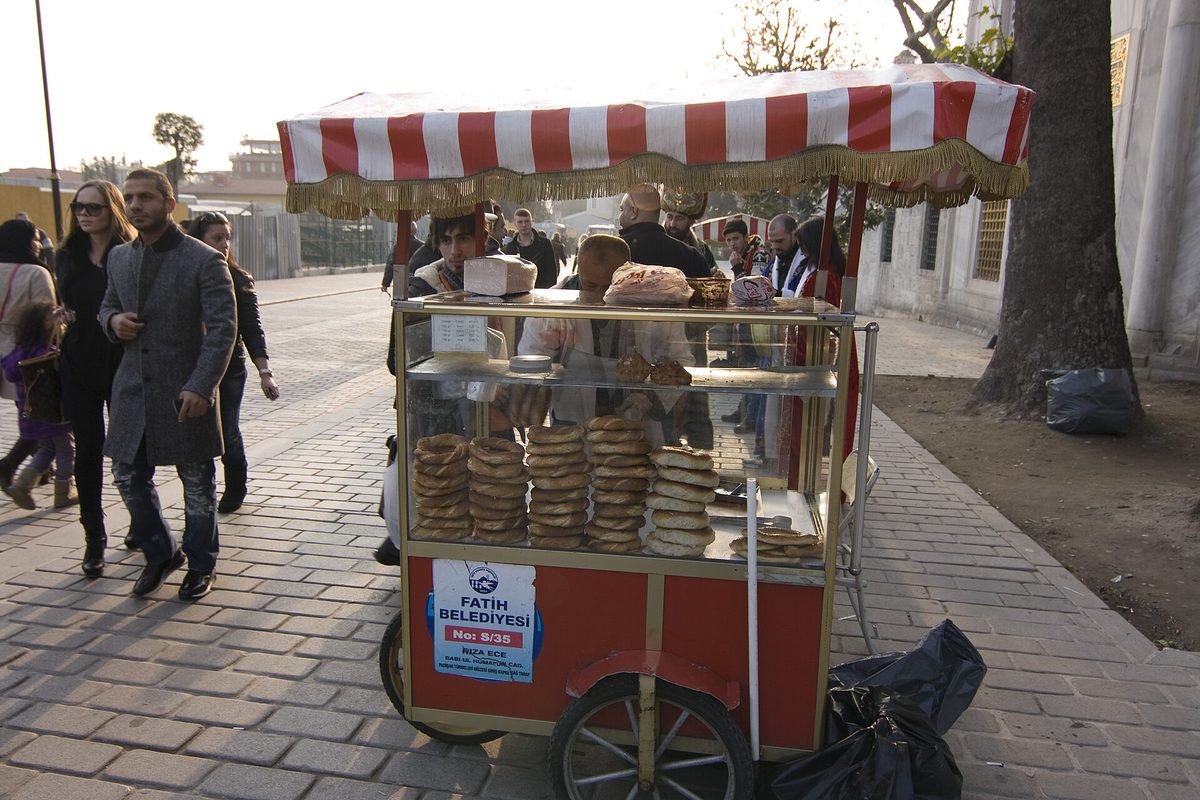
Simit, the sesame ring, 20–35 TL from the red carts. Buy it warm in the morning, not at four in the afternoon. Karaköy Galata Simitçisi does the best version I have had, and it is open all night.
Börek, layered pastry with cheese, spinach or minced meat, 100–200 TL a slice. Su böreği, the “water börek”, is boiled before baking and comes out closer to lasagne than to pastry — look for it in the morning at a proper börekçi and expect it to be gone by eleven.
Poğaça, soft savoury buns, and açma, a sweeter twisted roll, both around 40–70 TL and both bakery staples.
Bal kaymak, honeycomb and clotted cream on bread, which if you have not had it is the single most persuasive item on a breakfast table.
Where to go. Kadıköy’s Moda side, the streets behind Beşiktaş market, Cihangir for the leisurely version and Çengelköy on the Asian shore for the one with the view. Sunday breakfast is a social institution here and the good places fill by ten.
Street food
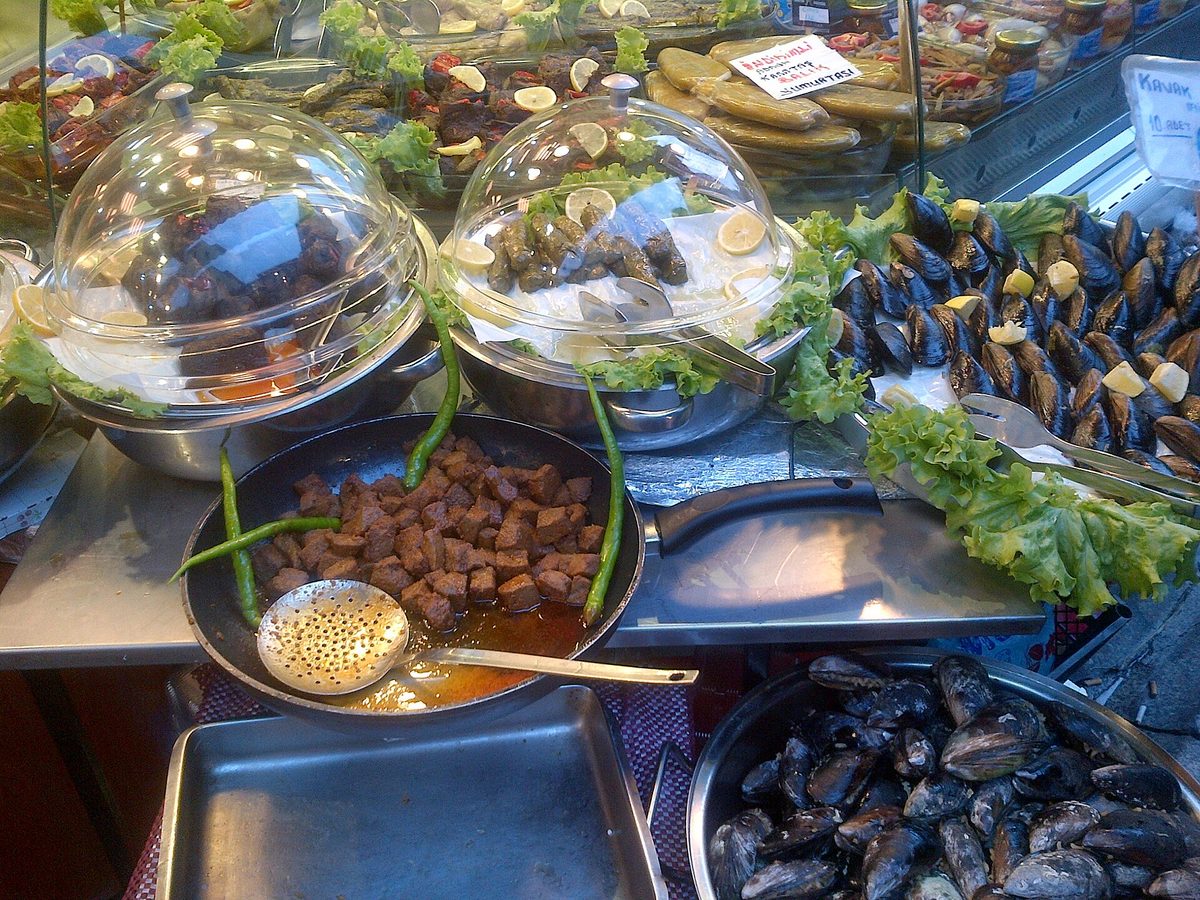
Midye dolma, mussels stuffed with rice spiced with cinnamon, allspice and pine nuts, 15–25 TL each. The seller prises one open, squeezes lemon on it and hands it to you; you keep going until you stop, and he counts the shells. Midyeci Ahmet is the reliable chain version. The classic advice is to eat them only in cool weather and only where the turnover is fast, which is sensible.
Balık ekmek, 150–200 TL, from the boats moored at Eminönü under Galata Bridge. Grilled mackerel, raw onion, rocket, lemon, in half a loaf. It is a tourist ritual and it is also genuinely good. Tarihi Eminönü Balıkçısı is the one with the queue. Buy a glass of turşu suyu — pickle juice, 30–50 TL — from the stand next door, because that is the correct accompaniment and because Özcan Turşu has been selling it for decades.
Kokoreç, 150–250 TL, seasoned lamb intestine wrapped around offal and grilled on a spit, chopped and served in bread with oregano and chilli. This is the item people are most reluctant about and most often converted by. Şampiyon Kokoreç in Beyoğlu is the famous one.
Çiğ köfte, 80–150 TL, bulgur kneaded with pepper paste and spices, wrapped in lettuce or a lavaş with pomegranate syrup. Since a 2009 regulation, the version sold in shops is meatless, so it is reliably vegetarian.
Tantuni, 150–250 TL, finely chopped beef fried on a flat pan with cotton oil and rolled in thin bread. A Mersin dish that Istanbul has thoroughly adopted.
Kumpir, 200–300 TL, at Ortaköy: an enormous baked potato mashed in its skin with butter and kaşar, then piled with whatever you point at from a counter of twenty toppings. Silly, filling, and best eaten sitting on the wall by the mosque.
Islak burger, 90–150 TL, the “wet burger” — a small beef patty in a bun steamed in garlicky tomato sauce inside a glass cabinet. Kızılkayalar on Taksim Square is the institution. It exists for three in the morning and should be judged on those terms.
Pilav and nohut, 100–150 TL, chickpeas over buttery rice from a white cart, often with shredded chicken. Meşhur Unkapanı Pilavcısı has been doing it since 1958. This is what Istanbul actually eats for lunch.
Kestane, roasted chestnuts, 100–150 TL a bag in winter, and mısır, boiled or grilled corn, from the same carts in summer.
Kebabs, grills and the meat you came for
Adana kebab, 450–800 TL, hand-minced lamb with tail fat and red pepper on a flat skewer, hot with chilli. Urfa kebab is the same thing without the heat. Both come with grilled tomato and pepper, sumac onions and lavaş, and both are judged on the mince rather than the marinade.
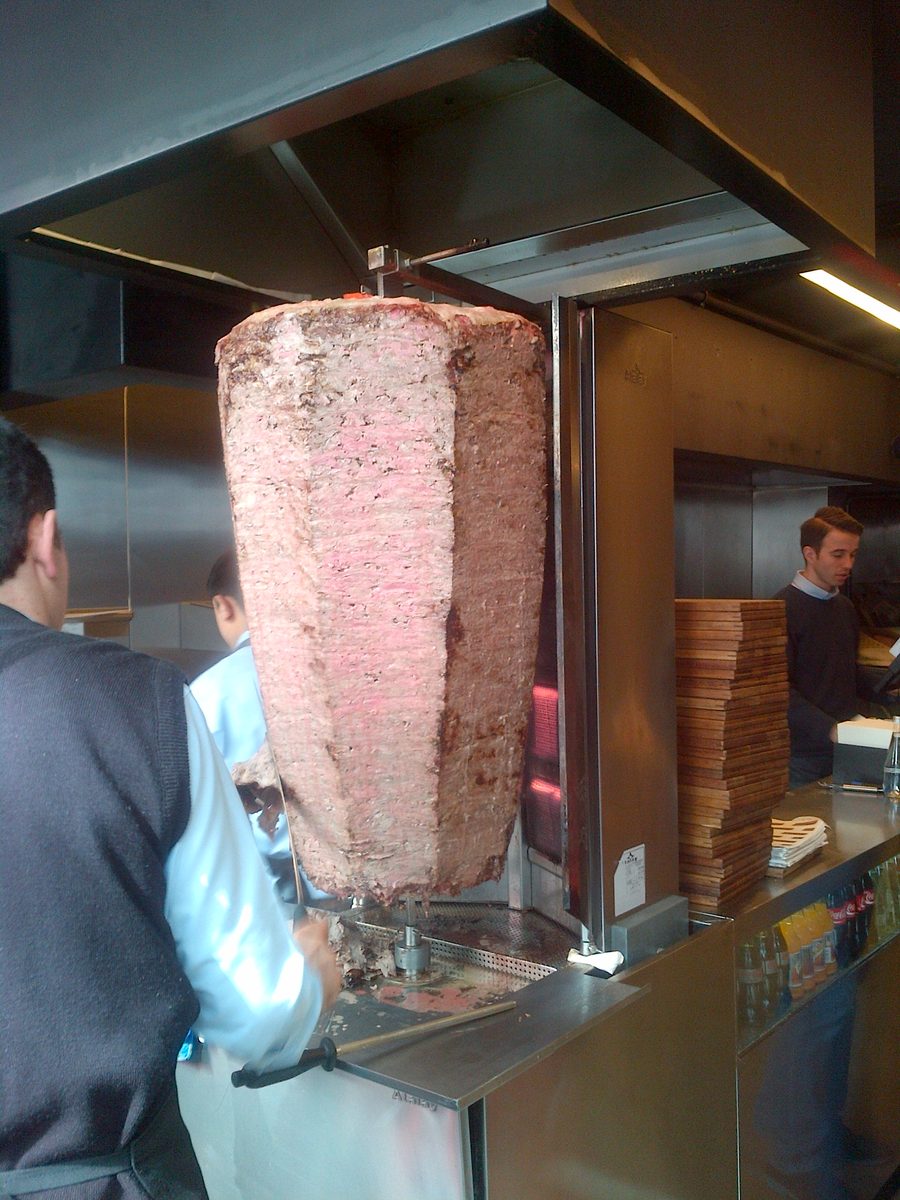
Döner, 200–400 TL in bread and more on a plate. The test is the spit: hand-stacked layers of marinated lamb or beef, shaved thin, not a machine-formed cone. Kadıköy and Beşiktaş have the honest versions.
İskender, 500–750 TL, döner laid over cubes of bread with tomato sauce and yoghurt, finished at the table with browned butter poured from a pan. A Bursa dish and the most theatrical thing on most menus.
Cağ kebabı, an Erzurum speciality, lamb marinated overnight and cooked on a horizontal spit, then carved onto small skewers. Rarer and worth seeking out.
Beyti, kebab wrapped in lavaş, sliced into rounds and served with yoghurt and tomato sauce; şiş kebap, plain cubed lamb or chicken; and ciğer, grilled lamb’s liver, which Edirne does best and several Istanbul places do very well.
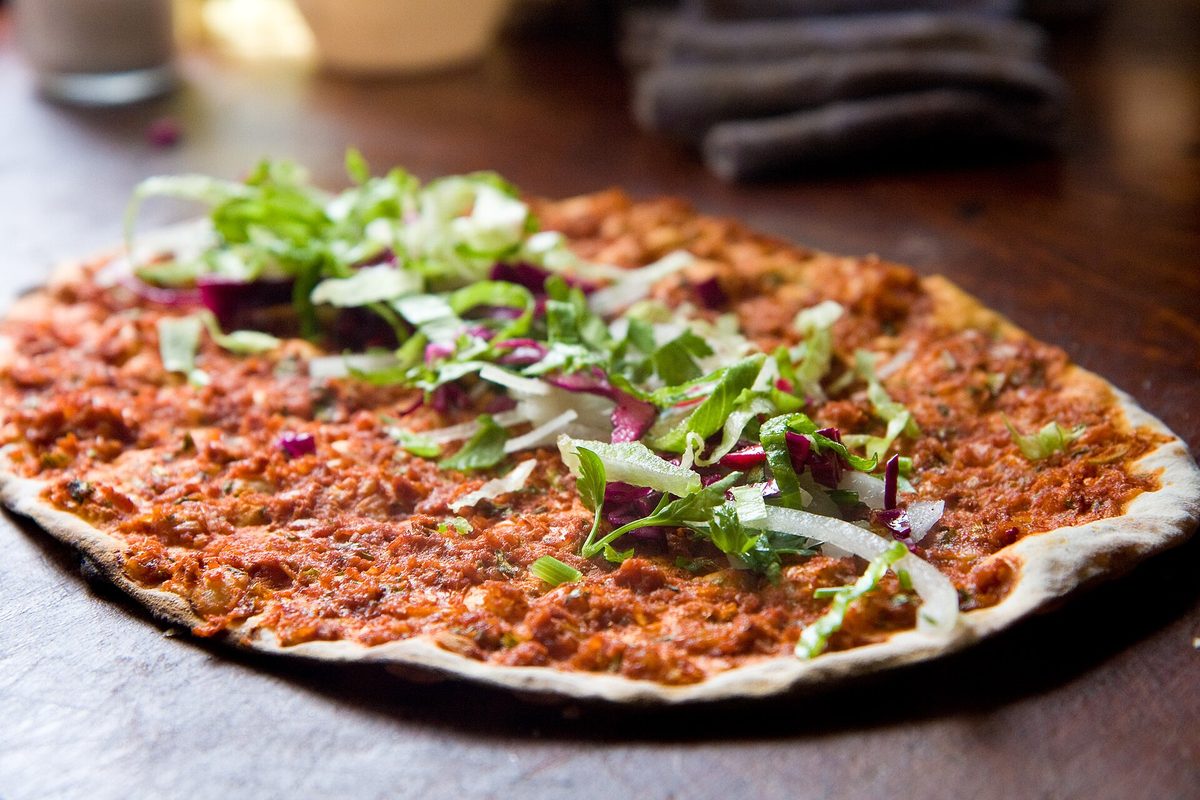
Lahmacun, 120–200 TL, a paper-thin round of dough with a smear of minced lamb, tomato and pepper. Do not eat it flat with a knife and fork. Lemon, parsley, roll, hands.
Pide, 250–400 TL, the boat-shaped one — kaşarlı with cheese, kıymalı with mince, kuşbaşılı with cubed meat, or the one with an egg cracked on top.
Meze and the meyhane
A meyhane evening is the most characteristic meal in the city and the one visitors most often miss. You order cold meze from a tray brought to the table, then hot meze, then perhaps grilled fish, and you drink rakı with water and ice over three or four hours. Two people with a bottle will spend 2,000 TL and up.
The meze to know: haydari, strained yoghurt with garlic and dill; acılı ezme, chopped tomato and pepper with heat; fava, broad bean purée; patlıcan salatası, smoked aubergine; lakerda, salt-cured bonito, which is the aristocrat of the tray; çerkez tavuğu, chicken in walnut sauce; barbunya pilaki, cranberry beans in olive oil; arnavut ciğeri, cubed fried liver with onions; midye tava, fried mussels with a walnut and garlic sauce called tarator.
The rakı ritual matters. It goes into a tall narrow glass, water is added — which turns it milky, hence “lion’s milk” — and ice last, if at all. It is drunk slowly, with food, over an evening. Nobody does shots. A bottle in a meyhane runs 1,200–2,000 TL, which is the largest single line on the bill and the reason the total looks the way it does.
Where. Nevizade and Asmalımescit in Beyoğlu, the streets around Kadıköy fish market, and Kumkapı — although Kumkapı has drifted a long way towards tourists and the touts outside are a warning sign. Ask your hotel for a meyhane rather than a restaurant; the word tells them what you actually want.
Fish, and its seasons
Istanbul is a fish city with a calendar, and ordering against the season is how you end up disappointed and overcharged.
Lüfer, bluefish, is the autumn prize and the one Istanbul is sentimental about. Hamsi, Black Sea anchovy, arrives in quantity from November at 180–280 TL a portion, fried in cornmeal or baked in a pan with rice. Palamut, bonito, runs in early autumn. Çipara and levrek — sea bream and sea bass — are farmed and available all year, which is why they are on every menu in July.
At a fish restaurant, ask the price of the fish by weight before it is cooked. A whole wild fish runs 800–1,500 TL depending on species and size, and this is where bill disputes come from. Kumkapı, Sarıyer, Çengelköy and the Kadıköy fish market are the concentrations.
Lokanta food, which is where the real cooking is
A lokanta is a canteen with trays of home-style dishes behind glass. You point, you pay 350–500 TL a head, and you eat some of the best food in Turkey. This is the answer to “where do people who live here eat lunch”.
Mercimek çorbası, red lentil soup with lemon and dried mint, 120–200 TL, is the default and is served from breakfast to midnight. İşkembe çorbası, tripe soup, is the hangover cure and is available at four in the morning.
Kuru fasulye, white beans in tomato sauce with rice, 250–400 TL, is the national comfort dish, and the shops around Süleymaniye that specialise in it have queues at lunchtime for a reason.
Karnıyarık, aubergine stuffed with minced lamb; hünkar beğendi, lamb stew on smoked aubergine purée, whose name means “the sultan liked it”; zeytinyağlılar, vegetables cooked in olive oil and served cold — green beans, artichokes, stuffed vine leaves — which are eaten at room temperature and are the reason vegetarians do better here than they expect.
Mantı, 350–500 TL, tiny meat dumplings under garlic yoghurt with chilli butter and dried mint. Kayseri does it smallest; Istanbul does it well enough.
Dolma and sarma, stuffed peppers and vine leaves, either warm with meat or cold in olive oil.
Sweets and pastry
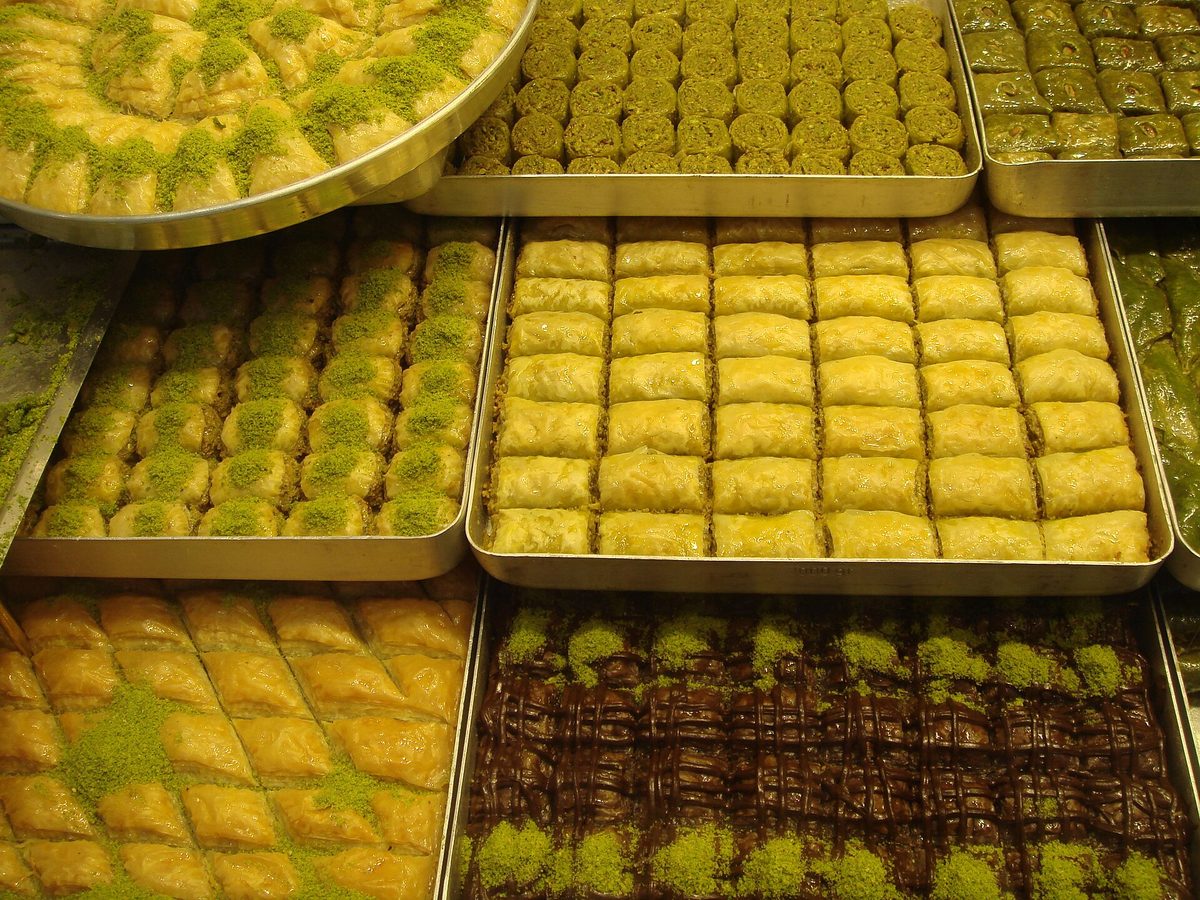
Baklava, 150–350 TL a portion or by the kilo, and the variable is the pistachio. Fıstıklı, with Gaziantep pistachio, is the benchmark; cevizli, with walnut, is the everyday version. Karaköy Güllüoğlu is the name everyone gives and it deserves it. Buy a small box, eat it within a day, and do not refrigerate it.
Künefe, 250–400 TL, shredded kadayıf pastry around unsalted stretchy cheese, baked in syrup and served hot with pistachio. Order it when you order the main course; it takes twenty minutes and is worth waiting for.
Sütlaç, baked rice pudding with a scorched skin; kazandibi, caramelised milk pudding; tavuk göğsü, a milk pudding made with shredded chicken breast that you will not detect and should not think about too hard.
Dondurma, 80–200 TL, mastic-and-salep ice cream from Kahramanmaraş, chewy and dense enough that the seller can hand it to you upside down on a knife. The street-cart routine with the long paddle is theatre; the ice cream underneath is real.
Lokum, Turkish delight, 300–800 TL a kilo. Buy it from a proper shop rather than the Grand Bazaar’s front lanes, ask to taste, and prefer the double-roasted pistachio versions.
Aşure, “Noah’s pudding”, a grain, fruit and nut dessert eaten in the month of Muharrem; revani, semolina cake in syrup; kabak tatlısı, candied pumpkin with tahini and walnut, which is a winter dish and much better than it sounds.
Drinks
Çay, 25–60 TL, black tea from Rize, served in a tulip glass with two sugar cubes on the saucer. It is offered constantly, including by shopkeepers who want to sell you a carpet, and accepting does not obligate you to anything except politeness.
Türk kahvesi, 120–250 TL, ground fine, boiled in a cezve, poured with the grounds and served with water and a piece of lokum. Order it sade (no sugar), az şekerli (a little) or orta (medium). Let it settle for a minute before drinking and stop before the sludge.
Ayran, 40–80 TL, salted yoghurt drink, and the correct thing to have with a kebab.
Şalgam, fermented turnip and carrot juice, sour and often spicy, which goes with rakı and divides opinion violently.
Salep, 100–180 TL, hot thickened milk with orchid root and cinnamon, sold on winter streets and genuinely one of the pleasures of a January visit.
Boza, 80–120 TL, thick fermented millet, sour-sweet, served with cinnamon and roasted chickpeas. Winter only. Vefa Bozacısı, out past the Grand Bazaar, has been selling it since 1876 and has Atatürk’s glass in a case on the wall.
Rakı, as above. Turkish wine is better than its reputation — look for Öküzgözü, Boğazkere and Kalecik Karası — and heavily taxed, so expect 900 TL and up for a bottle in a restaurant.
Where to eat it: neighbourhoods, ranked

Kadıköy is the best eating in Istanbul and it is not close. The market streets around Güneşlibahçe Sokak, the fish market, the meyhanes on Kadife Sokak, breakfast in Moda. Prices are twenty to thirty per cent below the European side for better food.
Karaköy and Galata for coffee, modern Turkish cooking and baklava. Beyoğlu for meyhanes and late food. Beşiktaş for the market, cheap and excellent. Fatih and Süleymaniye for lokantas, kuru fasulye and religiously conservative, very good, alcohol-free eating. Eminönü for street food and the shops around the Spice Bazaar. Sarıyer and Çengelköy for fish by the water.
Sultanahmet is the worst eating in the city, for the structural reason that almost every customer is there once and will never come back. Hocapaşa Sokak near Sirkeci is the honourable exception. Otherwise, walk five minutes inland or cross the bridge.
At the top end, Istanbul has serious tasting-menu restaurants — Mikla at around 6,900 TL a head and Nicole at about 6,100 are the reference points. They are good. They are also, at roughly eight times the price of the best meyhane dinner you will have, a very particular kind of decision.
Food shopping: what to buy and where
Half the pleasure of eating here is portable, and the mark-up between the covered bazaars and the streets around them is enormous.
Spices from Hasırcılar Caddesi and the surrounding streets rather than from inside the Spice Bazaar, where the same saffron, sumac, pul biber and Urfa pepper cost roughly double. Be sceptical of “Turkish saffron” at a low price; real saffron is expensive everywhere on earth.
Tea from Rize, sold loose by weight, and apple tea, which is a sugar powder aimed squarely at visitors and which no Turkish person drinks.
Coffee from Kurukahveci Mehmet Efendi, whose shop by the Spice Bazaar has had a queue outside it since 1871. Ground for a cezve, not for a filter machine.
Cheese. Turkey has hundreds and almost none of them travel through customs, but tulum, otlu peynir and aged kaşar are worth eating here in quantity. The market streets at Kadıköy and Beşiktaş have the best counters.
Nuts and dried fruit — Antep pistachios, Malatya apricots, sun-dried figs — again from the streets rather than the bazaar lanes, and again by weight.
Pekmez, grape or mulberry molasses, and tahin, sesame paste, which are eaten mixed together for breakfast and which travel perfectly.
Pomegranate syrup (nar ekşisi) and pepper paste (biber salçası), the two ingredients that make Turkish home cooking taste Turkish and that are hard to buy well outside the country.
Eating on a budget, and eating well anyway
Istanbul is one of the few large cities where the cheap food is better than the expensive food, and you can eat superbly for very little if you eat where people who live here eat.
Under 200 TL: a simit and tea, a bowl of mercimek çorbası with bread, a plate of pilav and nohut from a cart, two or three midye dolma, a slice of börek.
200–500 TL: a full lokanta lunch — soup, a stew, rice, salad; a lahmacun with ayran; a plate of mantı; a döner in bread and a drink.
500–900 TL: a proper kebab main with all the trimmings; breakfast for two in Kadıköy; a whole grilled fish out of season.
2,000 TL and up, for two: the meyhane evening, most of which is the bottle.
The single most effective saving is to eat your main meal at lunch in a lokanta and something light in the evening, which is also how a good proportion of the city eats. The second is to cross a bridge: identical food in Kadıköy or Beşiktaş costs twenty to thirty per cent less than in Sultanahmet or on İstiklal, and is usually better.
What is overrated
Restaurants with a view in Sultanahmet. You are paying for the roof. The food is reliably worse than the same money buys three streets away, and the “Bosphorus view” is frequently the Sea of Marmara or a gap between two buildings.
Any restaurant with someone outside inviting you in. Comprehensive rule, no exceptions I have found.
Menus without prices. Walk away. This is the setup for the bill dispute and it is the most common commercial problem tourists have in this city.
Dinner cruises. €55–95 for a set menu on a moving boat in the dark with a floor show. The food is what you would expect of a kitchen serving two hundred covers at fifteen knots.
Turkish delight in the Grand Bazaar’s front lanes. Marked up several times over what a neighbourhood şekerci charges, and often not the good stuff.
“Ottoman palace cuisine” restaurants. Some are genuinely researching historical recipes and are interesting. Most are a normal menu with brass lamps and a surcharge.
Practical things worth knowing
Tipping is around 10%, in cash where you can, and check whether servis is already on the bill. Hamams and barbers expect a cash tip to the person who actually did the work.
Cards work almost everywhere, including most street carts now. Keep some lira for the ones that do not, and decline any card machine that offers to charge you in your own currency.
Vegetarians do far better than they expect, because the zeytinyağlı tradition — vegetables cooked in olive oil, served cold — is a whole category of Turkish cooking rather than an afterthought. Say “et yok” and “etsiz” and check whether the beans were made with meat stock. Vegans have a harder time, since yoghurt and butter are everywhere.
Alcohol is legal, taxed heavily and served in most restaurants in Beyoğlu, Kadıköy and Beşiktaş; it is not served at all in the conservative districts of Fatih and Üsküdar, and there is a retail sales ban between 22:00 and 06:00. During Ramadan restaurants stay open normally.
Meal times. Breakfast runs late, especially at weekends. Lunch is 12:00 to 15:00. Dinner starts around 19:30 and a meyhane evening goes on until midnight or later. Nothing is rushed and nobody will bring the bill until you ask.
Water. Tap water is chlorinated and generally safe but tastes poor and almost nobody drinks it; bottled water is 15–30 TL and is what you will be given.
Frequently asked questions
What food is Istanbul famous for?
Turkish breakfast, kebabs of several kinds, meze eaten with rakı, fish from the Bosphorus and Black Sea, and street food — simit, balık ekmek, midye dolma and kokoreç. It is not one cuisine but the collision of several: Ottoman palace cooking, Anatolian home food, Greek and Armenian traditions, and dishes brought by migrants from every region of Turkey.
How much does food cost in Istanbul?
Street items run 20–80 TL, balık ekmek 150–200 TL, a lokanta lunch 350–500 TL a head, a kebab main 450–800 TL, and a full meyhane dinner for two with a bottle of rakı 2,000 TL and up. Breakfast for two in Kadıköy is 780–900 TL. Checked 10 September 2026 at €1 ≈ 56 TL.
What should I eat in Istanbul for breakfast?
A full kahvaltı if you have two hours — twelve or more small dishes, endless tea, honey with clotted cream. If you have ten minutes, a simit from a cart and a glass of tea, or menemen at a café. Sunday breakfast in Kadıköy or Cihangir is a proper Istanbul institution.
Where is the best food in Istanbul?
Kadıköy, on the Asian side, by a clear margin — the market streets, the fish market and the meyhanes on Kadife Sokak. Karaköy for coffee and modern cooking, Beşiktaş for market food, Fatih for lokantas. Sultanahmet is the weakest area in the city and worth walking out of for every meal.
Is street food safe in Istanbul?
Broadly yes, with the usual sense: eat where the turnover is fast and the queue is local. Midye dolma is the one item worth being careful with in hot weather; buy from a busy cart rather than one that has been standing in the sun.
What is the best Turkish dessert?
Baklava from a serious baklavacı — fıstıklı, with Gaziantep pistachio, bought by weight and eaten the same day. Künefe is the best hot dessert, and dondurma the best thing to eat walking. Karaköy Güllüoğlu is the name to look for on baklava.
Can vegetarians eat well in Istanbul?
Yes, better than most people expect. The zeytinyağlı dishes — vegetables slow-cooked in olive oil and served at room temperature — are a whole category, and mercimek çorbası, börek, menemen, çiğ köfte, mantı in its yoghurt-only version, and most meze are meat-free. Check that beans and soups are not made with meat stock.
What should I drink in Istanbul?
Çay constantly, Turkish coffee after a meal, ayran with a kebab, rakı with meze. In winter, salep on the street and boza at Vefa. Turkish wine is better than its reputation but heavily taxed.
How do I avoid being overcharged in a restaurant?
Never sit down anywhere without a printed menu showing prices, never follow someone who approaches you in the street, and at fish restaurants ask the price of the fish by weight before it is cooked. Those three rules cover almost every bill dispute that happens to visitors here.
What is the one thing I should not leave without eating?
A long Turkish breakfast, unhurried, preferably on the Asian side. Kebabs you can get elsewhere. That table, and the two hours it takes, is the thing you will still be thinking about a year later.
Two things will do more for your eating here than any restaurant list: never sitting down at a table whose menu has no prices on it, and having the fish weighed in front of you before it goes near the grill. Both belong to a longer set of Istanbul travel tips that covers the bill scams, tipping rates, meal times and what a day of eating actually costs in lira.
If you want the best-value eating in the city it is not on this side of the water. Twenty minutes on a ferry gets you the Kadıköy produce market, Çiya Sofrası, the pickle shops and a bar street where dinner costs a third less than Beyoğlu — our guide to the Asian side of Istanbul covers the whole crossing.
The other half of a Turkish evening out is a bath before dinner or a sema ceremony after it — and the dervish segment tacked onto a dinner cruise is not the same thing as the real ritual at the Galata Mevlevi lodge. Our guide to hamams, dervishes and Istanbul’s signature experiences sorts out which is which, with 2026 prices.
Knowing what to order is half of it; the other half is where. Our guide to the best restaurants in Istanbul sorts forty places by the kind of meal they are — Michelin tasting menus, Ottoman palace cooking, meyhanes, ocakbaşı grills, lokantas and Bosphorus fish — with September 2026 prices where the restaurants publish them.
Related Istanbul guides
- Which neighbourhood you sleep in largely decides how well you eat — see where to stay in Istanbul, where the food is part of every area’s verdict.
- Meals are built into every plan in our Istanbul itineraries for one to seven days.
- Fish is seasonal here — the best time to visit Istanbul covers when hamsi and lüfer are running.
- And for everything else, the best things to do in Istanbul, with dated prices.
Photo credits
- A simit cart on an Istanbul street (featured image) — photo by Maksym Kozlenko, Wikimedia Commons, CC BY-SA 4.0.
- Balık ekmek boats at Eminönü — photo by David Berkowitz, Wikimedia Commons, CC BY 2.0.
- Midye dolma cart — photo by E4024, Wikimedia Commons, CC BY-SA 4.0.
- Döner in Kadıköy — photo by E4024, Wikimedia Commons, CC BY-SA 4.0.
- Lahmacun — photo by Garrett Ziegler, Wikimedia Commons, CC BY-SA 4.0.
- Baklava trays — photo by Dan from Brussels, Europe, Wikimedia Commons, CC BY-SA 2.0.
- Grand Bazaar — photo by Jorge Franganillo, Wikimedia Commons, CC BY 4.0.
Prices checked on 10 September 2026, converted at €1 ≈ 56 TL, $1 ≈ 48 TL and £1 ≈ 65 TL. Restaurant prices in Istanbul move faster than almost any other cost on a trip here — treat these as the right order of magnitude rather than a quote, and check the menu before you sit down.