Before You Go ·
Istanbul Travel Tips: 40 Things to Know Before You Go (Safety, Scams, Etiquette & Practicalities)
The Istanbul rules that actually change your trip: the Istanbulkart, the four closed days, prayer-time windows, the taxi tariff, the scams worth knowing and what everything costs in September 2026.
In this guide 18 sections
- Istanbul travel tips at a glance
- Money
- Transport
- Timing
- Mosque etiquette
- The scams, ranked by how likely you are to actually meet one
- Is Istanbul safe?
- Etiquette
- Tipping in Istanbul
- Bargaining without embarrassing yourself
- Practicalities
- What to wear
- How the city is laid out
- Eating out
- Layovers, kids and limited mobility
- What is overrated
- A first-timer’s checklist, in the order you should do it
- Frequently asked questions
My first evening in Istanbul I paid 900 lira for a taxi from Sultanahmet to Taksim, a ride that should have cost about a third of that, because the meter was set to a tariff that does not exist. I only worked it out three days later, reading a fare notice on a pier wall while waiting for a ferry.
Which is the short version of why this page exists. The istanbul travel tips that actually change your trip are these: buy an Istanbulkart within an hour of landing, learn the four closed days, never get into a taxi without the meter running, cover shoulders and knees for mosques, carry some cash, and check prayer times before you build a morning around a mosque.
Everything below is either something I got wrong, something I watched somebody else get wrong, or something a Turkish friend explained to me with the particular patience of a person who has explained it many times. Prices are from September 2026 and dated as such; the lira moves fast enough that anything undated is worthless.
Istanbul travel tips at a glance: the twelve that matter most
If you read nothing else on this page, read the table. It is the compressed version of about six weeks in the city across four trips, and eight of the twelve rows have cost me money at some point.
| The tip | Why it matters | What it costs you to ignore |
|---|---|---|
| Buy an Istanbulkart immediately | Single-use tickets are 65 TL; a card ride is 46.20 TL and transfers are 34.40 TL | Roughly 40% more on every journey, plus queueing at machines |
| Topkapı shuts Tuesdays, Dolmabahçe Mondays, the Grand Bazaar Sundays | Four separate closed days across the big sights | A wasted morning and a re-planned itinerary |
| Mosques close to visitors around each of the five daily prayers | Windows shift with the sun through the year | An hour standing outside the Blue Mosque |
| There is no night taxi tariff in Istanbul | The double-tariff button was abolished in 2015 | Double the fare, every night ride |
| Cover shoulders and knees; women cover hair in mosques | Enforced at Hagia Sophia and the Blue Mosque | A borrowed scarf and a slower entry, or a refusal |
| The Basilica Cistern takes cards only | No cash accepted at the door, at all | A walk to an ATM and back |
| Never accept a menu without prices | The classic İstiklal and Sultanahmet bill scam | 2,000–6,000 TL for a meal worth 600 |
| State museums charge foreigners in euros, municipal sites in lira | Euro prices are stable; lira prices drift with inflation | Budgeting from a blog post written eight months ago |
| Decline the ATM’s offer to convert to your currency | Dynamic currency conversion costs 4–8% | About 300 TL on a 5,000 TL withdrawal |
| The public ferry is the real Bosphorus cruise | 640 TL return on the long tour, or 59.28 TL for a crossing | €40 and up for a worse boat with a soundtrack |
| Allow 90 minutes from Istanbul Airport to anywhere central | The airport is 40 km out; the M11 metro needs an interchange | A missed dinner reservation, or a missed flight |
| Cash for taxis, tips, street food and small hamams | Cards work almost everywhere else, including on ferries | Awkwardness at exactly the moments you cannot afford it |
Checked 10 September 2026, when €1 bought about 56 TL, $1 about 48 TL and £1 about 65 TL. If you are reading this more than a few months later, treat the lira figures as a shape rather than a price, and the euro ones as still roughly correct.
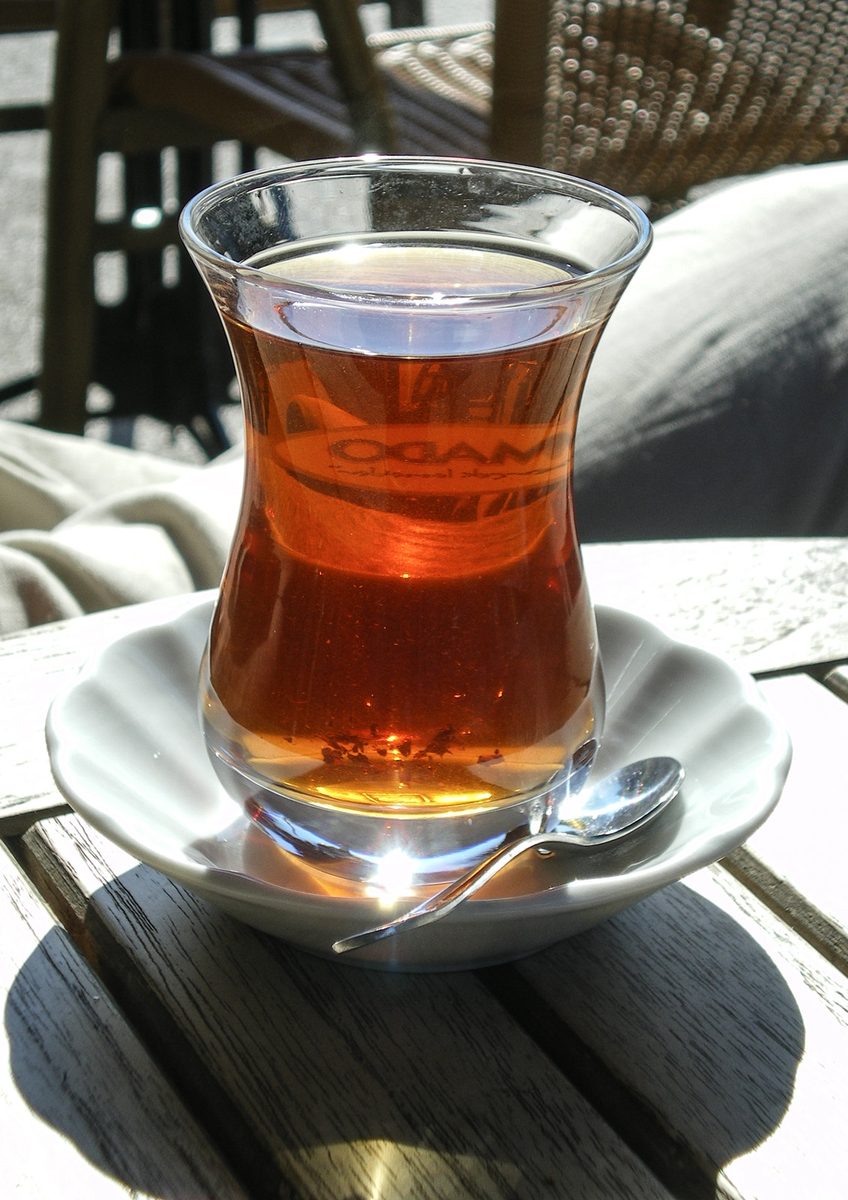
Money: lira, cards, ATMs and the euro-versus-lira split nobody explains
Turkey has been running inflation somewhere between 30% and 50% for several years. That single fact explains most of what is strange about paying for things here, and once you understand it the rest stops being confusing.
Why some tickets are in euros and some are in lira
Ministry-run museums — Hagia Sophia, Chora, the Archaeology Museums, the Museum of Turkish and Islamic Arts, Galata Tower — price foreign-visitor tickets in euros. Municipal sites run by the city, like the Basilica Cistern and the Şerefiye Cistern, price in lira. The National Palaces directorate, which runs Dolmabahçe and Beylerbeyi, prices in lira too. Topkapı sits oddly in the middle and quotes lira.
The practical consequence: a euro price you read six months ago is probably still right. A lira price from six months ago is probably 20–30% low. When you are checking a figure before you travel, check the lira ones and trust the euro ones.
Cash or card
Cards work in almost everything with a roof — restaurants, museums, shops, hotels, supermarkets, the ferry turnstiles, most taxis if you insist. What still wants cash: street food, tips, the small neighbourhood hamams, the tea you drink standing up, and any taxi driver who tells you the card machine is broken. Something between 1,500 and 3,000 lira in your pocket covers a normal day comfortably.
The Basilica Cistern is the exception that catches people out: it takes cards only and turns cash away. So does the airport metro ticket machine if you have no card and no small notes.
ATMs, exchange and the mistake that costs the most
Use a bank ATM — Garanti BBVA, İş Bankası, Yapı Kredi, Ziraat — rather than the standalone machines in tourist streets or the exchange booths at arrivals. Withdraw a reasonable amount in one go rather than 500 lira five times; per-withdrawal fees are what hurt.
The single most expensive habit I see visitors have is accepting the machine’s offer to bill you in pounds, dollars or euros. That is dynamic currency conversion, the rate is set by the ATM operator rather than your bank, and it typically costs 4–8%. Always choose to be charged in lira. The same applies to card machines in restaurants: if the terminal asks whether you want to pay in your home currency, say no.
Exchange offices in Sultanahmet and around the Grand Bazaar advertise “0% commission” and make their money on the spread. The ones on Kalpakçılar street and in the Nuruosmaniye area are generally competitive; the ones inside the airport are not, and the ones inside hotels are worse still. Change enough at the airport to reach your hotel, then do the rest in town.
What a day actually costs
| Style of day | Rough daily spend, excluding hotel | What that buys |
|---|---|---|
| Careful | 1,200–1,800 TL (~€21–32) | Street food, free mosques, ferries, one paid sight every other day |
| Normal | 2,500–4,000 TL (~€45–71) | One or two major sights, a proper lunch, a sit-down dinner, taxis when tired |
| Comfortable | 6,000 TL and up (~€107+) | A hamam, a good meyhane dinner with rakı, private transfers, a rooftop bar |
The two things that blow budgets are taxis and museum tickets, in that order. A day of four taxi rides is easily 1,200 TL; the same day on an Istanbulkart is under 200. If you want the full picture of what things cost across the city, my rundown of forty things to do in Istanbul carries a dated price for every one of them.
Transport: the Istanbulkart is not optional
Get one at any metro, tram or ferry station from the red-and-blue machines. The card costs 165 TL, it is non-refundable, and you then load credit onto it. One card can pay for up to five people, which is the detail that saves families the most money — tap it once per person at the turnstile.
- Standard ride: 46.20 TL after the 20 July 2026 fare rise.
- First transfer within the window: 34.40 TL, with further transfers cheaper again.
- Single-use paper ticket, if you refuse to buy a card: 65 TL — and 530 TL for ten.
- Ferry crossings: 53.20 TL Üsküdar–Eminönü, 57.00 TL Kabataş–Kadıköy, 59.28 TL Beşiktaş–Kadıköy.
Load more than you think you need. Topping up mid-journey means finding a machine, and the machines outside metro stations are frequently out of order or cash-only. Around 800 TL covers three or four days of ordinary moving about.

The tram, the metro and the funicular in one paragraph
The T1 tram is the tourist line: Kabataş to Bağcılar, through Karaköy, Eminönü, Sirkeci, Gülhane, Sultanahmet, Beyazıt and the Grand Bazaar. It is also the most reliably pickpocketed vehicle in the city, because it is packed and everyone on it is looking at a phone. The M2 metro runs up the European side through Şişhane, Taksim and Şişli. Two short funiculars — F1 Kabataş to Taksim and the historic Tünel from Karaköy to the bottom of İstiklal — save you two brutal hills. All of it is on the same card, and my guide to getting around Istanbul maps the lines properly.
Taxis: the rules, and the ones drivers pretend exist
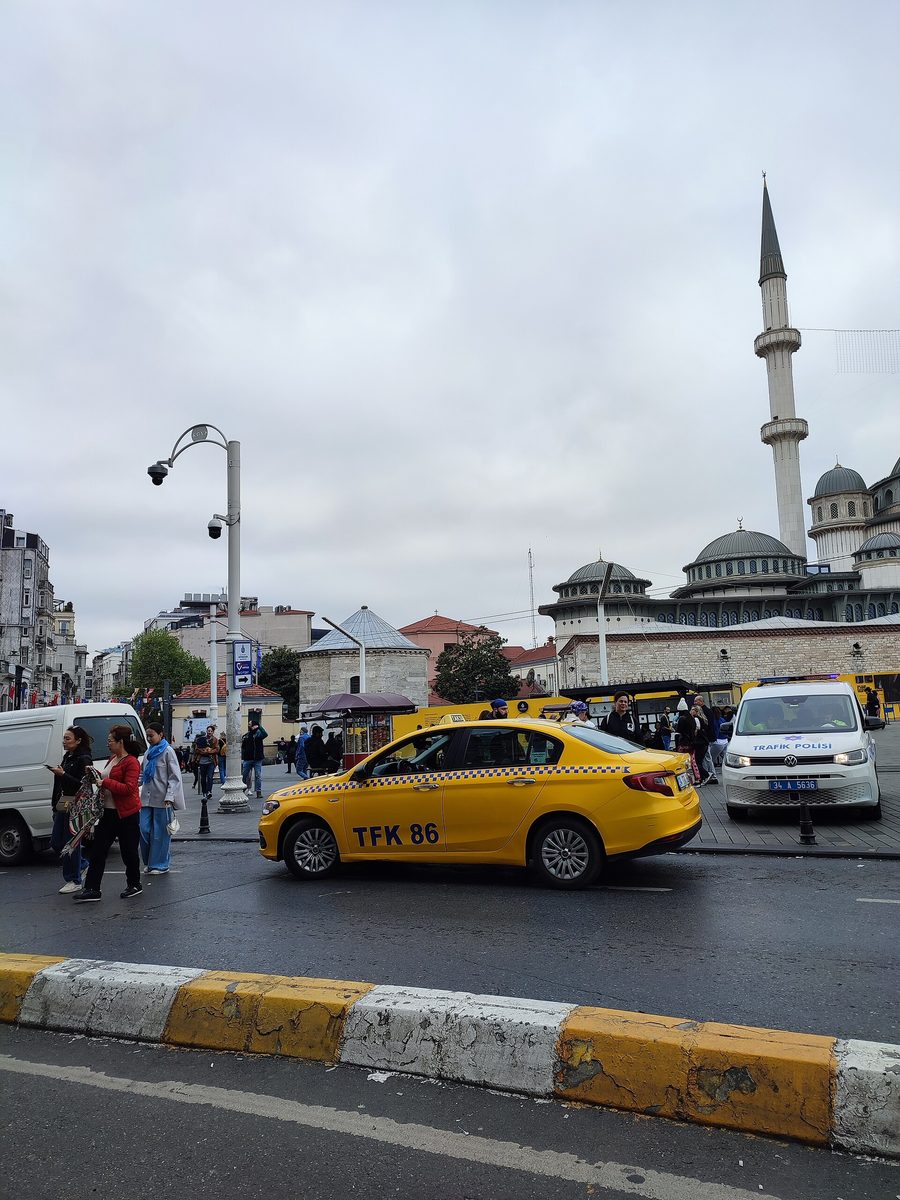
The İstanbul UKOME transport board sets taxi fares. From 20 July 2026 the yellow-taxi tariff is a 71.94 TL flagfall plus 47.92 TL per kilometre, with a minimum fare of 230 TL. Turquoise taxis are 75.21 and 50.09, eight-seaters 85.02 and 56.63, black taxis 111.18 and 74.05 with a 360 TL minimum. Waiting time runs at roughly 10 TL a minute.
There is no night tariff. It was abolished in 2015. Any driver who tells you the rate doubles after midnight is lying, and the meter itself will show tariff 1 regardless of the hour. Similarly, there is no legitimate “airport supplement” beyond genuine tolls, which are real: about 59 TL for the two older Bosphorus bridges, 95 TL for the Yavuz Sultan Selim, and about 280 TL for the Eurasia Tunnel. A driver taking the tunnel should tell you before he does it.
Practical version: use BiTaksi or Uber, both of which hail licensed yellow taxis, log the route, and remove the argument entirely. If you flag one on the street, look at the meter before the car moves, say “taksimetre lütfen”, and if it does not go on, get out. Nobody will chase you. As a sense-check, Sultanahmet to Taksim runs about 312 TL and Sultanahmet to Galata about 359 TL at current rates.
Arriving and leaving
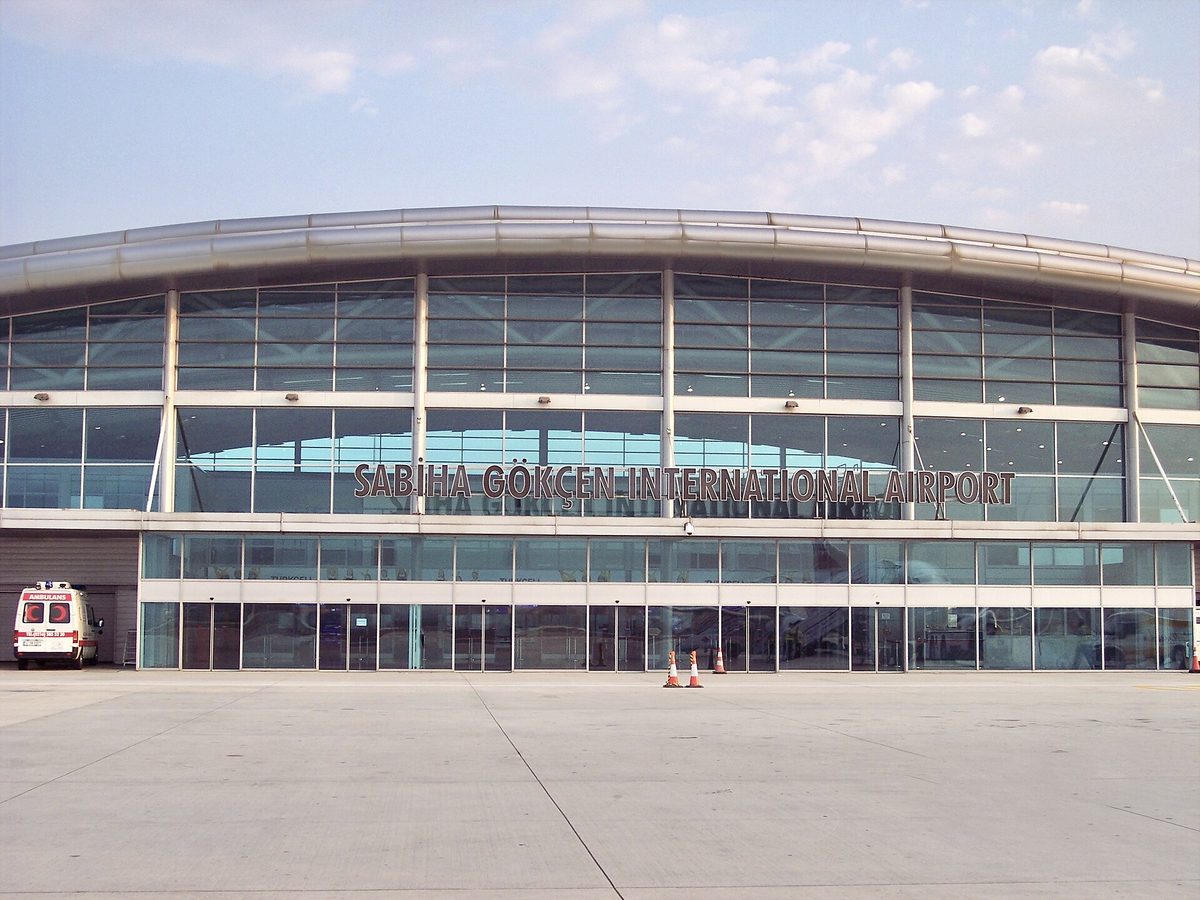
Istanbul Airport is 40 km from the centre and the journey is genuinely long. The M11 metro reaches Gayrettepe in about half an hour for 35–46 TL depending on distance, but the interchange onto the M2 involves an eleven-minute underground walk with luggage. The Havaist coach to Taksim costs 470 TL and takes 60–90 minutes. A fixed-price yellow taxi to Taksim was around 2,100 TL in April 2026 and will be roughly 10% higher now. Sabiha Gökçen, on the Asian side, is a different problem with different answers — the M4 metro to Kadıköy takes 52 minutes at a standard fare, which is the best value in the whole airport-transfer landscape. I have written all of this up properly, with times of day and luggage caveats, in the Istanbul airport transfer guide.
Timing: closed days, prayer windows and the calendar traps
More first trips are damaged by timing than by money. There are four recurring closures worth memorising and two calendar events worth checking.
| Site | Closed | The workaround |
|---|---|---|
| Topkapı Palace, Harem, Hagia Irene | Tuesdays | Do the Archaeology Museums or Süleymaniye instead |
| Dolmabahçe Palace | Mondays (one source also lists Thursdays — check on the day) | Beylerbeyi on the Asian shore, also Monday-closed, so make it a Bosphorus ferry day |
| Grand Bazaar | Sundays and religious holidays | Spice Bazaar, Arasta Bazaar and the Mahmutpaşa street market all open |
| Chora (Kariye Mosque) | Fridays, to visitors | Pair it with Balat and the Golden Horn on any other day |
| Hagia Sophia | Visitors out Fridays 12:00–14:30 | Go early; it opens 08:00 April to September |
| Great Palace Mosaic Museum | Closed for restoration, no reopening date | The mosaics you can see are in the Archaeology Museums |
Prayer times close mosques, and they move
Working mosques stop admitting visitors for roughly half an hour before each of the five daily prayers and for about twenty minutes after. Because prayer times follow the sun, those windows shift by an hour or more across the year, which is why a schedule you copied from a 2019 blog post will not hold. Friday midday prayer is the big one: expect most mosques, including the Blue Mosque, to be shut to visitors from late morning until roughly 14:30.
The Diyanet publishes the day’s times for Istanbul, and any of the prayer-time apps will give you the same numbers. Check them the night before and build your mosque visits into the gaps. It takes two minutes and it is the highest-value planning act available to you.
Ramadan, Bayram and the tulips
Ramadan runs 8 February to 8 March in 2027. Istanbul during Ramadan is one of the better times to be there — the mosque courtyards fill at sunset, Sultanahmet Square turns into a food fair, and the city is at its most itself — but daytime restaurant service outside tourist areas thins out and the mosques are busier. The two Bayram holidays that follow close the Grand Bazaar and empty the city as residents leave, which makes hotels cheap and traffic light.
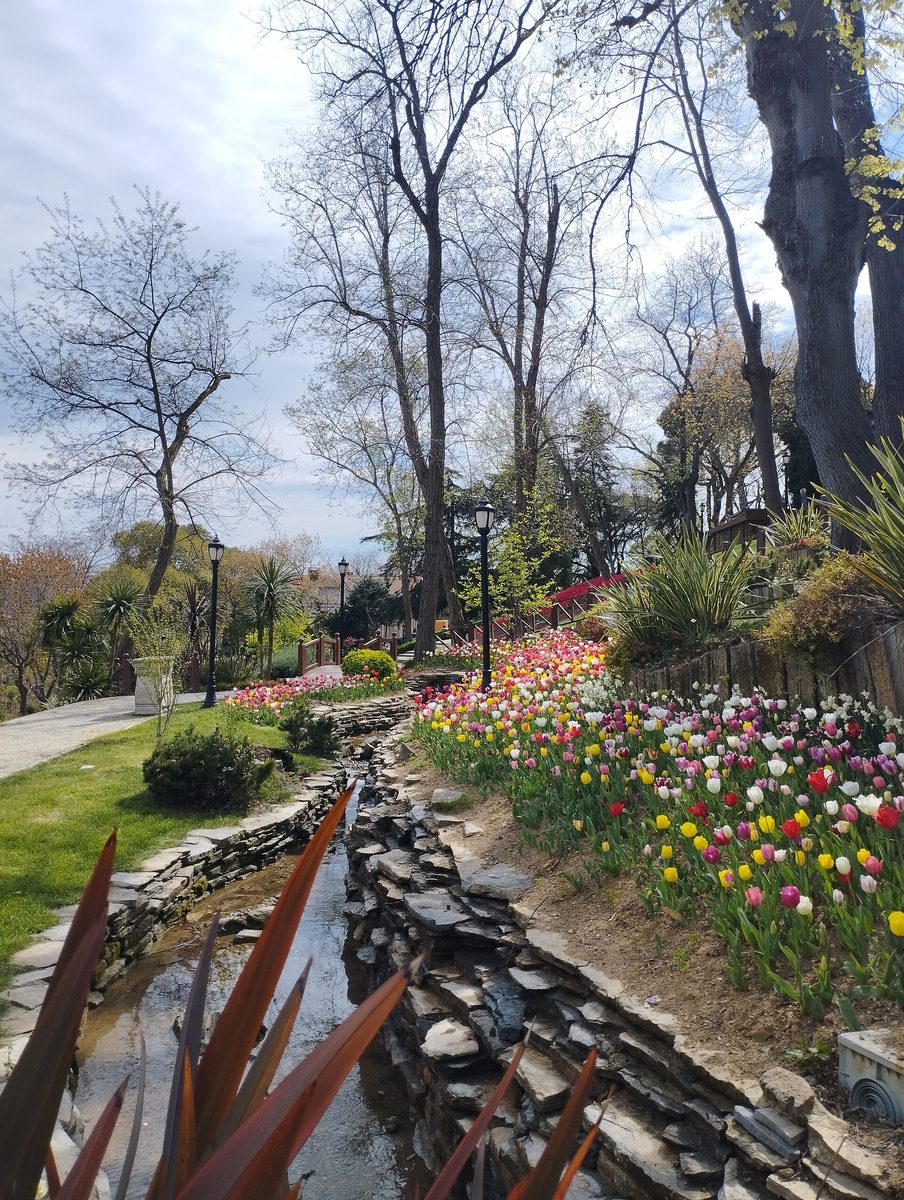
April is tulip season; the Emirgan Park displays are the reason. July and August are hot, hazy and full. If the timing question is still open for you, the month-by-month breakdown of when to visit Istanbul goes through it with the actual climate figures.
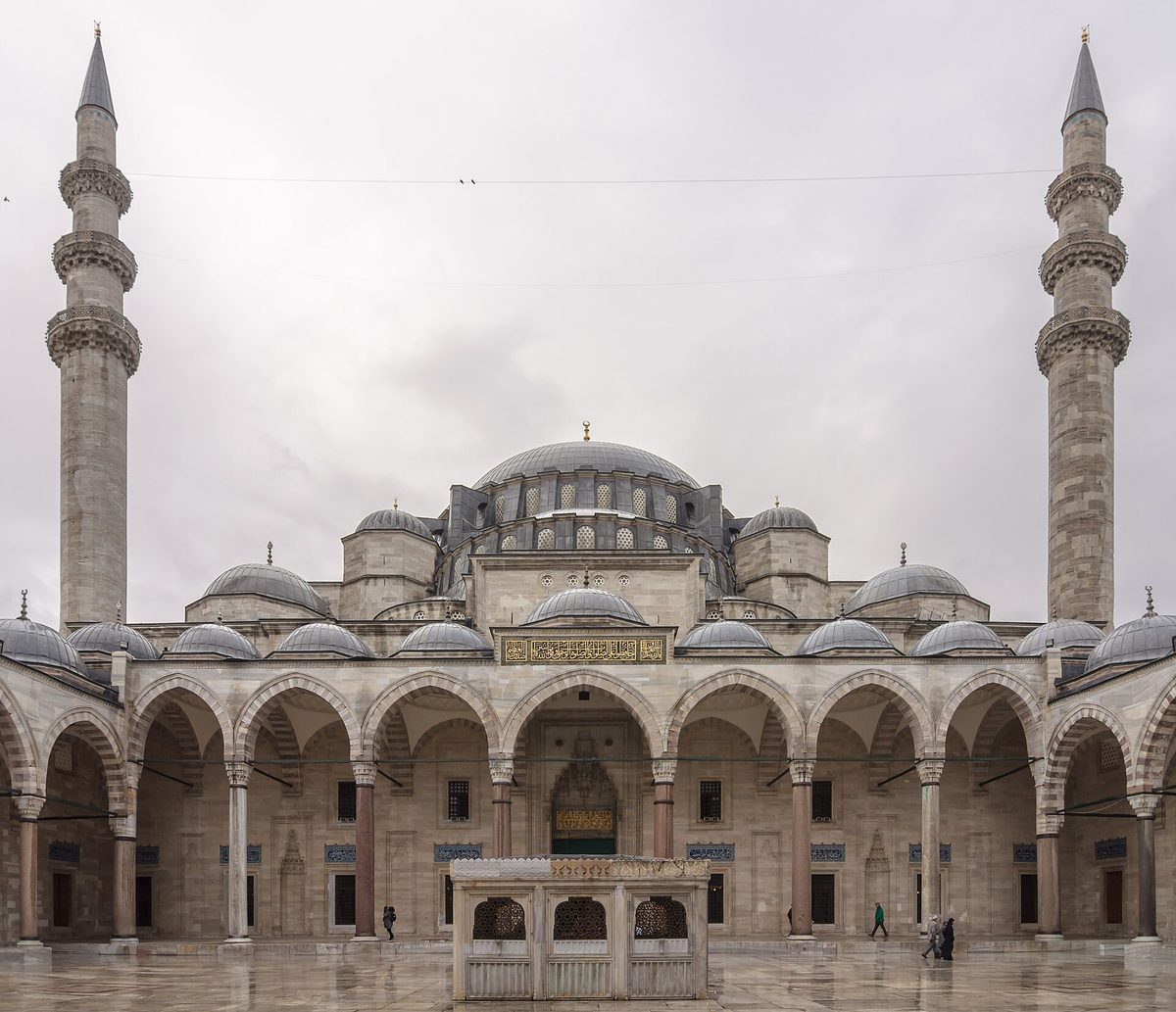
Mosque etiquette: what is genuinely required and what is myth
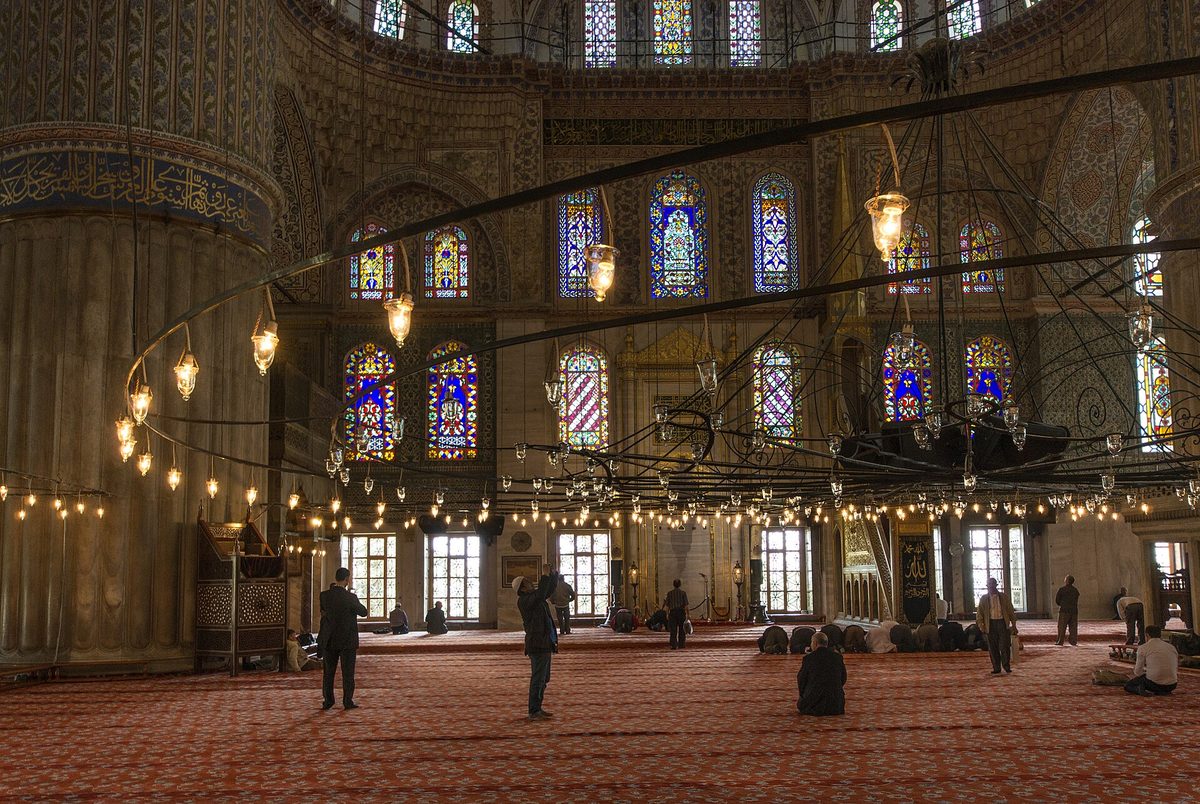
The rules are simpler and less onerous than the internet suggests, and every major mosque hands out what you need for free at the door.
- Everyone: shoulders and knees covered, shoes off on the carpet. Bags for your shoes are provided; carry them rather than leaving them on the racks.
- Women: hair covered. A scarf is loaned free at Hagia Sophia and the Blue Mosque; bringing your own is easier and more comfortable.
- Men: shorts are fine at some mosques and refused at others. A wraparound skirt is loaned if yours are too short, which is a memorable way to see the Blue Mosque.
- Photography: allowed in the visitor areas of almost every mosque. Photographing people at prayer is not. Nobody will confront you; it is simply rude.
- Behaviour: quiet voices, phones silent, no walking in front of somebody who is praying, and no sitting with the soles of your feet pointing at the mihrab.
What is not required: women do not need to cover their faces, their arms below the elbow, or their ankles. There is no charge to enter any working mosque and anyone asking for one at the door is running a scam. Süleymaniye, Rüstem Paşa and Little Hagia Sophia are all free and all less crowded than the Blue Mosque; my Sultanahmet walking guide sequences them so you are not doubling back.
Hagia Sophia is a partial exception because it is now both a working mosque and a €25 ticketed monument. Visitors use the upper gallery route; the main floor is for worshippers. The dress code applies exactly the same, and the full Hagia Sophia guide covers the restoration scaffolding, which is substantial and which nobody warns you about.
The scams, ranked by how likely you are to actually meet one
Istanbul is not a dangerous city. It is a commercially inventive one. Almost everything that happens to visitors is a transaction that went wrong rather than a crime, and the defence is nearly always the same: agree the price before the thing happens.
1. The menu without prices
Overwhelmingly the most common, and the most expensive. A restaurant — typically on or just off İstiklal, or in the alleys behind Sultanahmet Square — brings a menu with no prices, or a fish “of the day” with no price, or simply starts putting meze on your table that you did not order. The bill arrives at 2,000–6,000 TL. The unordered meze is chargeable if you eat it.
Defence: never sit down anywhere that will not show you a printed menu with numbers on it. Ask the price of fish by weight before it is cooked. Send back anything you did not order, immediately and without embarrassment. If the bill is wrong anyway, ask for an itemised receipt — many places retreat at that point — and pay by card so you have a route to dispute it.
2. The shoe-shine brush
A man walking ahead of you drops a brush. You pick it up and hand it back. He is grateful, insists on shining your shoes for free, and then wants 500 TL. It happens on the tram approach to Sultanahmet and around Eminönü, several times a day. Defence: point at the brush, keep walking. It is not your brush.
3. The friendly stranger and the bar bill
The one with real money in it. A well-dressed, English-speaking man strikes up a genuinely enjoyable conversation, mentions a bar with good music, and takes you there. Drinks arrive, women join the table, and the bill is 15,000 TL or more, with staff at the door. It targets men travelling alone, most often around Taksim and Beyoğlu.
Defence: do not go to a bar chosen by somebody you met twenty minutes ago. That is the whole rule. If you are already in it, pay by card, leave, and dispute the charge with your bank — Turkish police take these reports and there is a recognised process.
4. The taxi collection
The meter that will not go on, the “night tariff”, the long way round via the Eurasia Tunnel, the 200-lira note swapped for a 20 while you look away, the card machine that is suddenly broken. Defence: BiTaksi or Uber. If you must flag one, watch the meter start, know that Sultanahmet–Taksim is about 312 TL, and hand over notes one at a time saying the value out loud.
5. Pickpockets on the T1 and around Taksim
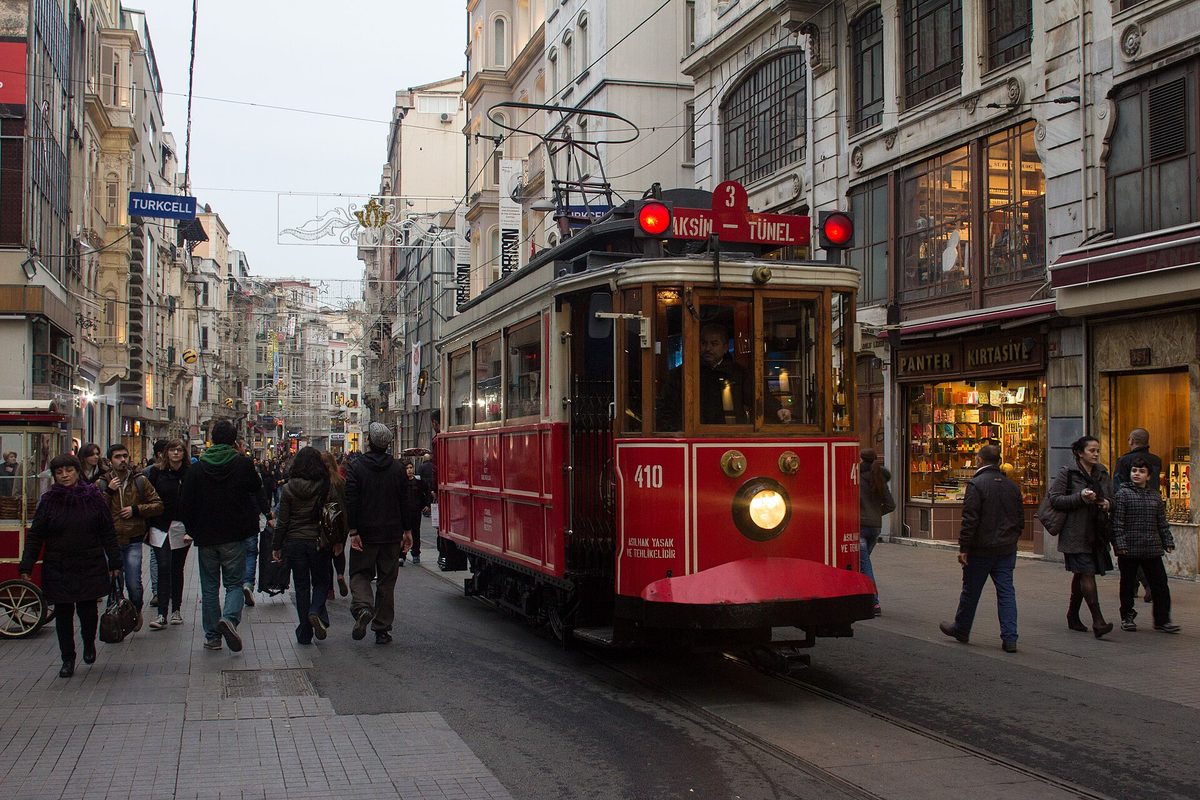
Opportunistic rather than organised, and concentrated in three places: the T1 tram at rush hour, İstiklal Caddesi in the evening, and the packed lanes of the Grand Bazaar. Defence: front pockets, zipped bag worn in front on the tram, no phone in a back pocket. Nothing exotic.
6. The carpet, the leather jacket and the “my brother’s shop”
Not a scam so much as a sales funnel. A friendly local asks where you are from, walks with you, and steers you to a shop where the pressure is heavy and the prices are three or four times what they should be. The tea is genuine hospitality; the shop is business. Defence: enjoy the conversation, decline the detour. If you do want a carpet, go to a shop you found yourself, on a day when you have hours, and expect to negotiate.
7. The fake ticket site
Increasingly the one that costs the most before you even arrive. Search “Hagia Sophia tickets” and the first several results are resellers charging €60–90 for a €25 ticket, sometimes with a “skip the line” claim for a queue that does not work that way. Defence: buy from muze.gov.tr for ministry museums, ayasofyacamii.gov.tr for Hagia Sophia, and the operator’s own site for everything else.
What to do if it happens
For anything involving money, pay by card if you can — it gives you a dispute route that cash does not. Turkey’s single emergency number is 112, which covers police, ambulance and fire. There is a tourist police office in Sultanahmet, on the street beside the Basilica Cistern, and a number widely published as 0212 527 4503; I have seen it quoted with different final digits on different sites and would call 112 or walk in rather than rely on it. Photograph the receipt and the shopfront. For a taxi complaint, the plate number and the BiTaksi trip record are what the İBB complaint line actually acts on.
Is Istanbul safe? The honest version
Yes, with the usual caveats about a city of sixteen million people. Violent crime against visitors is rare, and rarer than in most large European or American cities. Women travelling alone report Istanbul as easier than they expected, with persistent but non-threatening attention in the tourist quarters, and considerably less of it in residential neighbourhoods like Kadıköy or Cihangir.
As of September 2026, the United States places Turkey at Level 2, “exercise increased caution”, with Level 4 “do not travel” applied only to the provinces along the Syrian and Iraqi borders — which are more than a thousand kilometres from Istanbul. The UK’s FCDO, Canada and Australia’s Smartraveller carry broadly similar advice. All four update independently and none of them describes Istanbul itself as dangerous. Check the current text before you fly rather than trusting this paragraph; that is the point of advisories.
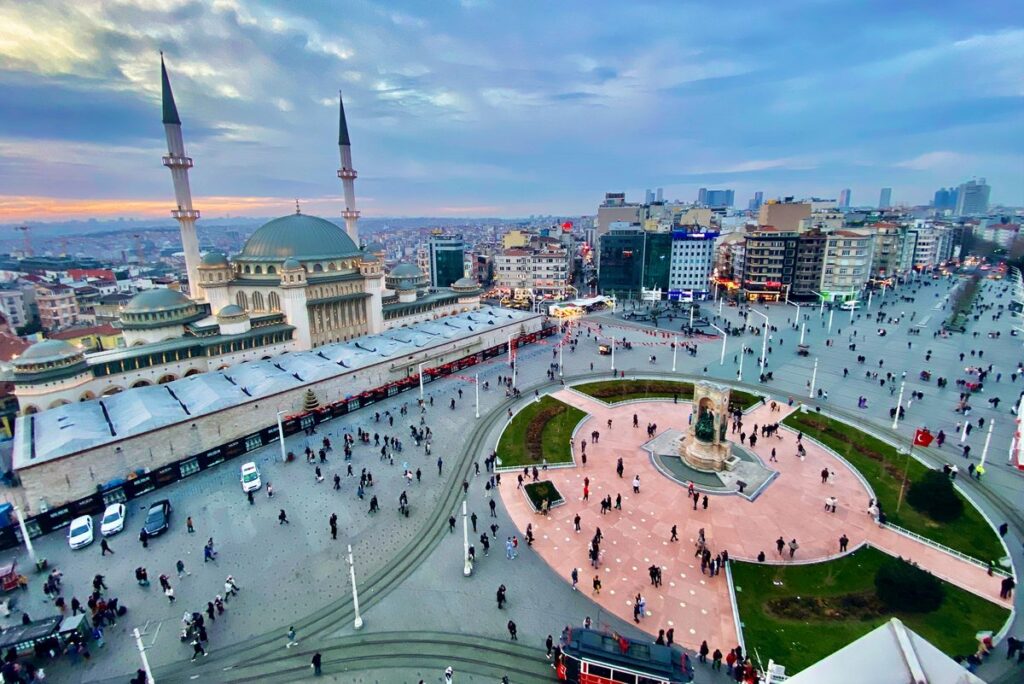
Two specific things worth knowing. Political demonstrations do happen, most often around Taksim Square and on İstiklal, and Turkish police disperse unauthorised ones firmly; the advice from every government is to walk away from any gathering, which is easy advice to follow. And Istanbul sits near the North Anatolian Fault, so earthquakes are a real long-term risk — not something you can plan around as a visitor beyond noting your hotel’s exits, and not a reason to stay away.
Etiquette: tea, shoes, cologne and the phrases worth learning
Turkish hospitality is not a marketing line, and it is easy to accidentally rebuff it. A few things that took me a while to understand.
- Tea is offered constantly, and refusing is fine but accepting is better. A shopkeeper offering çay is not opening a negotiation you are now trapped in. You can drink the tea, thank them and leave. It happens all day, in every kind of shop.
- Shoes come off in homes, always, and slippers usually appear. The same applies in some small carpet shops with a raised seating area.
- Lemon cologne gets offered on buses, after meals and at barbers. Hold your hands out, cupped. It is an antiseptic and a courtesy at once.
- “Kolay gelsin” — “may it come easily” — said to anyone working is the single most useful phrase in Turkish. It is a small, ordinary kindness and it visibly changes how people respond to you.
- Bread is respected. Do not throw it away in front of people; you will see loaves hung on railings rather than binned.
- Photographing people — especially women, especially older women, especially in conservative neighbourhoods like Fatih and Eyüp — needs a look and a nod first. A raised camera and a questioning eyebrow works fine.
- Public drunkenness reads badly almost everywhere outside the bar streets. Alcohol is legal and widely available; being visibly drunk in a residential street is not the norm.
Six words that carry you a long way
| Turkish | Roughly | When to use it |
|---|---|---|
| Merhaba | Hello | Everywhere, to everyone |
| Teşekkür ederim / sağ ol | Thank you / thanks | Formal / casual |
| Kolay gelsin | May it come easily | To anyone working |
| Hesap, lütfen | The bill, please | Restaurants |
| Taksimetre lütfen | The meter, please | Taxis, said pleasantly, before moving |
| Afiyet olsun | Enjoy your meal | Said to you constantly; say it back |
Tipping in Istanbul: how much, to whom, in what
Tipping is expected but modest, and cash is strongly preferred — a tip added to a card payment often does not reach the person who served you.
| Who | How much | Notes |
|---|---|---|
| Restaurants | 5–10%, or 10–15% somewhere expensive | Check whether servis is already on the bill; it sometimes is |
| Cafés and tea houses | Round up | Leave the coins |
| Taxis | Round up to the next 50 TL | No percentage expected |
| Hamam attendants | 10–20% of the package, in cash | Give it to the person who washed you, not at reception |
| Hotel porters | 50–100 TL per bag | Cash, at the room door |
| Housekeeping | 100 TL a day | Left daily, not at the end |
| Tour guides | 100–300 TL per person per day | Group tours at the lower end |
| Barbers | 10–15% | Worth doing; a Turkish shave is 300–600 TL and excellent |
Nobody will pursue you for a tip and nobody sulks if you round down. The hamam is the one place where the tip is genuinely part of the economics of the job, and where I would not skip it.
Bargaining without embarrassing yourself

Where you haggle: the Grand Bazaar, the Arasta, carpet and leather shops, souvenir stalls, and taxi fares only when the meter is genuinely broken and you agree a number first. Where you do not: restaurants, supermarkets, chain shops, museums, the Spice Bazaar’s fixed-price stalls, and anywhere with a printed price tag.
The mechanics are less adversarial than travel writing suggests. Ask the price. Look at the thing properly. Offer somewhere around half, expecting to settle at 60–70% of the opening number. Be pleasant throughout; the whole exchange is a social form, not a fight. Two rules matter more than the arithmetic: never start haggling for something you do not intend to buy, and be ready to walk away and mean it, because walking away is the only real leverage you have. Prices quoted to you in euros or dollars are usually higher than the lira price for the same object — ask in lira.
Practicalities: water, alcohol, toilets, SIMs and plugs
Can you drink the tap water?
It is treated and technically potable, and almost nobody local drinks it. The distribution pipes in the older neighbourhoods are the problem rather than the treatment. Bottled water costs 10–20 TL for half a litre from any corner shop, and most hotels supply it. Ice in restaurants is made from filtered water and is not a concern.
Alcohol
Legal, widely available, and heavily taxed — a bottle of Efes in a bar runs 200–350 TL and a bottle of rakı in a shop 900 TL upwards. Retail sales are banned between 22:00 and 06:00, so a supermarket will refuse to sell you wine at 22:15; licensed bars and restaurants are unaffected and serve as late as they like. Beyoğlu, Karaköy, Kadıköy and Beşiktaş are the drinking neighbourhoods; conservative Fatih and Eyüp largely are not, and you should not expect a beer with lunch there.
Toilets
Public toilets are common, clean enough, and cost 5–10 TL, usually collected by an attendant at a turnstile. Carry coins. Mosque complexes almost always have them. Many have a bidet spray or a small tap built into the bowl and no paper — carry tissues, which is advice that sounds trivial until the moment it is not.
Phones and data
Turkish tourist SIMs are expensive by European standards: expect 1,200–2,500 TL for a two-week tourist package from Turkcell, Vodafone or Türk Telekom, and buy it in a proper branded shop rather than an airport kiosk. An eSIM from any of the international providers usually undercuts that substantially. Note the phone-registration rule: if you keep a foreign handset with a Turkish SIM in it beyond about 120 days, the handset gets blocked unless you register and pay a fee. Irrelevant for a week’s holiday, relevant for a long stay.
Plugs, time and pharmacies
Type F sockets, 230 V — the standard European two round pins, so UK and US visitors need an adapter. Istanbul is UTC+3 all year and does not change its clocks. Pharmacies (eczane) are excellent, pharmacists give real advice, and a rota of night pharmacies is posted in every shop window. Free wifi is near-universal in cafés and on the ferries.
What to wear
Istanbul is a modern city and you will see everything on the street from miniskirts to full covering. Nobody is judging your clothes in Beyoğlu or Kadıköy. Three practical constraints, though.
- Mosques need shoulders, knees and — for women — hair covered. Carrying a light scarf makes this a non-event.
- The hills are real. Istanbul is built on seven of them and paved in cobbles and broken marble. This is a walking city and the wrong shoes will end your day at four o’clock. Do not bring heels for anywhere but a restaurant you will take a taxi to.
- The weather swings hard. September afternoons hit 26 °C and September evenings on a ferry are cold and windy. Layers, and a light waterproof from October onwards — December averages 105 mm of rain.
In conservative neighbourhoods — Fatih, Eyüp, Çarşamba — longer sleeves and trousers or a longer skirt will simply make your afternoon more comfortable, not because anyone will say anything but because you will feel conspicuous otherwise.
How the city is laid out, and why it changes your planning
Istanbul is not laid out like a European capital with a centre and suburbs. It is three land masses divided by two waterways, and almost every planning mistake visitors make comes from not holding that shape in their heads.
The Bosphorus runs north to south, separating Europe from Asia. The Golden Horn is an inlet off it that splits the European side into two: the historic peninsula to the south, and Beyoğlu and everything modern to the north. So you have three zones, and moving between them means a bridge, a tunnel or a boat.
- The historic peninsula — Sultanahmet, Eminönü, the bazaars, Süleymaniye, Fatih, Balat and the land walls. Almost everything Byzantine and Ottoman is here. The T1 tram is its spine.
- Beyoğlu and the north bank — Karaköy, Galata, İstiklal, Taksim, then Beşiktaş and Ortaköy running up the Bosphorus shore. This is where you eat and drink, where the modern city lives, and where the hills are steepest.
- The Asian side — Kadıköy, Moda, Üsküdar, Çamlıca and the shore villages. Twenty minutes by ferry, and where residents actually spend their weekends.
Two practical rules fall out of this. First, group your days by zone. A day that goes Sultanahmet, then Taksim, then back to the Grand Bazaar, then Kadıköy will consume two hours in transit and leave you resenting the city. Second, use the ferries to cross rather than the bridges. The Galata Bridge on foot is a pleasure; the Bosphorus bridges by taxi in traffic are forty-five minutes of your life for a crossing the ferry does in twenty for 57 lira.
The other thing the map does not tell you is the vertical. Istanbul was built on seven hills and the streets in Galata, Cihangir and Balat go up at gradients that would be stairs anywhere else. Distances that look walkable on a phone screen are not always walkable in the afternoon in July. When in doubt, check whether your route crosses a contour line, and remember the two funiculars exist precisely because the climbs beat people.
Eating out: meal times, breakfast, ordering and what nobody tells you

Turkish meal rhythms are not the ones you are used to, and a few structural things about how restaurants work here will save you both money and confusion.
When people actually eat
Breakfast is the serious meal, and Turkish breakfast — kahvaltı — is an event rather than a snack: cheeses, olives, tomato, cucumber, honey with clotted cream, eggs, jams, endless bread and endless tea, served for two people on a table covered edge to edge with small plates. It runs late, often to 13:00 at weekends, and costs 780–900 TL for two in Kadıköy. If you do one food thing in Istanbul, do this.
Lunch is casual and often eaten standing. Dinner starts late by British or American standards — 20:00 is normal, 21:00 unremarkable — and a proper meyhane dinner with rakı and meze is a three-hour affair, not a meal. Budget 2,000 TL and up for two, and do not book anything afterwards.
How ordering works
- Meze arrive on a tray in meyhanes and you point at what you want. Ask the price of anything unlabelled; this is where the bad restaurants make their money.
- Bread and water are usually charged, at trivial amounts. Not a scam.
- Fish is sold by weight. Always have it weighed and priced in front of you before it goes near a grill. Always.
- Tea after a meal is often free, and refusing it is fine but slightly disappointing to everyone.
- “Servis” on the bill means service is already included; do not tip twice on top of it.
Vegetarians, vegans and picky eaters
Better than the reputation suggests. The entire meze tradition is largely vegetable-based — zeytinyağlılar, the olive-oil dishes, are a whole category — and dishes like mercimek çorbası, imam bayıldı, mücver and every variety of börek are everywhere. Vegans have a harder time because dairy is pervasive, though Kadıköy and Cihangir both have dedicated vegan places. The word to learn is etsiz, “without meat”; be aware that chicken sometimes does not count as meat in the answer you get back.
What to order first, where the named vendors are and what everything costs is a whole article of its own — the Istanbul food guide has the full list with September 2026 prices.
Layovers, kids and limited mobility
Three situations that change the advice enough to need their own paragraph.
If you only have a layover
Turkish Airlines runs free city tours for passengers with a long enough connection, and Istanbul Airport has left-luggage from 90 TL per 24 hours by bag size. The arithmetic that matters: allow ninety minutes each way to the old city and be back at the airport three hours before departure, so a six-hour layover gives you nothing and a ten-hour one gives you a comfortable Sultanahmet morning. Do not attempt it without checking whether your nationality needs a visa to leave the airside area.
With children
Istanbul is genuinely child-friendly — Turkish hospitality extends emphatically to children, and staff will take a baby out of your arms in a restaurant without asking. The ferries are the single best thing to do with kids in the city and cost almost nothing. Be aware that LEGOLAND, Madame Tussauds and Sea Life Istanbul have all permanently closed, which strips the family-attraction options down considerably and quietly wrecks the value case for several of the city passes that still list them. Prams are a struggle on cobbles, in the tram crush and on the hills; a carrier is easier.
With limited mobility
Honestly: hard. Cobbles, hills, stepped alleyways, and mosques that require removing shoes and crossing carpeted floors. The good news is that the metro is modern and lifted, the T1 tram is level-boarding, the ferries are boardable, and the major museums have improved. Sultanahmet’s core sights sit close together on relatively flat ground, which makes the old city the most manageable base. Beyoğlu and Balat are the difficult ones.
What is overrated, and what I would skip
The contrarian section, because a list of forty enthusiasms is not advice.
- The evening dinner cruise with a “Turkish night” show. €55–95 for average food, a rushed belly dance and a boat that keeps the windows shut. The public Bosphorus ferry at 640 TL return does the actual water better than any of them.
- The Galata Tower queue. €30 and often an hour of standing, for a view you can get free from the terrace of any of a dozen bars in Karaköy with a drink in your hand. Go if the tower itself interests you; do not go only for the view.
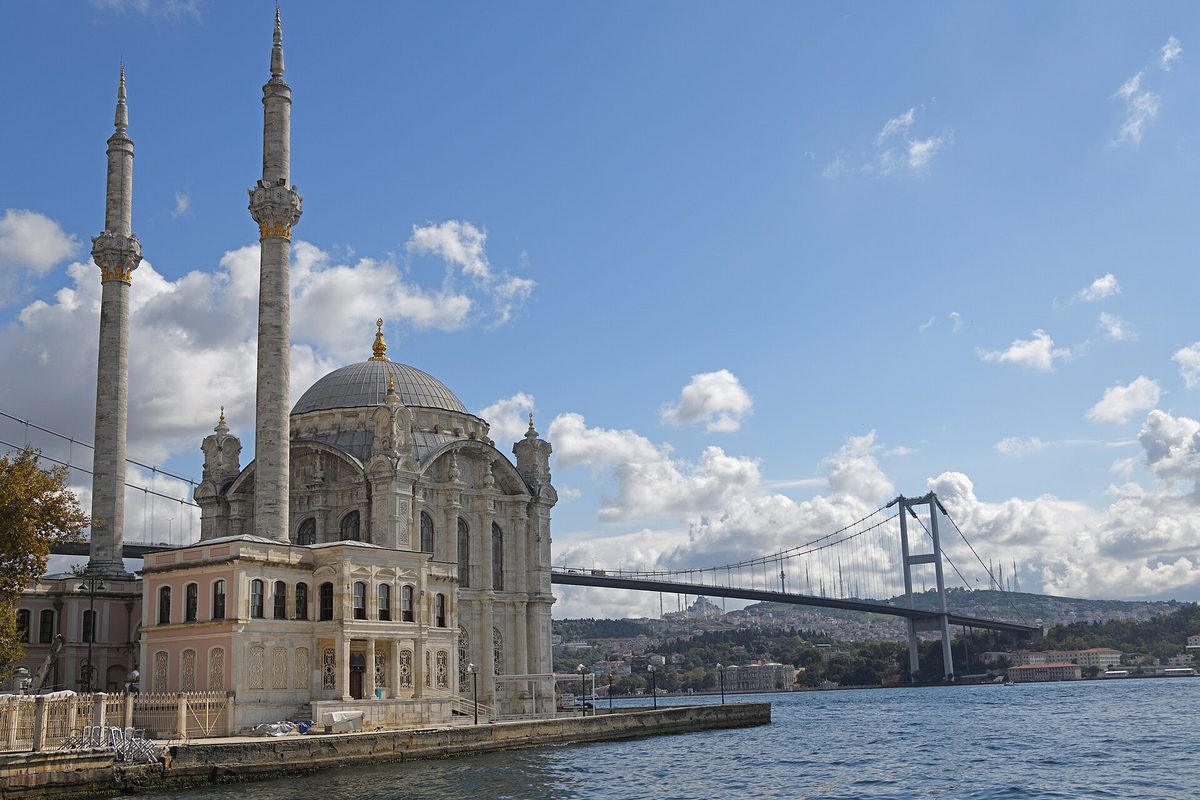
- Ortaköy on a summer Sunday. The mosque and bridge photograph beautifully and the kumpir is fine, but at 200–300 TL a potato in a crush of people it is a poor hour.
- Buying a carpet on day one. Whatever you pay on day one, you will see the same kilim for 40% less on day four. Look first, buy last.
- The city passes, for most people. The Museum Pass İstanbul at €105 or 6,500 TL excludes Hagia Sophia, the Basilica Cistern, Dolmabahçe and Chora — which is to say, four of the six things you came for. It pays only if you will visit at least four of its thirteen covered sites in five days. Do the arithmetic against your actual list.
- Staying in Sultanahmet for a week. It is the right base for two nights and a slightly dead place to spend seven. The neighbourhood-by-neighbourhood accommodation guide goes through the trade-offs; Karaköy and Cihangir are where I keep ending up.
A first-timer’s checklist, in the order you should do it
Before you book
- Check whether your passport needs an e-visa, and buy it only at evisa.gov.tr. Turkey requires at least 150 days of passport validity for most visitors.
- Check the closed days against your dates. If your trip is Monday to Wednesday, you have a Topkapı problem and a Dolmabahçe problem at once.
- Pick your airport deliberately. Sabiha Gökçen is cheaper to fly into and much more awkward to reach if you are staying on the European side.
The week before
- Book Hagia Sophia and Topkapı slots on the official sites. Both sell timed entries and both sell out in season.
- Tell your bank you are travelling, and check your card’s foreign-transaction fee.
- Download BiTaksi, an offline map of the city, and a prayer-time app.
- Sketch a route that does not cross the Golden Horn more than twice in a day. The day-by-day Istanbul itineraries are built around exactly that constraint.
The first two hours on the ground
- Withdraw lira from a bank ATM, declining the conversion offer.
- Buy an Istanbulkart at the airport station and load 800 TL.
- Eat something. The Istanbul food guide covers what to order first; a simit and a glass of tea costs about 50 TL and is a perfectly respectable start.

Frequently asked questions about visiting Istanbul
Do I need cash in Istanbul, or is a card enough?
A card covers most of it, including museums, restaurants, supermarkets and ferry gates. Carry 1,500–3,000 TL in cash for street food, tips, taxis and small hamams. The Basilica Cistern is the odd one out and takes cards only.
Is Istanbul expensive?
Cheaper than Western Europe for food, transport and hotels; roughly comparable for the big museum tickets, which are priced in euros for foreign visitors. A careful day runs 1,200–1,800 TL, a normal one 2,500–4,000 TL, excluding accommodation. Public transport is the standout value at 46.20 TL a ride.
How many days do you need in Istanbul?
Three is the minimum that does not feel like a raid — one for Sultanahmet, one for the Bosphorus and Beyoğlu, one for the Asian side and the bazaars. Five lets you add Balat, a hamam and a proper afternoon doing nothing. Two is a layover, and a good one, but you will book a return flight.
Can women travel alone in Istanbul?
Yes, and many do. Expect persistent but generally non-threatening attention in the tourist quarters and much less of it in residential neighbourhoods. The usual precautions apply — licensed taxis or apps at night, a hotel in a busy street, no unplanned bars with new acquaintances. Dress is a comfort question rather than a safety one outside conservative districts.
What should I not do in Istanbul?
Do not sit down at a restaurant with no printed prices, do not get into a taxi before the meter is running, do not pick up a dropped shoe-shine brush, do not follow a friendly stranger to a bar, and do not build a Tuesday around Topkapı.
Do people speak English in Istanbul?
Widely in Beyoğlu, Sultanahmet, hotels and anything touristed; patchily in Fatih, Eyüp and the outer neighbourhoods. Younger people generally do. Six words of Turkish still changes the temperature of every interaction, and translation apps handle the rest.
Is the Istanbul Museum Pass worth buying?
Only if you will use four or more of its thirteen covered sites within five days. It excludes Hagia Sophia, the Basilica Cistern, Dolmabahçe and Chora. Note also that the price is quoted as €105 by some sellers and 6,500 TL by others, which is a currency-lag artefact rather than two different products — check which currency you are actually charged in.
Can I visit mosques as a non-Muslim?
Yes, at every major mosque in the city, free, outside prayer times. Cover shoulders and knees, remove your shoes, and women cover their hair. Coverings are loaned at the door. Nobody will ask about your beliefs.
Is the tap water safe to drink?
Treated and technically safe, but almost nobody local drinks it because of the age of the pipes in the older districts. Bottled water is 10–20 TL for half a litre. Ice in restaurants is fine.
What is the biggest mistake first-time visitors make?
Trying to see the European and Asian sides properly on the same day, and building an itinerary that ignores closed days and prayer windows. The second one is free to fix and takes ten minutes.
Before any of this, check two things: that your passport has at least 150 days left from your arrival date, and that you are not about to pay an agent site for an e-visa you do not need. Our Turkey entry-rules guide covers both, plus lira, ATMs, SIMs and what to declare at customs.
A late night out raises its own practical questions — the last ferry, a safe taxi home, what is and isn’t open. Our Istanbul nightlife guide covers all of it by neighbourhood, with 2026 drink prices.
What closes and what gets busier on a given date is one of the more genuinely useful things to know before you go. Our Istanbul events guide covers national holidays, Ramadan and Eid, and the city’s festival season.
Still deciding whether the trip is for you at all? Our honest answer to whether Istanbul is worth visiting weighs the city’s real downsides, from crowds and hills to two-tier ticket prices, and gives a verdict for families, couples, solo travellers, seniors and travellers with limited mobility.
Related Istanbul guides
- Things to do in Istanbul — forty of them, priced and dated.
- Sultanahmet and the old city — the walking route that avoids doubling back.
- Getting around Istanbul — trams, metro, funiculars and ferries on one card.
- Istanbul airport to the city centre — every route from both airports, timed and priced.
- The best time to visit Istanbul — month by month, with the weather data.
- Where to stay in Istanbul — which neighbourhood suits which kind of trip.
- Istanbul itineraries — one, two, three and five days.
- Bosphorus cruises — the public ferry versus the tourist boats.
- What to eat in Istanbul — the dishes, the vendors and what they cost.
- Hagia Sophia — tickets, the gallery route and the scaffolding.
- Topkapı Palace — which sections are worth the extra ticket.