Before You Go ·
Istanbul Events Calendar 2026-2027: Festivals, Holidays, Ramadan, Football & What’s On Month by Month
Istanbul's events year at a glance: the IKSV festival season, the Tulip Festival, Ramadan and Eid, the two-continent Marathon, football season and New Year's Eve.
In this guide 15 sections
- Istanbul events calendar at a glance
- The IKSV season
- The Istanbul Biennial
- The Istanbul Tulip Festival
- Ramadan and the two Eid holidays
- National holidays
- The Istanbul Marathon
- Football season
- ANZAC Day and Kırkpınar
- New Year’s Eve in Istanbul
- Winter events
- Booking tickets for Istanbul’s festivals and events
- Planning a trip around
- What to skip
- Frequently asked questions
I once planned a trip around “spring in Istanbul” without checking a single date, and landed in the middle of Ramadan with no idea why half the restaurants near my hotel were quiet until sunset and then suddenly packed, tables full and fasıl music starting up all at once. The city was still wonderful. It would have been a different, better-planned wonderful if I had checked a calendar first.
Istanbul events worth planning around fall into five categories: the IKSV cultural season (Film Festival in April, Music Festival in June, Jazz Festival in July, the Biennial from September and Filmekimi in October), the Tulip Festival across April, the Istanbul Marathon in November — the only marathon that crosses two continents — the religious calendar (Ramadan and the two Eid holidays, which move roughly eleven days earlier each year), and the football season running August to May. Below is what happens month by month through 2026 and into 2027, what actually closes for religious holidays, how to get tickets for any of it, and which of these events are worth genuinely planning a trip around.
Istanbul events calendar at a glance
| When | Event | Type | Notes |
|---|---|---|---|
| 1 January | New Year’s Day | Public holiday | Most museums open; some shops closed |
| April (dates vary) | Istanbul Tulip Festival | Free, city-run | Emirgan Park, Gülhane Park, Sultanahmet tulip carpet |
| April | Istanbul Film Festival | Ticketed, IKSV | Running since 1982 |
| 23 April | National Sovereignty and Children’s Day | Public holiday | Fixed date |
| 8 Feb – 9 Mar 2027 | Ramadan | Religious month | Iftar tents, mahya lights, restaurants adjust hours |
| ~9–11 Mar 2027 | Eid al-Fitr (Ramazan Bayramı) | Public holiday, ~3 days | Grand Bazaar and Spice Bazaar close at least the first day |
| 1 May | Labour Day | Public holiday | Fixed date |
| ~16–19 May 2027 | Eid al-Adha (Kurban Bayramı) | Public holiday, ~4 days | Longer closures than Eid al-Fitr |
| 19 May | Commemoration of Atatürk, Youth and Sports Day | Public holiday | Fixed date |
| June | Istanbul Music Festival | Ticketed, IKSV | Classical music, historic venues |
| July | Istanbul Jazz Festival | Ticketed, IKSV | Running since 1994 |
| 15 July | Democracy and National Unity Day | Public holiday | Fixed date |
| 30 August | Victory Day | Public holiday | Fixed date |
| Mid-Sep to mid-Nov (odd years) | Istanbul Biennial | Ticketed/free mix | Next edition 2027 |
| October | Filmekimi | Ticketed, IKSV | Best of the festival-circuit films |
| 29 October | Republic Day | Public holiday | Fireworks, Bosphorus events |
| November | Istanbul Marathon | Registration required | Only marathon crossing two continents |
| November | Istanbul Theatre Festival | Ticketed, IKSV | |
| 31 December | New Year’s Eve | Citywide | Taksim, Nişantaşı, Bosphorus-view dinners |
Religious holiday dates shift roughly eleven days earlier each year on the Gregorian calendar and are confirmed only close to the date by religious authorities; treat the 2027 dates above as the current best estimate and re-check nearer your trip. IKSV festival dates for 2027 editions were not yet confirmed at the time of writing — check iksv.org for the current year’s exact dates.
The IKSV season: Istanbul’s four big festivals
İKSV, the Istanbul Foundation for Culture and Arts, runs the four events that structure Istanbul’s cultural calendar. The Istanbul Film Festival, running every April since 1982, screens a large international and Turkish programme across the city’s cinemas — its 45th edition ran in 2026, with the 46th expected in April 2027. The Istanbul Music Festival takes over historic venues — palaces, churches, museums — for classical performances each June, pairing world-class acoustics with settings no purpose-built concert hall could match. The Istanbul Jazz Festival, running since 1994, fills July with performances across the city, historically sponsored by Garanti BBVA and drawing both major international names and Turkey’s own jazz scene. The Istanbul Theatre Festival closes the season in November.
Filmekimi, in October, is IKSV’s smaller autumn programme bringing a curated selection of the year’s best festival-circuit films to Istanbul audiences before general release — a good option if the April Film Festival’s dates do not line up with your trip but you still want a taste of the same programming. Buy tickets through Biletix, Passo or IKSV’s own site rather than a third-party reseller; festival tickets sell out for the best-known names and venues, particularly at the Music Festival’s historic sites, which hold far fewer seats than a standard concert hall.
What makes the IKSV season worth planning a trip around, rather than simply enjoying if you happen to be in the city, is the venues as much as the programming. The Music Festival in particular stages performances inside spaces that are not otherwise open for anything like this — a Byzantine church, a palace hall, a historic mosque courtyard — which means the setting itself is frequently as much the draw as the specific performer on the bill. Check each festival’s own site for the current year’s venue list before booking, since the historic-venue performances are exactly the ones that sell out fastest and are least likely to have a comparable substitute if you miss them.
The Istanbul Biennial
Running from mid-September to mid-November in odd-numbered years, the Istanbul Biennial is one of the most respected contemporary art biennials outside the traditional Venice-São Paulo axis, staged across multiple venues — museums, historic buildings, sometimes disused industrial spaces — rather than a single site. The 18th edition, in 2025, was curated by Christine Tohme; the 19th, expected in 2027, is set to be curated by Liu Ding and Carol Yinghua Lu. If contemporary art is a priority and your trip can flex to land within the Biennial’s roughly two-month window, it is worth building a trip around specifically rather than treating as a bonus.
The Istanbul Tulip Festival
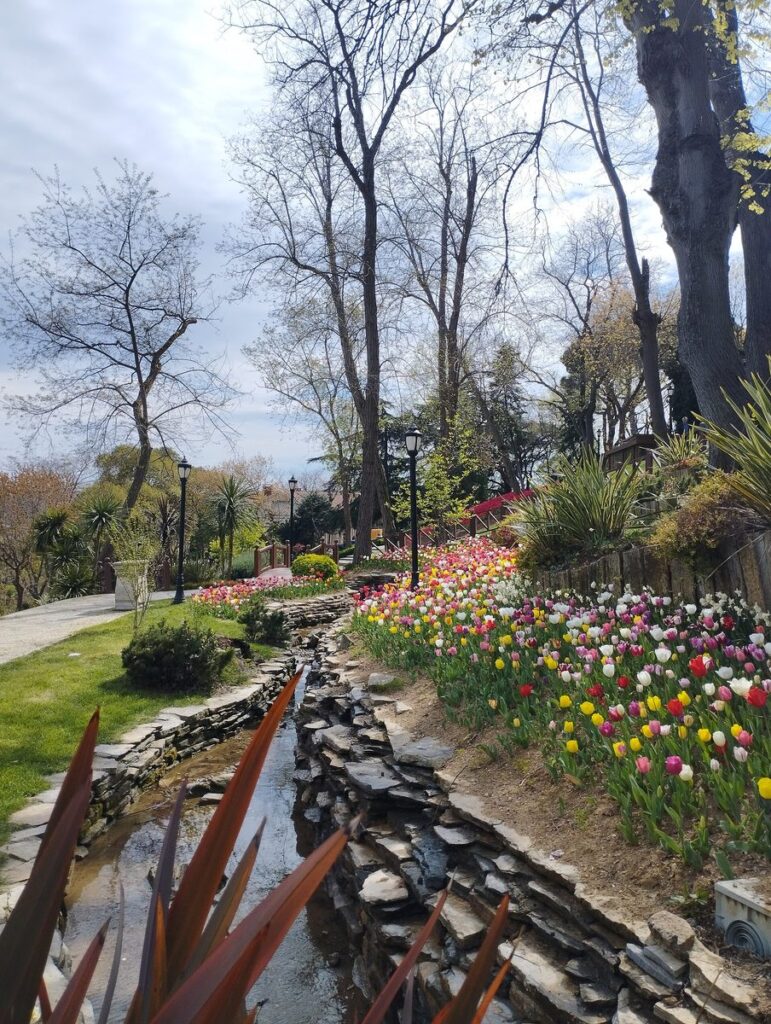
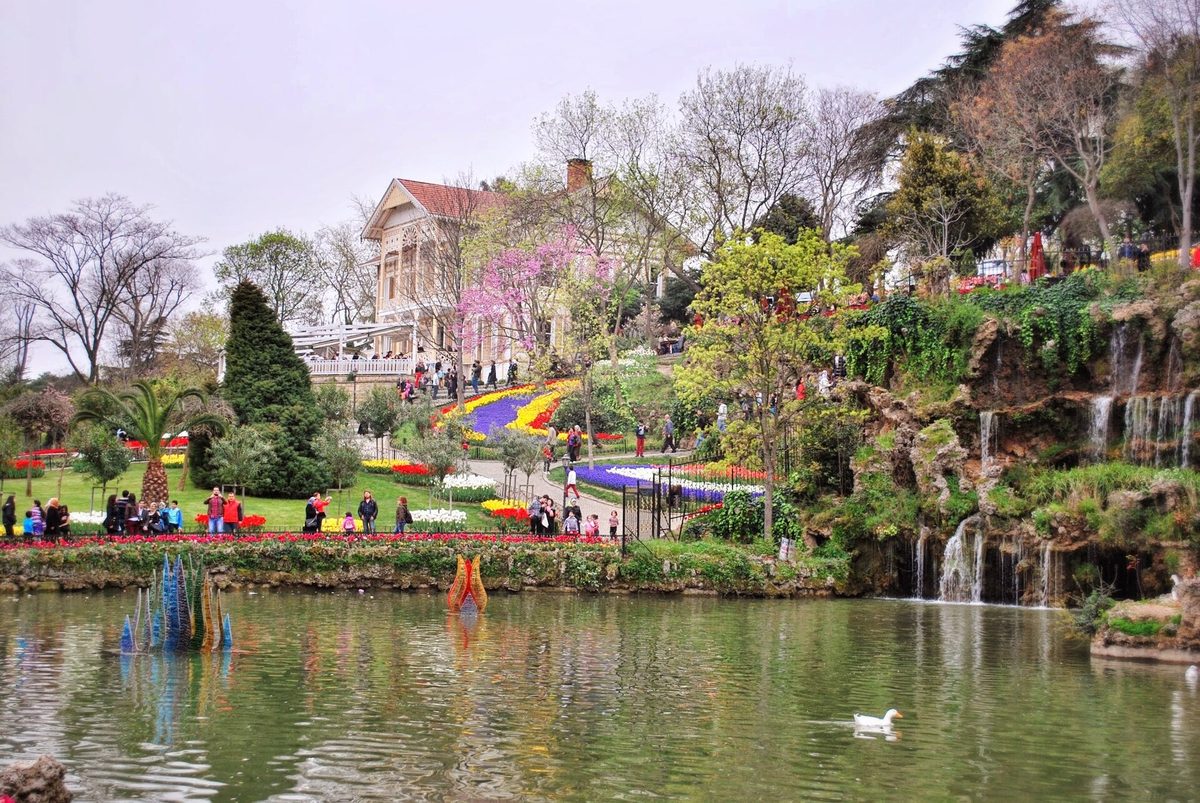
Every April, the İBB plants millions of tulip bulbs across the city’s parks as part of the Istanbul Lale Festivali — a nod to the Ottoman “Tulip Era” of the 1720s, when the flower briefly became a genuine cultural obsession at court. Emirgan Park on the Bosphorus is the festival’s centrepiece, with Gülhane Park near Topkapı and a temporary “tulip carpet” of roughly half a million bulbs laid in Sultanahmet Square among the other major displays. It is entirely free, city-run, and the exact peak bloom dates shift year to year with the spring weather — expect the festival to run across most of April with peak colour typically in the second or third week, though this is announced only a few weeks ahead each year rather than fixed in advance.
Ramadan and the two Eid holidays
Ramadan 2027 is expected to run from roughly 8 February to 9 March, based on the lunar calendar’s estimated position; Eid al-Fitr (Ramazan Bayramı), the shorter holiday marking Ramadan’s end, follows immediately after for around three days, and Eid al-Adha (Kurban Bayramı), the longer festival of sacrifice, falls roughly ten weeks later, around mid-to-late May. Both dates are confirmed only close to the day by religious authorities and shift roughly eleven days earlier on the Gregorian calendar each year, so treat any date more than a year out as an estimate.
Visiting during Ramadan itself is genuinely rewarding rather than something to avoid: restaurants stay open for tourists throughout the day even though many locals are fasting, iftar tents spring up around Sultanahmet serving the sunset meal at a fraction of restaurant prices, and mahya — illuminated messages strung between minarets — light up the old city’s mosque skyline after dark in a way that does not happen the rest of the year. What genuinely changes is pace and volume: some restaurants near mosques reduce hours or close during the day, streets around the tents get considerably busier after sunset, and the general mood shifts toward the evening rather than the day. During the Eid holidays themselves, the Grand Bazaar and Spice Bazaar close for at least the first day or two, state museums typically stay open, and public transport is often free on the holiday’s first day — an announcement made by the İBB rather than a fixed rule, so confirm it does not assume anything for your specific dates.
The single best evening to build a Ramadan visit around is the sunset moment itself, iftar, when the call to prayer marks the end of the day’s fast and entire streets around the Sultanahmet iftar tents shift from quiet anticipation to full activity within minutes. Arrive at a tent or a nearby restaurant before sunset if you want to witness the moment rather than simply eat afterward — the atmosphere in the ten or fifteen minutes either side of it is genuinely different from any other time of day, in Ramadan or out of it. Alcohol service at some venues becomes more muted during the month as a matter of social consideration rather than legal requirement, covered in more depth in our nightlife guide; expect a quieter Beyoğlu evening scene generally, even in licensed, tourist-facing venues.
National holidays: what actually closes
| Date | Holiday |
|---|---|
| 1 January | New Year’s Day |
| 23 April | National Sovereignty and Children’s Day |
| 1 May | Labour and Solidarity Day |
| 19 May | Commemoration of Atatürk, Youth and Sports Day |
| 15 July | Democracy and National Unity Day |
| 30 August | Victory Day |
| 29 October | Republic Day (half-day from 28 October) |
On fixed national holidays, banks, government offices and many shops close, but major tourist sights, restaurants and public transport generally keep running — these are considerably less disruptive to a visitor’s plans than the religious holidays, which affect specific commercial sites like the Grand Bazaar directly. Republic Day, marking the 1923 founding of the Turkish Republic, is the one fixed holiday with genuine visitor-facing spectacle: fireworks over the Bosphorus and a flag-heavy, celebratory atmosphere across the city into the evening, with red-and-white flags and bunting appearing on buildings and ferries across the city for days beforehand.
The Istanbul Marathon: the only race across two continents
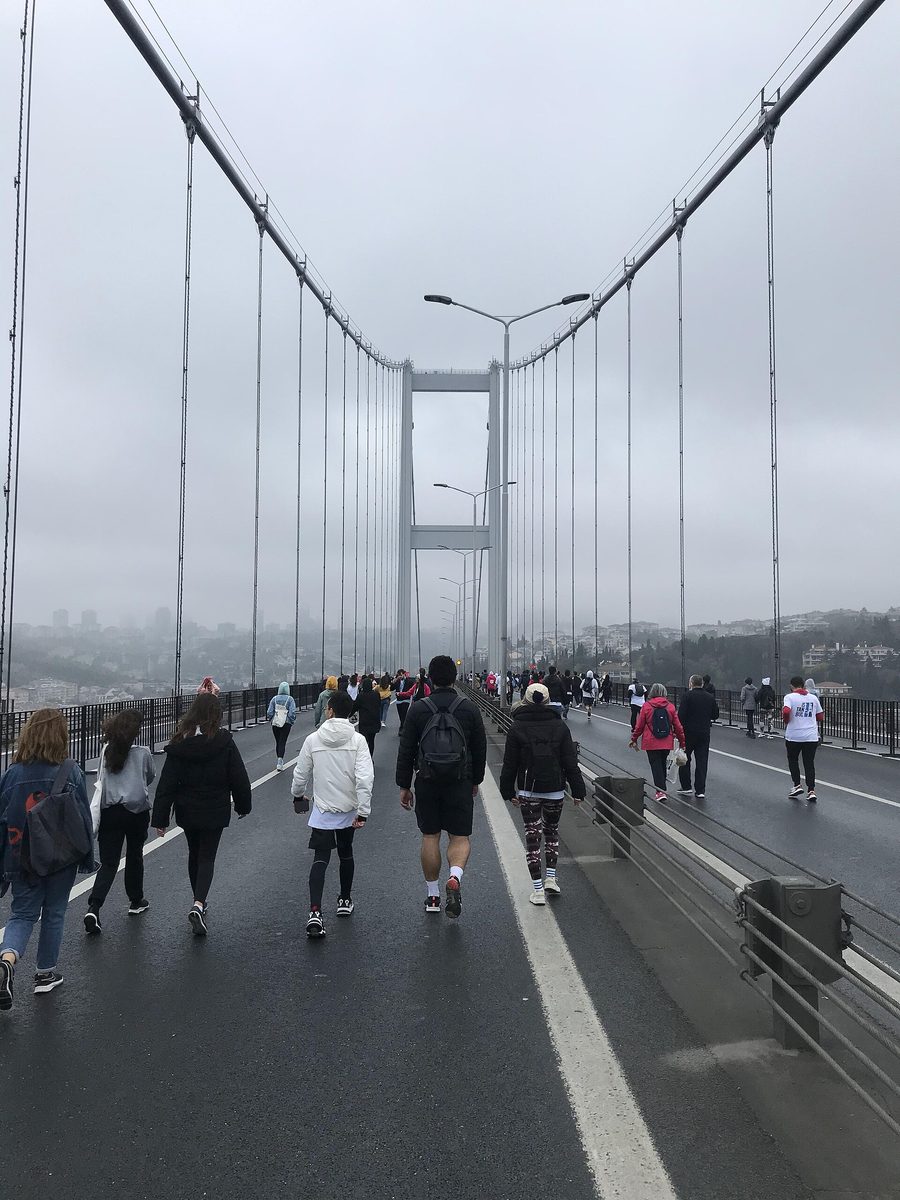
Run every November, typically on the first or second Sunday, the Istanbul Marathon is the only marathon in the world that crosses from Asia to Europe, starting on the Asian side and running across the 15 July Martyrs’ Bridge (the First Bosphorus Bridge) before continuing over two further bridges to finish in the old city. The full 42.195 km marathon, a 15 km race and a fun run all run on the same day, and the 15 km and fun-run distances are, notably, the only occasions all year when pedestrians are allowed to cross a Bosphorus bridge on foot — a genuinely unique experience even for a visitor who has no interest in running competitively. Registration for the timed distances happens through the official race site well ahead of race day; spectating is free and the finish area in Sultanahmet draws a genuinely festive crowd.
If running the distance itself does not appeal but the idea of walking across a bridge you would otherwise never be allowed on foot does, the 15 km or fun-run entry is worth considering purely for that experience — neither requires a competitive pace, and both let you stop for photographs partway across in a way that a car crossing never would. Roads across the affected bridges and their approaches close to traffic for the morning, which is worth building into your day’s transport plan even if you have no interest in the race itself, since a normally quick taxi or bus route across the strait may need rerouting or a metro alternative on race morning.
Football season: Beşiktaş, Fenerbahçe and Galatasaray
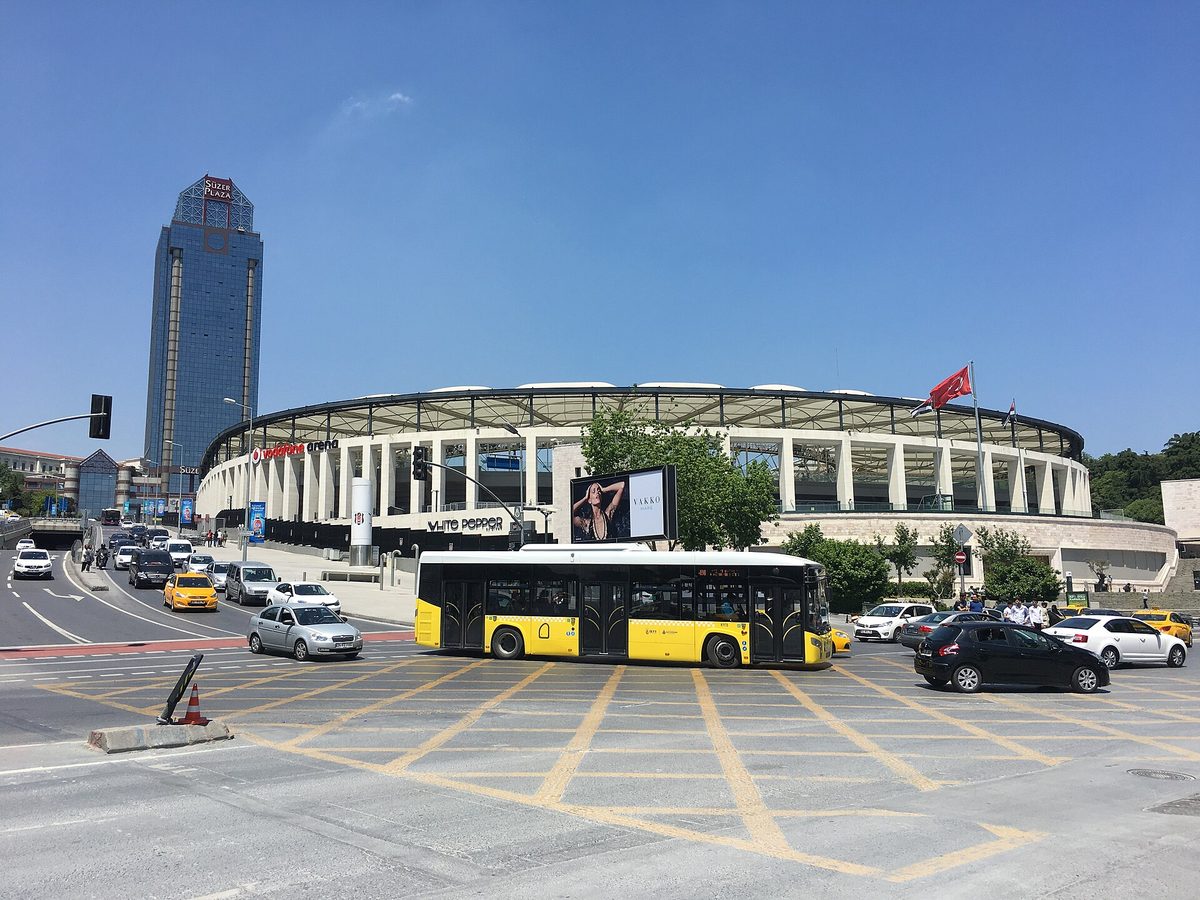
The Süper Lig season runs roughly August to May, and Istanbul’s three major clubs — Beşiktaş, Fenerbahçe and Galatasaray — play in stadiums that are genuinely intimidating in the best possible way, with a matchday atmosphere that ranks among the most intense in European football. Foreign visitors need a Passolig fan identification card to buy a ticket and enter any Süper Lig stadium, a rule introduced in the wake of past crowd-related incidents; the card takes several days to arrange, so this is a plan-ahead item rather than something to sort out on arrival. If a derby between any two of the three clubs falls during your trip, it is worth building a whole evening around, ticket or not — watching in a packed neighbourhood bar near the relevant stadium is nearly as intense as being inside it, and does not require the Passolig card at all.
Each club’s Passolig registration process has its own quirks and occasionally changes season to season, so check the current process on the club’s own official ticketing page rather than a general how-to guide that may describe an older system — this is one of the more frequently updated practicalities on this whole page. Beşiktaş plays at Vodafone Park in the club’s namesake district on the European shore; Fenerbahçe at Şükrü Saracoğlu on the Asian side in Kadıköy; Galatasaray at RAMS Park, further out on the European side. All three are reachable by public transport, though a taxi or rideshare on a matchday evening, when local transport gets genuinely crowded with fans, is worth the extra cost for a visitor unfamiliar with the system.
ANZAC Day and Kırkpınar: events that pull visitors out of the city
Two events outside Istanbul itself are worth knowing about because they change what the city looks like around them, even though neither happens in Istanbul proper. ANZAC Day, 25 April, falls on a Sunday in 2027 and draws Australian and New Zealand visitors specifically to Gallipoli’s dawn service at the Anzac Commemorative Site — a five-hour drive from Istanbul, with Çanakkale and Eceabat’s hotels booked out months ahead of the date and many visitors basing a whole Istanbul trip around timing a Gallipoli side trip to coincide. If ANZAC Day falls inside your travel dates and a Gallipoli visit interests you, book accommodation near the battlefields as early as you can rather than assuming a same-week booking will be possible.
Kırkpınar, Turkey’s historic oil-wrestling tournament, runs in Edirne in late June or early July most years — again not in Istanbul itself, but close enough (roughly 2.5–3 hours by bus) that it turns up on itineraries for visitors extending a trip north toward the Bulgarian border. It is a genuinely unusual spectacle with roots going back centuries, oiled wrestlers competing in a tournament format unlike anything most visitors have seen, and worth the day trip specifically if your dates align with it.
New Year’s Eve in Istanbul
31 December draws large crowds to Taksim Square and İstiklal Caddesi, upscale dinners with a Bosphorus view in Beşiktaş and Ortaköy, and fireworks over the strait itself in a citywide, informally coordinated celebration rather than one official display. Security is visibly heavier than an ordinary night, restaurants with a view book out weeks in advance, and hotel prices across the city run 30–50% above the rest-of-year average for the days surrounding it — book both a table and a room well ahead if New Year’s Eve specifically is the reason for your trip.
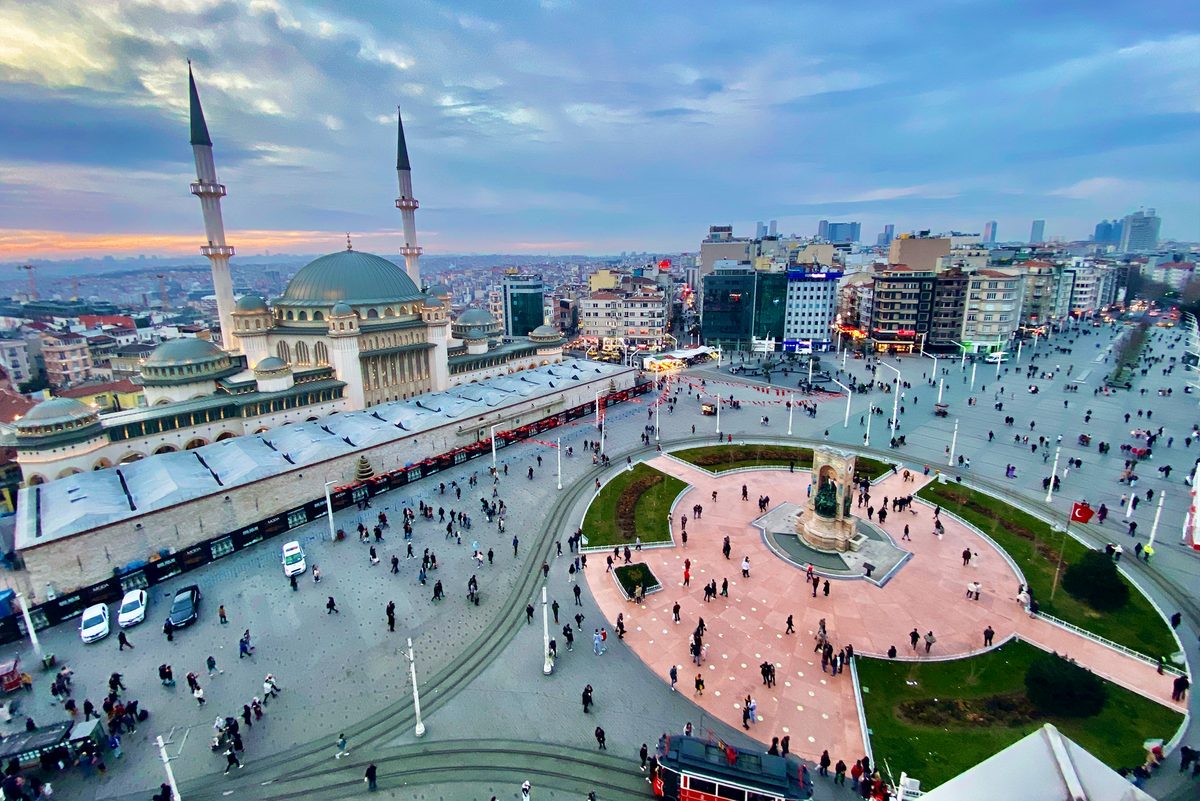
An alternative to the Taksim crowds worth knowing about: a Bosphorus-facing hotel room or restaurant well away from the square gives a quieter, arguably better view of the fireworks over the water without the density of the İstiklal crowd, at the cost of a considerably higher price for that specific table or room on that specific night. Choose based on whether you want to be part of the crowd’s energy or watching it from a comfortable distance — both are legitimate ways to spend the evening, and neither is the “correct” one.
Winter events: snow, New Year and the quiet months
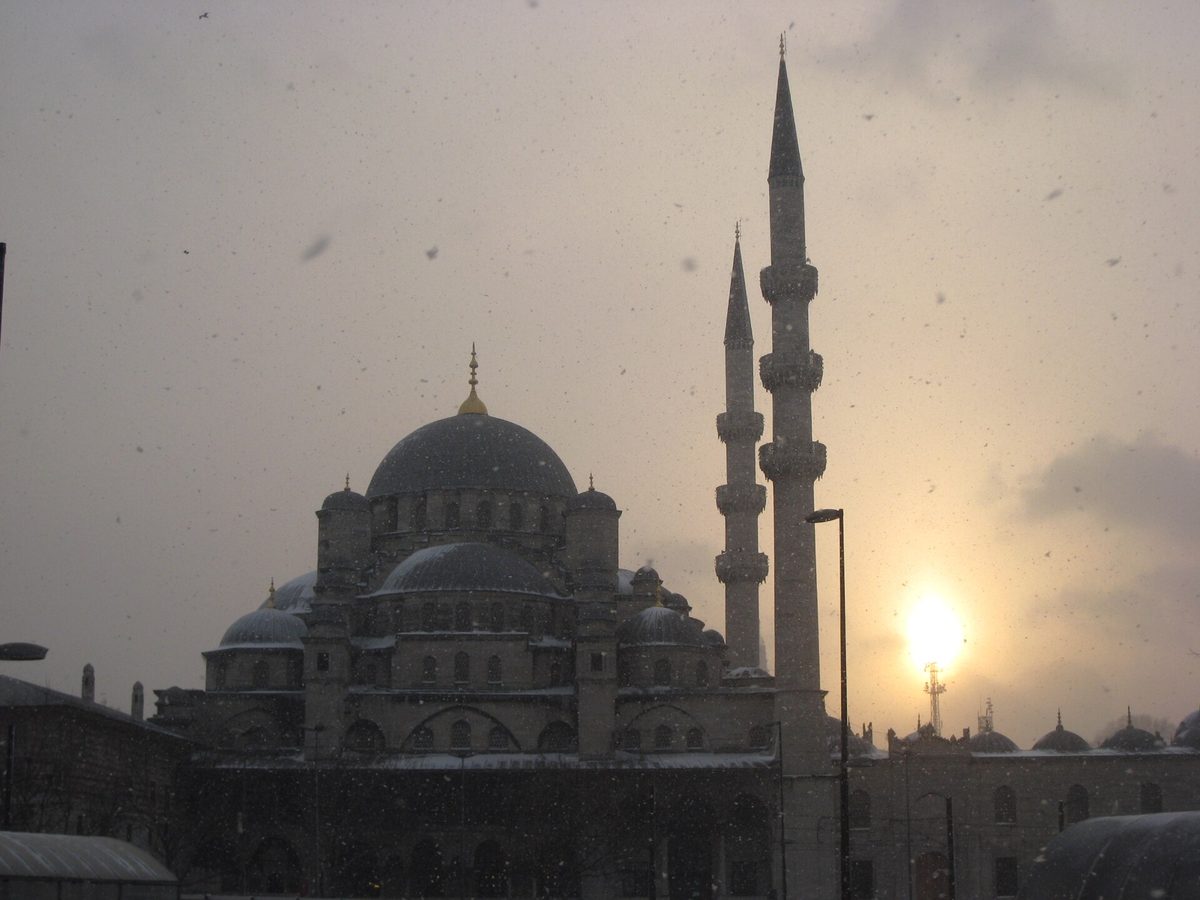
January and February are the quietest months on Istanbul’s own events calendar, but they are also when the city looks most unexpectedly beautiful — a rare snowfall over the domes and minarets of the old city is one of the most photographed weather events in Istanbul, precisely because it happens only a handful of times most winters and never lasts long. There is no scheduled “snow event” to plan around, obviously, but if your trip already falls in January or February, a cold snap is worth hoping for rather than something to avoid; hotel prices in this window run 25–35% below the rest of the year specifically because most visitors assume there is nothing on, which is broadly true of festivals but not of the city’s own quiet, uncrowded charm.
The sights themselves change character in this window too, in ways worth knowing about beyond the weather. Queues at Hagia Sophia, Topkapı and the Basilica Cistern thin out dramatically compared with April through October, and a winter morning at any of the big three can mean genuinely having a gallery or a courtyard to yourself for several minutes at a time — an experience that simply does not happen at any price during the peak season crowds of a spring or autumn visit.
Booking tickets for Istanbul’s festivals and events
Biletix is the largest general ticketing platform for concerts, festivals and theatre; Passo and Bubilet cover overlapping ground with some exclusive listings of their own, and IKSV sells directly for its own four festivals through its own site, which is the safest channel for Film Festival, Music Festival, Jazz Festival and Theatre Festival tickets specifically. Buy directly through one of these rather than a resale site advertising “guaranteed” tickets at a markup — Istanbul’s festival scene has the same reseller-inflation problem as any major city’s, and there is no legitimate reason to pay above face value for anything covered on this page.
Most of these platforms have English-language interfaces, though payment occasionally requires a Turkish-issued card or works more reliably through one payment method than another depending on the specific venue and event — if a purchase fails on your first attempt with a foreign card, try a different card or payment method before assuming the event is sold out entirely.
Planning a trip around, or away from, a specific event
Two opposite strategies both work, depending on what you want from the trip. Planning toward an event — timing a visit for the Tulip Festival, the Music Festival’s historic-venue concerts, or a specific derby — rewards booking flights and hotels earlier than you would for an ordinary trip, since accommodation in the relevant neighbourhood tightens up as the date approaches and the best festival tickets sell out well ahead of the event itself. Planning away from the busiest dates — avoiding New Year’s Eve week, the peak of Eid al-Adha, or the exact days around a Galatasaray-Fenerbahçe derby if crowds are not your thing — is just as valid a strategy, and Istanbul rewards it: the city has enough going on every week of the year that “nothing is on” is never really true, it just means a quieter, easier trip rather than a livelier one.
A useful middle path for a first visit: pick a broad season using our best time to visit Istanbul guide for weather and crowd levels, then check this page’s calendar for whatever happens to fall inside that window, and treat any event you land on as a bonus rather than the reason for the trip. That approach avoids both the risk of over-planning around a festival date that later shifts and the disappointment of landing during a major holiday closure you did not know to expect.
What to skip, and what to reconsider
Assuming Ramadan means everything is closed. Tourist-facing restaurants, museums and transport all keep running. What changes is pace, some daytime restaurant hours near mosques, and the evening’s atmosphere — genuinely worth experiencing rather than avoiding.
Planning a trip around an exact tulip bloom date a year out. Peak bloom is announced only weeks ahead each spring and depends on that year’s weather. Build in flexibility rather than fixing travel dates around a specific week.
Buying festival or match tickets from a resale site. Biletix, Passo, Bubilet and IKSV’s own site are the legitimate channels for everything on this page; a marked-up reseller offers no advantage over any of them.
Trying to attend a Süper Lig match without a Passolig card. It is a hard requirement for foreign visitors at any Turkish top-flight stadium, and arranging it takes several days — not something to leave until the day of the match.
Booking New Year’s Eve dinner or a room at the last minute. Both the best-located restaurants and hotel rates move well in advance of 31 December; this is one of the few dates on the Istanbul calendar where genuinely early booking makes a real, measurable difference to both price and availability.
Frequently asked questions
What events happen in Istanbul in 2026 and 2027?
The Tulip Festival and Film Festival in April, the Music Festival in June, the Jazz Festival in July, the Biennial from September to November 2027, Filmekimi in October, the Marathon in November, plus Ramadan and the two Eid holidays on a shifting Islamic calendar and New Year’s Eve on 31 December.
Is Istanbul good to visit during Ramadan?
Yes — restaurants stay open for tourists, and the iftar tents and illuminated mahya displays over the old city’s mosques are genuinely worth seeing. Expect a quieter daytime pace and a livelier, more sociable evening than the rest of the year, particularly around the Sultanahmet iftar tents once the sun goes down.
When is the Istanbul Tulip Festival?
Throughout April, with peak bloom typically in the second or third week, though the exact dates are announced only a few weeks ahead each year depending on the spring weather. Emirgan Park is the main site; Sultanahmet gets a temporary tulip carpet.
Do I need a ticket to watch the Istanbul Marathon?
No — spectating is free. Only the timed race distances (the full marathon, 15 km and fun run) require registration, and the 15 km and fun run are the only occasions each year when a pedestrian can legally cross a Bosphorus bridge on foot.
What closes during Eid in Istanbul?
The Grand Bazaar and Spice Bazaar close for at least the first day or two of each Eid holiday; state museums generally stay open, and public transport is often free on the first day, though this is announced by the İBB rather than guaranteed every year.
How do I buy tickets to a football match in Istanbul?
You need a Passolig fan identification card, required of all visitors at Süper Lig stadiums, which takes several days to arrange — plan for it before you travel rather than on the day of a match.
Is New Year’s Eve a big deal in Istanbul?
Yes — Taksim Square, İstiklal Caddesi and the Bosphorus-view restaurants of Beşiktaş and Ortaköy all draw large crowds, with fireworks over the strait. Book dinner and a hotel well in advance if this is the reason for your trip.
Where can I find the current year’s exact IKSV festival dates?
Directly at iksv.org, which publishes confirmed dates for the Film, Music, Jazz and Theatre Festivals, Filmekimi and the Biennial closer to each event — treat any date more than a year out, including the ones on this page, as the current best estimate.
What is the quietest time of year to visit Istanbul?
January and February, with hotel prices 25–35% below the rest-of-year average and no major festival competing for attention — genuinely rewarding if a rare snowfall over the old city’s mosques appeals more than a packed festival calendar.
Can I walk across a Bosphorus bridge on foot?
Only during the Istanbul Marathon each November, on the 15 km and fun-run distances — the only occasions all year pedestrians are permitted on the bridges. At every other time, crossing on foot is not allowed.