Shopping ·
What to Buy in Istanbul: 25 Souvenirs, Where to Shop for Each & What to Pay
25 things worth buying in Istanbul, where to actually buy each one, September 2026 fair prices, and the carpet, saffron and leather scams that trip up visitors.
In this guide 16 sections
- What to buy in Istanbul
- Where to shop
- Grand Bazaar practicalities
- Carpets and kilims
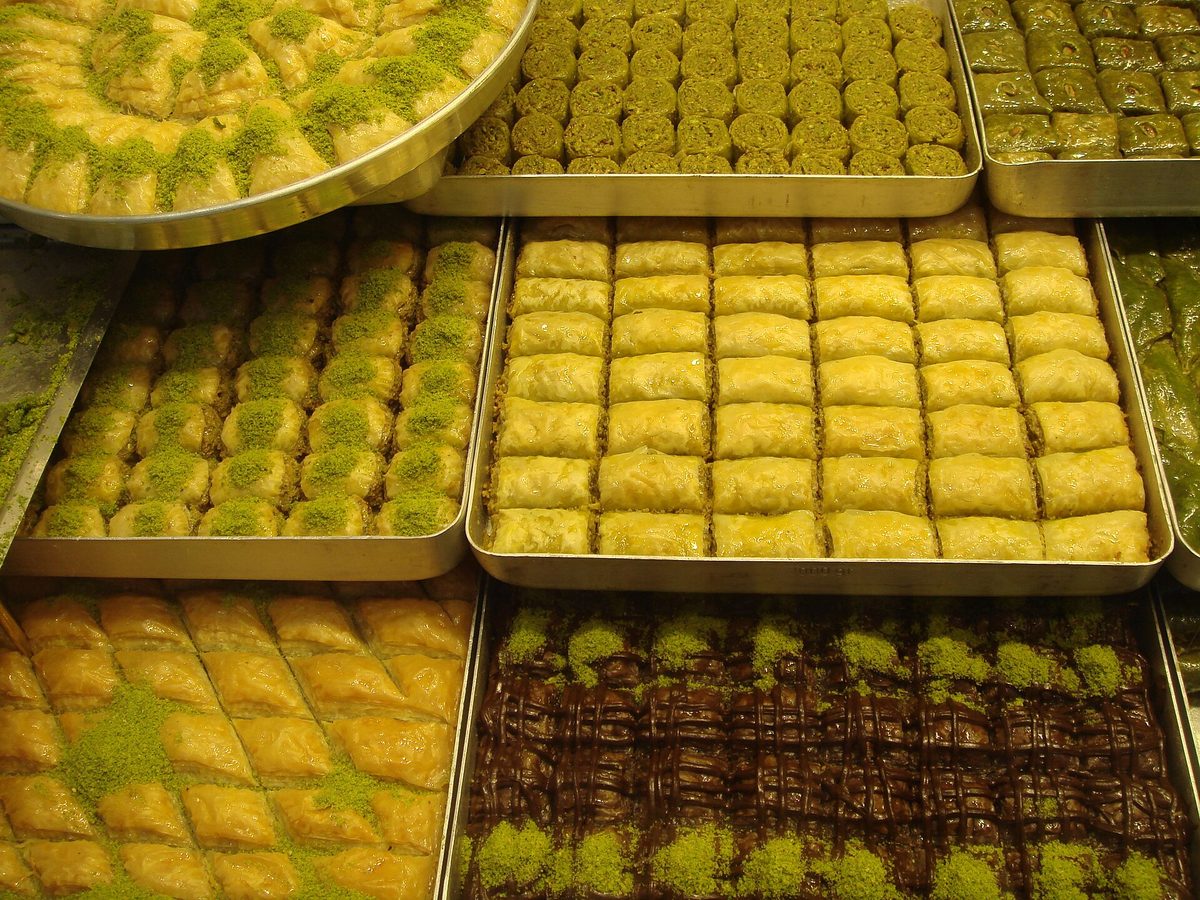
- Turkish delight and sweets
- Spices, saffron and coffee to take home
- Textiles
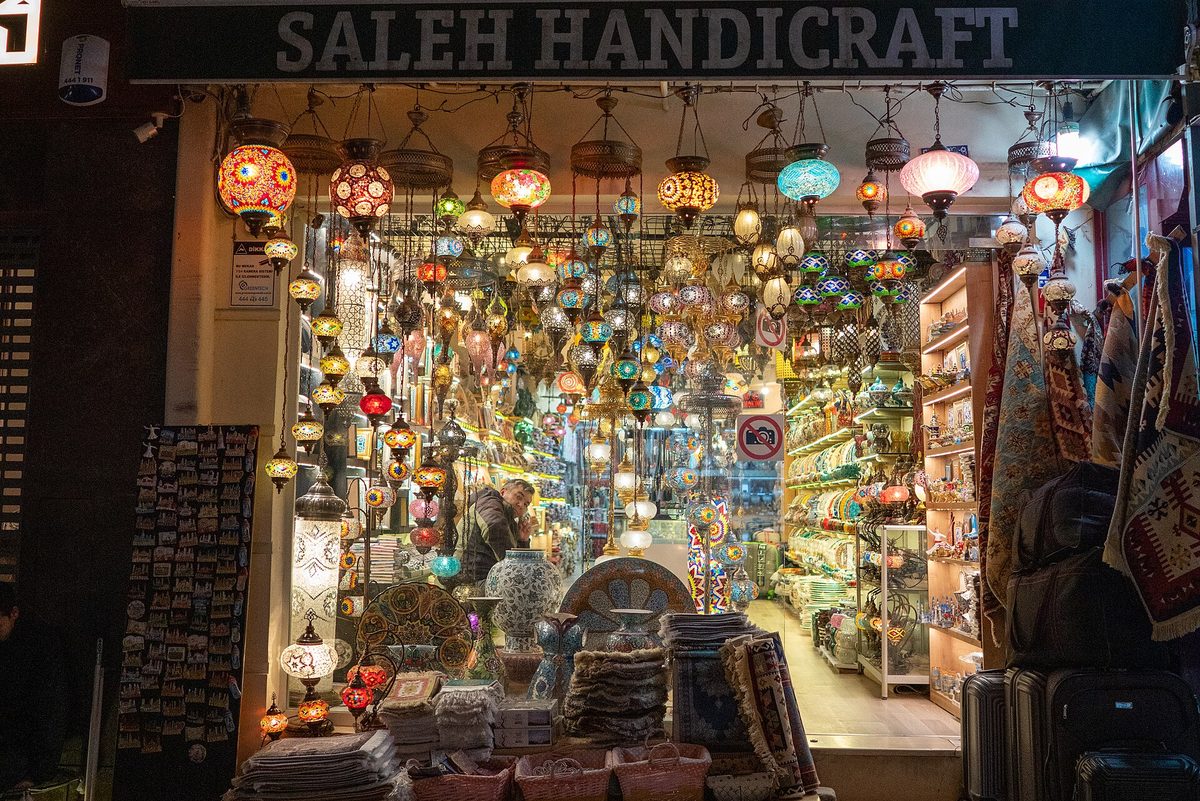
- Ceramics, tiles and mosaic lamps
- Evil eye charms, jewellery and leather
- Beyond the bazaars
- Tax-free shopping
- Bringing food and spices through customs
- Shipping a carpet or large item home
- Packing textiles, ceramics and food for the flight home
- What to skip
- Frequently asked questions
A dealer in the Grand Bazaar once told a friend of mine her carpet was “one hundred and twenty-five years old, madam, from my grandfather’s village.” It was machine-made, likely within the decade, and she paid four times its worth before a hotel concierge talked her out of the matching cushion covers.
Here is what is actually worth bringing home when you think about what to buy in Istanbul: real hand-knotted kilims from a dealer who will show you the knots, Turkish delight from one of three shops making it since the Ottoman era, spices and saffron bought by weight from a stall not selling you dyed rice, hand-loomed towels, Iznik-pattern ceramics, mosaic lamps, and evil eye charms that cost less than your coffee. Below are twenty-five specific things worth buying, where to actually buy each one, what it should cost in September 2026, and the handful of scams that account for most of the bad reviews this city’s shopping gets.
What to buy in Istanbul: the twenty-five at a glance
| Item | Where to buy | Fair price (Sep 2026) | Fake risk |
|---|---|---|---|
| Small kilim (flatweave rug) | Grand Bazaar dealer, Arasta Bazaar | $100–300 | Medium — ask for the knot test |
| Medium hand-knotted carpet | Established Grand Bazaar dealer | $300–800 | High — “antique” claims |
| Large hand-knotted carpet | Established dealer, certificate offered | $800–3,000+ | High |
| Turkish delight (lokum), 500 g | Hafız Mustafa, Hacı Bekir, Spice Bazaar | $10–25 | Low |
| Baklava, boxed | Karaköy Güllüoğlu | Varies by weight, ~200–400 TL/kg | Low |
| Spices, per 100 g | Behind the Spice Bazaar, not inside it | Tens of lira | Medium — fake saffron common |
| Turkish coffee, 250 g | Kurukahveci Mehmet Efendi | ~100–200 TL | Low |
| Peştemal (Turkish towel) | Jennifer’s Hamam, Abdulla, Arasta Bazaar | 400–1,500 TL | Medium — machine-woven sold as hand-loomed |
| Iznik-pattern ceramic bowl/plate | Arasta Bazaar, Iznik Foundation shop | $15–40 | Medium — genuine Iznik tiles cost far more |
| Mosaic glass lamp, small/medium | Grand Bazaar lamp shops | $35–60 / $60–120 | Low |
| Evil eye (nazar boncuğu) charm | Anywhere; genuinely everywhere | $1–5 | Low |
| Leather wallet | Grand Bazaar, Zeytinburnu | $25–70 | High for “branded” jackets |
| Gold jewellery | Kuyumcular Çarşısı (Grand Bazaar’s gold market) | Daily gold price + workmanship | Low if weighed on scale in front of you |
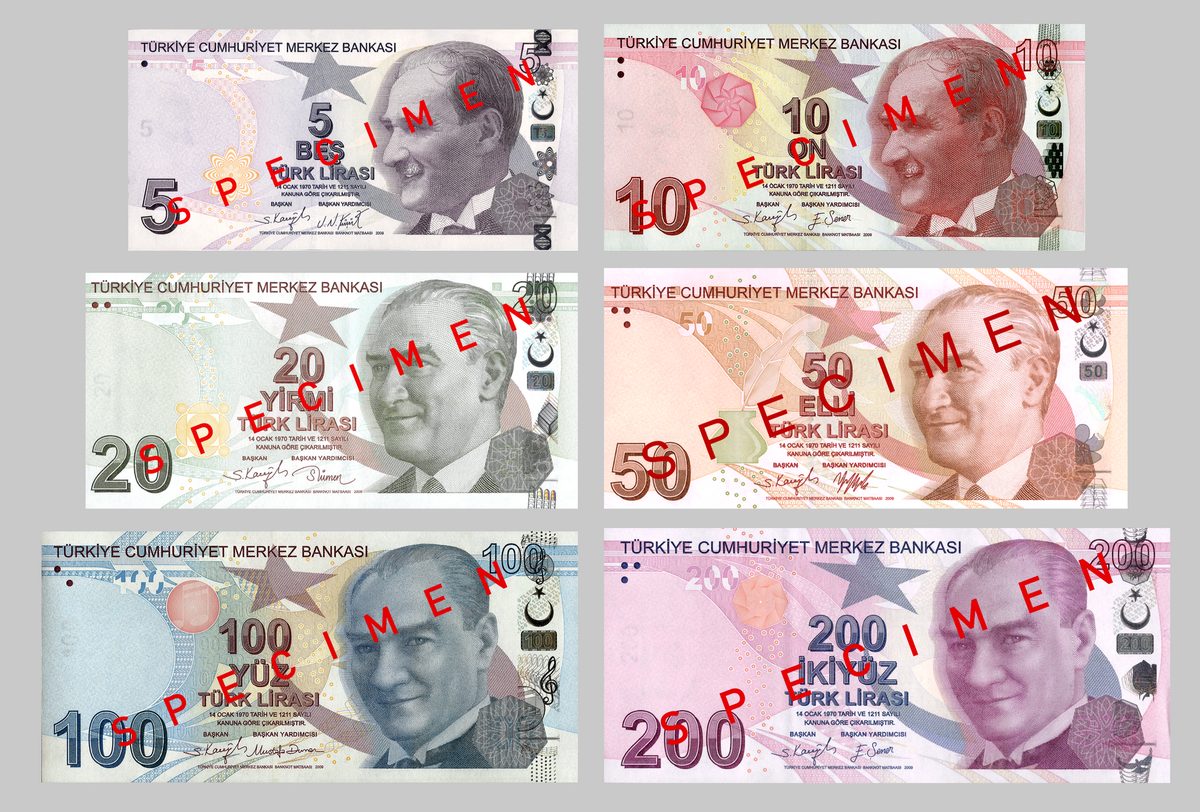
USD price bands checked against September 2026 shopping research; lira prices drift faster than dollar ones, so where a shop quotes only in lira, expect the figure to be higher next year even if the dollar-equivalent price barely moves.
Where to shop: Grand Bazaar, Spice Bazaar, Arasta, or somewhere else entirely
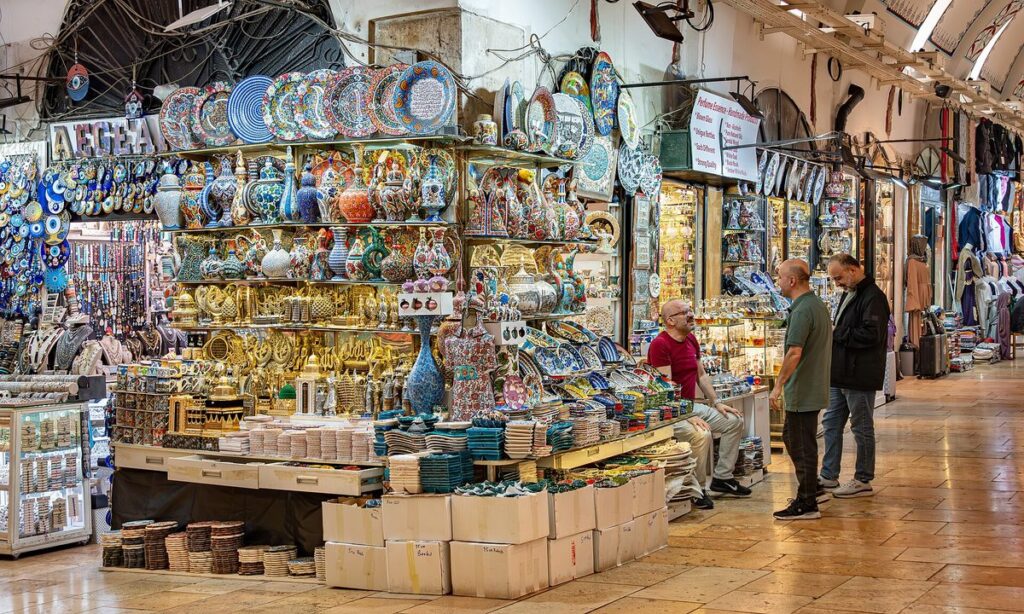
The Grand Bazaar is the obvious first stop and the right one for carpets, gold, leather and mosaic lamps — sixty-plus streets and around four thousand shops, Monday to Saturday 09:00 to 19:00, closed Sundays and Islamic holidays. The Spice Bazaar is genuinely excellent for spices and Turkish delight but charges tourist prices inside its main hall; the streets immediately behind it, Tahmis Caddesi and Hasırcılar Caddesi, sell the same or better product at half the money to actual Istanbul households. The Arasta Bazaar, a quiet arcade behind the Blue Mosque, is the calmest place in the old city to buy towels, Iznik ceramics and jewellery without the Grand Bazaar’s crowd or its more aggressive touts — a genuine “quiet alternative” rather than a lesser one. For everyday Turkish brands, malls like İstinye Park, Zorlu Center and Kanyon do the job with fixed prices and air conditioning, though nothing there is a souvenir in any meaningful sense.
Grand Bazaar practicalities: entrances, cash, and when to go
The bazaar has 22 gates and it is genuinely easy to lose your bearings inside it — the Nuruosmaniye gate on the Sultanahmet side and the Beyazıt gate at the opposite end are the two most useful reference points, and getting mildly lost between them for an hour is part of the experience rather than a failure of navigation. Cash remains useful for negotiating a final price, since a dealer has more room to move on a cash deal than a card one, but the larger, more established shops all take cards without issue and increasingly prefer contactless for anything over a token amount. Go on a weekday morning if you want the calmest version of the bazaar; Saturday afternoons are the busiest, and the whole building is closed on Sundays and the first days of Islamic holidays including Eid al-Fitr and Eid al-Adha, which catches visitors who assume a major shopping destination is open every day of the week.
Carpets and kilims: the single biggest-ticket souvenir, and the biggest scam risk
A genuine hand-knotted carpet is one of the best things you can bring home from Turkey, and also the item most likely to separate you from money you did not mean to spend. The price bands are real: a small kilim runs $100–300, a medium hand-knotted carpet $300–800, and a large one anywhere from $800 to $3,000 or more depending on knot density, material and age. Silk Hereke carpets, the most prized regional style, sit well above all of these.
The scam patterns are consistent enough to name specifically. A “125-year-old” carpet that is actually machine-made within the last decade is the most common single lie in the bazaar. A card terminal that “fails” and is run twice, with the first charge never refunded, is the second. Hotel and taxi drivers who steer you to a specific “cousin’s shop” for a kickback are the third — a recommendation from your driver is not a recommendation you asked for. And a VAT-refund form the shop promises to process that is never actually honoured is the fourth.
The single most useful thing you can do before paying anything: turn the carpet over. A genuinely hand-knotted piece shows uneven knots and slight irregularities on the reverse; a machine-made carpet is uniform, almost printed-looking, on the back regardless of how convincingly worn the front has been made to look. Ask for a certificate of authenticity from any dealer selling above a few hundred dollars, get a second opinion if you are spending real money, and treat “final offer, just for you” as the opening line of a negotiation rather than the end of one.
Material matters as much as construction. Wool-on-wool kilims and carpets are the everyday standard and the right starting point for a first purchase; wool-on-cotton pieces, with a cotton foundation and wool pile, tend to lie flatter and are a common step up; silk, and especially silk Hereke carpets from the town of that name on the Sea of Marmara, sit at the top of the market and are priced accordingly, often running into the thousands of dollars for a genuinely fine piece. A reputable dealer will tell you unprompted which material and region a piece comes from, name the specific regional style (Kayseri, Konya, Uşak and Hereke are among the most recognised names), and let you sit with the piece in natural daylight rather than only under the shop’s own warm lighting, which flatters colour in a way that can shift noticeably once you get it home.
On negotiating specifically: a first offer from the dealer is rarely close to their real floor, and countering at 40–50% of the asking price is a normal opening move rather than an insult, provided it is done with good humour rather than aggression. Being served tea during a carpet negotiation is standard hospitality, not an obligation to buy, and a good dealer will not treat a declined offer as rude. If a shop pressures you to decide immediately, treat that pressure itself as information — a genuinely good piece from an established dealer will still be there, at a fair price, if you come back after thinking it over.
Turkish delight and sweets: three names that actually matter
Hacı Bekir has been making lokum since 1777 and is the name the other two are measured against; Hafız Mustafa, founded in 1864, runs the most photogenic shops and the widest modern flavour range; Koska is the mass-market name you will see in supermarkets and is perfectly good rather than special. Spice Bazaar lokum is fine for a quick gift but is priced for tourists and rarely the freshest stock in the building. A 500 g box runs $10–25 depending on the flavour and whether it is nut-filled, and it travels well if kept out of heat — do not leave a box in a hot car or a sun-facing hotel windowsill.
Baklava is the other sweet worth bringing home, and Karaköy Güllüoğlu is the name to look for specifically — a bakery old enough and good enough that Istanbul residents will walk past several other baklava shops to reach it. Buy it boxed and vacuum-sealed if you are flying rather than driving, and eat it within a few days regardless of what the box suggests; fresh baklava dries out faster than its shelf-stable cousins from a supermarket.
Spices, saffron and coffee to take home
Buy spices by weight, from a stall with visible pricing, and be specifically sceptical of cheap saffron — genuine saffron is expensive everywhere in the world, and a bargain price in the Spice Bazaar is a reliable sign of dyed safflower rather than the real thing. A hundred grams of most everyday spices runs a few tens of lira from the honest shops on Hasırcılar Caddesi behind the bazaar; the same weight inside the bazaar’s tourist-facing stalls costs meaningfully more for identical product.
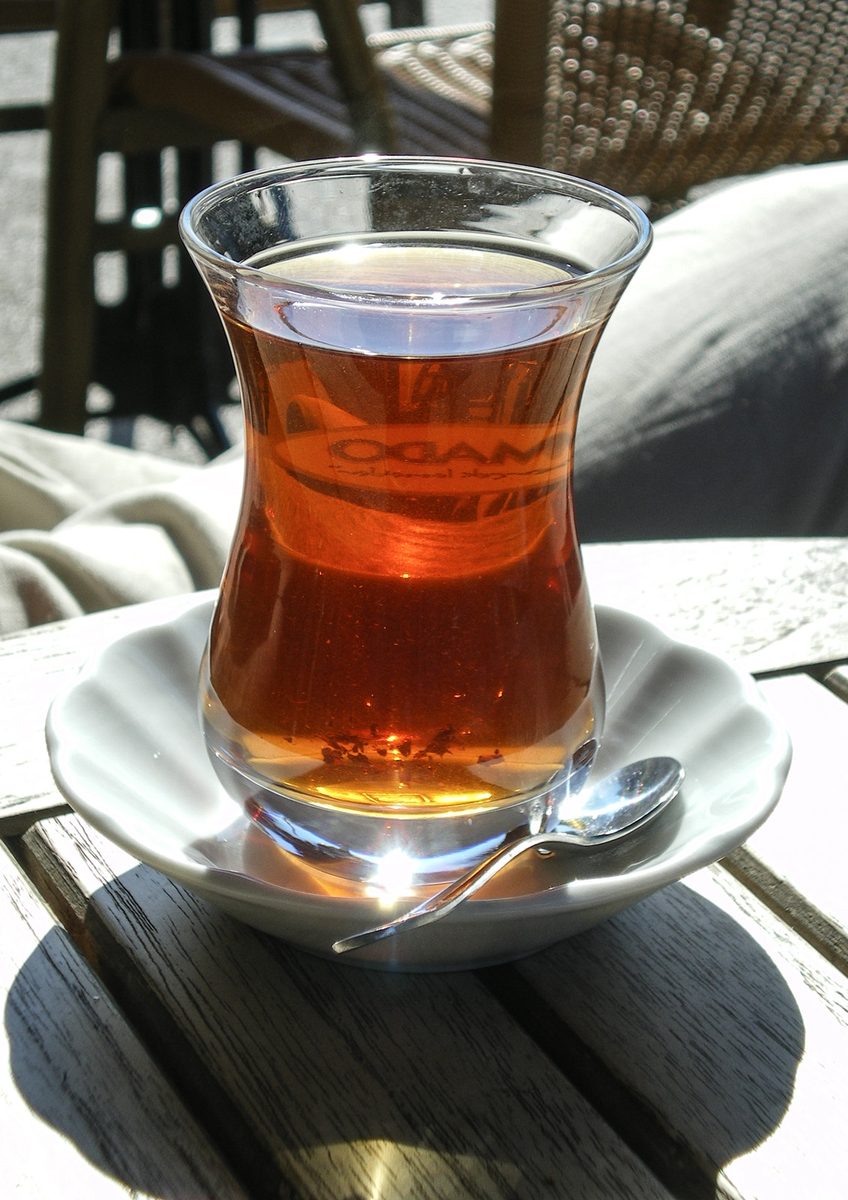
Turkish coffee to take home means one destination above all others: Kurukahveci Mehmet Efendi’s corner shop by the Spice Bazaar, queuing since long before Instagram made it famous, selling 250 g bags of fresh-ground coffee for roughly 100–200 TL. Buy it ground specifically for Turkish coffee (a much finer grind than espresso) and pick up an inexpensive cezve, the small long-handled pot, if you actually intend to make it the way it is meant to be made rather than in a regular coffee maker at home.
Textiles: towels, kilim bags and scarves
The peştemal, the flat woven towel Turkish hamams are built around, is one of the best souvenirs in this whole list because it is genuinely useful rather than purely decorative — thinner and faster-drying than a Western bath towel, and increasingly fashionable as a beach or picnic throw outside Turkey too. Jennifer’s Hamam in the Arasta Bazaar and Abdulla on İstiklal are the names to look for specifically; a real hand-loomed peştemal runs 400–1,500 TL depending on size and thread quality, and the giveaway for a machine-made imitation sold at the same price is a perfectly uniform weave with none of the slight irregularity hand-loomed cotton naturally has.
Small kilim cushion covers and bags scale down the carpet-buying logic to a size that fits in hand luggage, and are a sensible way to bring home a genuine hand-woven textile without the shipping headache a full-size carpet involves. Silk and cotton scarves in Ottoman-inspired prints are sold throughout the bazaars at a wide range of quality; check the fibre content on anything marketed as “silk” specifically, since a substantial share of what is sold as silk in the tourist-facing stalls is a silk-look synthetic blend at a silk-adjacent price.
Ceramics, tiles and mosaic lamps
Genuine Iznik tiles — the centuries-old ceramic tradition that lines Istanbul’s grandest mosques — are museum-quality and priced like it; what is sold as “Iznik ceramics” in most shops is Iznik-pattern earthenware made in the same design tradition at a fraction of the price, which is a perfectly good and honest souvenir as long as it is not being misrepresented as the centuries-old original. A decorative bowl or plate in this style runs $15–40 at the Arasta Bazaar or a dedicated Iznik Foundation shop, both better sources than the generic stalls for knowing which you are actually buying. The giveaway of a genuinely hand-painted piece over a printed transfer is visible brushwork and minor variation between supposedly identical tiles or plates in a set; a set that is perfectly identical piece to piece is almost always machine-printed rather than hand-decorated, which is not necessarily a problem as long as the price and the claim match what you are actually getting.
Mosaic glass lamps are the single most photographed item in the Grand Bazaar’s lamp shops, and for good reason — a wall of a hundred lit lamps in jewel colours is one of the most striking retail sights in the city. A small lamp runs $35–60, a medium one $60–120, and the genuinely useful buying tip is to ask for it wired for your home country’s voltage and plug type before you leave the shop, since a mismatched transformer bought separately at home is an annoying extra step most visitors do not think about until they unpack.
Evil eye charms, jewellery and leather
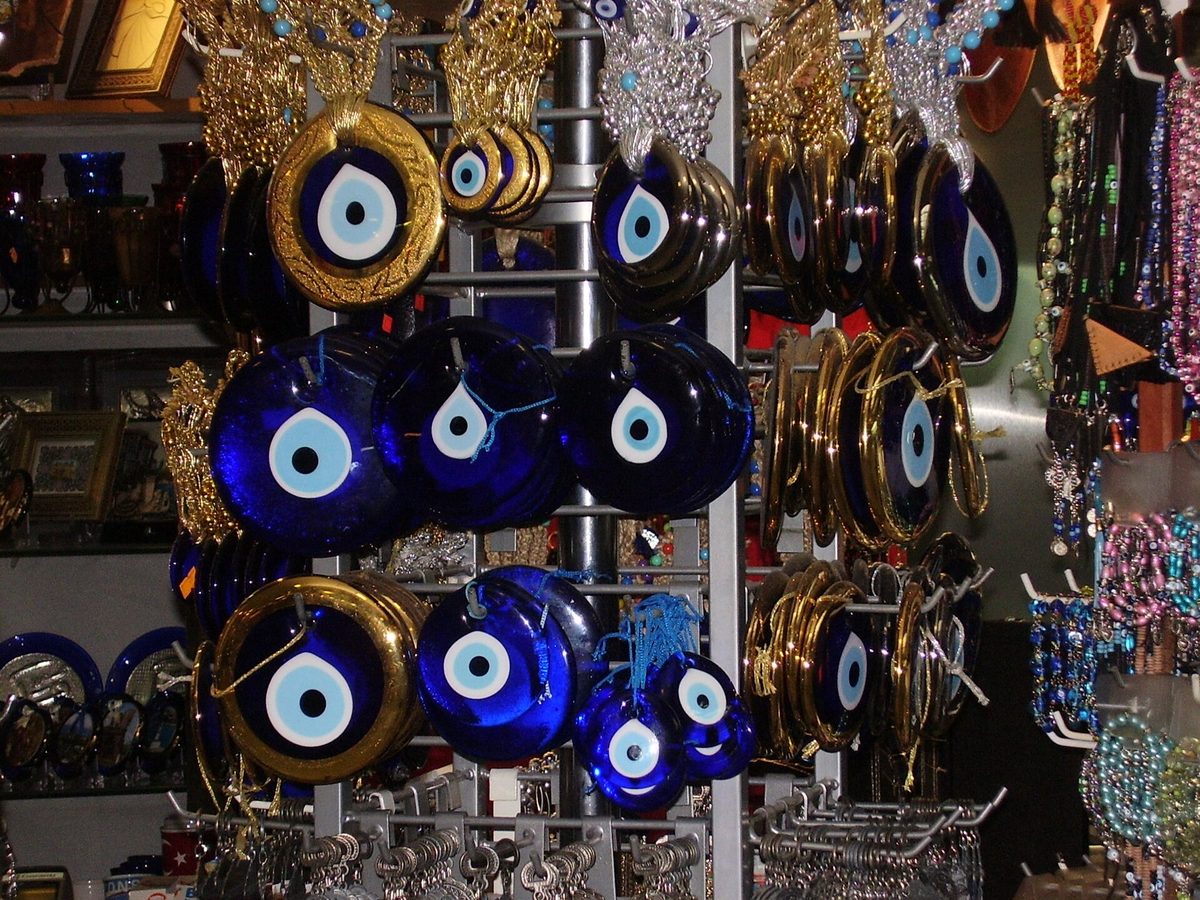
The nazar boncuğu, the blue-and-white glass evil eye charm, is Istanbul’s cheapest and most ubiquitous souvenir, sold everywhere from $1 to $5 depending on size and where you buy it, and genuinely meaningful in Turkish culture rather than purely a tourist trinket — it is hung in homes, cars and over doorways to ward off envy, and buying one at a fair price anywhere in the city is close to impossible to get wrong.
Gold jewellery is sold in the Grand Bazaar’s dedicated gold market, the Kuyumcular Çarşısı, priced by the day’s gold rate plus a workmanship charge — ask the shop to weigh the piece on a scale in front of you and quote the day’s gram price before agreeing to anything, which is standard practice and not a rude request. Turkish gold is typically sold at 14, 18 or 22 karat, higher purities than are common in some Western markets, and it is worth confirming the karat stamped on the piece matches what you are being told verbally before you agree a price, since the workmanship charge on top of the metal price varies by karat and design complexity.
Leather is the category with the most fakery risk: “genuine” branded leather jackets sold at a fraction of the real brand’s price in the bazaar or in Zeytinburnu’s leather district are counterfeits, full stop, and worth buying only as unbranded leather goods at unbranded prices — a plain leather wallet at $25–70 is honest; a jacket claiming to be a European luxury brand at a tenth of that brand’s retail price is not. Zeytinburnu itself is a genuine leather manufacturing district rather than purely a shopping destination, worth the trip specifically for unbranded jackets, bags and accessories made locally, at prices that reflect Turkish manufacturing costs rather than European retail markups — provided you go in expecting honest, unbranded leather rather than a disguised counterfeit of a brand you already know.
Beyond the bazaars: antiques, markets and Turkish brands
Çukurcuma, the antique quarter above Karaköy, is worth a browse for genuine vintage furniture, Ottoman-era objects and the neighbourhood the Museum of Innocence, Orhan Pamuk’s novel made physical, sits in. Ferikoy Antique Market runs Sundays with more than 450 stalls at Bomonti, alongside a Saturday organic food market on the same site — genuinely a locals’ market rather than a tourist one, and priced accordingly.
Istanbul’s weekly street markets are worth building a day around if your schedule allows: Kadıköy’s Tuesday market (Sali Pazarı), Fatih’s Wednesday market around the mosque — one of the largest in the city — and the weekend flea markets at Dolapdere and Küçükpazar. None of these are souvenir shopping in the conventional sense; all of them are a better window into how the city actually shops than anything inside the Grand Bazaar.
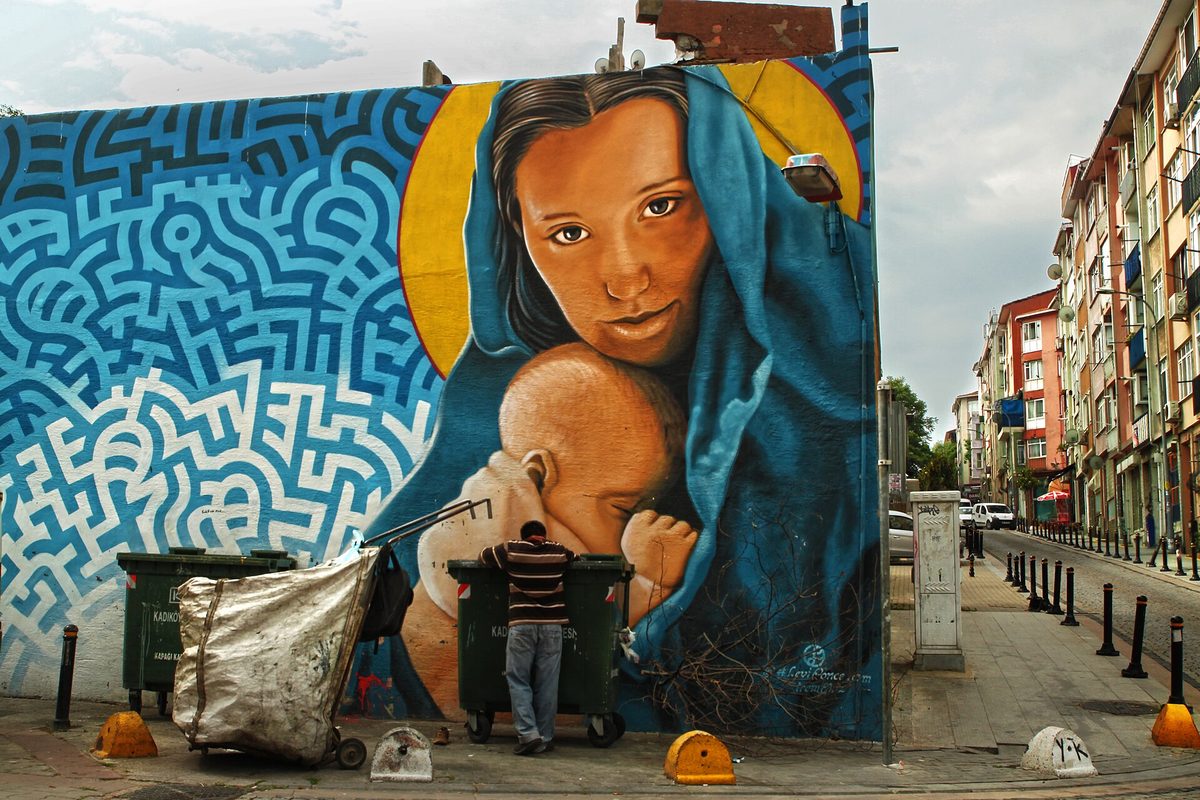
For ordinary Turkish clothing brands rather than souvenirs, Mavi (jeans, genuinely well regarded internationally), Vakko and Beymen (upscale), Koton and LC Waikiki (accessible, ubiquitous) and Paşabahçe (glassware, a good and underrated gift) all sell at prices noticeably below what the same or comparable quality costs in Western Europe or North America, and are sold in every mall and most high streets rather than requiring a special trip.
Nişantaşı, around Abdi İpekçi Caddesi, is Istanbul’s genuine luxury shopping street — Turkish designers alongside the international houses, cafés built for a long lunch between shops, and a useful stop if your idea of souvenir shopping runs toward contemporary fashion rather than bazaar crafts. Bağdat Caddesi on the Asian side does something similar for a more local, less internationally branded crowd, running for several kilometres through Istanbul’s most comfortable suburbs with the Sea of Marmara at the end of every side street — genuinely how prosperous Istanbul shops on an ordinary weekend, rather than a tourist attraction dressed up as one.
Outlet shopping exists at Viaport, Olivium and a handful of similarly named malls on the city’s outskirts, and the honest verdict is that Turkish outlet malls are considerably weaker than their US or UK equivalents on both selection and discount depth — worth a visit only if you are already in the area for another reason, not a destination to plan a day around.
Tax-free shopping: claiming the VAT refund
Turkey’s standard VAT (KDV) rate is 20%, and non-resident visitors can claim a refund on purchases above a minimum receipt value — most 2026 sources put this at 1,000 TL per receipt, though at least one source states 2,000 TL, so confirm the current threshold with the shop or a refund operator like Global Blue or Planet at the time of purchase. The goods must be unused, sealed, and exported within three months; you need a customs stamp at the airport before checking in any luggage containing the item, so factor in extra time at Istanbul Airport or Sabiha Gökçen specifically for this step rather than assuming it happens automatically at check-in. Refunds are typically issued by card or cash at a dedicated desk after the customs stamp is obtained — ask the shop for the paperwork at the time of sale, since a shop that cannot or will not provide it properly is not equipped to process a tax-free purchase regardless of what a sign in the window claims.
Bringing food and spices through customs
Rules vary sharply by destination country and change often enough that a specific figure printed here would be out of date faster than most of this page. As a general shape rather than a number to rely on: sealed, commercially packaged spices, tea, coffee and sweets are usually fine to bring into the UK, US, EU and Australia in reasonable personal quantities, while fresh or unprocessed foods, meat and dairy products face much tighter restrictions and are often simply prohibited. Caviar, where relevant, typically carries its own specific weight limit separate from general food allowances. Check your destination country’s customs authority directly before you buy in bulk — a market stall in the Spice Bazaar will sell you as much saffron or dried fruit as you can carry, and has no idea what your home country will actually let through its border.
Shipping a carpet or large item home
Reputable Grand Bazaar carpet dealers ship internationally as a matter of course, and a shop that has been at the same address for decades — ask how long they have been trading, and look for it yourself rather than only taking their word — is a meaningfully safer bet than one that appeared this season. Get a written invoice with a detailed description, get shipping insurance rather than assuming it is included, and get a tracking number before you leave the country, not promised “by email later.” Non-delivery after payment is one of the scam patterns named specifically in carpet-buying research, and it is also the one most preventable by simply not paying the full amount in cash with no paper trail.
Packing textiles, ceramics and food for the flight home
Peştemal towels and scarves pack flat and weigh almost nothing, so buy more of these than you think you need — they make better gifts than most of what is sold specifically as a “gift” in the tourist-facing stalls, and nobody has ever complained about receiving a genuinely nice towel. Ceramics and mosaic lamps are the fragile end of this list: ask the shop to wrap the piece properly, consider carrying it in hand luggage rather than checked if it is a single valuable item, and be honest with yourself about whether a large or oddly shaped ceramic piece is realistically going to survive a budget airline’s baggage handling before you buy it purely because it looked good in the shop’s lighting.
Food items travel best sealed in their original commercial packaging rather than loose in a market bag — a vacuum-sealed box of baklava or a properly sealed bag of coffee is both more likely to survive the trip intact and more likely to clear customs without a second look than an open, unlabelled parcel of the same product. Spices in particular benefit from being kept in their original sealed bag rather than transferred to a nicer-looking container at the stall, since a sealed, labelled commercial bag reads as a normal personal import in a way that a loose, repackaged version does not.
What to skip, and what is overrated
Anything sold with “official” in the name outside a genuine chain. There is no such thing as an “official Grand Bazaar souvenir shop” as a category — every shop in the bazaar is an independent business, and the word “official” printed on a sign is doing marketing work, not describing a real status.
Cheap saffron. Covered above — genuine saffron is expensive worldwide, and a suspiciously low price in the Spice Bazaar is close to a guarantee of dyed safflower rather than the real spice.
Branded leather jackets at a fraction of retail. These are counterfeits. Buy leather as leather, at leather prices, with no brand name attached.
A carpet bought on the strength of a hotel or taxi recommendation. The referral fee built into that recommendation is coming out of your negotiating room, not the dealer’s margin.
Souvenirs bought inside the Grand Bazaar’s most heavily touristed lanes near the entrances. The same or better quality, at a meaningfully lower price, sits a few streets further in, away from the gates where footfall and rent are both highest.
Frequently asked questions
What is the best souvenir to buy in Istanbul?
A hand-loomed peştemal towel or a small kilim, for something genuinely useful and distinctively Turkish at a modest price; a mosaic glass lamp for the most photogenic single item in the city; Turkish delight or baklava from Hacı Bekir, Hafız Mustafa or Karaköy Güllüoğlu for a food gift that actually differs from what is sold at home.
Is it cheaper to buy in the Grand Bazaar or the Spice Bazaar?
For spices and Turkish delight specifically, the streets immediately behind the Spice Bazaar beat the bazaar’s own tourist-facing stalls on price for equivalent quality. For carpets, leather, gold and lamps, the Grand Bazaar is the better hunting ground regardless.
Can you haggle in Istanbul?
Yes, and it is expected in carpets, leather, gold and jewellery — starting around 40–60% below the first quoted price is a reasonable opening move. Anywhere with a price tag already on the item, haggling is pointless and mildly unwelcome.
How much is a Turkish carpet?
A small kilim runs $100–300, a medium hand-knotted carpet $300–800, and a large one $800–3,000 or more depending on knot density and material. Silk Hereke carpets sit above all of these bands.
Is Turkish delight in the Grand Bazaar or Spice Bazaar authentic?
It is generally real lokum rather than a fake product, but it is priced for tourists and not always the freshest stock. Hacı Bekir and Hafız Mustafa, both long-established specialist makers with their own shops, are the more reliable sources for freshness and value.
How do I know if a Turkish carpet is hand-made or machine-made?
Turn it over. A hand-knotted carpet shows uneven, individually tied knots on the reverse; a machine-made carpet looks uniform and almost printed on the back regardless of how the front has been aged or worn to look antique.
What is the minimum spend for a VAT refund in Turkey?
Most 2026 sources cite 1,000 TL per receipt, though confirm the current figure with the shop or a refund operator like Global Blue at the time of purchase, since at least one source states a higher threshold.
Is it safe to buy gold in the Grand Bazaar?
Generally yes, in the dedicated gold market (Kuyumcular Çarşısı), provided the piece is weighed on a scale in front of you and priced against the day’s published gold rate plus a stated workmanship charge — standard practice, not a suspicious request to make.
What is the best area to shop in Istanbul besides the Grand Bazaar?
The Arasta Bazaar behind the Blue Mosque for a calmer version of the same categories — towels, ceramics, jewellery — without the Grand Bazaar’s crowds. Nişantaşı for contemporary Turkish and international fashion; Bağdat Caddesi on the Asian side for a similar experience with a more local crowd.
Can I ship a carpet home from Istanbul rather than carrying it?
Yes, and reputable long-established dealers do this routinely. Get a detailed written invoice, confirm shipping insurance is included or add it separately, and get a tracking number before you leave — non-delivery after payment is a documented scam pattern, and a paper trail is your main protection against it.
For designer labels and Turkish fashion houses rather than bazaar goods, head uphill from the Bosphorus to Nişantaşı. Our guide to Beşiktaş and Nişantaşı covers the shopping streets, Maçka Park and where to eat between boutiques.