Things to Do ·
Grand Bazaar Istanbul: Hours, Gates, Sundays, Haggling & the Sights Between
Opening hours and the Sunday closure, which of the 22 gates to use, the hans nobody finds, what things actually cost, how to haggle, and a full Sunday alternative plan.
In this guide 14 sections
- Grand bazaar istanbul opening hours
- The gates
- What is actually inside
- What to buy
- Five and a half centuries in the same building
- Gold, silver and antiques
- The scams
- The Spice Bazaar
- The bazaar quarter
- If it is Sunday
- Practicalities
- Is the Grand Bazaar worth it?
- What to skip
- Frequently asked questions
I have been to the Grand Bazaar four times and got properly lost three of them. This is not a failure of navigation. The place has sixty-one covered streets and twenty-two gates arranged on no discernible logic, the ceiling looks identical everywhere, and your phone’s compass gives up under a stone vault. The fourth time I stopped fighting it and had a much better morning.
The grand bazaar istanbul visits is free to enter, open Monday to Saturday from 09:00 to 19:00, and closed on Sundays and religious holidays — which is the single fact that ruins more Istanbul itineraries than any other. It was founded in 1461 by Mehmed II, has around 4,000 shops, and is not the shopping destination it is sold as.
This guide covers the hours and the closed days, which gate to use and why it matters, the hans and courtyards almost nobody finds, what things actually cost and how the haggling works, the scams, and a full Sunday alternative for the day you get it wrong. The Spice Bazaar — a completely different place with a completely different timetable — gets its own section. Prices checked 10 September 2026 at about €1 = 56 TL.
Grand bazaar istanbul opening hours, and the Sunday problem
| Market | Open | Closed | Entry | Time needed |
|---|---|---|---|---|
| Grand Bazaar (Kapalıçarşı) | Mon–Sat, roughly 09:00–19:00 | Sundays and Bayram holidays | Free | 1–2 hours |
| Spice Bazaar (Mısır Çarşısı) | Daily 08:00–19:30; Sundays from 09:30 | Bayram holidays | Free | 45 minutes |
| Arasta Bazaar (Sultanahmet) | Daily, roughly 09:00–19:00 | Nothing routinely | Free | 30 minutes |
| Sahaflar Çarşısı (book bazaar) | Daily, shop-dependent | Varies by seller | Free | 20 minutes |
| Mahmutpaşa street market | Daily, roughly 09:00–19:00 | Nothing routinely | Free | 30 minutes |
One honest caveat on the opening time: the bazaar’s own listing and most guides say 09:00, but a fair number of sources — and a fair number of shopkeepers — say 08:30, and in practice shutters go up gradually between about half past eight and half past nine. If you arrive at 08:45 some of it will be open and most of it will not. Aim for 09:00 if you want it quiet, or accept 11:00 if you want everything trading.
The Sunday closure catches enormous numbers of people, and the Bayram closures catch even more because the dates move each year with the lunar calendar. Both Bayrams shut the Grand Bazaar for several days. Check the dates for your trip against the calendar rather than assuming, and see the Sunday alternative further down.
The gates: which one to use, and why it matters
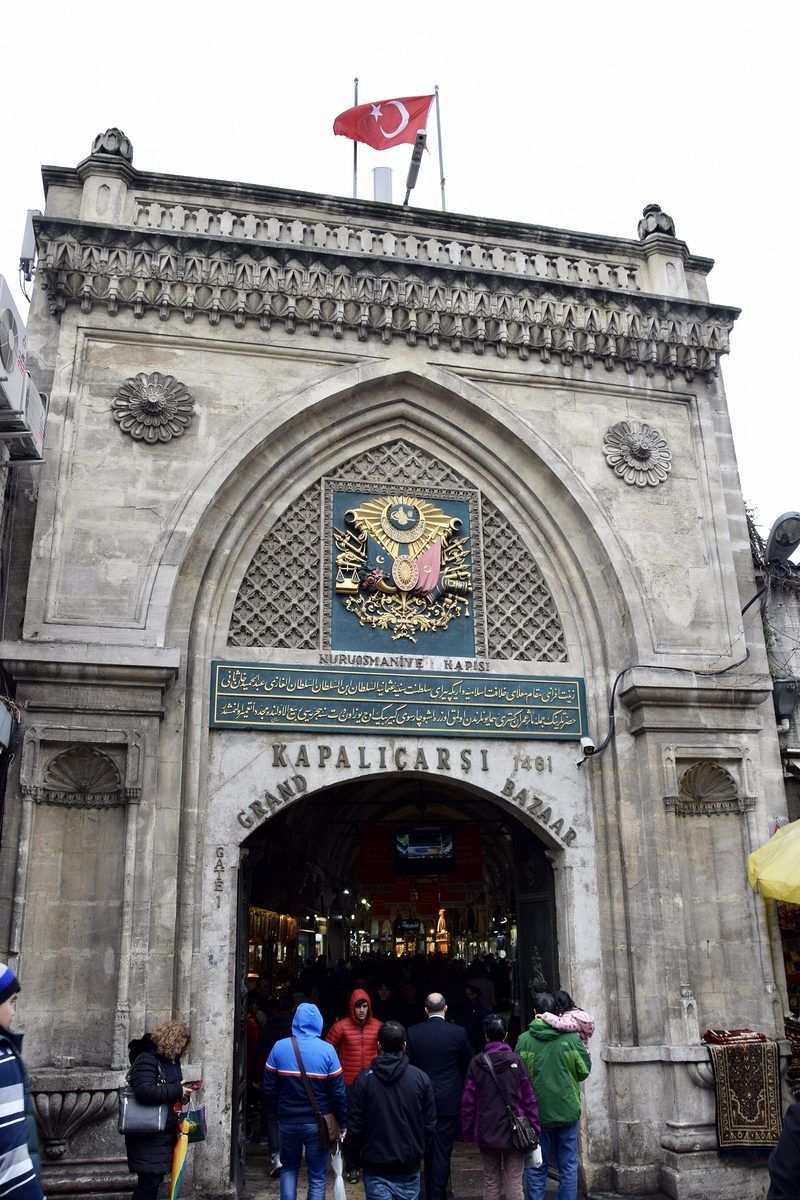
Twenty-two gates, most of them unremarkable doorways in a wall of shops, two of them proper monumental entrances. Choosing correctly is the difference between arriving with your bearings and arriving in the middle of a scarf shop.
- Nuruosmaniye Gate (Gate 1) — the main ceremonial entrance on the eastern side, under a stone arch with the imperial tughra above it, reached from the Nuruosmaniye Mosque courtyard. This is the one to use. It puts you at the head of Kalpakçılar Caddesi, the bazaar’s widest street, which runs straight through the whole complex. If you can hold one line in your head, hold that one.
- Beyazıt Gate (Gate 7) — the western entrance, closest to the T1 tram at Beyazıt and to Beyazıt Square, the book bazaar and the university. The other end of Kalpakçılar. Use this if you are coming by tram and walking through towards Çemberlitaş.
- Mahmutpaşa Gate — the northern one, which drops you into the Mahmutpaşa street market running downhill towards Eminönü and the Spice Bazaar. This is the walking route between the two bazaars, and it is much more interesting than a taxi.
- Everything else — small, unsigned, and useful only for getting out when you have had enough.
The navigational trick that actually works: Kalpakçılar Caddesi is the spine, running roughly east to west between Nuruosmaniye and Beyazıt, and it is the jewellery street, so it is unmistakable — several hundred metres of gold in windows. Whenever you are lost, find the gold and you know which way you are facing. Every other lane branches off it.
What is actually inside

The bazaar is not one building but a covered accretion of five and a half centuries, and the interesting parts are the oldest ones.
The two bedestens
İç Bedesten — also called the Cevahir or Jewellery Bedesten — is the original core, the stone lock-up hall Mehmed II built in 1461 immediately after the conquest, with heavy walls and iron doors because it held the valuables. It sits in the middle of the complex, and it is where the antique dealers now are: old silver, Ottoman calligraphy, watches, icons, coins. The atmosphere is completely different from the lanes outside — quieter, older, and with genuinely knowledgeable dealers.
Sandal Bedesten, the second hall, was built for fabric and is now largely carpets and rugs. It has been used for auctions for most of its life.
The hans
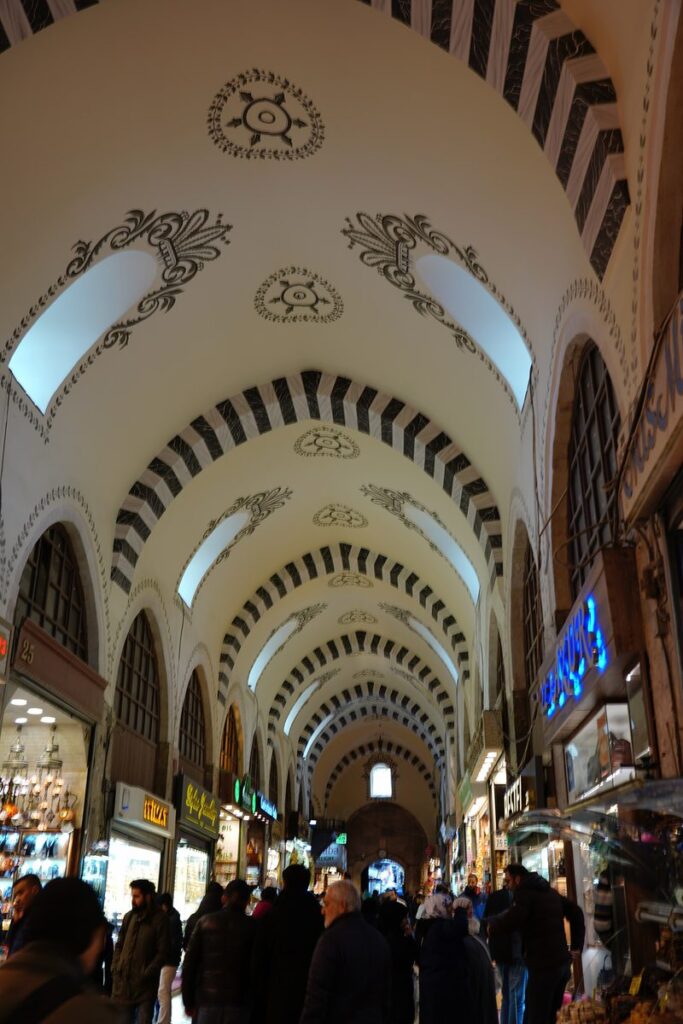
The best-kept secret of the bazaar, and free. A han is a caravanserai — a courtyard building where merchants stabled animals below and slept and worked above — and several are folded into the bazaar’s edges, still functioning as workshops. Look for the arched openings off the main lanes that lead into daylight.
Zincirli Han is the prettiest and the easiest to find, off the northern side: a two-storey arcaded courtyard with a tree, a carpet dealer of some renown, and about a tenth of the noise of the lanes. Cebeci Han and several others are working spaces where you can watch jewellers and metalworkers at benches. Walking into a han is entirely acceptable and nobody will stop you; buying is not expected.
If you do one thing in the Grand Bazaar beyond looking, make it finding two hans. It takes twenty minutes, it costs nothing, and it is the part that still feels like a place of work rather than a place of sales.
What to buy, and what things cost
An important framing first: no price in the Grand Bazaar is a published price. There is no price list, the number you are told depends on how you arrived and what you are wearing, and the same object will be quoted at three different figures in three adjacent shops. The table below is what I was quoted and what things came down to in September 2026 — an anchor for a conversation, not a rate card. Treat the ranges as wide and expect to be wrong about some of them.
| Item | Typical opening quote | Roughly what it should settle at | Notes |
|---|---|---|---|
| Mosaic glass lamp, small | 1,500–2,500 TL | 800–1,400 TL | Most are machine-made; ask if you want handmade and expect double |
| Silk-blend scarf | 1,200–2,000 TL | 500–900 TL | “Pure silk” at 400 TL is not pure silk |
| Peştemal (hamam towel) | 700–1,200 TL | 350–600 TL | Genuinely the best-value thing here |
| Ceramic bowl, hand-painted | 900–1,800 TL | 500–1,000 TL | Kütahya is the everyday ware; real İznik is far more |
| Small kilim, 1 × 1.5 m | 8,000–20,000 TL | Wildly variable | Do not buy one on day one. See below |
| Leather jacket | 12,000 TL and up | Wildly variable | The high-pressure category. Be sure before you enter the shop |
| Turkish delight, 500 g | 400–800 TL | 250–500 TL | Cheaper and better outside the bazaar |
| Copper coffee pot | 800–1,500 TL | 450–900 TL | Check whether it is tin-lined if you intend to use it |
| Evil-eye trinkets | Whatever they think | 50–150 TL | Buy these in any corner shop, not here |
The things genuinely worth buying here: peştemals, antique silver and calligraphy in the İç Bedesten, decent ceramics if you can tell the difference, and a carpet if you have taken the time to learn something. The things not worth buying here: spices, Turkish delight, tea, evil eyes, and anything a supermarket sells — all cheaper and no worse elsewhere in the city.
How to haggle without embarrassing anyone
- Only start if you would actually buy it. Negotiating for sport wastes a shopkeeper’s afternoon and is genuinely rude.
- Ask the price, then look at the object properly. Silence is a legitimate move.
- Counter at roughly half. Expect to settle somewhere around 60–70% of the opening number.
- Ask in lira. Prices quoted in euros or dollars are almost always higher for the same object.
- Buying two things is leverage; walking away is more leverage. Both are normal and neither offends.
- Be pleasant throughout. This is a social form with rules, not a confrontation, and the tea is real hospitality rather than an obligation.
- Cash may get a better number than card, because card fees are real. Ask.
The carpet question
Carpets are where the real money and the real risk are, and the single best piece of advice is: not on day one. Whatever you pay on your first afternoon, you will see the equivalent for forty per cent less on your fourth. Spend an hour in three or four shops learning the difference between a hand-knotted carpet and a flat-woven kilim, between wool, cotton and silk, and between an old piece and a distressed new one. Ask to see the back — knot density and neatness of the reverse tell you most of what you need. Ask where it was made and expect a specific region, not “Anatolia”. Then go away, think, and come back.
If you are being walked to a shop by a friendly stranger who asked where you were from twenty minutes ago, you are in a commission arrangement and the price includes his cut. That is not illegal and it is not what you want.
Five and a half centuries in the same building
Mehmed II took Constantinople in May 1453 and started building the bazaar eight years later, which tells you something about what he thought the city was for. The conquest had emptied it — the population had been falling for two centuries before the siege and collapsed further after it — and the new sultan’s problem was repopulating and re-monetising a ruin. His answer was a stone hall in the middle of the old commercial district where merchants could lock up valuables safely, endowed so its rents funded his mosque complex.
That is the İç Bedesten, and everything else grew around it. Traders put up stalls against its outer walls, then roofs over the lanes between them, then more lanes, until by the seventeenth century the whole quarter was covered and organised into guilds by street — one for gold, one for felt hats, one for slippers, one for quilts. The street names survive even where the trades do not: Kalpakçılar Caddesi is “the street of the fur-hat makers”, and it now sells gold.
The bazaar burned repeatedly — fire is the recurring catastrophe of a timber-roofed city — and was rebuilt each time, most substantially after 1701. The 1894 earthquake brought down a great deal of it and prompted the restoration that produced much of the layout you walk today. It has been continuously trading for over five and a half centuries, which makes it one of the oldest working shopping complexes on earth and, at somewhere between a quarter and half a million visitors on a busy day, among the most visited buildings anywhere.
One correction worth making, because it is repeated on a lot of otherwise decent pages: the Grand Bazaar was not built in the 1660s as an endowment for the New Mosque. That is the Spice Bazaar, two kilometres downhill at Eminönü. The Grand Bazaar is two hundred years older and was endowed for Mehmed II’s own foundation. If a guide gets that wrong, treat the rest of its facts with the same caution.
Gold, silver and antiques: the specialist corners
Kalpakçılar Caddesi is lined with jewellers because the Grand Bazaar is, among other things, one of the working centres of the Turkish gold trade — and for a country where people have held savings in gold through decades of inflation, that is a serious business rather than a souvenir one.
Gold is sold largely by weight, with the day’s price per gram set by the market and a workmanship charge added on top. That makes it one of the more transparent things in the bazaar: ask for the weight, the karat (22 and 14 are the common ones), the day’s gram price and the labour charge, and you can compare shops like for like. The labour charge is the negotiable part. If a jeweller will not break the price down that way, go next door.
Silver is less regulated and more variable. Look for the hallmark, and be sceptical of anything very cheap that is described as solid.
Antiques are concentrated in the İç Bedesten, and the good dealers there know their stock and will talk about it at length. Two practical warnings. First, Turkish law restricts the export of genuine antiquities, and anything over roughly a century old may need a certificate from a museum authority to leave the country legally — a reputable dealer will know this and handle it, and one who shrugs is telling you something. Second, reproductions are common and not always described as such. Ask directly whether a piece is old or made in the old style, and get the answer on the receipt.
With children, or with limited mobility
Children tend to love the Grand Bazaar for about forty minutes — the lamps, the noise, the colour — and then very abruptly stop. Plan for that. Pushchairs are manageable on the main streets and difficult in the side lanes, which have steps and uneven stone. For wheelchair users, the main streets between the Nuruosmaniye and Beyazıt gates are broadly level and navigable with help, while the hans and much of the northern side involve steps. The Spice Bazaar is small, flat and considerably easier.
The scams, and the ordinary annoyances
- The commission walk. The most common. A helpful English-speaking man attaches himself to you and steers you to “my brother’s shop”, where prices are three or four times the going rate. Decline the detour, keep the conversation.
- The currency swap. You pay in euros, get change in lira at a rate invented on the spot. Pay in lira or agree the rate before you hand anything over.
- The bait price. A very low number quoted for something in the window, which turns out to apply to a smaller or different item. Point at the exact object.
- “Pure silk”, “genuine İznik”, “hand-knotted”. Sometimes true. Often not. If the claim is what makes the price, ask for it in writing on the receipt — many sellers will, and the ones who will not have answered your question.
- Pickpockets. The lanes are packed and everyone is distracted. Front pockets, bag in front. This is the same advice as for the T1 tram, and for the same reason.
- Photographs of shopkeepers without asking. Not a scam, just rude, and it will cost you the goodwill you need to negotiate.
None of this makes the bazaar dangerous — it is one of the safest crowded places in the city, and the wider picture on Istanbul’s commercial scams is in the travel tips guide.
The Spice Bazaar: a different place entirely
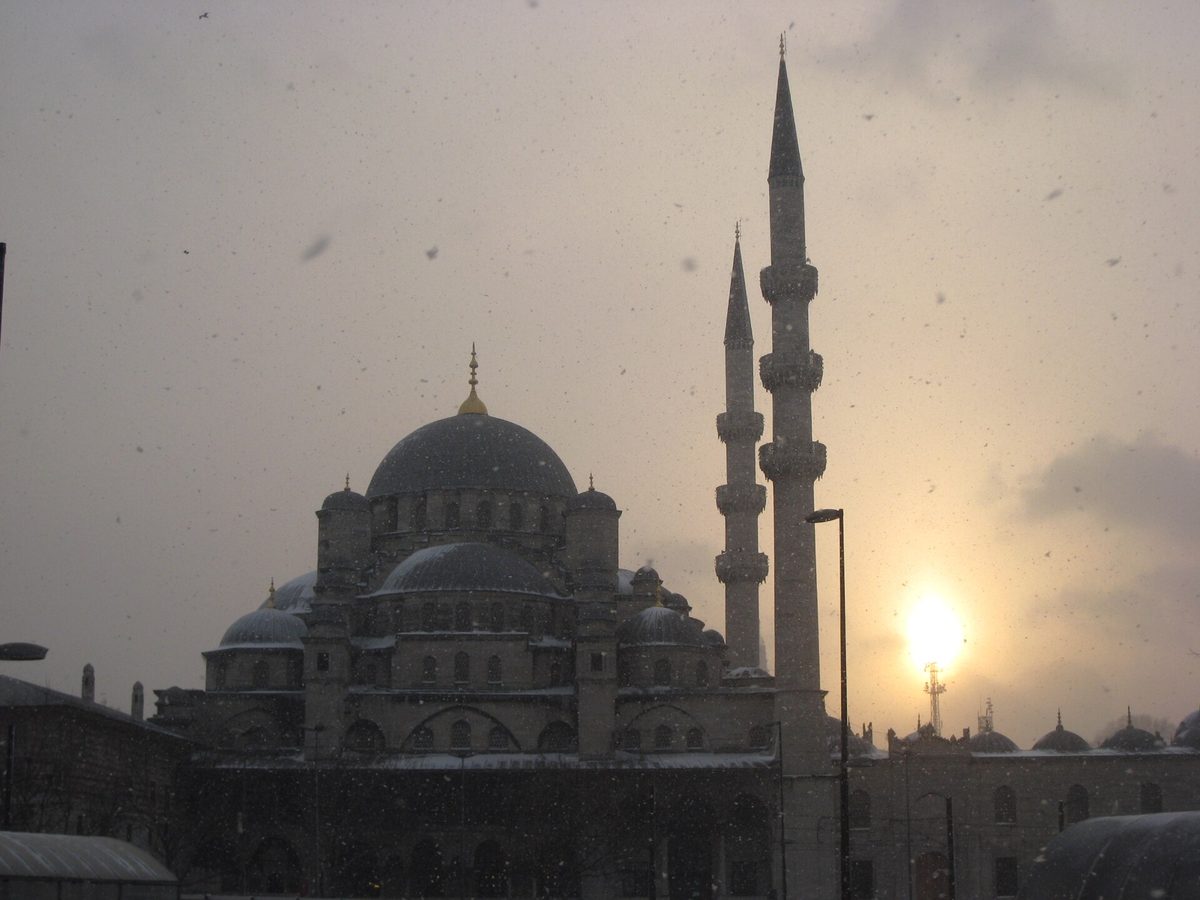
The Mısır Çarşısı — “Egyptian Bazaar”, from the Egyptian tax revenues that funded it — was built between 1660 and 1664 as part of the New Mosque complex at Eminönü, endowed so that the rents from its shops would maintain the mosque. It is an L-shaped covered hall of about eighty-five shops, which makes it roughly a fiftieth the size of the Grand Bazaar and about a tenth as confusing.
Crucially, it is open daily, 08:00 to 19:30, and from 09:30 on Sundays. This is the answer to the Sunday problem.
What to buy, and the saffron reality check
Spices, Turkish delight, dried fruit and nuts, tea, coffee and honey. It is beautiful, it smells extraordinary, and it is priced for tourists — often two to three times what the same goods cost fifty metres outside.
The specific warning: almost every stall sells bright orange-yellow threads labelled saffron at a price that makes no sense. Real saffron is the most expensive spice in the world by weight, deep red with a slight orange tip, and does not cost a few hundred lira for a heaped bag. What is being sold cheaply is safflower — harmless, and not saffron. If you want the real thing, buy a tiny quantity from a specialist and expect to pay accordingly.
The move that saves you money: walk out of the bazaar’s western side onto Hasırcılar Caddesi, the street of hardware, coffee and food shops running towards Rüstem Paşa Mosque. Same goods, local prices, no performance. This is also where Kurukahveci Mehmet Efendi, the coffee institution, has its shop, usually with a queue out of the door.
While you are at Eminönü

Rüstem Paşa Mosque is hidden above the shops on Hasırcılar, up an unmarked staircase, and holds the finest İznik tilework in Istanbul — Sinan, 1561–63, free, and almost empty because nobody can find the stairs. It is fifty metres from the Spice Bazaar and it is better than anything you will buy in it.
The New Mosque itself is free and worth ten minutes. Galata Bridge is a two-minute walk with the fishermen on top and restaurants underneath, and the balık ekmek boats moored at the pier sell grilled fish in bread for 150–200 TL. The full Eminönü and old-city walk is in the Sultanahmet guide, and what to order is in the food guide.
The bazaar quarter: what else is here
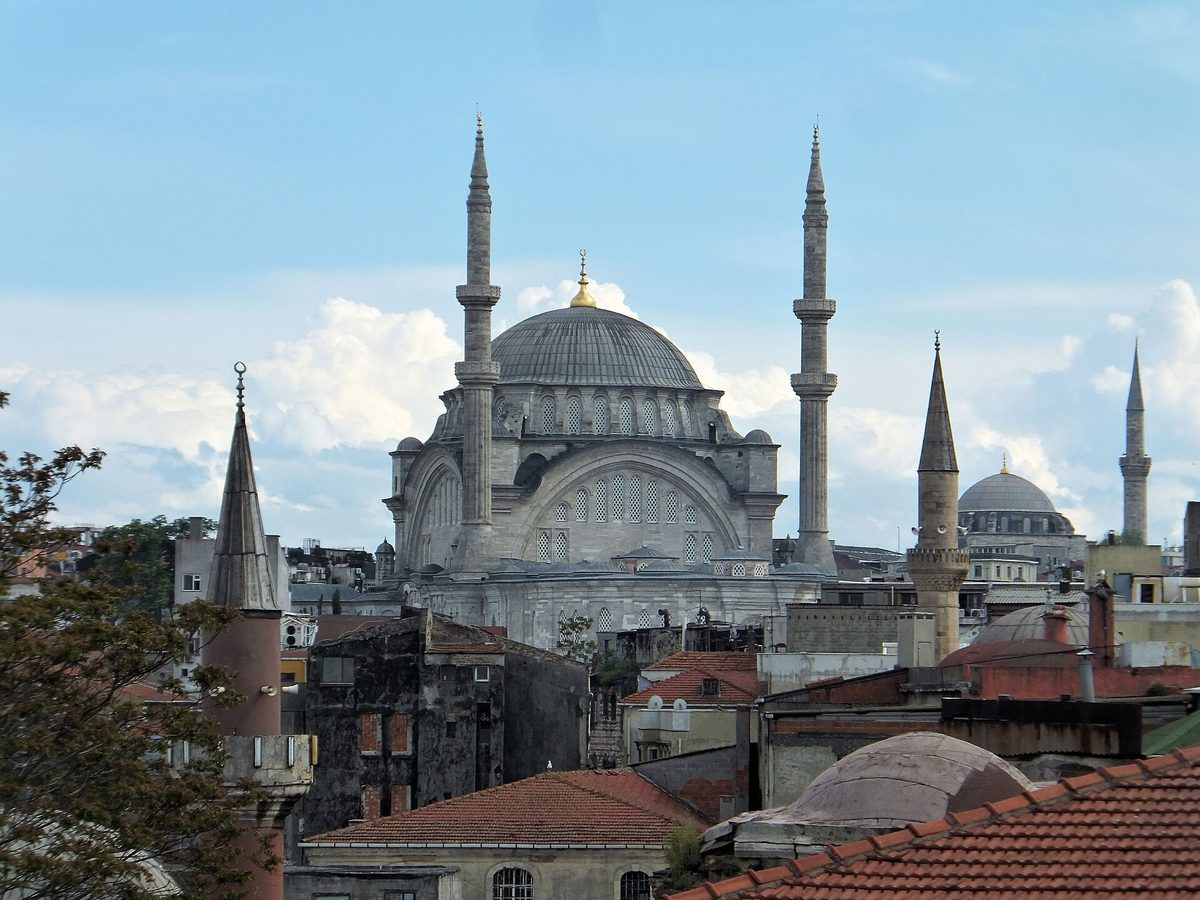
The Grand Bazaar sits in the middle of the most densely interesting square kilometre in Istanbul, and most visitors walk out of a gate and get straight back on the tram.
- Nuruosmaniye Mosque, immediately outside Gate 1, finished in 1755 and the first fully baroque Ottoman mosque — curved, light-filled and entirely unlike the classical mosques around it. Free, and its courtyard is the quietest place near the bazaar.
- Mahmutpaşa Caddesi, running downhill from the northern gate to Eminönü: a street market of textiles, wedding dresses, luggage and haberdashery serving Istanbul rather than visitors, and considerably more fun than the bazaar it starts at.
- Sahaflar Çarşısı, the book bazaar, a small courtyard between the Beyazıt Gate and Beyazıt Mosque, selling secondhand and academic books on the site of a book market that has been there since the Byzantine period.
- Beyazıt Mosque and Square, and the gate of Istanbul University behind it.
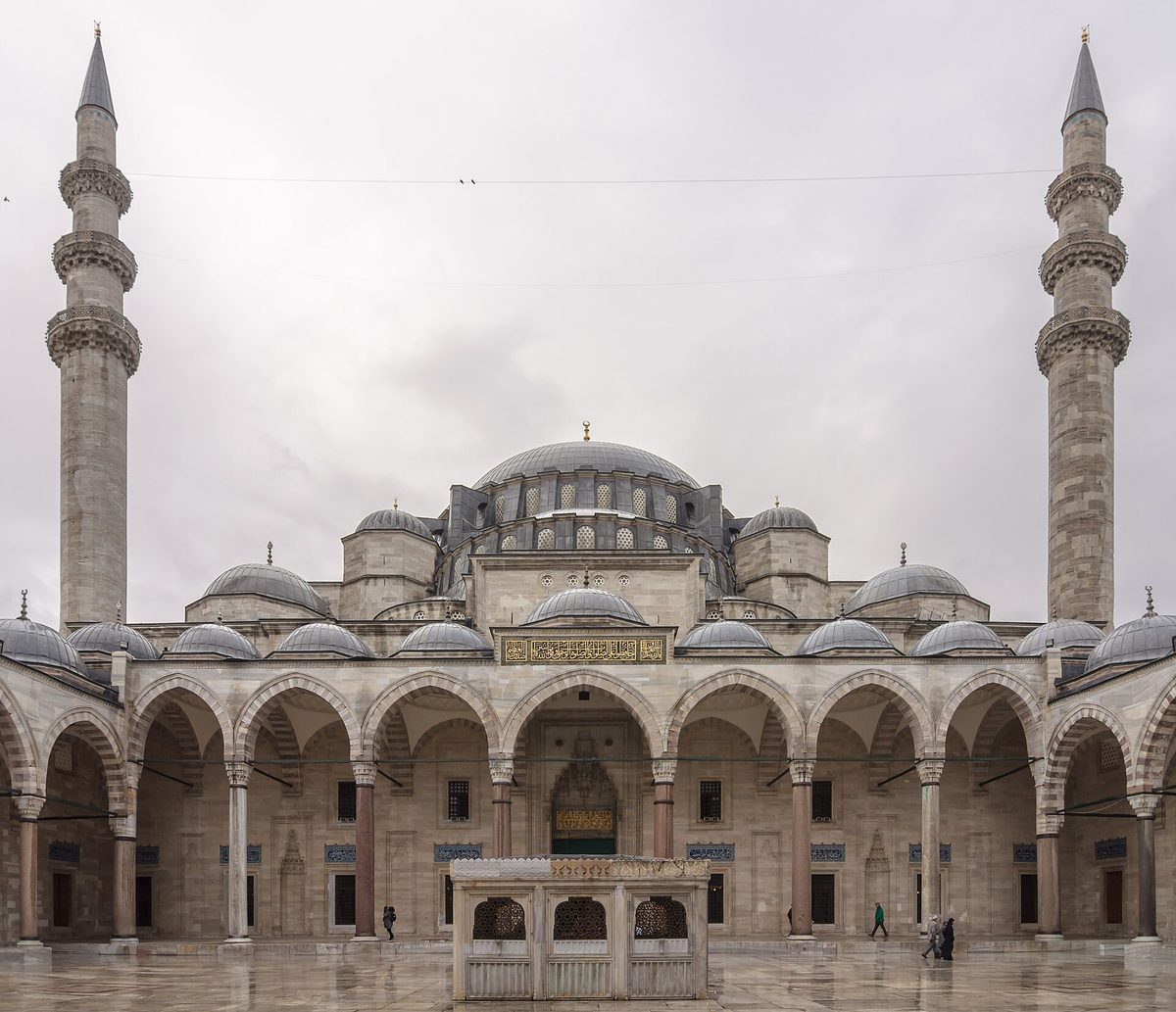
- Süleymaniye Mosque, uphill from the bazaar’s northern edge — Sinan’s masterpiece in the city, free, with the tombs of Süleyman and Hürrem in the garden and a terrace over the Golden Horn.
- Çemberlitaş Hamamı, two minutes from the eastern gate, at €57 for the classic service and open until midnight. The natural end to a bazaar afternoon; details in the Turkish bath guide.
If it is Sunday: the alternative plan
The Grand Bazaar is shut. Everything else is not. A full and arguably better day:
- Spice Bazaar, open from 09:30 on Sundays.
- Hasırcılar Caddesi for the same goods at local prices, then Rüstem Paşa Mosque up the hidden stairs.
- Mahmutpaşa street market, uphill, open and busy.
- Nuruosmaniye Mosque and a walk around the outside of the closed bazaar, which is itself interesting.
- Balık ekmek at Eminönü, or lunch in the Süleymaniye kebab places.
- Süleymaniye Mosque and the terrace.
- Arasta Bazaar in Sultanahmet, open Sundays, for the shopping you were going to do.
- Çemberlitaş Hamamı, open until midnight.
Alternatively, cross to Kadıköy, whose produce market is open and considerably better for anything you plan to eat.
Practicalities: when to go, how to pay, where to eat
The best and worst times
Go at opening on a weekday. Between about 09:00 and 10:30, Monday to Thursday, the lanes are navigable, the shopkeepers are drinking tea rather than working the doorways, and you can actually look at things. From about midday the tour groups arrive and by mid-afternoon on a Saturday the main streets are a slow-moving crush in which negotiating anything is impossible.
Late afternoon has its own quality — shutters coming down, porters wheeling loads out, the whole apparatus of a market closing — and shopkeepers near the end of a slow day are sometimes noticeably more flexible. But you have less time and less light.
Money
Larger shops take cards; many smaller ones prefer cash and a few will only take it. There are ATMs inside the bazaar and exchange offices along Kalpakçılar Caddesi and around the Nuruosmaniye gate, and the rates in those offices are generally competitive — considerably better than the airport, better than a hotel. Change money before you start negotiating rather than during, so you know exactly what you are holding.
Two rules that save real money: always decline a card machine’s offer to charge you in your home currency, and never let a shopkeeper set an exchange rate for you as part of a deal.
Tax-free shopping
Turkey operates a VAT refund scheme for non-residents, and larger shops in the bazaar can issue the paperwork on purchases over a threshold. Whether it is worth the queue at the airport depends entirely on how much you spent; on a scarf, no. On a carpet, definitely — ask for the form at the point of sale, because it cannot be issued afterwards, and allow extra time at the airport for the customs stamp before check-in.
Eating inside
There are small lokantas and köfte places tucked into the bazaar’s side lanes, mostly serving the people who work there rather than visitors, and they are decent and cheap. The tea sellers running trays of çay between shops are a whole small economy. Do not expect anything remarkable; the good eating is outside, in the Süleymaniye kebab houses uphill or at Eminönü downhill.
Toilets, wifi and getting out
Public toilets are inside the bazaar near several of the gates, at 5–10 TL, and want coins. Phone signal is patchy under the vaults and mapping apps are close to useless — download an offline map before you go in, or use the Kalpakçılar rule. If you are thoroughly lost, walk uphill; the ground rises towards Beyazıt, and any gate will do.
Is the Grand Bazaar worth it?
Yes, for an hour, as a piece of architecture and social history. No, as a shopping destination, unless you are buying a carpet or an antique and have done the work.
Go early, walk Kalpakçılar end to end, find the İç Bedesten and one or two hans, buy a peştemal, drink the tea somebody offers you, and get out before the crowds and the sales pressure grind you down. Ninety minutes is the right length. Three hours is a mistake, and treating it as the place to do your Istanbul shopping is a more expensive one — Karaköy, Çukurcuma and Kadıköy all sell better things at fixed prices to people who are not being hustled.
The version of the bazaar I would actually recommend is the one most people never see: a weekday at nine, the gold street half-lit, porters hauling sacks through a side gate, a han courtyard with a single tree in it and a man soldering a bracelet at a bench. That bazaar is still there. You just have to arrive before the one on the postcards wakes up.
What to skip
- Spices from the Spice Bazaar. Two to three times the price of Hasırcılar Caddesi fifty metres away, and the saffron is not saffron.
- A guided bazaar tour. You are paying somebody to walk you between shops. The map is the problem and the map is solvable in five minutes with the Kalpakçılar rule.
- Buying anything on your first visit. Prices come down enormously once you have seen the same object four times.
- The “rooftop” photograph. Access is informal, sometimes charged for, periodically closed off, and occasionally involves being led up somebody’s stairs. Not worth the negotiation.
- Turkish delight and tea from either bazaar. Buy them from Hafız Mustafa, Kurukahveci Mehmet Efendi or an ordinary supermarket.
- Going at 14:00 on a Saturday, which is peak everything.
Frequently asked questions about the Grand Bazaar
Is the Grand Bazaar open on Sunday?
No. It is closed all day Sunday and for several days at each of the two Bayram holidays. The Spice Bazaar, the Arasta Bazaar, the Mahmutpaşa street market and every mosque in the quarter are all open, so a Sunday in the bazaar district still works — see the alternative plan above.
What are the Grand Bazaar’s opening hours?
Monday to Saturday, roughly 09:00 to 19:00. Some sources give 08:30, and in practice shutters go up gradually between about 08:30 and 09:30, so an early arrival finds a partly open bazaar. It is closed Sundays and on Bayram holidays.
Is the Grand Bazaar free?
Yes. There is no admission charge to the Grand Bazaar, the Spice Bazaar, the Arasta or the book bazaar. Anyone asking for an entry fee at a gate is running a scam.
How much should you haggle in the Grand Bazaar?
Counter at roughly half the opening quote and expect to settle at about 60–70% of it. Ask in lira rather than euros, only negotiate for things you would actually buy, and be prepared to walk away — that is the only real leverage you have. Be pleasant; it is a social form, not a fight.
Can you pay in euros at the Grand Bazaar?
Most shops will accept euros or dollars, and you will get a worse deal for it — the exchange rate is invented at the counter and the quoted foreign-currency price is usually higher for the same object. Pay in lira, and prefer cash, which sometimes buys a better number than a card.
Which is better, the Grand Bazaar or the Spice Bazaar?
The Grand Bazaar is the better building and the bigger experience; the Spice Bazaar is smaller, prettier in a single view, open daily, and quicker. If you have an hour, do the Grand Bazaar. If it is Sunday or you want food, do the Spice Bazaar — and then walk fifty metres to Hasırcılar Caddesi and buy there instead.
How long do you need at the Grand Bazaar?
Ninety minutes is right: enough to walk Kalpakçılar Caddesi end to end, find the İç Bedesten and a han or two, and buy one thing. Three hours means either you are carpet shopping seriously or you are lost.
Which entrance should I use?
The Nuruosmaniye Gate on the eastern side, which is the monumental one and puts you at the head of the main street. The Beyazıt Gate on the western side is closest to the T1 tram. The Mahmutpaşa Gate on the north is the walking route down to the Spice Bazaar.
Is the Grand Bazaar safe?
Yes, very. It is one of the safest crowded places in Istanbul and the risks are commercial rather than criminal: the commission walk, the currency swap and inflated quotes. Pickpocketing happens in the busiest lanes, so keep your bag in front. Nothing here requires anything beyond ordinary city sense.
What is the best thing to buy in the Grand Bazaar?
A peştemal — the flat-woven cotton hamam towel — is the best-value purchase: useful, light to carry, and genuinely cheaper and better here than at home, at roughly 350–600 TL after negotiation. For something more serious, antique silver or calligraphy in the İç Bedesten, or a carpet if you have spent time learning the difference between hand-knotted and machine-made. Skip spices, Turkish delight and evil-eye trinkets, which are all cheaper outside.
How old is the Grand Bazaar?
Mehmed II founded it in 1461, eight years after the conquest, beginning with the stone İç Bedesten that still stands at the centre. It grew outward over the following centuries into the covered complex of roughly 4,000 shops, 61 streets and 22 gates that exists today, surviving several fires and the 1894 earthquake.
From the bazaar’s northern gate it is a short walk down to Eminönü and the T5 tram, which runs up the Golden Horn to Fener and Balat in a few minutes. Our Balat and Golden Horn guide walks the shore from the Greek Patriarchate to Eyüp, with Chora’s mosaics and the land walls on the way.
Related Istanbul guides
- Sultanahmet and the old city — the walk that takes in Eminönü and the bazaar quarter.
- Things to do in Istanbul — where the bazaars rank against everything else.
- Turkish baths in Istanbul — Çemberlitaş is two minutes from the eastern gate.
- Istanbul travel tips — the commission walk, the currency swap and the rest.
- What to eat in Istanbul — balık ekmek, and where to buy spices instead.
- The Asian side of Istanbul — Kadıköy’s market, open on Sundays.
- Beyoğlu, Galata and Karaköy — better shopping at fixed prices.
- Topkapı Palace — ten minutes away, and closed Tuesdays.
- Istanbul itineraries — which morning to give the bazaar.
- Getting around Istanbul — the T1 tram stops at Beyazıt and Çemberlitaş.