Getting Around ·
Istanbul Airport to City Centre: Every Transfer Option Compared With 2026 Prices
Every way into Istanbul from IST and Sabiha Gokcen compared on price and time, with September 2026 fares, the night-time gaps, the airport-to-airport transfer and the scams to ignore.
In this guide 13 sections
- Istanbul airport to city centre
- From Istanbul Airport (IST)
- From Sabiha Gökçen (SAW)
- Which option should you actually take?
- Transferring between the two airports
- Getting into the city late at night
- The first thirty minutes
- Going the other way
- Arriving by ship, coach or train instead
- Luggage, cards and the small stuff
- Onward
- The mistakes worth avoiding
- Frequently asked questions
At two in the morning at Istanbul Airport arrivals, a man with a lanyard told me the metro had stopped and the buses had finished, that a taxi to Sultanahmet would be €120, and that he could do it for €95. Two of those three statements were true. The taxi should have been about 2,600 lira, which at the time was under €50, and the fixed-price taxi desk was forty metres behind him.
Getting from Istanbul airport to city centre takes 60–90 minutes by Havaist bus at 470 TL, about 75 minutes via the M11 metro and one change for roughly 80 TL, or 60–90 minutes by fixed-price taxi at around 2,600–2,900 TL to Sultanahmet. From Sabiha Gökçen, the M4 metro to Kadıköy takes 52 minutes at a standard fare.
This guide compares every option from both airports with September 2026 prices, including the routes people get wrong, the night-time gaps in the timetable, what a transfer between the two airports actually involves, and the two or three places where a small amount of planning saves an hour. Fares were checked on 10 September 2026, after the İBB rise of 20 July.
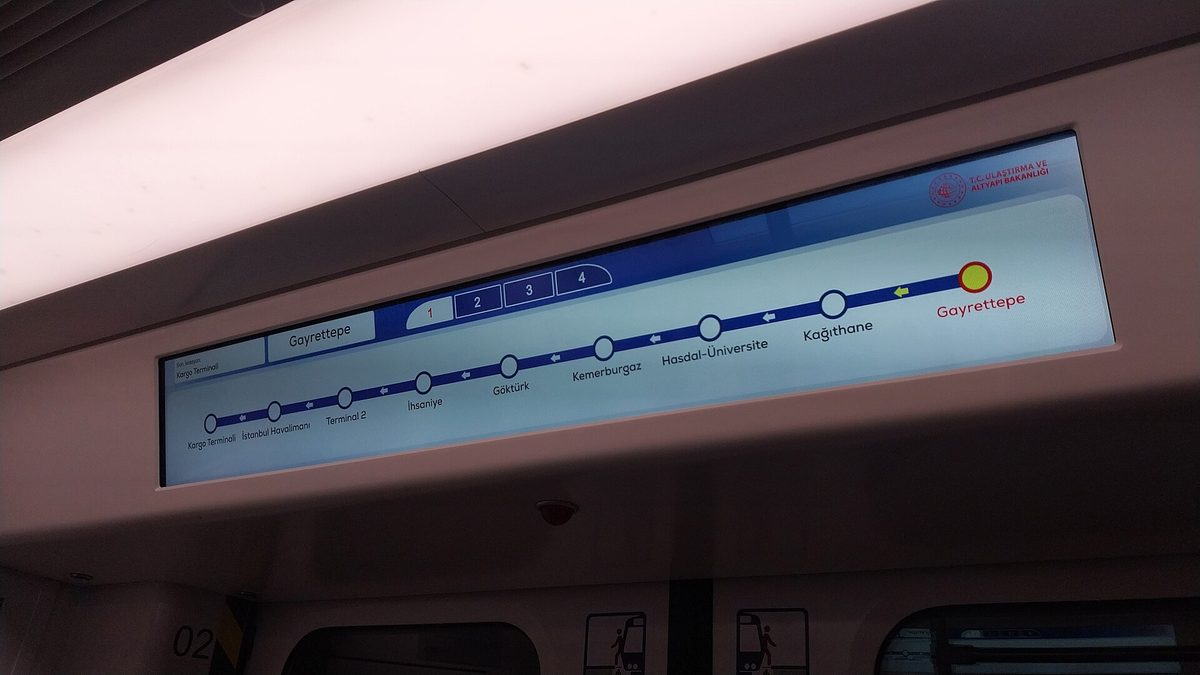
Istanbul airport to city centre: every option compared
Two airports, and the first thing to establish is which one you are landing at. Istanbul Airport (IST) is the enormous new one on the European side, about 40–50 km north-west of the old city, and handles most long-haul and Turkish Airlines flights. Sabiha Gökçen (SAW) is on the Asian side, roughly 45 km south-east of the centre, and handles most low-cost carriers including Pegasus and a good deal of AJet. They are about 90 km apart. Booking a flight into one and out of the other without noticing is a genuinely common and expensive mistake.
| From | Option | Price | Time | Runs | Best for |
|---|---|---|---|---|---|
| IST | M11 metro to Gayrettepe, then M2 | ~35–46 TL + 34.40 TL transfer | 60–80 min total | ~06:00–00:00 | Beyoğlu, Taksim, Şişli |
| IST | M11 to Halkalı, then Marmaray | ~35–46 TL + transfer | 70–85 min | ~06:00–00:00 | Sirkeci, the old city |
| IST | Havaist HVL-9 to Taksim | 470 TL | 60–90 min | 24/7, every 30 min by day | Beyoğlu with luggage |
| IST | Havaist HVL-1 to Aksaray | 470 TL | 60–90 min | 24/7 | Old city, then one tram stop |
| IST | Havaist to Sultanahmet | 470 TL | 70–100 min | Verify — see below | Sultanahmet direct |
| IST | Havaist HVL-6 to Kadıköy | 515 TL | 90–120 min | 24/7 | The Asian side |
| IST | Fixed-price taxi, Sultanahmet | ~2,600 TL yellow (Apr 2026, +~10% since July) | 45–90 min | 24/7 | Late arrivals, groups, bags |
| IST | Fixed-price taxi, Taksim | ~2,100 TL yellow | 45–75 min | 24/7 | As above |
| SAW | M4 metro to Kadıköy | Standard fare 46.20 TL | 52 min, 23 stations | ~06:00–00:00 | Anywhere, via a ferry |
| SAW | Havabüs SG-2 to Taksim | 485 TL | ~90 min | 06:30–00:30, every 30 min | Beyoğlu |
| SAW | Havabüs SG-1 to Kadıköy | 300 TL | 60–75 min | 05:45–01:30 | The Asian side |
| SAW | Metered taxi to Sultanahmet | 2,600–3,350 TL + tolls (Apr 2026) | 60–110 min | 24/7 | Late arrivals |
| IST ↔ SAW | Havaist HVİST-13 | 515 TL | ~2 h | 24/7 | Self-transfers |
All fares checked on 10 September 2026, at €1 ≈ 56 TL, $1 ≈ 48 TL and £1 ≈ 65 TL. The İBB raised public transport fares on 20 July 2026 and the taxi tariff went up the same week, so the fixed airport taxi prices, which were published in April, should be assumed roughly ten per cent higher than the figures above.
From Istanbul Airport (IST)
The M11 metro, which is the answer more often than people think
The M11 runs from the airport to Gayrettepe in about thirty minutes, distance-priced at roughly 35–46 TL on an Istanbulkart, with trains through most of the day from about six in the morning to around midnight. It is fast, it is clean, it has luggage space, and it costs about a tenth of a taxi.
The catch is the interchange, and nobody warns you about it. At Gayrettepe you change to the M2 for Taksim, Şişhane and Beyoğlu, and the connection involves a walk of around eleven minutes through a passage. With two suitcases, at the end of a long-haul flight, that walk is the part of the journey you will remember. Budget it in: the trip is about seventy-five minutes door to door to Taksim rather than the thirty the metro map suggests.
For the old city, the better M11 route is the other direction: stay on to Halkalı and change to Marmaray, which runs under the Bosphorus and stops at Sirkeci, five minutes’ walk from the tram and fifteen from Hagia Sophia. The Halkalı section opened on 20 June 2026, which is recent enough that a lot of published advice does not mention it. It also puts you on the high-speed rail network if you are heading to Ankara.
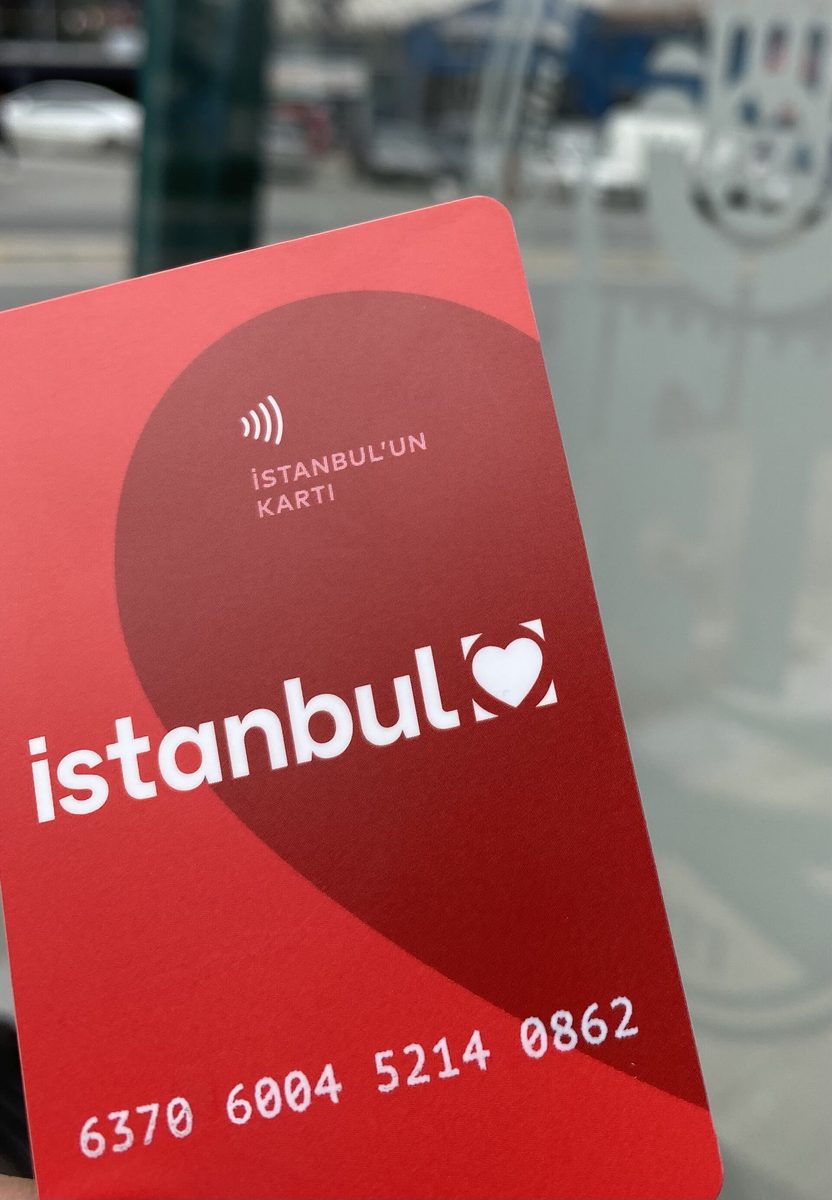
Buy an Istanbulkart at the machines in the arrivals hall — 165 TL for the anonymous card, non-refundable, loadable up to 2,750 TL, and usable by up to five people, so one card covers a family. It pays for itself over about four journeys against single-use tickets at 65 TL each.
The Havaist buses
Purpose-built airport coaches, air-conditioned, with luggage holds, running 24 hours a day, and they do not take cash — card or Istanbulkart only, at the desk or on board. This is the option I would choose arriving at three in the morning with bags.
The routes that matter: HVL-9 to Taksim at 470 TL, every thirty minutes during the day, sixty to ninety minutes depending on traffic. HVL-1 to Aksaray at 470 TL, which puts you on the T1 tram for the old city. HVL-6 to Kadıköy at 515 TL for the Asian side. HVİST-13 between the two airports at 515 TL. There are also services to the Otogar coach station at 370 TL, Halkalı at 350 TL and Arnavutköy at 170 TL.
The Sultanahmet line is the one to check rather than assume. It was suspended in January 2026 and reported restored in May at 470 TL, but the sources do not entirely agree and it is exactly the sort of route that gets cut and reinstated. Look at hava.ist before you plan around it; if it is not running, HVL-1 to Aksaray plus one tram stop costs the same and takes ten minutes longer.
Traffic is the variable. At three in the morning the bus to Taksim takes an hour; at six in the evening on a Friday it can take two.
Taxis, and the one number that protects you
Istanbul Airport operates a fixed-price taxi scheme, with published fares by destination and by cab colour. As of April 2026, before the July tariff rise, a yellow taxi cost 2,100 TL to Taksim, 2,600 TL to Sultanahmet or Sirkeci, 3,000 TL to Kadıköy and 3,800 TL to Sabiha Gökçen. Turquoise cabs are slightly more, and black cabs — larger, newer — are considerably more: 3,500 TL to Taksim and 4,400 to Sultanahmet. Assume all of these are about ten per cent higher now.
Go to the official taxi desk in the arrivals hall and take a numbered ticket. Do not accept a ride from anyone who approaches you inside the terminal. The three claims used on new arrivals are always some combination of “the metro has closed”, “the buses have finished” and “the meter is broken”, and at Istanbul Airport at least one of them is usually false.
The general city taxi tariff, for reference and for the return journey: the yellow flag is 71.94 TL with 47.92 TL per kilometre and a 230 TL minimum, from the UKOME decision of 17 July 2026. Waiting time runs about 10 TL a minute. Tolls are passed on — around 59 TL for the Bosphorus bridges, 95 TL for the Yavuz Sultan Selim bridge and about 280 TL for the Eurasia Tunnel — and a driver taking you between the European and Asian sides will and should add them. There is no night tariff in Istanbul. If a driver tells you the rate doubles after midnight, he is inventing it.
Private transfers
Pre-booked cars with a name board typically run €35–60 to the European side, which is competitive with a black taxi and more expensive than a yellow one. They are worth it if you are arriving very late, travelling with small children, or genuinely cannot face a negotiation. They are not worth it if the alternative is a Havaist bus and a five-minute walk.
From Sabiha Gökçen (SAW)
SAW has a reputation for being awkward, which is now largely out of date. The M4 metro extension put it on the network, and if you are staying on the Asian side it is the more convenient of the two airports by a wide margin.

The M4 metro
Twenty-three stations to Kadıköy in fifty-two minutes, at a standard 46.20 TL fare — the cheapest airport transfer in the city by an enormous margin. From Kadıköy you can take a ferry to Eminönü for the old city, or to Karaköy or Beşiktaş for Beyoğlu, and the crossing is twenty minutes on the water rather than an hour in traffic. Total cost to Sultanahmet, metro and ferry and tram: under 150 TL. Total time: about an hour and forty minutes.
The M4 also connects to the Marmaray at Ayrılık Çeşmesi, one stop before Kadıköy, which takes you under the Bosphorus to Sirkeci without changing to a boat. That is the fastest public route from SAW to the old city and it is not obvious from the airport signage.
Havabüs
SG-1 to Kadıköy, 300 TL, running 05:45 to 01:30, sixty to seventy-five minutes. SG-2 to Taksim, 485 TL, running 06:30 to 00:30 every thirty minutes, about ninety minutes. Both are comfortable and both are hostage to traffic on the coastal motorway, which is heavy from seven to ten in the morning and four to eight in the evening.
Taxis from SAW
Metered rather than fixed-price. As of April 2026, before the July rise: 1,750–2,300 TL to Kadıköy, 2,650–3,400 TL to Taksim, and 2,600–3,350 TL to Sultanahmet, plus tolls if you cross a bridge or use the tunnel. Add roughly ten per cent for the current tariff. The Eurasia Tunnel toll of about 280 TL is the one to watch — it is the fastest route to the old city and it is not cheap.
Which option should you actually take?
Arriving at IST in daylight, staying in Beyoğlu, travelling light: M11 to Gayrettepe, M2 to Taksim or Şişhane. About 80 TL and seventy-five minutes.
Arriving at IST in daylight, staying in the old city: M11 to Halkalı, Marmaray to Sirkeci. Similar money, about eighty minutes, and no eleven-minute interchange walk.
Arriving at IST with heavy luggage, or between midnight and six: Havaist, 470 TL, 24 hours. The metro does not run all night; the bus does.
Arriving at IST as a family or a group of three or more: the fixed-price taxi. Four people to Sultanahmet at 2,600 TL is roughly 650 TL each, which is a real cost but buys a door-to-door ride at the end of a flight.
Arriving at SAW, staying anywhere: the M4. It is fifty-two minutes for the price of a bus ticket, and the ferry leg that follows is the nicest arrival into Istanbul available at any price.
Leaving for either airport: add an hour to whatever the map says, and take public transport if you possibly can. Istanbul traffic does not obey rush-hour rules reliably, and a stalled lorry on the coast road has made more people miss flights than oversleeping has.

Transferring between the two airports
They are about 90 km apart with a bridge or a tunnel in between, and this is the single most underestimated journey in Istanbul travel.
The Havaist HVİST-13 runs between them 24 hours a day for 515 TL and takes about two hours in good conditions. A fixed-price taxi was 3,800 TL in April 2026. There is no rail link that does it usefully in one leg.
Allow four to five hours between flights if you are self-transferring, and more in the evening. That means bag reclaim, the transfer itself, check-in and security at the far end, and it is not padding — the coastal traffic can add ninety minutes with no warning at all. If your itinerary has a three-hour self-transfer between IST and SAW, change it.

Getting into the city late at night
Both metro networks stop around midnight and start again around six, and this is when people get caught.
Between midnight and six from IST, the Havaist buses run all night on their main routes, and this is the answer for almost everyone. Fixed-price taxis are always available from the official desk. From SAW, the Havabüs SG-1 runs until 01:30 and there are night buses, but the practical late-night option is a metered taxi.
Do not accept an unofficial ride at either airport at any hour. It is not usually a safety problem; it is a price problem, and the price is set by how tired you look.
The first thirty minutes: what to do before you look for transport
Both airports are efficient once you know the order of operations, and both punish improvisation.
Check your visa before you fly, not on arrival. Most nationalities need a visa or an e-visa for Turkey. The e-visa is an online form that takes a few minutes and is issued almost immediately — but you cannot apply for it after you have joined the immigration queue, and the “visa on arrival” desks are not available to every passport. Check the Ministry of Foreign Affairs site against your own nationality while you still have a choice about it.
Immigration at IST can take anywhere from five minutes to an hour depending on which wave of arrivals you are in. There is no reliable way to predict it, which is another argument for not booking a tight onward connection.
Money, in this order. Use a bank ATM in the arrivals hall rather than an exchange booth — the booth rate at an airport is always the worst rate you will see in Turkey. Withdraw enough lira for a couple of days rather than the whole trip, and always decline the ATM’s offer to convert the amount into your home currency. That offer, dynamic currency conversion, costs three to six per cent and appears on every machine here.
The Istanbulkart machines are in the arrivals hall at IST and near the metro entrance at SAW. They take cash and cards, they have an English option, and they are the single most useful thing to sort out before you leave the building. One card, 165 TL, shared by up to five people.
A SIM or eSIM. Turkish airport SIM prices are high and the tourist packages are poor value; an eSIM bought before you fly is usually cheaper. Be aware that Turkey registers phone IMEI numbers and a foreign handset used with a Turkish SIM will be blocked after about 120 days — irrelevant for a holiday, relevant if you are here for months.
Walking distances at IST are substantial. It is one of the largest terminals in the world under a single roof, and the walk from a far gate to immigration can be fifteen minutes. Factor that in both directions.
Going the other way: how much time to leave for departure
Three hours before an international departure from IST, and use public transport where you can. That is not excessive caution: the traffic on the approach roads is genuinely unpredictable, the terminal is enormous, and the security queues at peak times are long.
From the old city, allow ninety minutes for the Havaist from Aksaray, or a similar time for Marmaray to Halkalı and the M11 — the metro option is slower on paper and far more reliable in practice. From Beyoğlu, the M2 to Gayrettepe and the M11 takes about seventy-five minutes including the interchange walk.
For SAW, two and a half hours for an international departure and two for a domestic one, plus travel time. The M4 from Kadıköy is fifty-two minutes and is not affected by the coast road, which on a Friday evening can be very slow indeed.
One specific trap: if your hotel offers to book a taxi for a 5 a.m. departure, confirm the price in advance and in lira. Early-morning airport runs arranged through a hotel desk are where the largest mark-ups in this city live.
Arriving by ship, coach or train instead
By cruise ship you dock at Galataport in Karaköy, in the middle of the city — no transfer required at all. The T1 tram runs past the terminal, Sultanahmet is three stops or a fifteen-minute walk over Galata Bridge, and the ferry piers to the Asian side are next door.
By intercity coach you arrive at the Otogar at Esenler, which is on the M1 metro and about forty minutes from Sultanahmet with one change. Havaist runs a service between IST and the Otogar for 370 TL if you are connecting from a flight to a bus.
By train, the high-speed services from Ankara and Konya terminate at Halkalı, Bakırköy, Söğütlüçeşme or Pendik depending on the service — all of them on the Marmaray or metro network, and none of them in the centre. Haydarpaşa, the grand Asian-side terminus you will see in old photographs, is closed. Sirkeci station on the European side now handles Marmaray commuter services rather than long-distance trains.
Luggage, cards and the small stuff
Left luggage at IST costs 90, 115, 240, 300 or 375 TL per 24 hours depending on size — worth knowing if you have a long layover and want to go into the city unencumbered, since neither Hagia Sophia nor the Blue Mosque will let you in with a large case and neither has a cloakroom.
Cash. Havaist takes cards and Istanbulkart only, not cash. The Istanbulkart machines take cash and cards. Withdraw lira from a bank ATM in the arrivals hall rather than an exchange booth, and decline the machine’s offer to convert the amount for you — dynamic currency conversion costs three to six per cent every time.
Contactless bank cards now work at ferry gates and on much of the network, but an Istanbulkart is still cheaper per journey and is the only sensible option for a group.
The airport metro is not free with a city pass. None of the tourist cards — Museum Pass, E-Pass, Tourist Pass, Welcome Card — include transport to or from the airports, whatever the marketing suggests. The Museum Pass covers museums only.
Onward: the rest of Turkey from the airports
If Istanbul is a stop rather than the destination, two things are worth knowing. The high-speed rail to Ankara — about fifteen departures a day, four to four and a half hours, economy roughly 350–1,100 TL — runs from Halkalı, Bakırköy, Söğütlüçeşme and Pendik, and Halkalı is directly on the M11 from Istanbul Airport, which makes an airport-to-Ankara connection surprisingly painless. Haydarpaşa, the great Asian-side terminus in every photograph of Istanbul railways, is closed and has been for years.
For Cappadocia, the flights go to Kayseri or Nevşehir and take about ninety minutes, plus an hour of transfer at the far end. Both airports serve them; IST has more frequency, SAW is usually cheaper.
The mistakes worth avoiding
Booking into IST and out of SAW without noticing. Ninety kilometres apart. Check the three-letter code on both legs.
Assuming the M11 goes to the old city. It goes to Gayrettepe and Halkalı. Gayrettepe is for Beyoğlu; Halkalı is for the old city via Marmaray. Neither is a direct ride to Sultanahmet.
Trusting a published Havaist route without checking. The Sultanahmet line has been suspended and reinstated inside eighteen months, and route pages elsewhere on the internet lag by months.
Taking a taxi at rush hour. Between four and eight on a weekday the metro will beat a car to almost anywhere in the city, and it will beat it by half an hour.
Believing in a night tariff. There is not one.
Cutting the airport transfer fine on departure day. Istanbul Airport is very large; the walk from security to a far gate can be fifteen minutes on its own.
Frequently asked questions
How do I get from Istanbul Airport to Sultanahmet?
Three sensible ways. The Havaist bus to Aksaray at 470 TL and then one stop on the T1 tram; the M11 metro to Halkalı and Marmaray to Sirkeci for about 80 TL; or a fixed-price taxi at roughly 2,600 TL plus the July increase. There is a direct Havaist Sultanahmet service at 470 TL, but it was suspended in January 2026 and reportedly restored in May, so check hava.ist before relying on it.
How long does it take to get from Istanbul Airport to the city centre?
Sixty to ninety minutes by bus or taxi to the European side, depending entirely on traffic, and seventy-five to eighty-five minutes by metro including the interchange. Allow two hours to the Asian side. Add an hour to any of these on a weekday evening.
Is the M11 metro from Istanbul Airport worth it?
Yes, if you are travelling in daylight and can manage your own bags. It costs about a tenth of a taxi and is immune to traffic. The weakness is the eleven-minute interchange walk at Gayrettepe, which is unpleasant with luggage, and the fact that it does not run through the night.
How much is a taxi from Istanbul Airport?
About 2,100 TL to Taksim and 2,600 TL to Sultanahmet for a yellow cab under the fixed-price scheme published in April 2026, with black cabs at 3,500 and 4,400 respectively; assume roughly ten per cent more since the tariff rose on 20 July 2026. Use the official desk in the arrivals hall.
Which Istanbul airport is closer to the city?
Neither is close. IST is 40–50 km north-west of the old city on the European side; SAW is about 45 km south-east on the Asian side. In practice SAW is more convenient if you are staying in Kadıköy or Üsküdar, and IST if you are in Beyoğlu.
How do I get from Sabiha Gökçen to Taksim?
Havabüs SG-2 at 485 TL, roughly ninety minutes, running 06:30 to 00:30 every half hour. Or the M4 metro towards Kadıköy, changing to Marmaray at Ayrılık Çeşmesi and continuing on the European side — slower with changes but a fraction of the price and unaffected by traffic.
Can I use an Istanbulkart at the airport?
Yes, on the M11 and M4 metros and on the Havaist and Havabüs coaches. Buy the card from a machine in arrivals for 165 TL and load it there. One card works for up to five people, so a family needs one, not five.
How much time should I allow between flights at different Istanbul airports?
Four to five hours minimum, and preferably more if either leg is in the evening. The transfer itself is about two hours on the HVİST-13 bus in good conditions, and conditions are frequently not good.
Is there a night bus from Istanbul Airport?
Yes. Havaist runs its main routes 24 hours a day, which is the practical answer for arrivals between midnight and six when the metro is not running. Fixed-price taxis are also available around the clock from the official desk.
Is there a direct train from Istanbul Airport to the old city?
Not in one leg, but close. The M11 to Halkalı connects to Marmaray, which runs under the Bosphorus and stops at Sirkeci, a five-minute walk from the T1 tram and fifteen from Hagia Sophia. One change, about eighty minutes, and around 80 TL. The Halkalı section only opened on 20 June 2026, so plenty of older guides still say there is no rail option for the old city.
What is the cheapest way from Istanbul Airport to the city?
The M11 metro and one connection, at roughly 80 TL all in on an Istanbulkart including the discounted transfer. That is about a thirtieth of the price of a taxi and about a sixth of the price of the Havaist bus. The trade is the interchange walk at Gayrettepe and the fact that it does not run through the night.
Are there luggage restrictions on the airport buses and metro?
No formal ones. Havaist coaches have proper holds and are the easiest option with large cases. The M11 and M4 have luggage space and are entirely manageable with one case each; two large cases plus the eleven-minute Gayrettepe interchange is where people start regretting the decision. Neither Hagia Sophia nor the Blue Mosque will admit large luggage, so if you are heading straight to the monuments, use the airport left-luggage desk or your hotel.
Do I need a visa to leave the airport?
Most nationalities need either a visa or an e-visa to enter Turkey, including for a few hours in the city during a long connection. Passengers staying airside in transit do not. Check the Ministry of Foreign Affairs site against your own passport before planning a layover excursion — the e-visa takes minutes online but cannot be obtained after you have queued at immigration.
Once you are in the city the rules change completely, and the card you bought at the airport is the key to all of it. Our guide to getting around Istanbul has the September 2026 fares for the tram, metro, Marmaray and ferries, the routes worth memorising and the taxi tariff in full.
Passport control is usually the longest wait of the arrival rather than the check itself, and most visitors need nothing more than the passport — US, UK, Canadian, Australian and EU citizens are all visa-free for 90 days in 180. Our guide to whether you need a visa for Turkey sets out the rules passport by passport, the 150-day validity rule and the e-visa agent sites to avoid.
Whichever route you take into the city, buy your transport card before you leave the terminal. Our Istanbulkart guide covers the September 2026 price, exactly where the machines are at both airports, and how the fares and transfers work.
Even a short connection can be enough to see the old city, if the timing works. Our Istanbul layover guide covers Turkish Airlines’ free Touristanbul tour, the stopover hotel programme, and exactly how many hours you actually need.
Related Istanbul guides
- If your connection is long enough to leave the airport, the layover plans in our Istanbul itineraries for one to seven days set out what six, ten and twelve hours actually buy you.
- Which neighbourhood you are heading to changes the right transfer entirely — see where to stay in Istanbul.
- Arriving straight into the old city? Our guide to Sultanahmet and the historic peninsula covers everything within walking distance of the tram.
- And for the wider question of when to come, see the best time to visit Istanbul.