Before You Go ·
Best Time to Visit Istanbul: Month-by-Month Weather, Crowds, Prices & Events
Istanbul month by month with real temperature, rainfall, sunshine and sea-temperature figures, what hotels cost in each, the events calendar and which month suits which kind of trip.
In this guide 13 sections
- Istanbul weather month by month
- The best time to visit Istanbul, by kind of trip
- Spring
- Summer
- Autumn
- Winter
- Daylight
- How the seasons change the sights themselves
- Public holidays and when the city actually closes
- Ramadan, Bayram and the moving calendar
- The events calendar, roughly
- What is overrated about timing
- Frequently asked questions
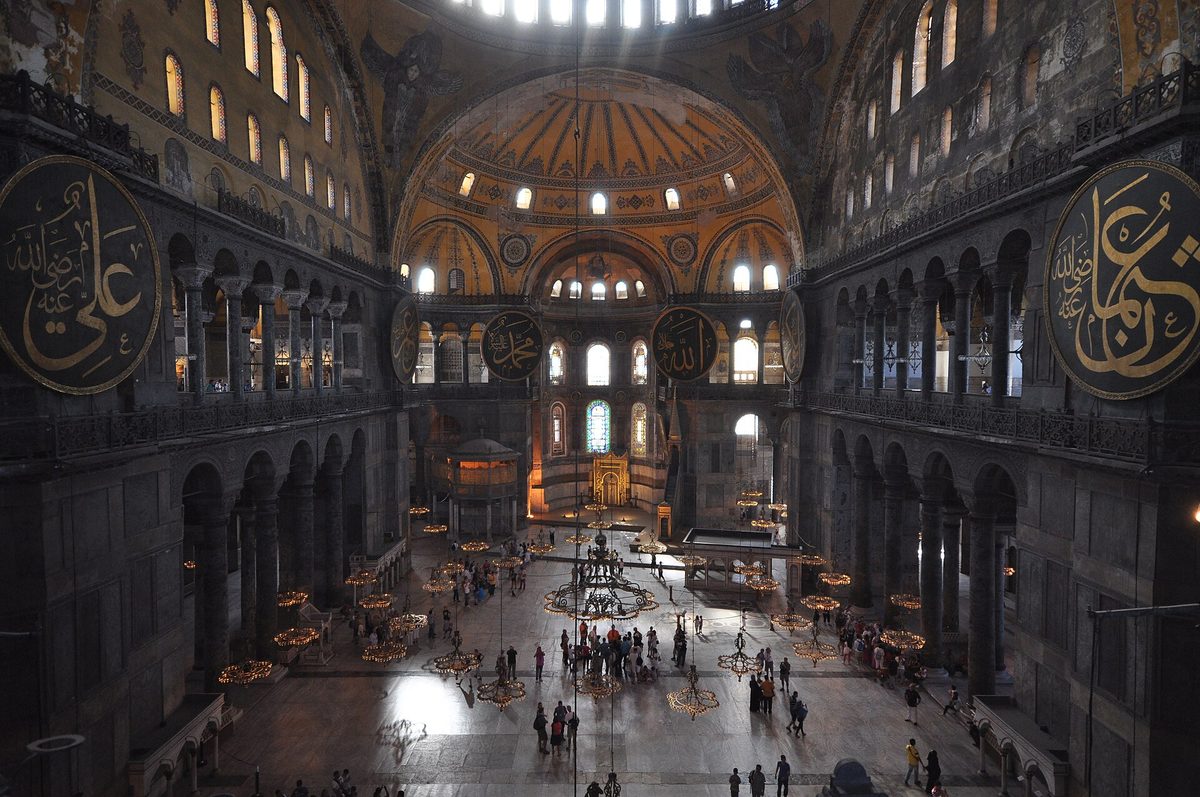
I have been to Istanbul in the second week of August and in the second week of February, and the surprise is which one I would repeat. August gave me a hazy white sky, a queue at every door and an afternoon spent hiding in the Archaeology Museum because the pavements were unwalkable. February gave me sleet, a half-empty Hagia Sophia, a hotel at forty per cent of the summer rate, and the Bosphorus looking like a Turner. Only one of those is a bargain.
The best time to visit Istanbul is April to early June or September to October, when highs sit between 17°C and 26°C, rainfall is at its lowest and the crowds are manageable. July and August are hot and busy, January and February are cold and grey but roughly half price, and the tulips in Emirgan Park peak through April.
Below is the year month by month, with real temperature, rainfall and sea-temperature figures rather than adjectives, what is happening in the city each month, what hotels cost, and — because this is the question behind the question — which month I would pick for six different kinds of trip. Climate figures were checked on 10 September 2026.

Istanbul weather month by month
These are long-run averages, checked on 10 September 2026 against climatestotravel.com and cross-checked with climate-data.org. Istanbul takes about 675 mm of rain a year, almost all of it between October and March. Note the sunshine column, which explains more about how a month feels than the temperature does: December gives you two hours of sun a day and July gives you ten and a half.
| Month | Avg high | Avg low | Rain | Sun/day | Sea | Crowds | Hotel prices |
|---|---|---|---|---|---|---|---|
| January | 9.0°C | 3.3°C | 60 mm | 2.5 h | 8.5°C | Lowest | Lowest |
| February | 9.7°C | 3.4°C | 65 mm | 3.0 h | 7.5°C | Very low | Lowest |
| March | 12.3°C | 5.1°C | 70 mm | 4.5 h | 8.0°C | Low | Low |
| April | 16.9°C | 8.4°C | 55 mm | 6.0 h | 10.5°C | Rising | Mid |
| May | 22.1°C | 13.7°C | 35 mm | 8.0 h | 15.5°C | High | High |
| June | 27.0°C | 18.5°C | 25 mm | 10.0 h | 20.5°C | High | High |
| July | 29.7°C | 21.3°C | 25 mm | 10.5 h | 23.5°C | Peak | Peak |
| August | 29.9°C | 21.8°C | 40 mm | 9.5 h | 24.5°C | Peak | Peak |
| September | 25.7°C | 17.8°C | 40 mm | 8.0 h | 22.5°C | High | High |
| October | 20.5°C | 13.7°C | 80 mm | 5.5 h | 19.0°C | Moderate | Mid |
| November | 15.5°C | 9.0°C | 85 mm | 3.5 h | 14.5°C | Low | Low |
| December | 11.0°C | 5.3°C | 105 mm | 2.0 h | 11.0°C | Low, spike at New Year | Low, spike at New Year |
Two things the table understates. The first is wind: Istanbul sits in a strait and the northerly poyraz can take five degrees off a February afternoon and cancel ferries outright. The second is humidity in July and August, which makes 30°C feel considerably worse than 30°C in a dry climate, especially on the peninsula, where the stone holds the heat well past sunset.
The best time to visit Istanbul, by kind of trip
First visit, sightseeing: late April to early June, or the second half of September into October. Comfortable walking weather, long light, and everything open.
Lowest possible cost: January or February. Hotel rates roughly halve, flights are at their cheapest, and the monuments are genuinely empty. Bring a coat that copes with wind and horizontal rain.
Photography: late October and November. The autumn light on the Bosphorus is the best of the year and the low sun works with the domes in a way that the flat glare of July does not.
Swimming, islands and the Black Sea beaches: late June to mid-September, when the sea is 20–24.5°C. August is the warmest water of the year at 24.5°C.
Food: autumn. The hamsi — Black Sea anchovies — start appearing in quantity from November, which is when Istanbul’s fish restaurants are at their best, and a portion runs 180–280 TL in season.
Atmosphere over comfort: Ramadan, which falls from 8 February to 8 March in 2027. The evenings in Sultanahmet during iftar are unlike anything else in the city’s year.
Spring: March, April, May
March
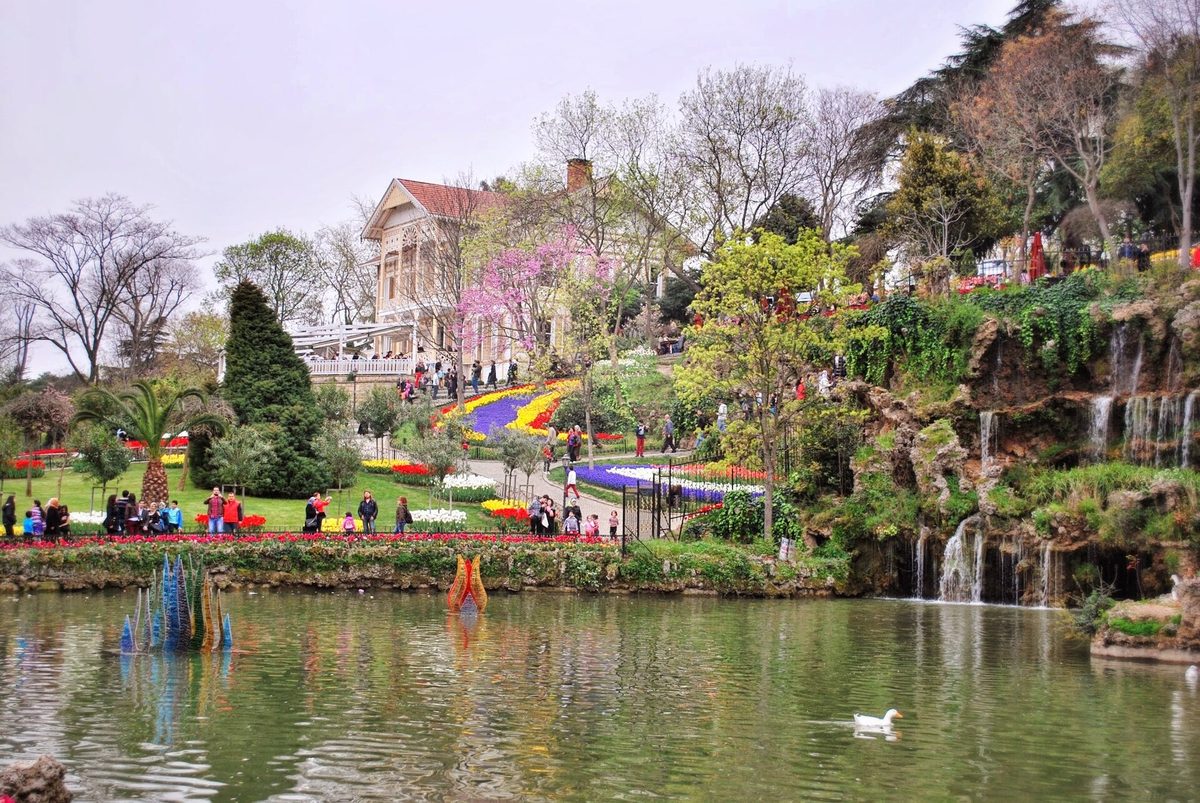
Highs of 12.3°C, lows of 5.1°C, 70 mm of rain and four and a half hours of sun a day. March is transitional and unreliable — it can produce a warm week and it can produce snow — but prices are still at winter levels and the queues have not started. The city looks green again by the end of the month and the parks begin to be planted.
Worth knowing: in 2027 Ramadan runs from 8 February to 8 March, so the first week of March that year is the tail end of it, followed immediately by the Ramazan Bayramı holiday. Turkish public holidays empty the Grand Bazaar and fill the domestic hotels, so check the exact dates for your year — the Islamic calendar moves about eleven days earlier annually.
April
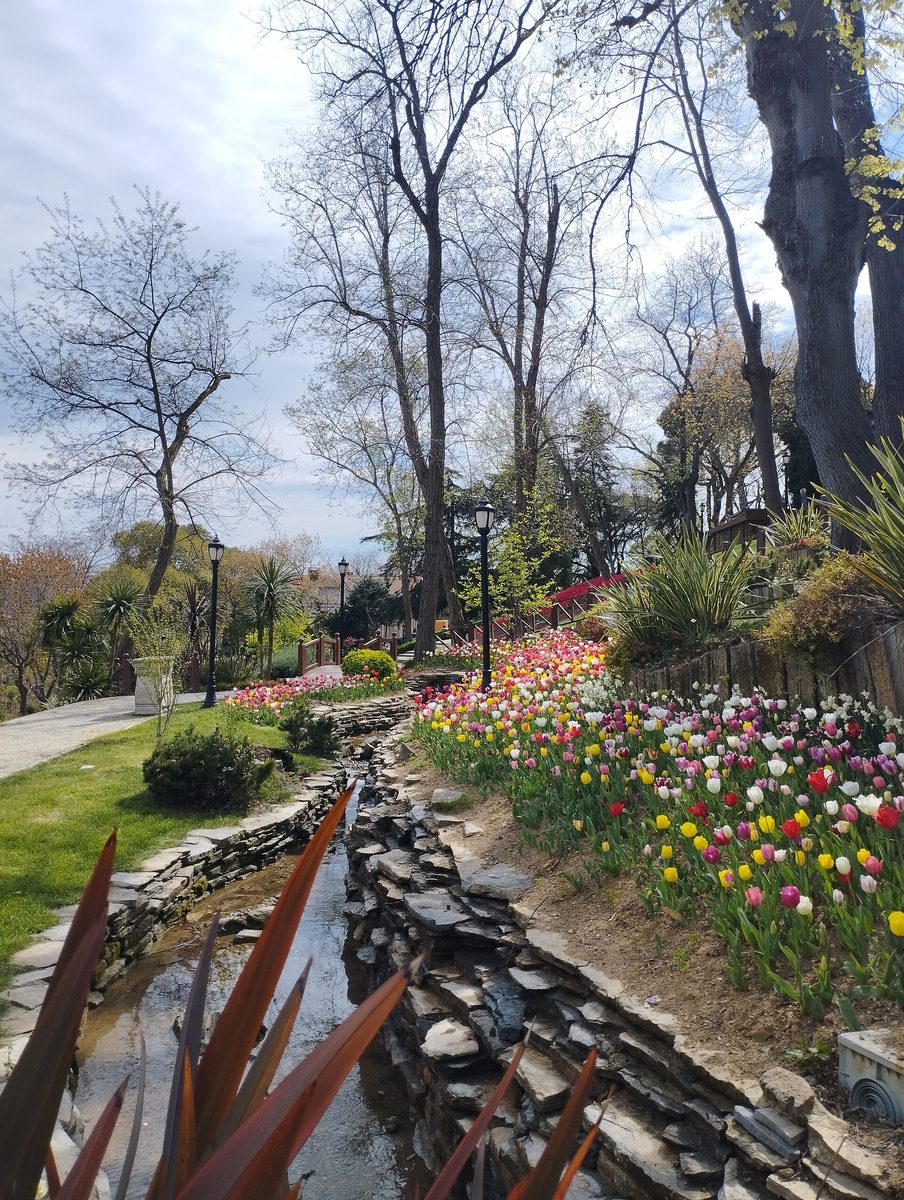
Highs of 16.9°C, lows of 8.4°C, 55 mm of rain, six hours of sun. This is the month I would book if someone made me pick one. The weather is walkable, the light is clean, the tourist volume is real but not yet oppressive, and the tulips are out.
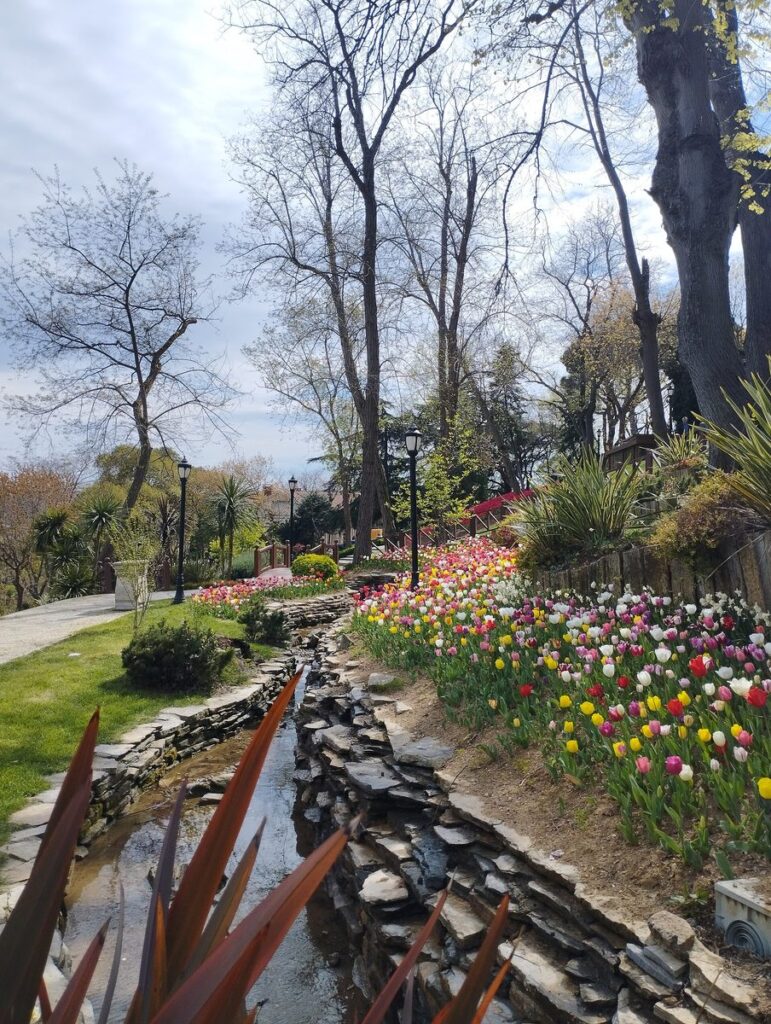
The tulip festival runs through April, principally in Emirgan Park up the Bosphorus, with major plantings in Gülhane below Topkapı, Sultanahmet Square and Beykoz on the Asian side. Emirgan is the serious one — hundreds of varieties across a large hillside park, free to enter, and busy at weekends. Go on a weekday morning. The dates shift with the weather each year and the peak is usually the middle two weeks.
Also in April: the Istanbul Film Festival, and ANZAC Day on the 25th, which fills Çanakkale and the Gallipoli peninsula and puts significant pressure on transport to the south-west. If you are travelling in Turkey around that date, book ahead.
May
Highs of 22.1°C, lows of 13.7°C, only 35 mm of rain and eight hours of sun a day. Arguably the single best month for weather, and priced accordingly. The sea reaches 15.5°C, which is swimmable if you are hardy and not otherwise. Everything is open, the ferries run their full summer timetables, and outdoor eating becomes the default.
The trade-off is that May is genuinely busy — cruise season is under way, the school groups are out and the monument queues are back. Book Hagia Sophia and Topkapı ahead.
Summer: June, July, August
June
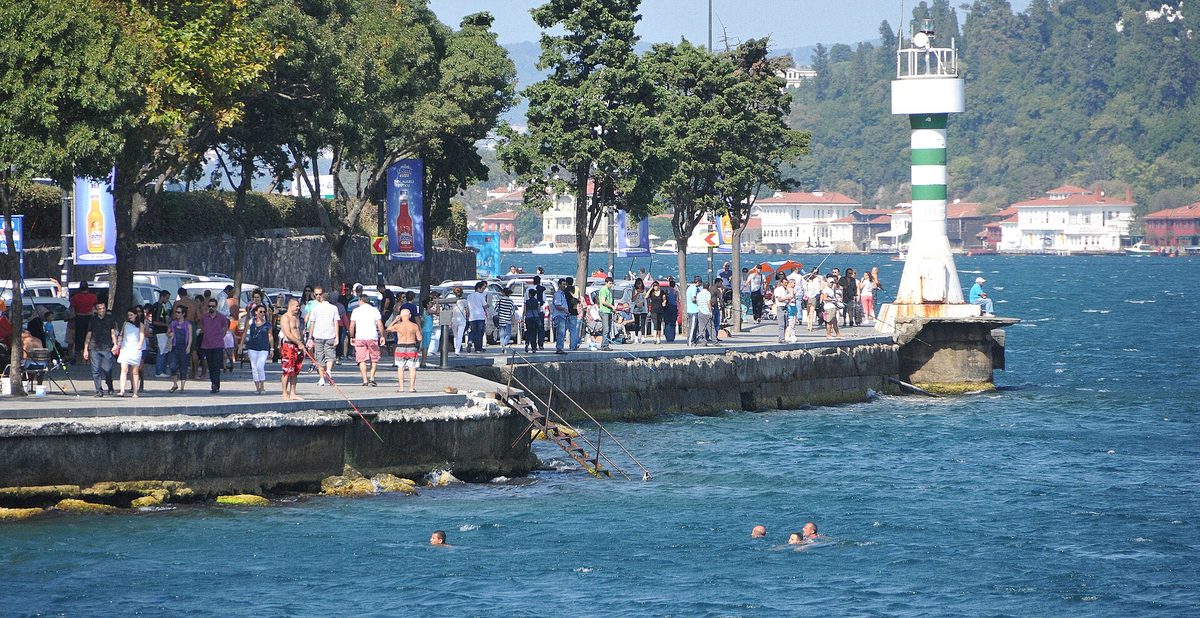
Highs of 27°C, lows of 18.5°C, 25 mm of rain, ten hours of sun. June is the last comfortable summer month and the sea has warmed to 20.5°C. Long evenings — light until about half past eight — which effectively adds two hours to each sightseeing day, and the Istanbul Music Festival brings serious classical programming into historic buildings including Hagia Irene.

July
Highs of 29.7°C, lows of 21.3°C, almost no rain, ten and a half hours of sun, sea at 23.5°C. Peak season in every sense: peak prices, peak queues, peak heat. The old city between eleven and four is hard work, and the humidity is what does it rather than the raw number.
If you come in July, invert the day. Monuments at opening, a museum, a hamam or a long ferry through the middle of the day, and the streets again from six. The Bosphorus is ten degrees more pleasant than Sultanahmet at three in the afternoon and this is not an exaggeration. The Istanbul Jazz Festival runs through the month.
August
Highs of 29.9°C, lows of 21.8°C, 40 mm of rain, sea at its annual peak of 24.5°C. The hottest month, and also the month when a good proportion of Istanbul leaves for the coast, which thins the residential neighbourhoods without thinning the tourist ones at all. The haze is the photographic problem — the skyline views that look so good in November are often a white smear in August.
The compensations are real, though: the islands and the Black Sea beaches at Şile and Kilyos are at their best, the ferry decks are the most pleasant place in the city, and the evenings on the water are long and warm. Victory Day on 30 August is a national holiday with military ceremonies and closures.
Autumn: September, October, November
September
Highs of 25.7°C, lows of 17.8°C, 40 mm of rain, eight hours of sun, sea still at 22.5°C. The best month in the year on a strict balance of weather against crowds, and my own preference. The heat breaks in the first fortnight, the light sharpens, the sea is still warm enough to swim in, and the July and August volume drops away. Prices stay high until about the third week.

October
Highs of 20.5°C, lows of 13.7°C, and this is where the rain returns — 80 mm, with five and a half hours of sun. Perfect walking weather between the showers, thin crowds, and the best photographic light of the year on the Bosphorus. Republic Day on 29 October brings flags, ceremonies and a public holiday. Hotel prices start to fall in the second half of the month.
November
Highs of 15.5°C, lows of 9°C, 85 mm of rain and only three and a half hours of sun a day. This is the point where the year turns properly grey, and it is also the point where Istanbul becomes cheap, quiet and — if you like cities in the rain — extremely good. The hamsi season starts, which matters more than it sounds: fish restaurants across the city put anchovies on at 180–280 TL a portion and the whole eating culture shifts.
Bring a waterproof rather than an umbrella; the wind off the Bosphorus destroys umbrellas at a rate that keeps a small industry of street sellers in business.
Winter: December, January, February
December
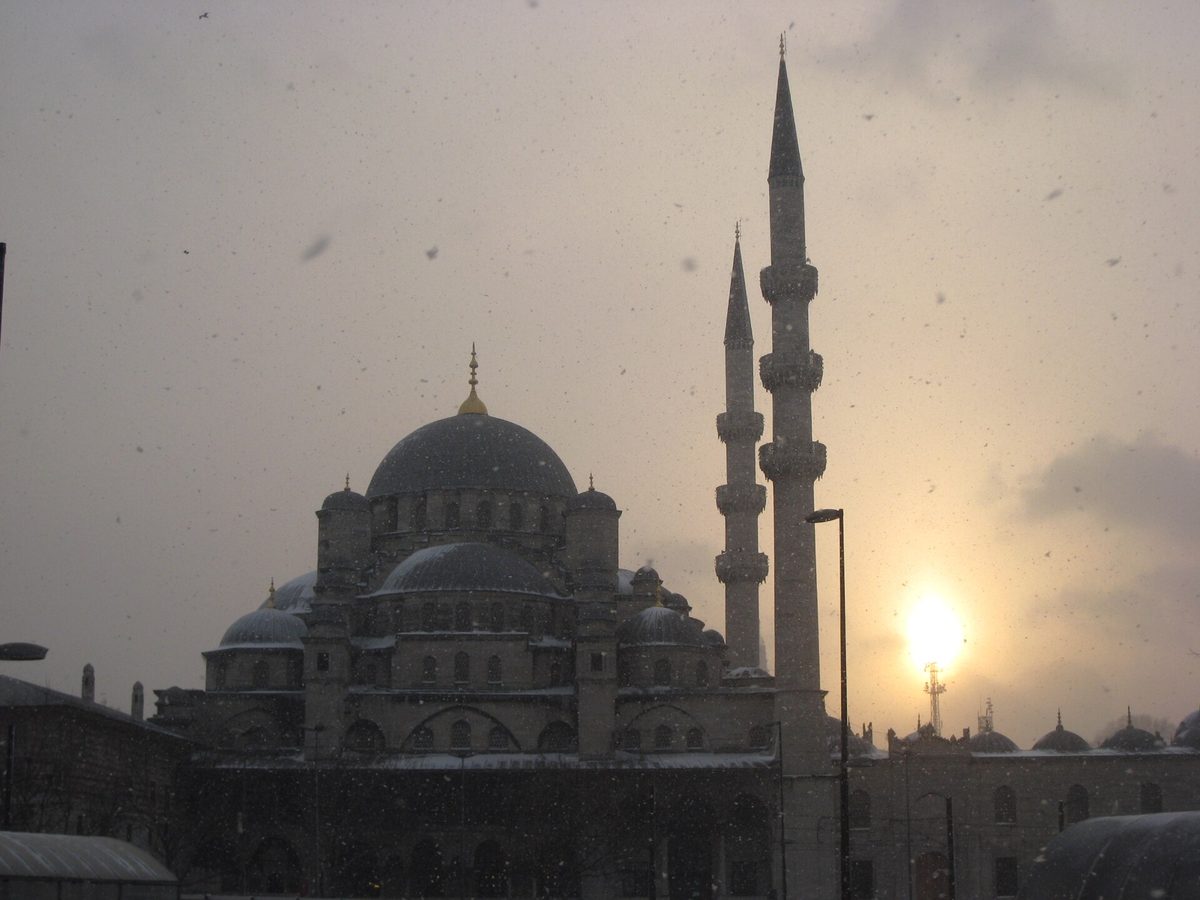
Highs of 11°C, lows of 5.3°C, the wettest month at 105 mm, and two hours of sun a day, which is the lowest figure in this guide and the one that catches people out. Short, grey days and early dark. Against that: almost no queues, low prices for three weeks of the month, and a genuinely festive city, since Turkish New Year celebrations borrow most of the visual language of Christmas and apply it to 31 December.
New Year’s Eve is the exception to the low prices — hotels along the Bosphorus and around Taksim sell packages, and rates spike hard for three or four nights.

January
Highs of 9°C, lows of 3.3°C, 60 mm of rain and two and a half hours of sun. The quietest month of the year and the cheapest. Snow is not unusual and rarely lasts more than a few days; when it comes, the city is extraordinary and the transport network is not. Hagia Sophia and Topkapı at a January opening time, with fifteen people in them, is an experience the summer visitor simply cannot buy.
February
The coldest month by average temperature, at a mean of 5–6°C, with the sea at its annual low of 7.5°C. Highs of 9.7°C, lows of 3.4°C, three hours of sun. Everything said about January applies, with the addition that in 2027 Ramadan begins on 8 February and runs to 8 March, which changes the city’s evenings completely.
Note also that the İBB has historically raised public transport fares in February and again in July, so a February visit in an odd year may catch a change; the last two rises were in February and on 20 July 2026.
Daylight, and why it matters more than temperature
Istanbul sits at about 41° north, roughly the latitude of Naples or Chicago, and Turkey stays on UTC+3 all year with no clock change. The practical consequence is a set of daylight hours that surprises people in both directions.
In late June the sun is up before half past five and sets around half past eight, giving you fifteen hours of usable light and evenings that go on. In late December the sun rises around half past eight and sets at about half past four — eight hours, and only two of them with any real sun in them. Because the clocks do not go back, winter mornings here are noticeably darker than they are at the same latitude in Europe, and a nine o’clock monument opening in January genuinely feels early.
What that means for planning. In summer you can do three sightseeing sessions a day with a long gap in the middle; in December you get one good block from about ten to four, and you should spend it outdoors and save the museums for the dark. Sunset photography from Galata Bridge or Salacak is at half past four in December and half past eight in June, which changes when dinner happens. And the mosque visitor windows, which are set by prayer times, shift by roughly two hours across the year — a summer schedule read in winter will send you to a closed door.
How the seasons change the sights themselves
Beyond weather, several things you might have planned around only work in part of the year.
Opening hours move. Hagia Sophia opens at 08:00 from April to September and 09:00 the rest of the year. The Museum of Turkish and Islamic Arts runs 10:00–20:00 in summer and 08:30–17:30 in winter. Rumeli Hisarı closes at 17:00 in winter and 19:30 in summer. These are not trivial differences when the light goes at half past four.
The Bosphorus tour runs all year. The Şehir Hatları long tour leaves Eminönü at 10:35 daily, year-round, at 640 TL return — one of the few things in this guide that does not have a season. In winter you will spend most of it inside the saloon, and it is still worth doing. Private sunset and dinner cruises thin out considerably from November.
The Princes’ Islands change character completely. In July and August they are packed and the ferries are a scrum. From November to March half the restaurants are shut, the buggies are fewer and the islands are wonderfully empty. A crisp winter day on Heybeliada is one of the best things you can do in Istanbul, and almost nobody does it.
Rooftop bars and outdoor seating. Most of Beyoğlu’s rooftops shut or glass themselves in from November. Conversely, the covered fish restaurants and the meyhanes come into their own in winter, and the hamams — which feel faintly punishing in August — make complete sense from October.
Beaches and the Black Sea. Kilyos, Şile and the island beaches operate roughly June to September. Outside that they are open ground with a view, which is not nothing, but the beach clubs are shuttered.
Tulips are the one genuinely fixed seasonal event — April, and if you are coming for them, the middle two weeks are the safe bet.
Public holidays and when the city actually closes
Turkey’s fixed national holidays are 1 January, 23 April (National Sovereignty and Children’s Day), 1 May, 19 May, 15 July, 30 August (Victory Day) and 29 October (Republic Day). Museums generally stay open on these; banks, offices and some shops do not, and Republic Day and Victory Day bring ceremonies, flags and road closures.
The two that materially affect a visit are the religious holidays, because they move. Ramazan Bayramı follows Ramadan — so early March in 2027 — and Kurban Bayramı falls roughly seventy days later. Both are multi-day national holidays. During them the Grand Bazaar closes entirely, intercity buses and domestic flights sell out, hotels in the coastal resorts fill with Turkish families, and Istanbul itself becomes noticeably quieter as people travel to see relatives. It is not a bad time to be in the city — the monuments are less busy than usual — but it is a bad time to be trying to buy a carpet or take a train.
Check the exact dates for your travel year rather than assuming: the Islamic calendar runs about eleven days shorter than the Gregorian one, so everything shifts earlier annually.
Ramadan, Bayram and the moving calendar
Ramadan in 2027 runs from 8 February to 8 March. It moves roughly eleven days earlier each year, so by 2030 it will fall in early January.
What actually changes: mosques are busier and visitor windows tighten, particularly around sunset; Sultanahmet Square fills with families laying out picnics for iftar, which is a genuinely moving thing to watch and a genuinely bad time to be trying to get into a building; and restaurants stay open throughout, because Istanbul is a city where a large minority does not fast and nobody minds either way. Eating and drinking in the street during daylight is not illegal and will not get you into trouble, but it is noticed, and a small discretion costs nothing.
The two Bayram holidays — Ramazan Bayramı immediately after Ramadan, and Kurban Bayramı about seventy days later — are the ones that affect logistics. The Grand Bazaar closes for several days, intercity transport sells out, and the coastal resorts fill with domestic travellers. Check the exact dates for your year before booking anything that depends on them.
The events calendar, roughly
- April: the tulip festival in Emirgan, Gülhane and Sultanahmet; the Istanbul Film Festival; ANZAC Day on the 25th.
- June: the Istanbul Music Festival, with concerts in historic buildings.
- July: the Istanbul Jazz Festival.
- Autumn: the Istanbul Biennial in its years, plus a dense season of concerts and gallery openings from September.
- 29 October: Republic Day.
- 31 December: New Year, the one guaranteed price spike of the winter.
- Football: the league runs August to May, and a Beşiktaş, Galatasaray or Fenerbahçe home match closes streets and fills ferries. Worth checking the fixture list against your dates whether you want to go or want to avoid it.
For anything specific, İKSV’s own site and the İBB events portal are the two places to check rather than an aggregator, since dates shift and the aggregators do not update.
What is overrated about timing, and what is not
Overrated: avoiding “peak season” at all costs. Istanbul is a city of sixteen million people. It is never empty, it never feels like a resort in low season, and the difference between a July queue and a May queue at Hagia Sophia is thirty minutes rather than three hours. The heat is a much better reason to avoid July than the crowds are.
Overrated: shoulder-season pricing. April, May, September and October are not cheap. The genuine price break is November to March, and it is a big one.
Underrated: winter. Half-price hotels, empty monuments, hamams that make sense, hamsi season, and a city that looks better under a grey sky than most places do in sunshine. The costs are the light, which is poor, and the two hours of daylight sun a day in December.
Underrated: how much the sunshine column matters. People plan around temperature and are then surprised by a December day that is dark at four. If short days will spoil your trip, that is a stronger argument against winter than the cold is.
Underrated: the wind. A calm 5°C day in Istanbul is pleasant. The same temperature with the poyraz blowing down the strait is not, and it is also the thing most likely to cancel a ferry and rearrange your day.
Frequently asked questions
What is the best month to visit Istanbul?
May or September, on a strict balance of weather, daylight and crowds. April is nearly as good and adds the tulips. If cost matters more than comfort, January and February are half the price and the monuments are close to empty.
What is the cheapest time to visit Istanbul?
January and February, when hotel rates fall by roughly half and flights are at their lowest. November and early December are nearly as cheap. The exception is the three or four nights around New Year, when Bosphorus and Taksim hotels sell packages at a large premium.
Is Istanbul too hot in July and August?
Hot rather than impossible — highs around 30°C with high humidity. The problem is the middle of the day on the peninsula, where the stone radiates heat well past sunset. Plan monuments at opening, something indoors or on the water from eleven to four, and the streets again from six, and July is perfectly manageable.
Does it snow in Istanbul?
Most winters, usually in January or February, and usually for a few days rather than weeks. It is beautiful and the city photographs magnificently, but the transport network handles it poorly and flights are occasionally disrupted. Do not build a tight itinerary around a January visit.
When is the Istanbul tulip festival?
Through April, with the peak usually in the middle two weeks and the exact dates dependent on the spring. Emirgan Park up the Bosphorus is the main site and is free; Gülhane, Sultanahmet Square and Beykoz also get large plantings. Weekday mornings are dramatically better than weekends.
Can you swim in Istanbul?
Yes, from late June to mid-September, though not in the Bosphorus itself in the centre — the current is serious and the shipping traffic is constant. The Black Sea beaches at Kilyos and Şile, the Princes’ Islands and the upper Bosphorus bays are where people actually swim. Sea temperature peaks at 24.5°C in August.
How many days of rain should I expect?
Istanbul gets about 675 mm a year, concentrated between October and March, with December the wettest month at 105 mm. Summer rain is rare — 25 mm in each of June and July. Rain here tends to arrive in heavy bursts with wind rather than as all-day drizzle, so an indoor plan for two hours is usually enough.
Is it worth visiting Istanbul during Ramadan?
Yes, if you want atmosphere and are willing to plan around it. Mosque visiting hours tighten, the squares fill at sunset and the city has a particular collective quality it has at no other time. Restaurants remain open throughout. In 2027 it runs from 8 February to 8 March.
When is Istanbul least crowded?
January, followed by February and November. Even then the city is not quiet — sixteen million people live here — but the monuments are, and that is the part that affects a visit.
Is Istanbul worth visiting in winter?
Yes, and it is the visit I would recommend to anyone who has been before. You get Hagia Sophia and Topkapı without queues, hotel rates at roughly half, hamams that finally make sense, hamsi season in the fish restaurants, and a city that photographs beautifully under cloud. What you give up is daylight — eight hours in late December, only two of them properly sunny — and a certain amount of comfort on the ferry deck.
How far in advance should I book?
Six to eight weeks for May, June, September and October, when the good small hotels in Galata and Karaköy genuinely sell out. Two or three weeks is fine from November to March, except around New Year. Monument tickets only need booking ahead in July and August, and then only for Hagia Sophia and Topkapı.
Does Istanbul change the clocks?
No. Turkey has stayed on UTC+3 year-round since 2016, with no summer or winter time change. This makes winter mornings darker than you would expect at this latitude — the sun does not clear the horizon until around half past eight in late December — and summer evenings correspondingly long.
Which month has the best light for photography?
Late October and November, when the sun is low, the summer haze has cleared and the rain leaves the air clean between showers. December and January give you dramatic skies but only two to two and a half hours of sunshine a day. July and August are the worst months for skyline photography despite the sunshine, because the haze flattens everything beyond about a kilometre.
Are the ferries affected by the weather?
Occasionally, and it is worth knowing. Strong northerly wind — the poyraz — can suspend the Princes’ Islands services and the longer Bosphorus routes at short notice, most often between November and March. The short commuter crossings almost always keep running. If a winter day depends on a boat, have a Marmaray or metro alternative in mind.
What should I pack, by season?
Summer: light clothing that covers shoulders and knees for mosques, a scarf, and shoes for cobbles rather than sandals. Spring and autumn: layers and a waterproof, because October and November deliver 80–85 mm of rain apiece. Winter: a genuinely windproof coat, since the wind off the strait is the thing that makes 5°C uncomfortable, and shoes with grip for wet marble and cobbles.
One thing that does not have a season: the Şehir Hatları Long Tour leaves Eminönü at 10:35 every day of the year. Our Bosphorus cruise guide covers how the boats change through the year, and which of them still run when the northerly wind gets up.
Season decides more than the weather here: the Black Sea beaches at Şile and Kilyos only work between June and September, the thermal baths at Yalova and the snow on Uluğdağ only between December and March, and intercity ferry timetables thin out sharply from November. Our guide to day trips from Istanbul sorts twenty escapes by distance, cost and time of year.
Whichever month you choose, the paperwork is the same: a 90-in-180-day visa-free stay for most Western passports, a passport valid well beyond your trip, and an e-visa only from the official government site if your nationality needs one. Our guide to Turkey visas, money and before-you-go essentials has the details, checked September 2026.
Season decides the weather; the calendar decides what is actually on while you are there. Our Istanbul events guide covers the festival season, Ramadan and Eid, the two-continent Marathon and football, month by month.
Related Istanbul guides
- Once you have picked the month, our Istanbul itineraries for one to seven days lay out the days themselves, with the seasonal adjustments for summer heat and winter dark built in.
- Hotel pricing is the most seasonal thing in the city — our guide to where to stay in Istanbul compares the neighbourhoods and what a room costs in each.
- For what to fill the days with, see the best things to do in Istanbul, with prices and closed days.
- And for the two monuments most affected by seasonal opening hours, Hagia Sophia and the Blue Mosque.