Things to Do ·
Where to Watch the Sunset in Istanbul: 9 Spots and the Months Each Works Best
Nine places to watch the sun go down in Istanbul, with the months when it sets behind the old city from each, sunset times all year and how to get home after dark.
In this guide 10 sections
- The sunset spots Istanbul has to offer, at a glance
- Sunset times and directions, month by month
- The nine spots, ranked
- Two more, with a catch
- What the sunset lists get wrong
- Photographing an Istanbul sunset
- Three sunset evenings
- Getting home after dark
- Weather, haze and the best months
- Frequently asked questions
In December, from the sea wall at Salacak on the Asian shore, the sun goes down almost exactly behind Hagia Sophia and Topkapı Palace. In June, from the same wall, it sets well to the right, behind the hills of Beyoğlu. Istanbul’s sunsets move along the skyline through the year, and the right place to watch one depends on the month.
The best sunset spots Istanbul has to offer are the Salacak shore and Kadıköy’s waterfront on the Asian side, Moda’s seafront, a commuter ferry across the Bosphorus, Çamlıca Hill, the Galata Bridge and Galata Tower. Salacak is the winter choice, Kadıköy the summer one, and a ferry works in every season.
Most sunset lists treat these places as interchangeable. They are not, because the sun sets about 64 degrees further north in June than in December, so a spot that frames the old city in winter can be looking at empty sky in summer. Below are nine spots, ranked, each with the way it faces, the months when the sun goes down in its view, what it costs and how to get home afterwards, plus two popular ones that come with a catch. For daytime panoramas, see our guide to the best views in Istanbul.
The sunset spots Istanbul has to offer, at a glance
| # | Spot | Side | Faces | When the sun sets in view | Cost | Getting home after dark |
|---|---|---|---|---|---|---|
| 1 | Salacak shore | Asian | West, to the old city | Late November to January behind Sultanahmet; further right the rest of the year | Free | Walk to Üsküdar for the Marmaray, metro or ferry |
| 2 | Kadıköy waterfront | Asian | North-west, to the old city | May to August behind the old city | Free | Ferry, or the M4 and Marmaray |
| 3 | Moda seafront | Asian | West and south-west, over the Marmara | All year over open water | Free | Walk back to Kadıköy |
| 4 | A commuter ferry | On the water | Depends on the crossing | All year | Ferry fare | You are already on it |
| 5 | Çamlıca Hill and Tower | Asian | West, over the whole European side | February and October behind the old city | Hill free; tower ticketed | Taxi down to Üsküdar |
| 6 | Galata Bridge | European | West, up the Golden Horn | Late November to January behind the Süleymaniye | Free | T1 tram at either end |
| 7 | Galata Tower | European | Every direction | All year | €30 | Walk to Karaköy (T1) or Şişhane (M2) |
| 8 | Pierre Loti Hill | European | South-east, down the Golden Horn | Never in front of you: you watch the light, not the sun | Free, or a cable-car fare | Cable car if running, then the T5 tram |
| 9 | Ortaköy waterfront | European | East, across the Bosphorus | Behind you: go for the blue hour | Free | Bus or taxi along the shore road |
Sunset times and directions, month by month
Turkey stays on UTC+3 all year, so Istanbul’s winter sunsets are later than you might expect, and its summer ones run past half past eight. The times below are for the middle of each month, rounded to the nearest five minutes; the direction is the compass bearing of the setting sun, where 270° is due west. Both come from the standard solar-position equations for Istanbul and agree with timeanddate.com’s published times to within a minute.
| Month (15th) | Sunset, about | Sun sets towards | Where the sun goes down behind something worth seeing |
|---|---|---|---|
| January | 18:00 | South-west, 242° | Salacak: behind Topkapı and Hagia Sophia. Galata Bridge: behind the Süleymaniye |
| February | 18:40 | West-south-west, 254° | Çamlıca: behind the old city. Salacak: behind Sarayburnu, the palace point |
| March | 19:10 | West, 268° | Çamlıca: behind Galata. Salacak: just right of the Süleymaniye |
| April | 19:45 | West-north-west, 284° | Salacak: just right of Galata Tower. Kadıköy: just left of the Blue Mosque |
| May | 20:15 | North-west, 296° | Kadıköy: behind Hagia Sophia and the Süleymaniye |
| June | 20:35 | North-west, 303° | Kadıköy: behind Topkapı. Moda: at the left edge of the old city |
| July | 20:35 | North-west, 300° | Kadıköy: behind the Süleymaniye and Topkapı |
| August | 20:00 | West-north-west, 289° | Kadıköy: behind the Blue Mosque |
| September | 19:15 | West, 274° | Çamlıca: just right of Galata. Salacak: between the Süleymaniye and Galata |
| October | 18:25 | West-south-west, 259° | Çamlıca: behind Topkapı and Sarayburnu. Salacak: behind the Süleymaniye |
| November | 17:45 | South-west, 246° | Salacak: behind Topkapı. Galata Bridge: behind the Süleymaniye |
| December | 17:35 | South-west, 239° | Salacak: behind Hagia Sophia and the Blue Mosque. Galata Bridge: behind the Süleymaniye |
Treat the landmark column as a guide to within a week or two rather than to the day, because the exact line depends on where you stand. Two other things to know: official times assume a flat horizon, so from the Asian shore the sun drops behind the European hills a few minutes before the published sunset, and the best colour in the sky often comes ten to twenty minutes after the sun has gone. Arrive half an hour early and stay half an hour late.
The nine spots, ranked
1. Salacak shore

The sea wall south of Üsküdar’s piers is where Istanbul comes to watch the sun go down behind the old city. The Maiden’s Tower sits on its islet about 200 metres offshore, and behind it the whole skyline of the historic peninsula, from Sarayburnu and Topkapı to Hagia Sophia and the Blue Mosque, turns into a silhouette. People line the wall with tea from the kiosks along the shore, and nobody charges anything.
This is the best sunset spot in the city from late November to the middle of January, when the sun sets almost exactly behind Sultanahmet’s domes. In February and October it goes down behind the palace point and the Süleymaniye; around the equinoxes, between the Süleymaniye and Galata; and from April to August well to the right, behind the hills of Beyoğlu. It is still a fine summer sunset, just not the postcard one.
Take a ferry to Üsküdar from Eminönü, or the Marmaray train under the Bosphorus, then walk south along the shore. Afterwards, walk back the same way: Üsküdar has the Marmaray, the start of the M5 metro and the ferries, so getting home after dark is easy. Our guide to the Asian side of Istanbul covers Üsküdar’s mosques and backstreets if you arrive early.
2. Kadıköy waterfront
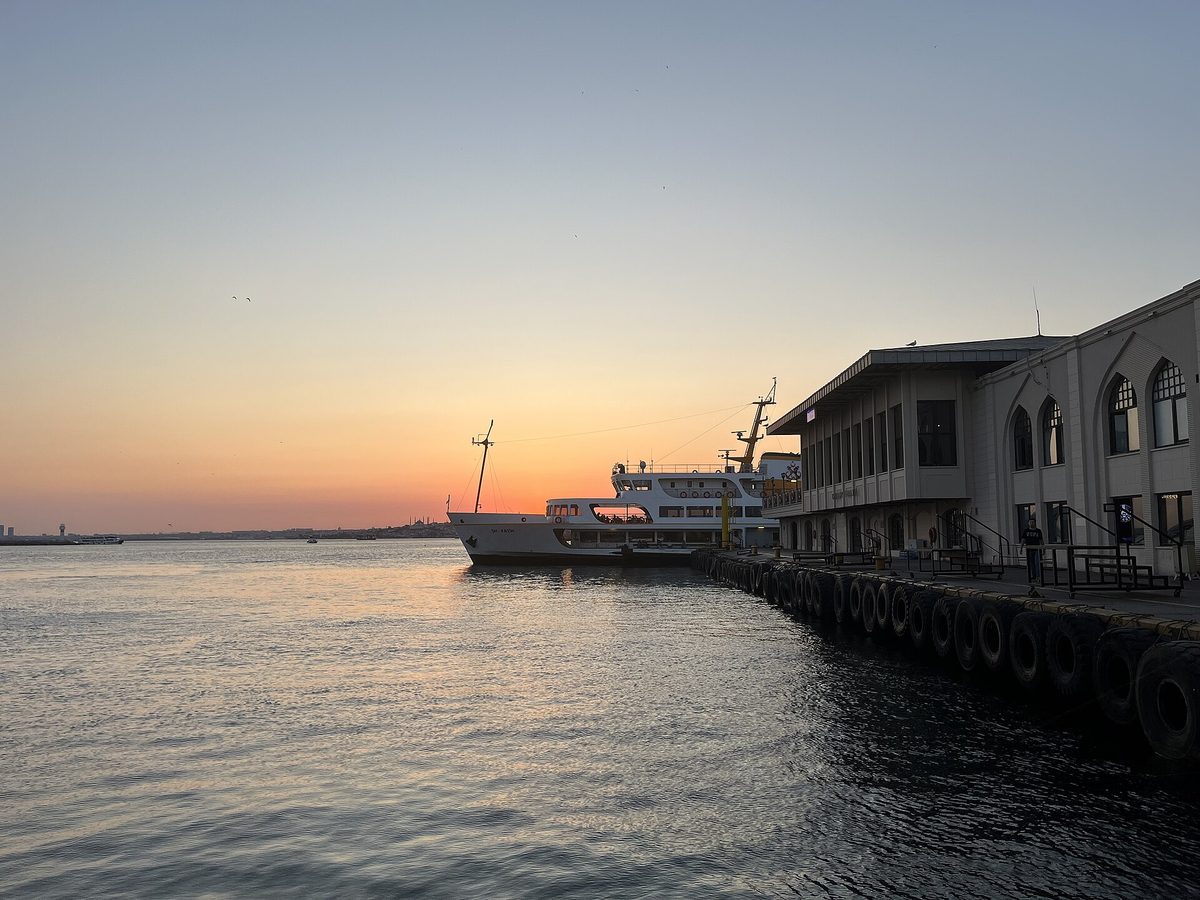
Kadıköy’s waterfront, along the shore by the ferry piers, is Salacak’s summer twin. From here the old city lies to the north-west, and between May and August that is exactly where the sun goes down: behind the Blue Mosque in August, behind Hagia Sophia and the Süleymaniye in May and July, and behind Topkapı around the June solstice. The skyline is further away than it is from Salacak, so the domes are smaller against the sun, but the sky over the mouth of the Bosphorus is huge.
The other advantage is what comes after. Kadıköy’s market streets start right behind the piers, and the neighbourhood is at its best in the evening, so a summer sunset here runs straight into dinner. The old Haydarpaşa station building, closed to trains since 2013, stands on the shore to the north. Ferries go back to Karaköy, Eminönü, Beşiktaş and Kabataş, and the M4 metro runs from Kadıköy to Ayrılık Çeşmesi for the Marmaray under the strait to Sirkeci.
3. Moda seafront
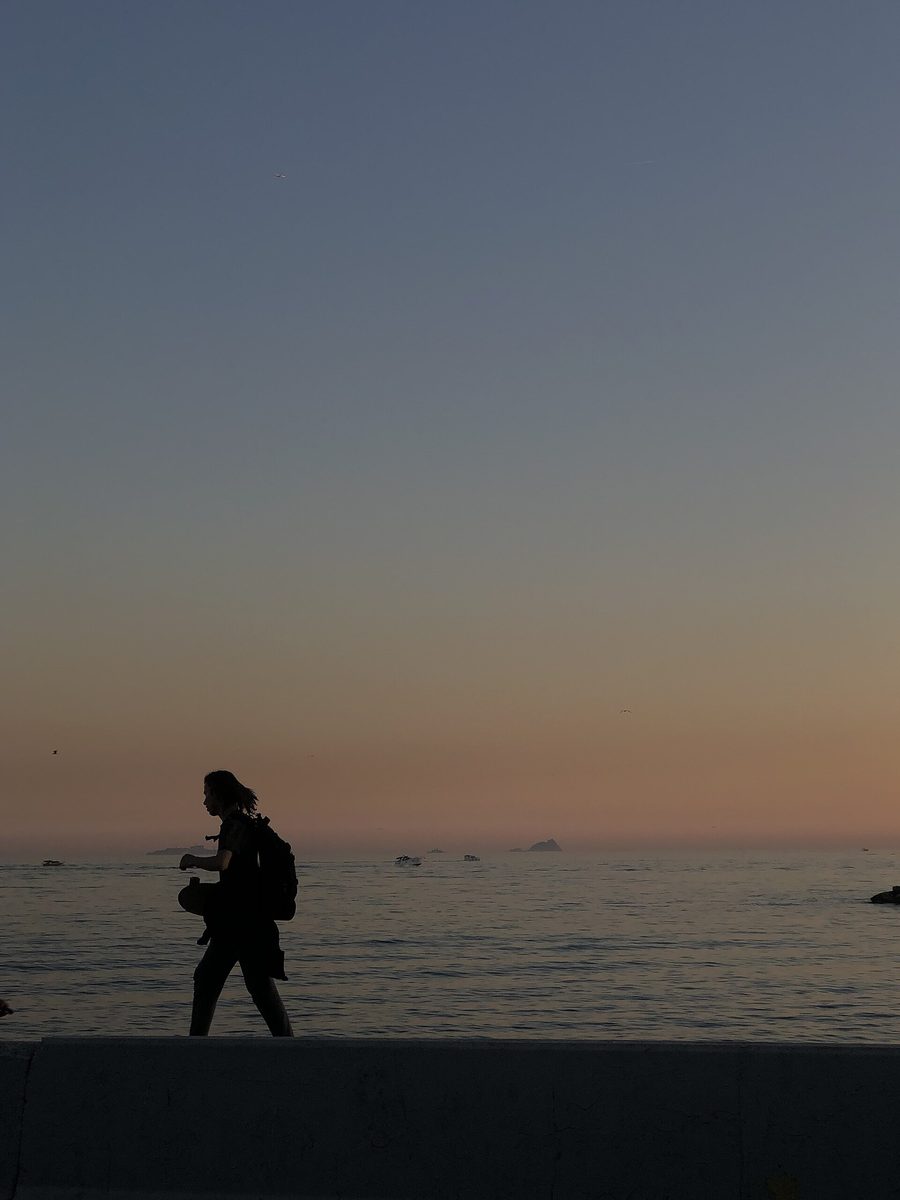
Moda’s seafront park, on the point south of Kadıköy, faces west and south-west over the open Sea of Marmara, and for most of the year that is where the sun sets: into the water, with nothing but ships at anchor between you and the horizon. It is the one sunset in Istanbul that is about the sea rather than the skyline, and in June and July, when the sun sets furthest north, it goes down just to the left of the old city, which is visible across the water to the north-west.
The neighbourhood treats it as a ritual: people sit on the grass and the rocks along the shore, with beer, tea or ice cream from the streets behind. Walk from the Kadıköy piers through Moda’s backstreets. Afterwards, walk back to Kadıköy for the ferry or the metro.
4. A commuter ferry
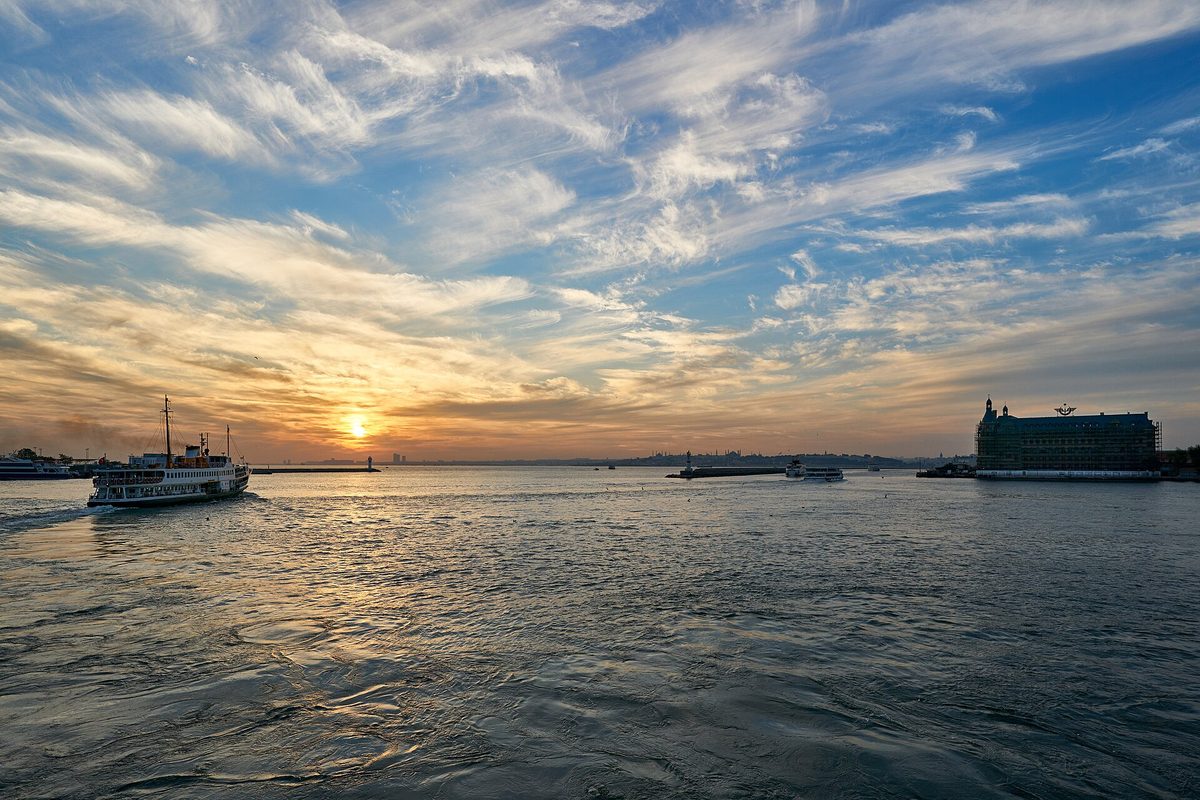
A ferry crossing at sunset gives you the light, the skyline and the water at once, for the price of a fare on your Istanbulkart. Choose the crossing by the season, and you sail straight at the setting sun. In winter, take the Üsküdar to Eminönü ferry, which heads west-south-west, almost exactly where the sun sets from November to January, with the old city ahead. In summer, take the Kadıköy to Karaköy or Eminönü ferry, which heads north-west, towards the summer sunset over the old city.
Stand at the rail on the open deck, or sit on the side facing the sun, and buy a tea from the man with the tray. The main crossings link Kadıköy with Karaköy, Eminönü, Beşiktaş and Kabataş, and Üsküdar with Eminönü. Strong south-westerly winds, the lodos, can stop sailings in winter, so check before you set off if the water looks rough. Our Istanbulkart guide has the fares; for the paid sunset and dinner cruises, see our Bosphorus cruise guide.
5. Çamlıca Hill and Çamlıca Tower
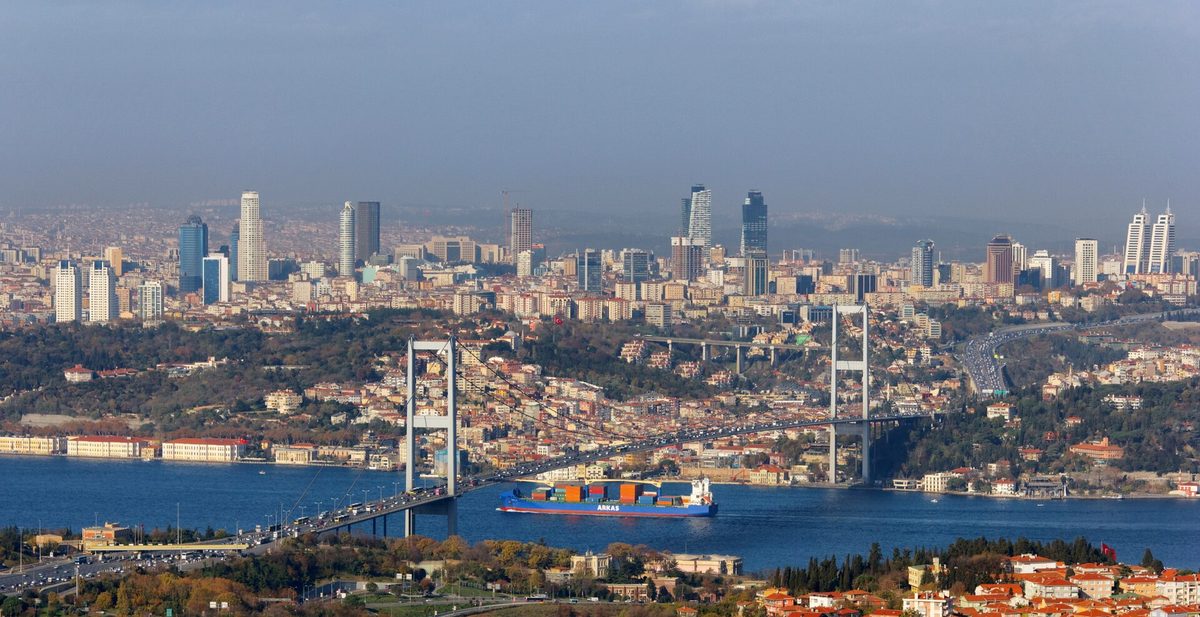
From Çamlıca Hill, 288 metres up on the Asian side, the whole European shore is laid out to the west, and the sunset moves along it through the year: behind the old city in February and October, behind Galata around the equinoxes, and over the hills of Beşiktaş and Şişli in summer. In midwinter it sets to the left of the old city, over the Sea of Marmara. The park on the hill is free.
For the view from higher still, Çamlıca Tower, the 369-metre tower that opened nearby in 2021, has observation decks open every day until 22:00. Tickets are sold by date on the tower’s own site, camlicakule.istanbul, with separate prices for Turkish citizens and foreign visitors. The catch with both is getting down after dark: the tower’s site lists metro, Marmaray and bus connections, all a climb from the top, so a taxi down to Üsküdar is simplest.
6. The Galata Bridge

Stand in the middle of the bridge, among the anglers, and look west. From late November to January the sun goes down behind the domes of the Süleymaniye on the hill above Eminönü, and the mosque becomes a silhouette against an orange sky, with the New Mosque and the ferry piers below it. In spring and summer the sun sets further to the right, up the Golden Horn, over the water.
It is free, it is in the middle of everything, and dinner is underneath you: the lower deck of the bridge is lined with fish restaurants. The T1 tram stops at both ends, at Eminönü and Karaköy. If you only have one evening in the old city, this is the easiest sunset to fit in, and our guide to what to see in Istanbul in 2 days shows where it fits.
7. Galata Tower
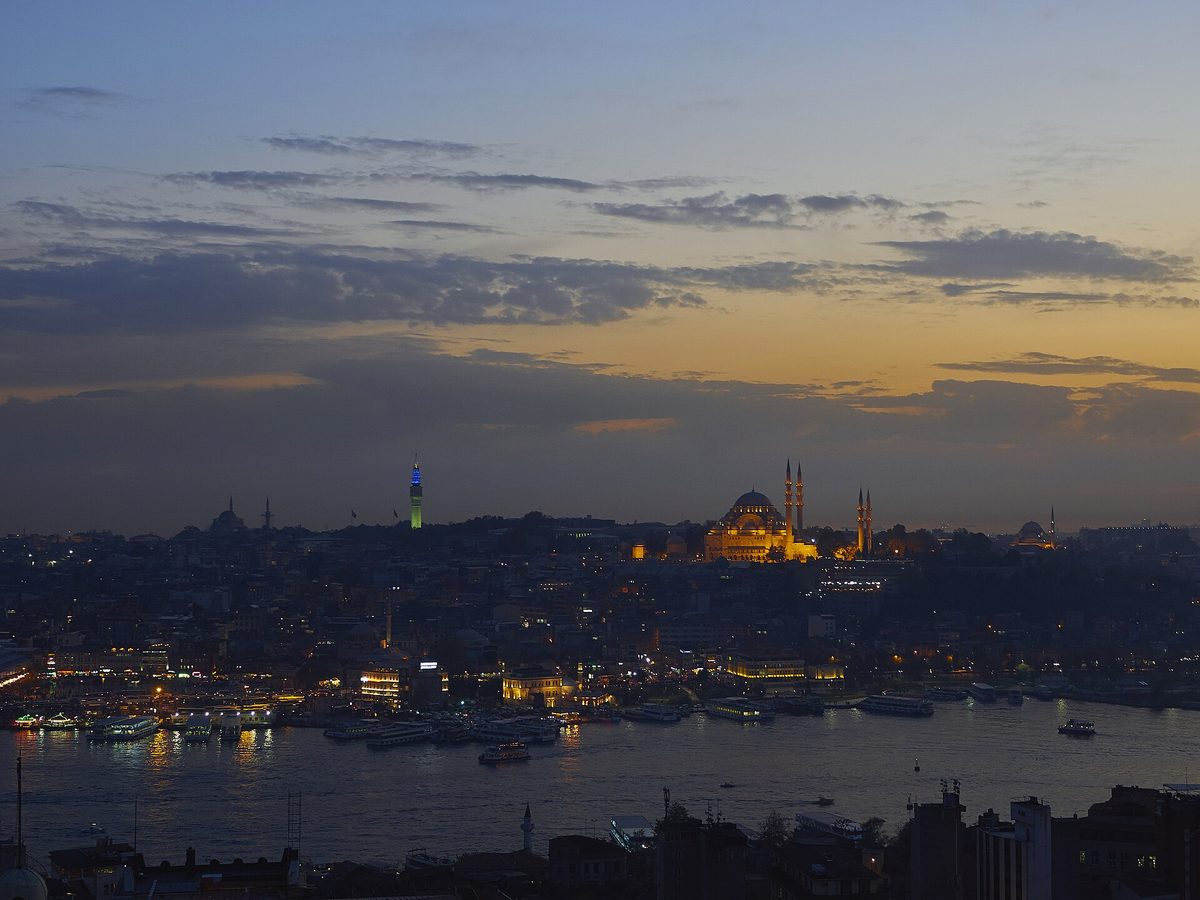
The tower’s gallery looks in every direction, so the sun sets in view whatever the season, over the old city in winter and over Beyoğlu’s hills in summer, and you watch the lights come on across the Golden Horn afterwards. It costs €30, and it opens every day 08:30–23:00, with last entry at 22:00, so you can stay well past dark.
The catch is that sunset is when everyone wants to be up there. Arrive well before the sun goes down, and expect a queue. There is a winter bonus for Museum Pass holders: entry with the pass is free if you are in by 18:14, and from November to mid-January the sun sets before that, so the pass covers a winter sunset. Walk up from Karaköy on the T1 tram or down from Şişhane on the M2 metro, and see our Beyoğlu guide for where to eat afterwards.
8. Pierre Loti Hill
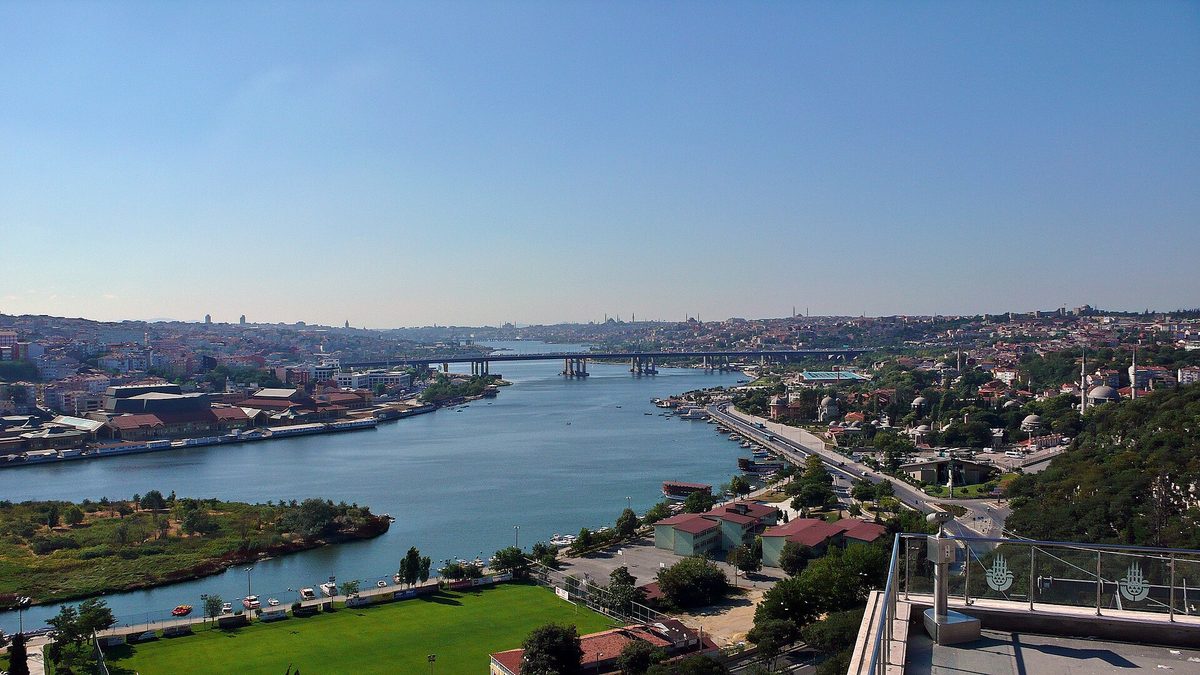
Pierre Loti appears on many sunset lists, and it is a lovely place to be at the end of the day, but know what you are getting. The terrace on the hill above Eyüp looks south-east, down the length of the Golden Horn towards the city, so the sun sets behind you. What you watch is the light: the water turning copper, the hillside cemetery below going dark, and then the lights of both banks coming on. The café at the top, named after the French novelist Pierre Loti, is where most people sit with a tea.
The T5 tram from Eminönü runs along the Golden Horn to a stop named after the Eyüpsultan cable car, and the TF2 cable car climbs from there to the top. It can stop in high winds, so check that it is running before you rely on it to get down after dark; if it is not, take a taxi rather than the steep path through the cemetery. From the bottom, the T5 tram takes you back towards Eminönü.
9. Ortaköy waterfront
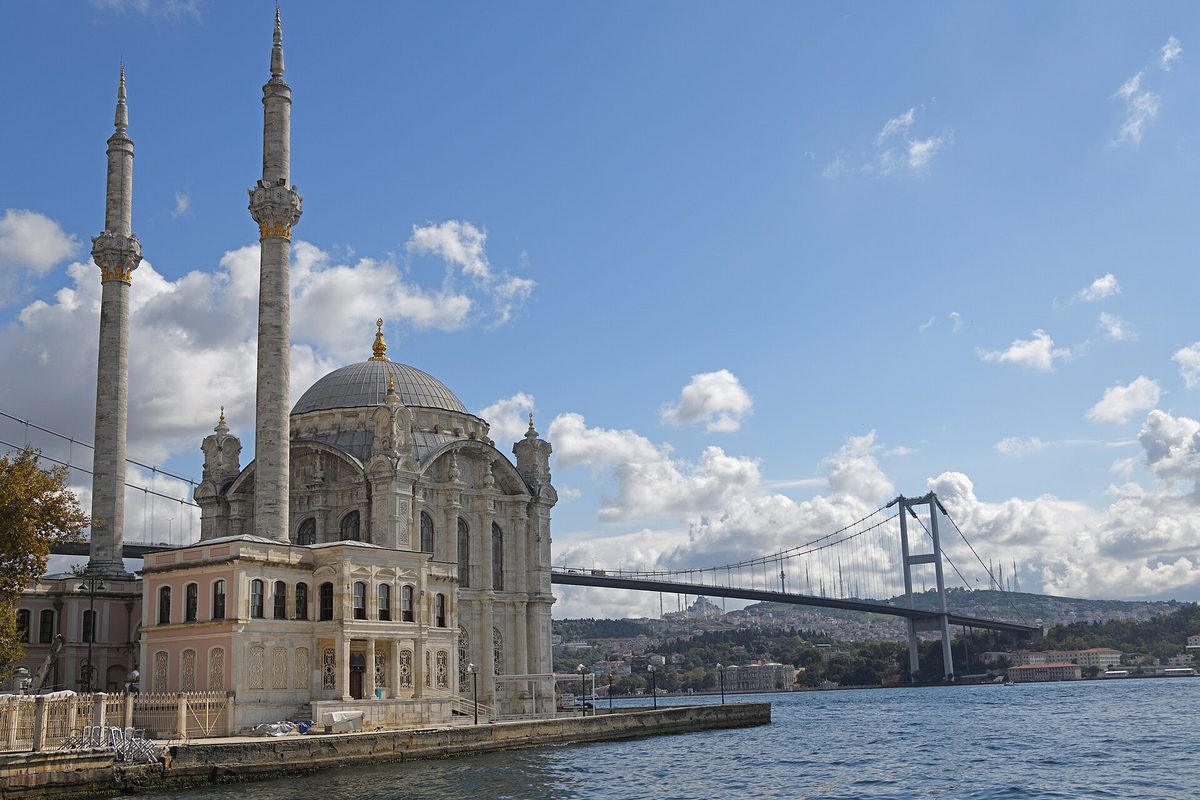
Ortaköy’s little square faces east, across the Bosphorus to the Asian shore, so the sun sets behind the neighbourhood, not in front of you. It is on this list for what happens afterwards: in the blue hour after sunset, the white facade of Ortaköy Mosque and the 15 July Martyrs Bridge behind it light up against a darkening sky, and the square is full of people eating kumpir, the stuffed baked potatoes sold from the stalls around the square.
Get there about half an hour after sunset. Buses run along the shore road to Beşiktaş and Kabataş, and taxis are easy to find. Our guide to Beşiktaş, Ortaköy and Bebek covers the neighbourhood.
Two more, with a catch
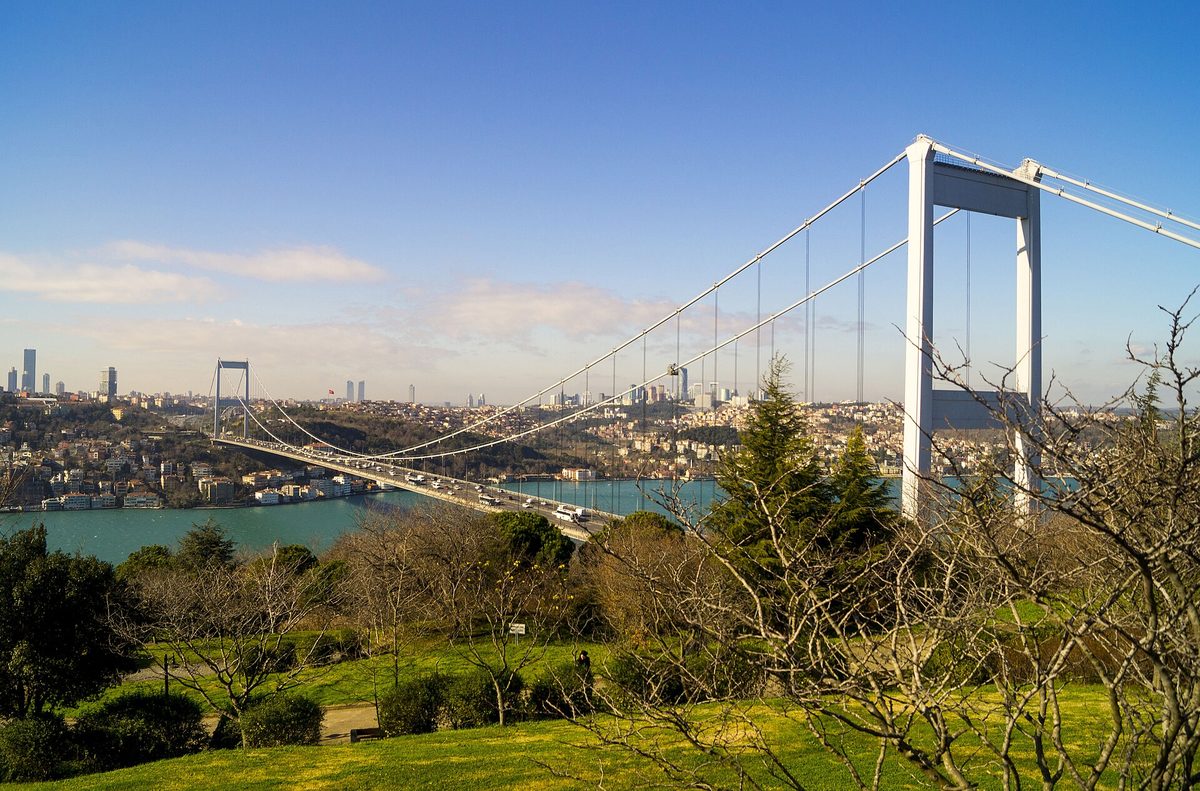
Otağtepe. This wooded hilltop park in Beykoz, above the Asian end of the Fatih Sultan Mehmet Bridge, is a well-known sunset viewpoint on the Bosphorus: the bridge in silhouette against the sky, with the European hills behind it. The catch is that it is a park with gates and set opening hours, which may end before the sun goes down, especially in summer, when sunset is after eight. Check the closing time before you plan a sunset there, and allow for a bus or taxi out to Kavacık and an uphill walk.
The Maiden’s Tower. The tower on its islet off Salacak looks like the perfect place to watch the sun go down over the old city, and from the shore it is the perfect foreground. Visiting it is another matter. The published hours have the boats running 09:30–17:00 from Karaköy and Salacak and the box office closing at 17:00, with the tower open until 18:00, so ask about the last boat back before you plan to stay late. For most of the year all of that ends before sunset. Entry costs €27 plus an €8 transport fee. Visit by day, then watch the sunset from the Salacak shore with the tower in front of you.
What the sunset lists get wrong
“Pierre Loti at sunset.” It faces the wrong way for the sun itself. Go for the light on the Golden Horn and the lights coming on, and you will not be disappointed.
“Ortaköy at sunset.” The same: the sun goes down behind the mosque’s neighbourhood, and the famous photograph is a blue-hour shot. Arrive after sunset, not before.
“The sun sets behind Hagia Sophia from Salacak.” Only from late November to the middle of January. In summer, the same wall looks at a sunset over Beyoğlu, and Kadıköy’s waterfront is the place to see the sun go down behind the old city.
Sunset cruises. Tour boats sell sunset sailings on the Bosphorus, some with dinner and a show. A commuter ferry, timed for the season, gives you the same light and the same skyline for a fare. Our guide to Istanbul at night has better ways to spend the evening that follows.
Rooftop bars sold on the sunset. Many bars and restaurants in Beyoğlu, Karaköy and Sultanahmet charge for their terrace through the price of a drink. Some are worth it for the evening, but check which way the terrace faces before you pay for the view: plenty of them look east, at the Asian shore, while the sun sets behind the building. Our Istanbul nightlife guide covers the rooftops.
Photographing an Istanbul sunset
Three things make the difference. The first is focal length. From Salacak and Kadıköy the domes on the far shore are small, so the classic shot of the sun sitting behind Hagia Sophia needs a zoom, or the 2x or 3x lens on a phone, rather than a wide view. Step back from the sea wall at Salacak and use the Maiden’s Tower as your foreground; it does half the composing for you.
The second is exposure. Expose for the sky and let the skyline go black. A silhouette of domes and minarets reads at a glance, while trying to keep detail in the buildings washes out the colour. On a phone, tap the bright part of the sky before you shoot.
The third is patience. The evening call to prayer comes a few minutes after the sun goes down: on 25 November 2026 the Diyanet’s sunset prayer time is 17:46, with the sun setting at about 17:38. It rises from minarets on both shores at once and carries across the water, and it is worth staying for. Twenty to thirty minutes after sunset comes the blue hour, when the floodlights on the mosques stand out against a deep blue sky. That is when the Galata Bridge, Ortaköy and the view from Galata Tower look their best.
Three sunset evenings
Winter: Üsküdar, Salacak and the ferry back
Take the ferry from Eminönü to Üsküdar in the middle of the afternoon and look into the Şemsi Paşa Mosque, the small Sinan mosque on the water’s edge, before walking south along the shore to Salacak. Watch the sun go down behind Sultanahmet, then walk back into Üsküdar for dinner; Kanaat Lokantası on Selmani Pak Caddesi, run by the same family since 1933, is the classic choice. The ferry back to Eminönü sails straight towards the floodlit old city.
Summer: Kadıköy, from the market to the water
Cross to Kadıköy in the late afternoon and spend an hour in the market streets behind the piers, among the fishmongers, delis and pickle shops. Walk down to the waterfront by the piers for the sun going down behind the old city, then go back into the market streets to eat; Çiya, whose three restaurants stand a few metres apart there, serves regional Anatolian cooking. Take a late ferry back, or the M4 and Marmaray if you stay later than the boats.
Any season: the European side in one loop
Walk onto the Galata Bridge half an hour before sunset; in winter the sun goes down behind the Süleymaniye. Eat at one of the fish restaurants on the lower deck, or cross to Karaköy, then climb to Galata Tower once the lights are on, since it stays open until 23:00. The whole loop is on foot, with the T1 tram at both ends of the bridge.
Getting home after dark
The joy of the Asian-side spots is also their only drawback: you watch the sun set over Europe from the wrong side of the water. In practice it is easy. Üsküdar and Kadıköy are both transport hubs, with ferries back to the European side, the Marmaray rail tunnel under the strait from Üsküdar and from Ayrılık Çeşmesi (one change from Kadıköy on the M4), and metro lines inland. Ferries run into the evening, but timetables change with the season, so check the last sailing for your crossing on the operator’s timetable before you settle in for a long dinner.
On the European side, the Galata Bridge, Galata Tower and Ortaköy are all on or near tram, metro and bus lines. Pierre Loti and Çamlıca are the two where a taxi is the simple answer after dark. Everything here, from the ferry to the Marmaray, takes the same Istanbulkart; our guide to getting around Istanbul explains the network.
Weather, haze and the best months
The best sunsets need a clear western sky, and Istanbul’s weather shifts sharply through the year. On the Turkish State Meteorological Service’s 1950–2025 averages, July and August have the fewest rainy days, about three and a half a month, while December and January have the most, about 15 to 16. Summer brings the most reliable evenings but also haze, which softens the skyline and can turn the sun into a pale disc well before it sets. Winter brings more cloud and rain, but on the clear days in between, the air is often sharp and the sun sets behind the old city from Salacak and the Galata Bridge.
Our pick would be October or late November for the combination of clear-ish air, early sunsets that fit around dinner and the sun returning to the old city’s skyline. If you are here in summer, go to Kadıköy. Our guide to the best time to visit Istanbul goes through the seasons month by month.
Frequently asked questions
Where is the best place to watch the sunset in Istanbul?
From late November to January, the Salacak shore in Üsküdar, where the sun sets behind Hagia Sophia and Topkapı with the Maiden’s Tower in front. From May to August, Kadıköy’s waterfront, where it sets behind the old city’s skyline. All year, a commuter ferry timed for the season, or Galata Tower if you want to be up high.
What time is sunset in Istanbul?
Because Turkey stays on UTC+3 all year, sunset ranges from about 17:35 in early and mid-December to about 20:40 around the June solstice. In mid-January it is about 18:00, mid-March about 19:10, mid-September about 19:15 and mid-November about 17:45. Check the exact time for your date on timeanddate.com.
Can you watch the sunset from Galata Tower?
Yes. The tower is open every day until 23:00, with last entry at 22:00, so the sunset falls well within its hours all year. Entry costs €30. Sunset is the busiest time, so arrive early and expect a queue. From November to mid-January, Museum Pass holders can watch the sunset free, since entry with the pass is free up to the last pass entry at 18:14.
Is Pierre Loti good for sunset?
It is good for the end of the day, not for the sun itself. The terrace looks south-east down the Golden Horn, so the sun sets behind you; what you see is the light on the water and the city’s lights coming on. For the sun going down in front of you, go to Salacak, Kadıköy or Moda instead.
Where can I watch the sunset on the Asian side?
The Salacak shore in Üsküdar is best from late November to January, Kadıköy’s waterfront from May to August and Moda’s seafront all year, with the sun setting over the open Sea of Marmara. Çamlıca Hill, high above Üsküdar, looks over the whole European side, and the sun sets behind the old city from there in February and October.
Can you watch the sunset from the Maiden’s Tower?
Not reliably. The published hours have the boats running 09:30–17:00, the box office closing at 17:00 and the tower closing at 18:00, which is before sunset for most of the year, so ask about the last boat back when you buy your ticket. Visit by day and watch the sunset from the Salacak shore, with the tower in front of you.
What is the best month for sunsets in Istanbul?
For the classic shot of the sun going down behind the old city, late November to January from Salacak or the Galata Bridge, on a clear day. For the most reliable weather, July and August, from Kadıköy’s waterfront, though summer haze softens the colours. October is a good compromise: drier than winter, clearer than summer, and the sun sets behind the old city from Çamlıca.